

By Heidi Bornhorst
The first time I saw the real native name, I went no, WAY too hard to say! But learning to spell Latin names is not that much easier. So maybe we should practice using the real name.
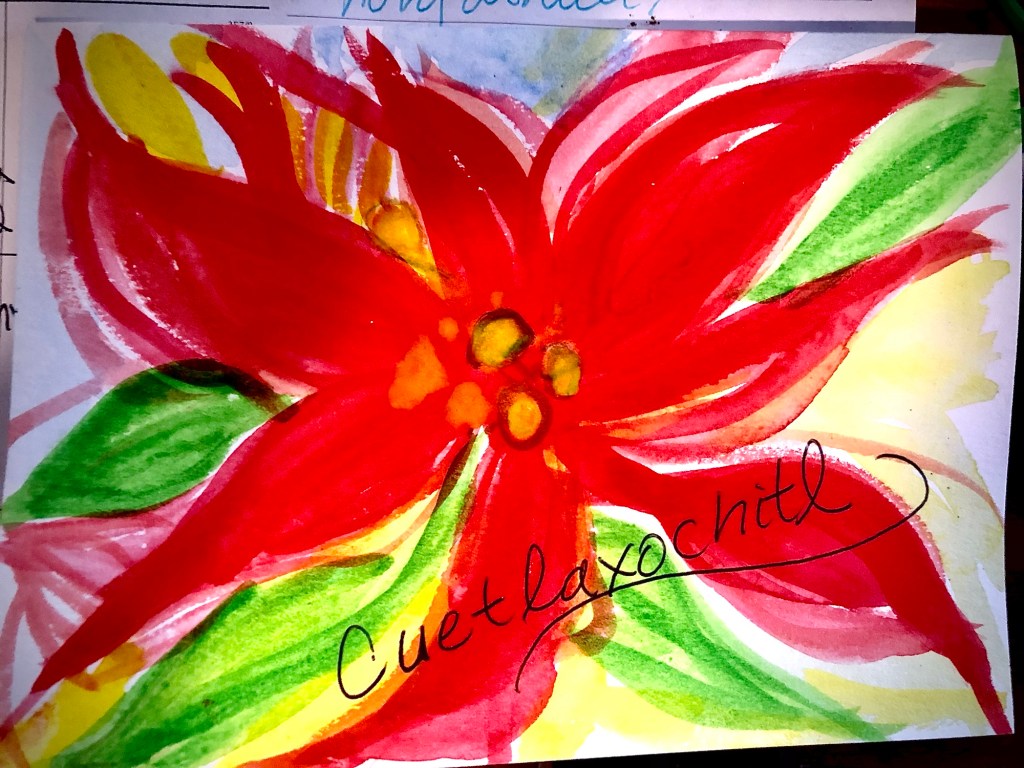
Break it down and it’s easier to say. Write it and your brain will remember it.
It is pronounced: Kwet La sho Chel
Sing it! Let’s try and remember and use it.
Just like we respectfully use, and properly pronounce ohelo Hawai’i words, we probably shouldlearn to use the real name.
Not only is it a seasonal festive plant for us (and a big production for our nursery growers), starting in Hawaii about June with little plugs, it is a very special and significant plant in its native Mexico and Central America.
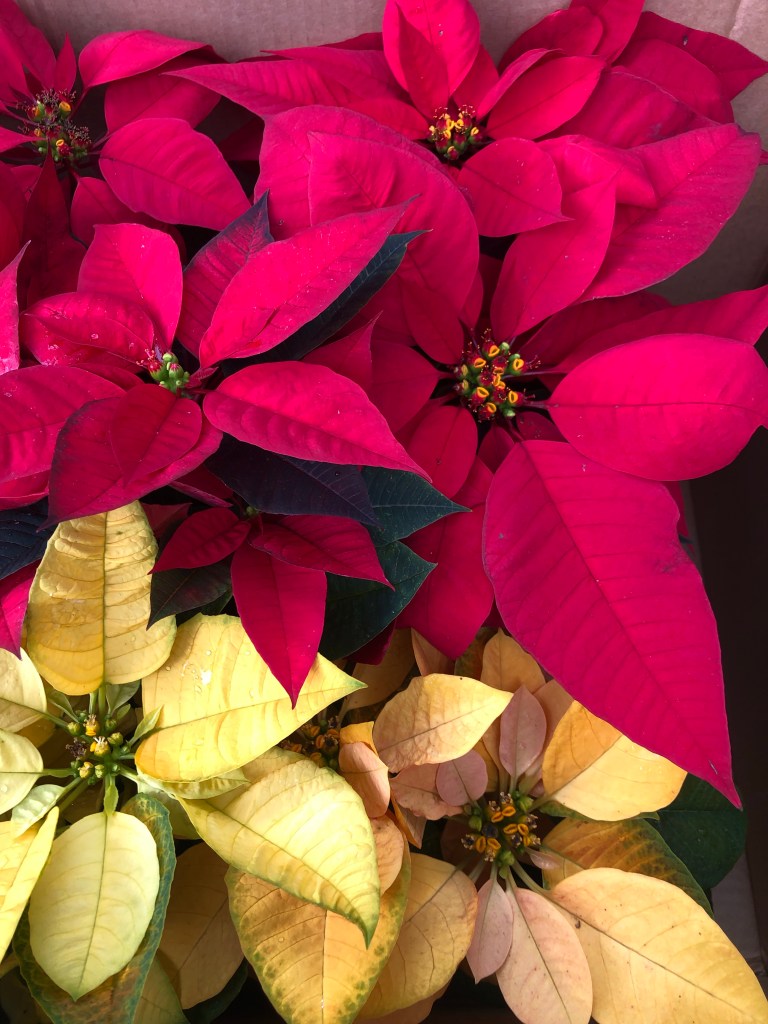
Red is original color, and many new variations now exist. I like the new colors for their novelty, but the rich red is so seasonal and joyous.
In Mexico they were symbolic and were also used for medicine (A special recipe induced breast milk). they are not as poisonous as some rumors suggest. Red and purple fabric dyes come from the colorful. bracts.
The “flowers” we see so brightly are actually bracts, modified leaves. The true flowers are yellow and green and are nestled in the center of the bracts.
For the past few years, I have been buying them from the UH Manoa Horticulture club, to help support and encourage students in the fine art of intensely growing and studying plants.
I love going up to Manoa to buy them and then sharing this growing gift with family, friends, and neighbors.
We also have the old-fashioned hedge type of Cuetlaxochitl in some Hawaii gardens. They are becoming a more rare plant to see. In Foster Village, where my husband grew up, we’d love to see all the pretty tall plants growing in gardens as we drove out to visit his folks. A particular house had green walls and it was so striking to see the plants growing there.
If you see one like this, you might ask the gardener for a cutting to grow. This is not among varieties growers produce today. This hedge type one is more of a perennial and will grow and bloom every year.
Who remembers the old hedge that the Board of Water supply grew along the Pali Highway in Nuuanu?
For many of us this was the true sign of the season.
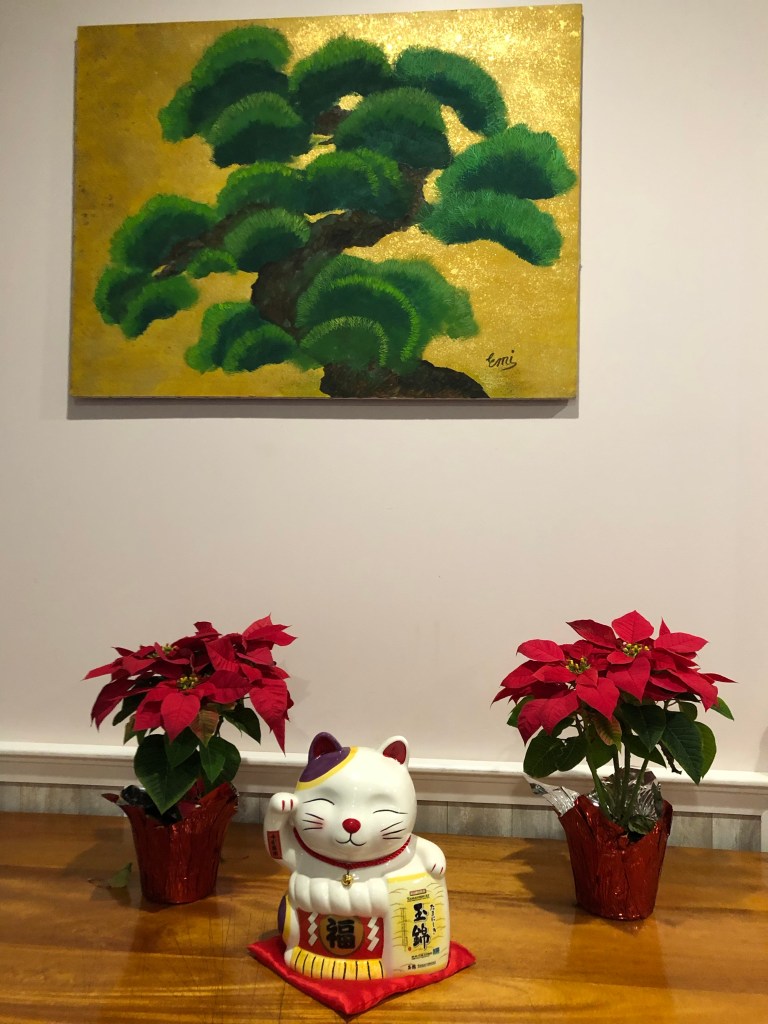
These seasonal flowers can last for months if you treat them right. They like light but not baking sunlight. Water them about once a week. Take off any decorative foil. Fill the pot with water and let it drain all the way out. Then put it back with your other Holiday decorations. They may last and stay red all the way to April!
An old gardener trick is to trim them back in the A months, April, and August. This holds true more for the hedge type.
Although I keep them alive a full year, these newer cultivars don’t look great. Nurseries use all kinds of special fertilizer and lighting to get them looking so pretty and perfect.
 Heidi Bornhorst