Dragon Fruit

By Heidi Bornhorst

Q: Heidi when did dragon fruit come to us here in Hawaii?  Seems kinda recent to me but one of my gardening writing friends tells me its been here since the late 1800s.

Pls inform

Mahalo

KD, Kahala

A: Like you, I think it’s recent. I know night blooming cereus, a relative of dragon fruit, has been here for a long time and has an interesting survival at sea/ revival by Horticulture story. So, I did some digging.

Ken Love, one of my go to Fruit experts, informs me that yes, it’s a recent arrival to our shores and gardens.

Love says that Greg Adams brought them from Vietnam in the late 60s or early 70s. Since then others have introduced cultivars from places like Israel.

They are native to Mexico and Central America where we get the common name pitaya. Now widely grown by masterful Horticulturists and entrepreneurial Farmers in Thailand and Vietnam, we are seeing more in Hawaii home gardens and fruit markets.

There are some reports of it getting here early, maybe by that epic plantsman and translator for Alii, Don Francisco de Paula Marin. He brought us our first mango, grapes and Yellow Plumeria, among many other wonderful plants that now enhance our Hawaii gardens.

I think the red fleshed one is gorgeous especially in a mixed fruit platter. To me the white one is more ono but less colorful and pretty. I’m still waiting to try the yellow fruited one.
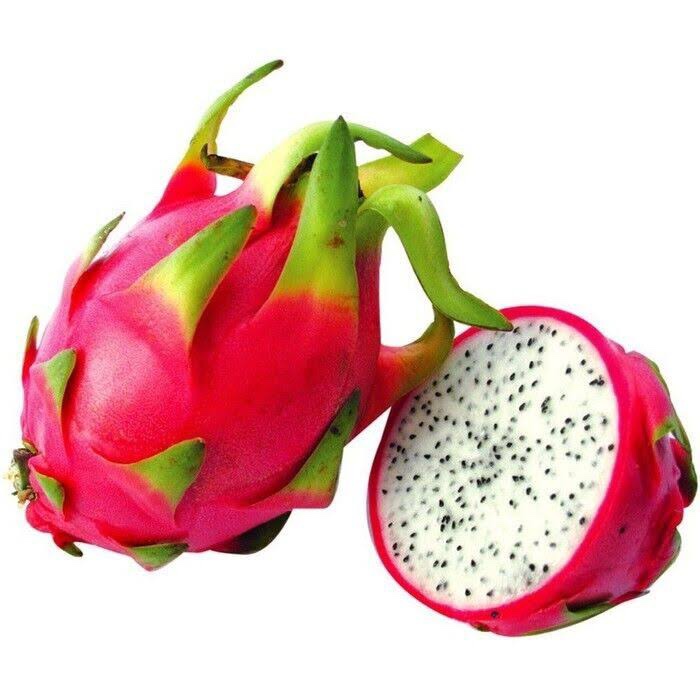
Scientists call it Hylocereus.  H. undatas is the white fleshed one, H. roja is the red fruited one and H. amarilla has yellow flesh. All are in the Cactus family, Cactaceae.

They are fun to grow if you don’t mind thorns.  The stalks are heavy and need support on a sturdy trellis or fence.  You get more fruit if you hand pollinate.

We always wonder how nutritious our Hawaii grown fruit are and dragon fruit has some great nutrients.  It is high in lycopene, as are tomatoes and watermelon. It’s a good source of calcium and iron.

Night-blooming cereus or panini o ka Punahou is a kind of cactus. The most famous planting of it in Hawaii is on the rock wall surrounding Punahou School in Makiki.

Night-blooming cereus

The plant, Hylocereus undatus, is from Mexico, where it is called pitahaya. It first landed in Hawaii around 1830 on the brig Ivanhoe, which was carrying plants collected in Mexico. Most of them died and were tossed overboard, and the nearly dead, dried-out cereus cutting looked like a goner, but First Officer Charles Brewer took care of it on the long voyage and planted it in Honolulu.

Dr. Richard Criley of UH Manoa, has been monitoring the night blooming cereus flowering cycles at Punahou school, for about 20 years, and sometimes sees fruit.  Maybe young scientists are hand pollinating them. He contends that hand pollination is needed for them to set fruit here in Hawaii.

They set fruit in Mexico where they are naturally bat pollinated. Our native bats are insect eaters and they are rare.

Its thorny stems send out aerial roots from the nodes or sections of stem. You can grow it from cuttings but watch out. It looks innocent at first but as it grows it can take over your rock wall, climb up slopes or trees, or even up your utility poles and lines.

(This happened at my parents’ home and they were without a phone for three weeks! I told my mom to keep it in a pot, but she is too kindhearted and said, “It looked so cute and helpless in the pot.”)
Nutrition of Mountain Apples

By Heidi Bornhorst

Local Hawaii people are so Funny!

Nowadays people go nuts for Mangos and lychee and `ULU.

Even to far as buying them in the store!

Don’t you all think we should have some fruit trees in our gardens? And share with friends and neighbors? Let’s plant and grow some fruits today!

As kids, mangoes were like stray kittens, people would beg you to take them! We got jobs raking up the fallen smashed ones from super tall trees for elderly neighbors.

I could never get enough lychee even tho the trees were abundant in Makiki where I grew up. Lychee enticed me to move to Wahiawa where we had two lychee trees and then planted a third.

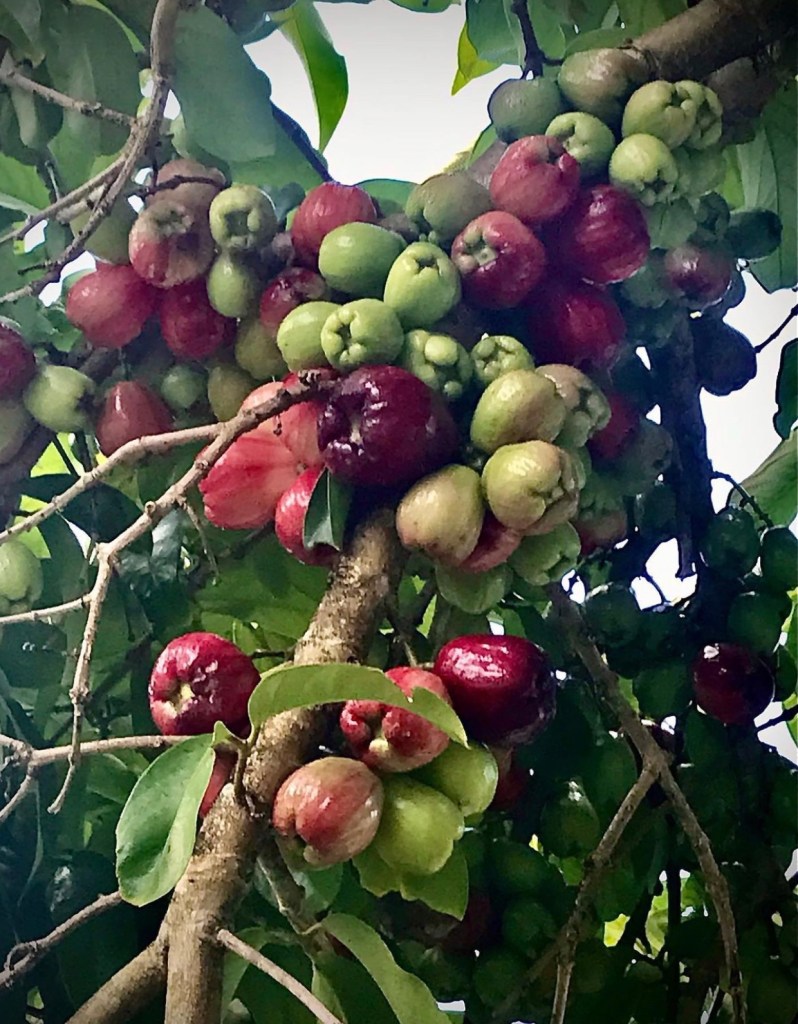
When you offer people mountain apples or `ohi`a `ai some are enthusiastic, some will help you pick and rake up and some meet the offer with distain.

Funny.

Nutritionally they are great; lots of hydration for your body, and rich in vitamins C, Calcium, magnesium, phosphorus, and super rich in potassium.

Also known as `Ohi`a `ai, the `ohi`a that you eat (`Ai) they were carried here by ancient Polynesians in their sailing canoes, an important part of our “imported” landscapes and gardens.

What a gorgeous gift to find when hiking the low moist forests. This fruit will keep you hydrated on your hike!

And you can bring home a seed and grow it to commemorate that special hike. Surprise and share with your hiking buddies at the next festive occasion.

They are nice to grow in our gardens too. A small to medium tree with pretty leaves and bark most of the year and then BOOM! in flower so pretty magenta pom poms

A month or two later you will have that juicy ono fruit. Like jewels up in the tree canopy.

Besides eating them straight off the tree, you can slice and add to fruit salads.

Or as my niece Jalene found out for us, you can make pickles from them to savor for another day. 

My friend and akamai farmer Deborah Ward makes a mean mountain apple pie and you can also make mountain apple sauce.

Add some slices to your favorite cold beverage.

You can make a lei with the smaller green and white fruit.  Store the lei in the fridge and when you wear it “Fruit cooling air conditioning” !  I made one for my then boss, Sydney Iaukea at a Kupuna Hawaiian studies training session and the lei kept her cool all day.

It’s an unusual lei today.   But easy to make and fun and unusual to wear.

​The scientific name is Eugenia mallaccensis and they are in the MYRTACEAE plant family along with `Ohi`a lehua, guavas, rose apples, Eucalyptus, and more.

Some call them Malay apple as they are native to the Malay peninsula and southeast Asia.

We have different varieties in Hawaii, a pure white one, a seedless one, squat plump Hawaiian variety and long and big Tahitian variety.

Many grew naturally in the wet lowland tropics of Ho`omaluhia Botanic Garden and then we planted more in the “Kahua Kukui” Polynesian plants section of this amazing and FREE botanic garden in Kane`ohe.

They are easy and fun to grow from seeds.  Save a seed from an ono one and plant it right away.

Besides the ono fruit and attractive flowers and tree, bringing shade and birds to yoru garden, mountain apples have medicinal uses.

The bark is a sore throat cure.   If you feel a sore throat coming on or are getting a cold, scrape off some young bark, rinse it and chew it.  It has lots of tannins and this truly can help ward off a cold.

The nutritious fruit will also help keep you healthy !

Finger limes, a fun pretty, newish fruit for Hawaii gardens

By Heidi Bornhorst

Citrus grow well in our Hawaii gardens, trees come in all shapes and sizes. Many people ask me for smaller fruit trees, or even shrubs and finger lime fits this to a T!

 One fun one that I first heard about and got to sample while visiting gardens on Hawaii island (a few years ago) with fellow horticulturist Erin Lee is the finger lime.

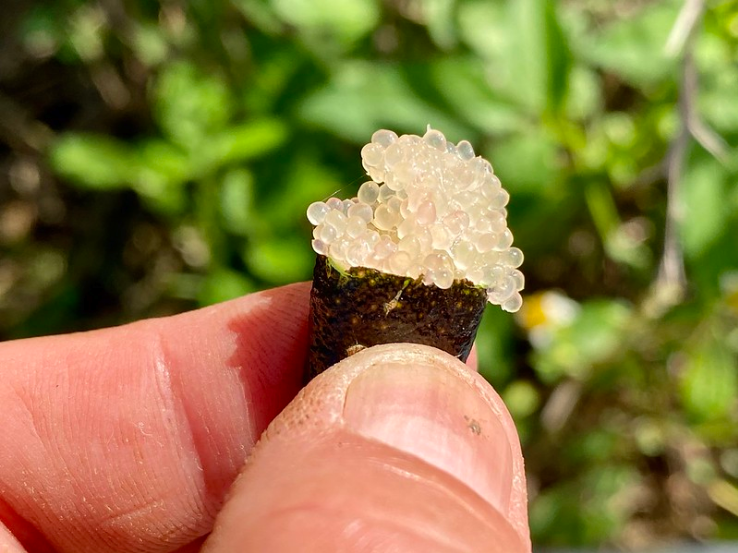
It is so Fun to eat! Cut open a ripe one and just squeeze it out like wasabi paste !  Fun for keiki to learn about, grow and eat more healthy fruit.

The little fruitlets inside can be white, green, or pink. The skin of the fruit as well as the insides, comes in different colors.

 So pretty and decorative for your Holiday table, whatever the Holiday is!  Let’s celebrate being alive and learning to grow and eat new things from our own gardens !

And sharing with friends and neighbors!

Amazing at your next gourmet potluck!  (when it safe to have a pa`ina). Imagine pairing it with home made sushi ! or on fish, or in drinks

Lee suggests growing it in a large decorative ceramic pot in full sun.  Once it’s growing vigorously, you can shape it as a standard or into a topiary on your sunny lanai or party patio !

It came to us from Australia, a land of many wonderful and unusual plants.

Scientists call it Citrus australasica and it is in the Rutaceae or Citrus Family. It is also sometimes called “caviar lime”.

 It is a rambling, very thorny, under-story shrub or small tree, from lowland, subtropical rain-forests, and dry rain-forests in the coastal border region of Queensland and New South Wales, Australia.

Happily, we are now growing finger limes in Hawai’i. We need to grow more of them and test varieties and find out which are best for our micro-climates.

The shrub is variable in height and its leaves and mixed in with thorns. Buds are purple, petals are white . The flowers are tiny . The fruit is cylindrical, 4–8 inches long, sometimes slightly curved, and shaped like a fat finger. Finger limes come in a range of colors, both inside and out

HOW DO YOU EAT IT?

One fun way to prepare eat this fruit is to cut the ends off and use a  rolling pin and roll out the small, caviar-shaped vesicles. The fruit caviar can be used wherever you would like a squeeze of citrus.  Or just cut and squeeze out the fruitlets like a tube of wasabi paste.

For a fun family pa`ina, have your keiki help you prepare your gourmet fruit platter and let them open and squeeze out the tart juicy insides.

In France they call it “lemon Caviar’ and it commands a very high price in Gourmet restaurants.  They must grow them in greenhouses there.

This could be a model for us in Hawaii. A rare, pretty and flavorful gourmet treat sold for a good price.  We could develop our own varieties that do thrive here.

This is true Horticulture and why the U.H. could sure use a Tropical fruit specialist to help grow our farms and support farmers.

I spoke with amazing ex UH extension agent Jari Sugano.  She was growing finger limes as a hedge crop at Waimanalo experimental station.  She mentioned how thorny they are.

Clients do ask me for thorny plants to help secure their homes and gardens. This could be a plus for farm security but does make harvesting tricky.

Tree crops are good for the land as they are perennials and you don’t have to work over the soil like with veg crops.  This is the concept of permaculture,

Frank Sekiya and Lynn Tsuruda of Frankie’s Fruit Tree Nursery in Waimanalo are growing finger limes. I talked to them about their experience with this interesting citrus fruit.  

Douglas Himmelfarb was living at the Marks estate in Nu’uanu and he gave Sekiya some varieties.   The California varieties do fruit well in California but not always here in Hawaii.

Some in the field that Sekiya planted got huge, and never bore fruit. Some only a few fruits; Sekiya relates that there is so much variability. 

Ken Love, a major Fruit advocate on Hawaii island, gave Sekiya some cuttings, and he say it fruits all year,  and it’s the slightly pink one. The outside of the fruit is kind of purple and  matures to green, if it gives a little, that’s how you tell its ripe enough to pick, the fruit will have sort of a spongy feel.

We have so many micro-climates and soil types in Hawaii, that we all can experiment with which ones grow and fruit best in our own ecosystem. People have had them in their yards for a while, says Sekiya and some grew well, and yet barely fruited,

They graft finger limes and can also start them from cuttings.  Grafting is quicker, but it’s a practice and skill that not many have today.  (Something to learn and practice, while we stay safely at home ?!)

Root stocks (the bottom part of the graft) are important.  As many people prefer smaller trees, for semi dwarf  trees ‘Rubidoux trifoliate’ were advised at one time for their dwarfing effects, but as Tsuruda says,  ‘We don’t use the Rubidoux trifoliate anymore since citrus  trees grow fairly slowly in Hawaii and are easily pruned’. 

  ‘Heen naran’ is a good root stock.  It’s from India,  U.H. highly recommends it.  It’s Good for most citrus here in Hawaii. The Botanical name for Heen Naran is Citrus lycopersicaeformis.  (The fruits of this root stock are small, round, super seedy inside,  and look something like a tomato, Lyco is a Latin name referring to tomatoes, as in the healthy lycopene, we’re encouraged to eat more of)

‘Some people like it it for New year’s décor, as the size and shape fits very well on the mochi stack since it’s an inch in diameter. It’s very productive and very seedy’, says Sekiya. 

The U.H. has had Trees at Poamoho Experimental Station for 30 years, all grafted with the Heen Naran root stock, which seemed to survive over 30 years while some others were grafted to different root stocks.

Most Citrus of the good, preferred varieties are sweet all year not only summer.  Only the pummelo seems to be sweeter in summer than in winter. 

Sekiya says that Tristeza virus is what can weaken and  kill Citrus trees, the root stock helps them be stronger and more resistant and vigorous.   Life of a citrus is 20-30 years here in general, and with heen naran maintains good growth. 

Sekiya as Chef, says he just put some finger limes on fish the other night, ‘on salmon and saba, and says that it tastes really good and adds some crunch!’.

Some people put it in beer, and it doesn’t dissolve like limes so at end you have these fish egg like things to chew on’.