Gardenias: Blooming in May in Hawai’i Gardens

by Heidi Leianuenue Bornhorst
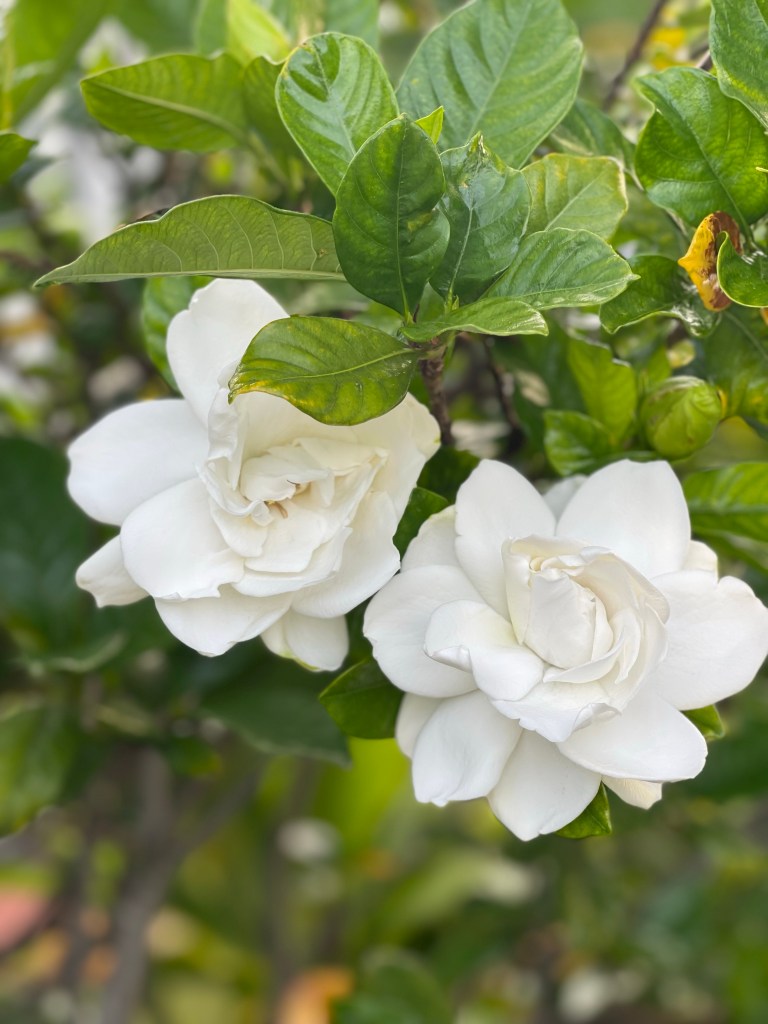
Q: my Gardenias are blooming a lot right now! I even put some of the dead brown flowers back around the plant, like mulch.

That’s the right thing to do, right Heidi?

Mahalo Debbie Azama Park

(Our fave Yoga teacher)

A; Brief answer: the spent flowers are good for mulch if they are pest free. Leafy mulch is also greatly beneficial for Gardenias.

Gardenias are called KIELE in Hawaiian.

They came to us from tropical China. The scientific name is Gardenia chinensis. They are in the RUBIACEAE plant family.

Did you know that there are over 200 species of Gardenias in the world?

Gardenias are easy to grow and bloom if you follow a few basics:

• Grow them in full sun.

• Pick every flower.

• Use soapy water to control ants and other insect pests.

• Cut long stems with blossoms if your plant is tall and flourishing!

• Cut the stems in the right place!

• Water!

• Shoot the undersides of the leaves to rinse off pests.

• Foliar fertilizer

• MirAcid 

The more sun the better, for Gardenias and most flowering plants. Study your sun and shade patterns and try to find the sunniest spot. Wind is good too. Air circulation helps get CO2 to the leaves of the plants and helps reduce insect pests.

You will have way fewer pest insects: thrips, aphids, scale, if you pick every blossom, look for a swirl of white on the green fat kiele bud, that’s the time to get your clippers and cut the bud and some stem.

Put that bud with stem, right into a vase of cool water.

If you see any pests on the buds or flowers, rinse them gently at the sink. If the pests are stubborn or plentiful, squirt some dish soap (1-2 drops) in some water and swirl it around, rinse off the pests.

Soapy water for the plant pests outside one tablespoon per gallon.

You can use a pump sprayer or handheld spray bottle. Spray the soapy solution onto the leaves and young stems, get the undersides of leaves, as that is often where the pests seek shelter and hide.

Leave the soap to sit on the leaves for at least an hour.

You can then rinse the leaves and shoot off the now smothered and dead pests and rinse the sooty mold off of the leaves.  Or you can just leave the soapy residue on the plants.

If you really want clean shiny Gardenia leaves, take a soft rag, dip that in the soapy solution and rub off the sooty mold and any insects or their eggs.

Watering and rinsing, like a strong windy rainstorm would do, is a great way to keep your plants healthy and pest free.

Observing while watering is also good; look for any buds coming along, and think about the best place to cut the stem to enjoy the blooms (and Fragrance!) inside your home.

GARDENIA Basics: THEY LIKE RICH, ACID SOIL, RED DIRT MIXED WITH GOOD LEAFY COMPOST. DIG OUT THE GRASS AND TOPDRESS WITH GOOD SOIL, MAKE AN EDGE TO THE PLANTER BED LIKE FLUSH BRICKS OR STONE, AND THEN JUST MOW AROUND THE BIG EDGE. KEEP THE GARDENIAS WEED FREE.No grass next to the stem.

Make a good soil zone area for the Gardenia roots with no competition from turf grass.

Gardenias also will bloom more if you fertilize with MirAcid. It’s the miracle gro in a blue box. If you fertilize with this each time you water, or at least a month or two before the main blooming season in May in Hawaii, you will get lots of lovely gardenia blossoms.
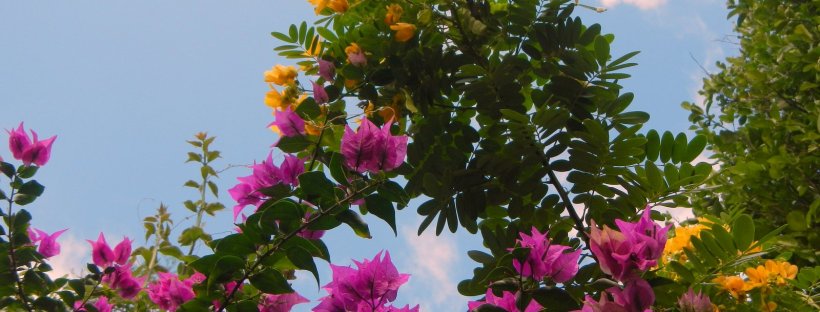
 

Bougainvillea, Seasonal Gifts

I sure appreciated the gift of Bougainvillea this winter!  I made a lot of lei for the holidays along with Birthdays, an almost 50th wedding anniversary (Masami and Pearl) and hostess gifts for the Hostess with the mostest.

I made flower arrangements for some, but the gift of a hand sewn lei is true aloha.  Yes, a florist can be faster and easier (except for the driving and parking) but where’s the fun in that? I know that mine are flowers and plants grown in Hawaii and chemical free.

With the weird weather and things blooming out of time this past winter, I did find a few Plumeria, and Pua keni keni.  My na`u or native Gardenia has been blooming like crazy, stimulated by the bountiful rains and the super moons…. I think….  The buds of na`u make for an amazing lei.  I pick them as buds, put them in tiny vases or in the fridge immersed in water, if I really want to slow down the blooming and unfurling phase.

But I didn’t have quite enough, so I looked around my garden and my neighborhood and went AH hah!  Bougainvillea!  This plant is a winter bloomer, the short days of winter stimulate it to bloom (just like Poinsettias) Bougainvillea are native to Brazil and Poinsettias to Mexico…

The bright Bougie “flowers” that catch our eyes are actually colorful bracts, or modified leaves. The true flowers are white and peek out from the bracts.  Collect the flowers in a bag, clean and pluck them and start stringing.  I like to watch recorded surf meets on TV when I string a lei.

hb-boug-arch


It takes me back to small kid time where we would make lots of lei, mostly from Plumeria and bougainvillea, abundant in our neighborhood and easy to string.  The other great thing about Bougies is that they dry well and retain some of their color.

For years we had the purple Bougies, quite thorny and apt to go wild.  Our family had a rule: NO Bougies planted in the ground, after my dad battled a wild thorny purple one for over 10 years, getting poked and mad, and killed our prized rainbow plumeria in the process.  (Always read the labels when using chemicals, or hire a professional)

As a landscape designer I always caution my clients to think long and hard before planting one in the ground.  They are way more manageable in a pot.  I dislike pruning the big wild ones due to the thorns.

If you have a wild hillside and need color – Grow for it, plant them in the ground.  They are great on the freeway embankments and so pretty.  They are also a xeric or less thirsty plant.  I love seeing them in Kona and in Kalaupapa.

We got many new varieties thanks to the vision of Paul Weissich of the Honolulu botanic gardens and the plant connections of the late Donald Angus, in the 1960s and early ‘70s.  Together they collected and legally imported new and wonderful varieties like ‘Miss Manila’ (peach and colored a hybrid from the P.I.) and the double flowered ‘Carmencita’.  Plant sales were wild events in those days, with people lining up to get these new exciting varieties.  Today they are part of the landscape and many don’t know how much effort it took to bring them here.

The na`u or native gardenia, G. brighamii, was brought back from the brink of extinction, by Conservationists and horticulturists.  Today many are grown in gardens and their unique perfume makes for a very nice lei, hair adornment or gorgeous native Hawaiian addition to your garden.  It’s also very important to protect and nurture them in the wild, by controlling weeds, feral animals and wildfire.

Heidi Leianuenue Bornhorst is a landscaping consultant, gardener trainer and specialty VIP garden guide. She has been a professional horticulturalist for more than 33 years, and she is a Certified Arborist.

You can contact her via email at heidibornhorst@gmail.com or at 739-5594.