Question: Heidi, what can we grow in rocky Nanakuli as a replacement for lawn grass? We don’t have the time or money to fertilize, mow, and water and we don’t like the thought of polluting our aquifer or ocean with chemical fertilizers.
Kupuna M.A., Nanakuli
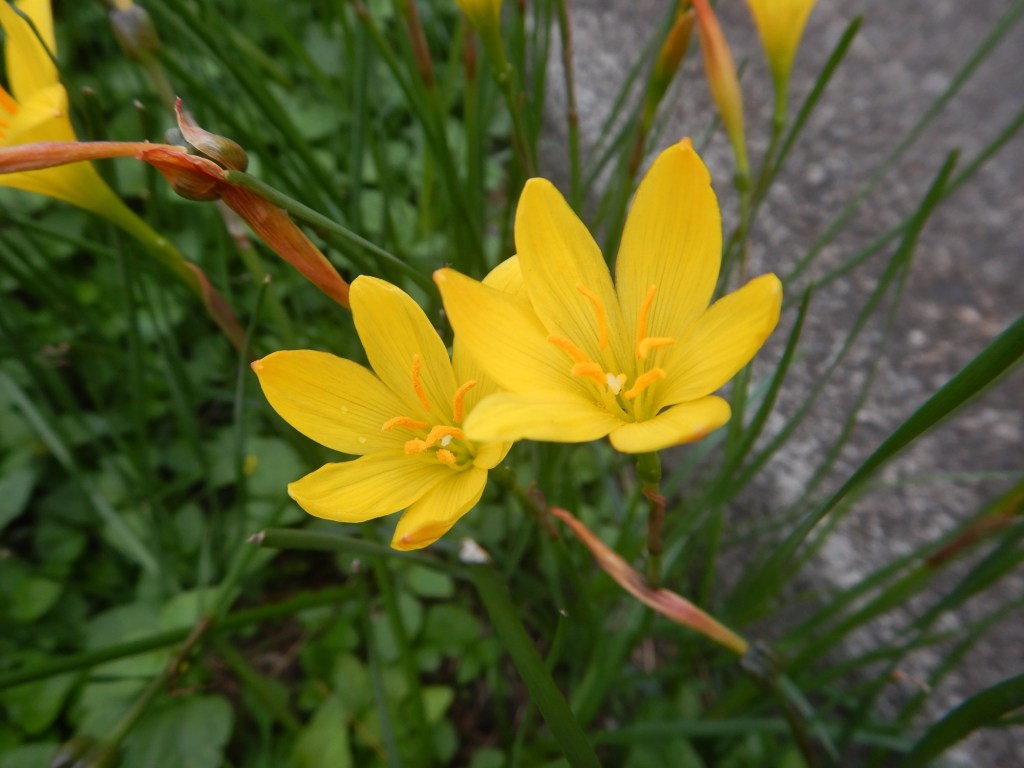
Answer: Zephranthes lilies might be just the thing. They look like grass and also have gorgeous flowers, an added benefit. The pretty lily flowers tell us and the taxonomists that they are a lily, just like mondo “grass”, and Liriope.
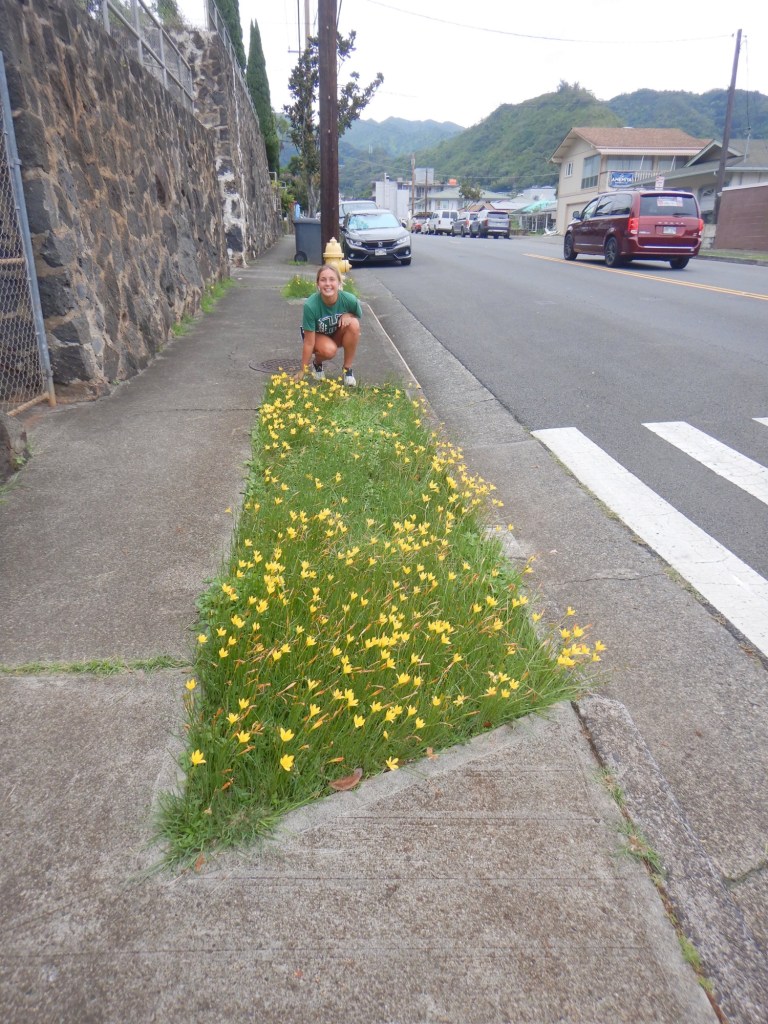
After a good rain you sometimes see yellow lilies popping up. I feel like this is a floral visit from May Moir. One good place to see them is along Palolo Avenue. They may have been the original akamai wai groundcover, planted along with gorgeous and low fuss no muss Magnolia trees, which are our City street trees.
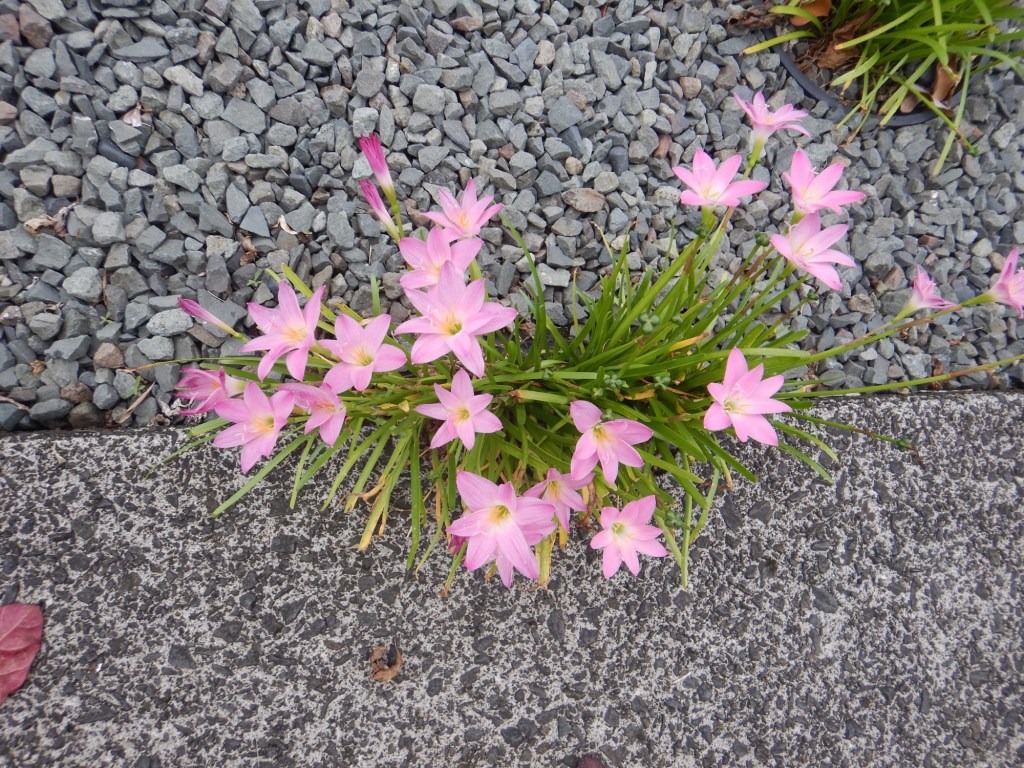
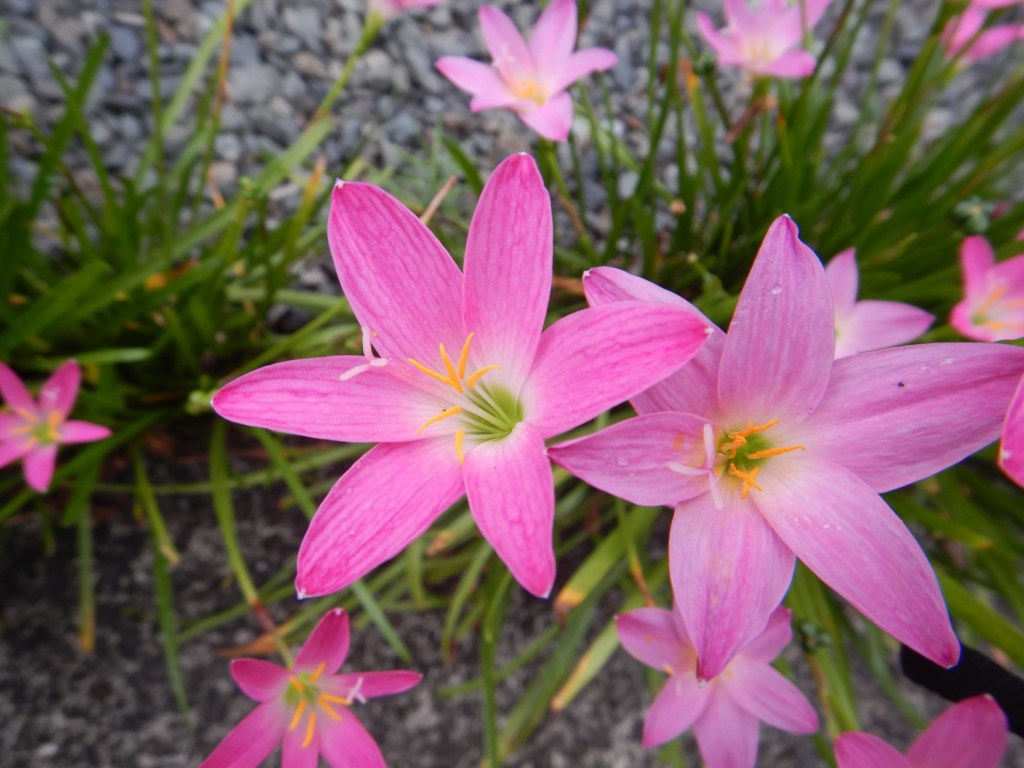
May Moir, the late great Art Academy volunteer flower arranger, and natural Hawaiian gardener, was a big proponent of this simple plant. They are lilies and they come in yellow, pink and white. Check out the book “Floral traditions” if you want to learn more about May Moir and other volunteers who made floral designs of epic proportions for our local art center. This book makes a great Holiday gift for the gardeners, flower and art lovers on your list.
They are perfect in a Japanese or Chinese rock garden. Most of the time they look like a nice healthy mondo (also a lily) but sometimes they flower and then they are so pretty and striking.
After flowering is pau, don’t cut off the flower heads. They will form seed pods with lots of flat black seeds stacked inside They are easy to plant and grow. They also don’t need much water so we like them in our less thirsty or xeriscape gardens.
Perfect in a rock garden, edge of driveway, in a pot.
The yellow Zephyr lilies are really choice and it’s such a cheerful color. They respond to rain and a carpet of gold sprouts up. This is one of those old-fashioned plants that lend itself well to low input gardening.
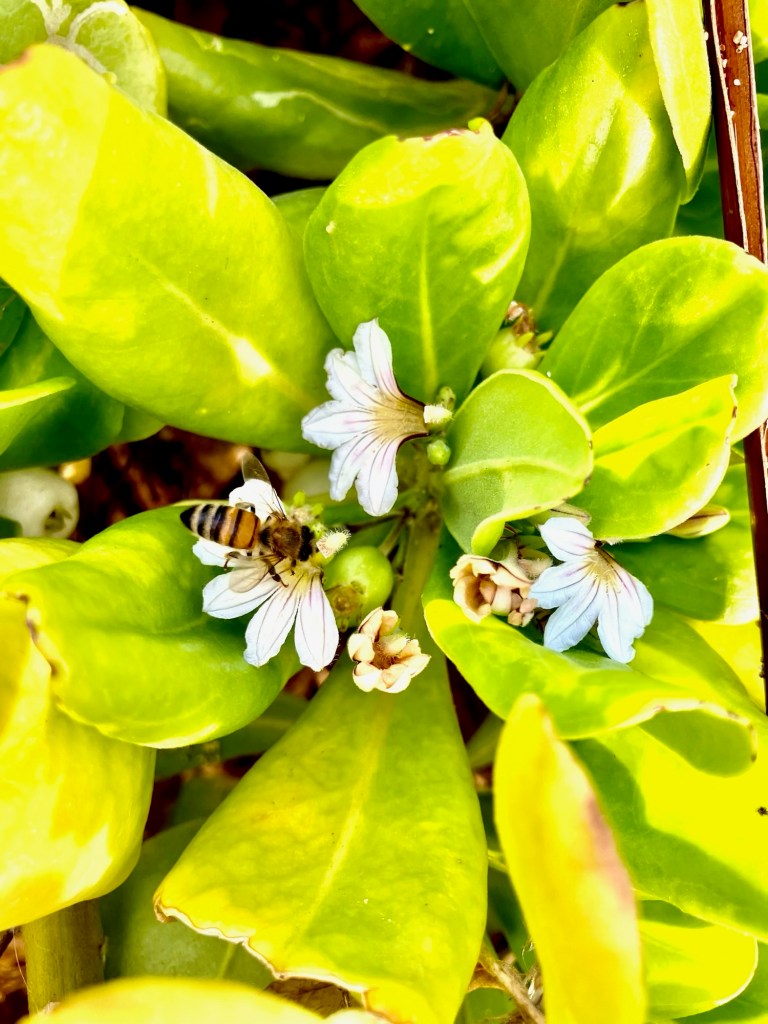
Naupaka is such a simple and elegant native Hawaiian plant to grow in beach gardens, xeriscapes, and to nurture in the wild.
It makes a great hedge, or specimen plant. It protects our coast and holds onto the sand. You can also grow it in large pots.
Naupaka is a less thirsty plant, perfect for your xeriscape garden. It is also salt and wind tolerant.
Grow it from seeds or cuttings or buy some potted ones and support your favorite local nursery.
Strategic landscape designed naupaka hedges can protect beach homes from the strong ehukai, salty winds.
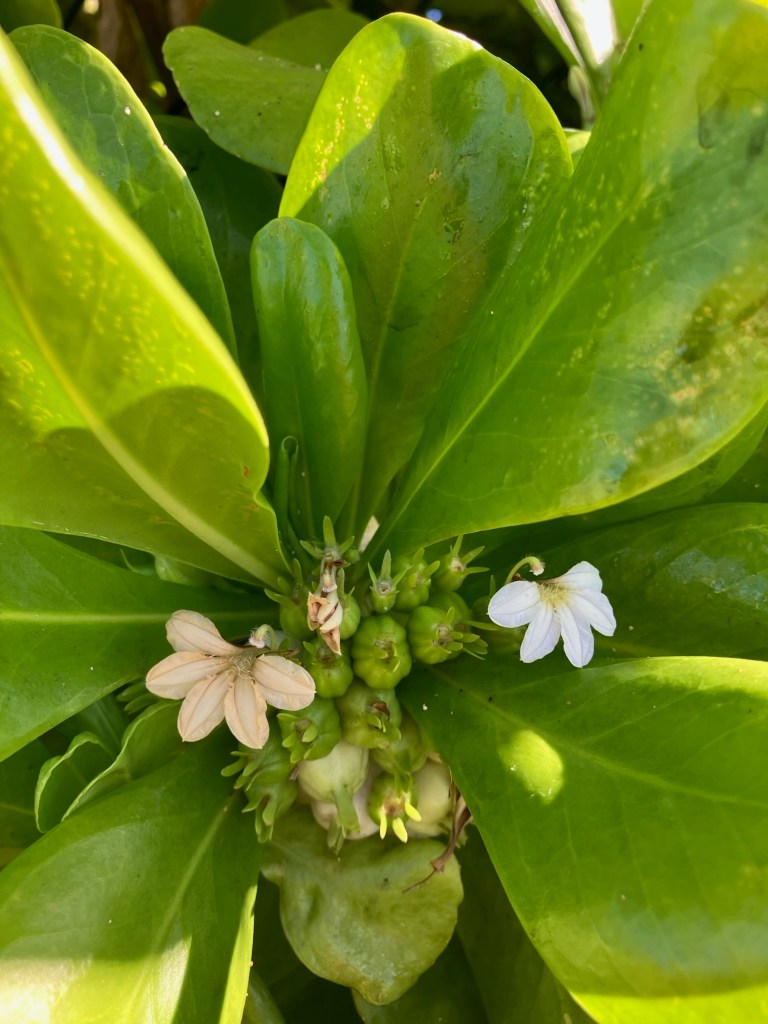
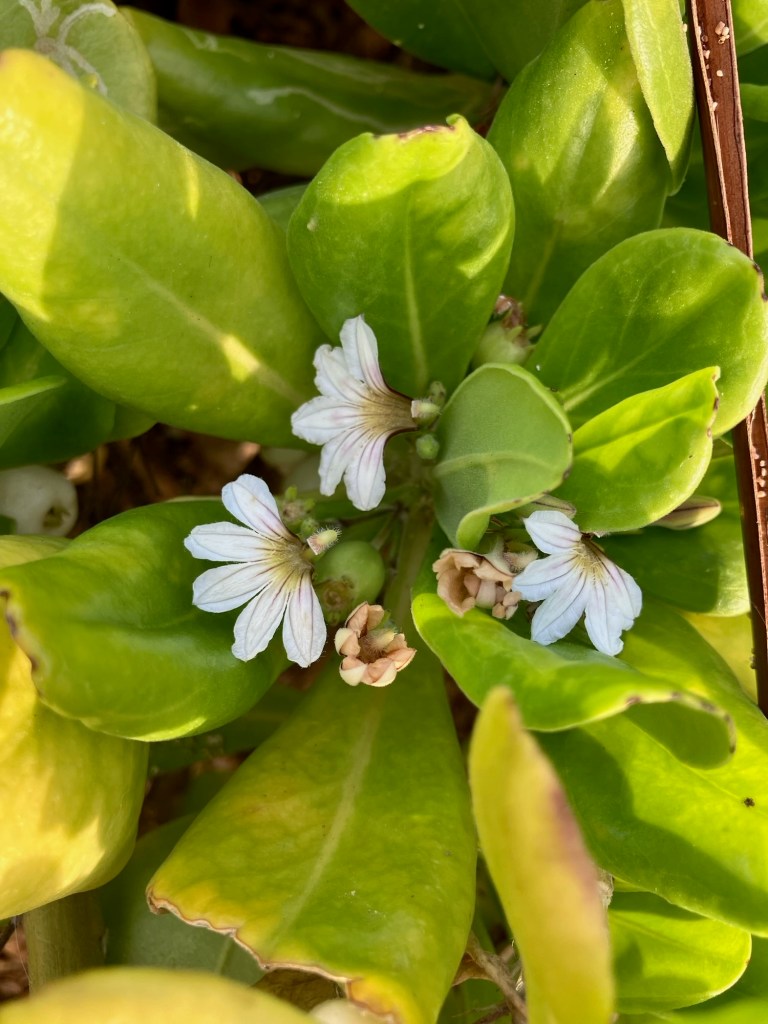
It is beautiful with its soft green leaves and half flowers which are white with a hint of purple. White fruit follow the flowers.
Beach Naupaka, Naupaka kahakai is known as Scaevola taccada to scientists.
It is an indigenous Hawaiian plant, which means it got here on its own, but it grows in other tropical areas too.
We also have native endemic species of Scaevola, Naupaka kuahiwi that inhabit our uplands. They too have a half flower, which features in Hawaiian love legends.
It is the easiest plant to care for if we keep it simple:
• Minimal water once established.
• No fertilizer.
• Keep turf grass away from the root zone.
• Minimal trimming, and only by hand.
As with many of our native Hawaiian plants, modern ‘mow blow and go’ landscape techniques do not agree with naupaka.
The worst is gas powered hedge trimmers, this will mutilate naupaka. Do minimal trimming and shaping with hand clippers or loppers.
Do not TOP naupaka. Prune carefully, and minimally and only when you are in a good mood.
Topping is where you mindlessly cut trees or plants.
The new growth is soft, and the older branches are very woody and tough.
Power equipment trimming shakes up the roots and then makes the branches grow too dense, making habitat for insect and disease pests.
Turf grass should be physically separated from the Naupaka planting area. Use a nice stone, coral, or brick edging to keep grass and naupaka separated.
Hand weed out any invading grass. Grass will compete and rob water, nutrients, light and space from the naupaka.
An edge also makes it easier to mow the lawn.
Thoughtful Landscape design and old fashioned garden maintenance will help you keep your naupaka thriving and Beautiful, as nature designed.
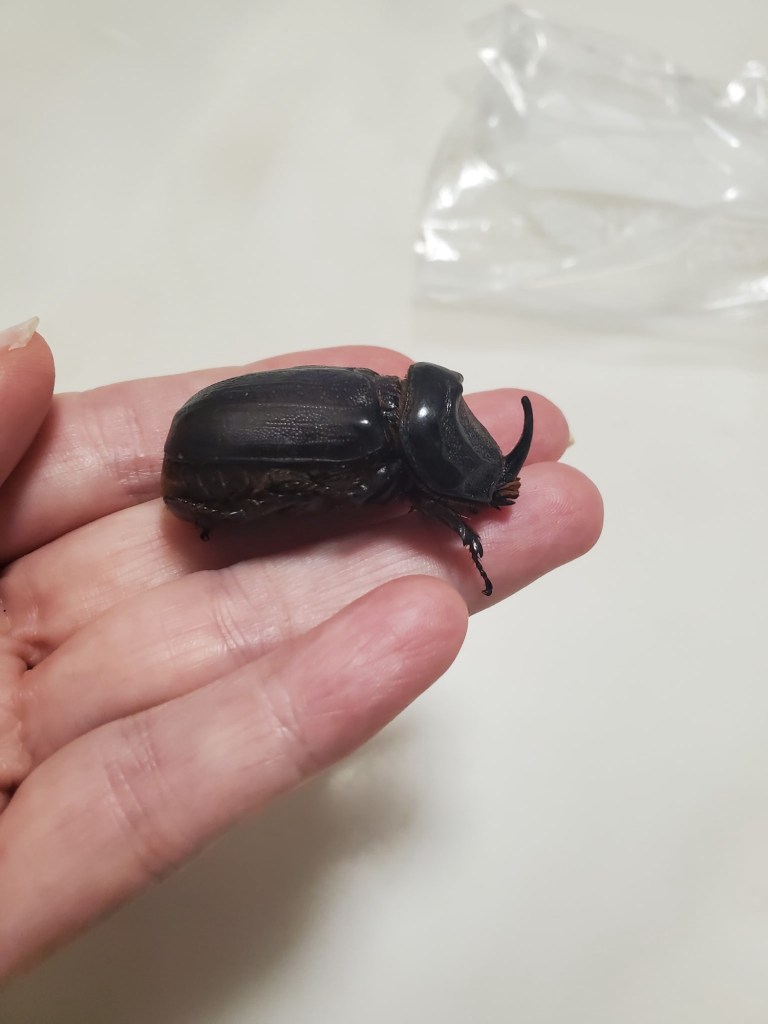
Alien Coconut Rhinoceros Beetles are currently Endangering our Niu (coconut palms), native Hawaiian Loulu palms, hala, banana and more.
Coconut Rhinoceros Beetle
This is an existential threat, not only for beauty, but for life.
Without Niu we may starve.
Imagine Hawaii with no Niu.
Coconut Rhinoceros beetles (CRB) are a serious alien pest. We really need to take this problem seriously and attack / control them on all fronts.
For years, At Every Arborist and landscape conference, we were warned about these chunky hungry beetles and warned to KAPU !! keep them out of Hawaii.
CRB are Major and serious pests in other places such as Polynesia and overall world tropics.
Now they have spread from a Navy site in 2013, to the west side, devastating the north shore and Waialua. They are bad in Waimanalo.
I was at Wahiawa Botanic Garden recently and so devastated to see all of our native Loulu palms being munched and destroyed. This upland Botanic Garden has a collection of rare Loulu palms (CRB love our native Loulu palms even more than Niu or coconuts). They also attack Royal palms.
(We have the famous ET grove of Royals, on Royal palm drive in Wahiawa.)
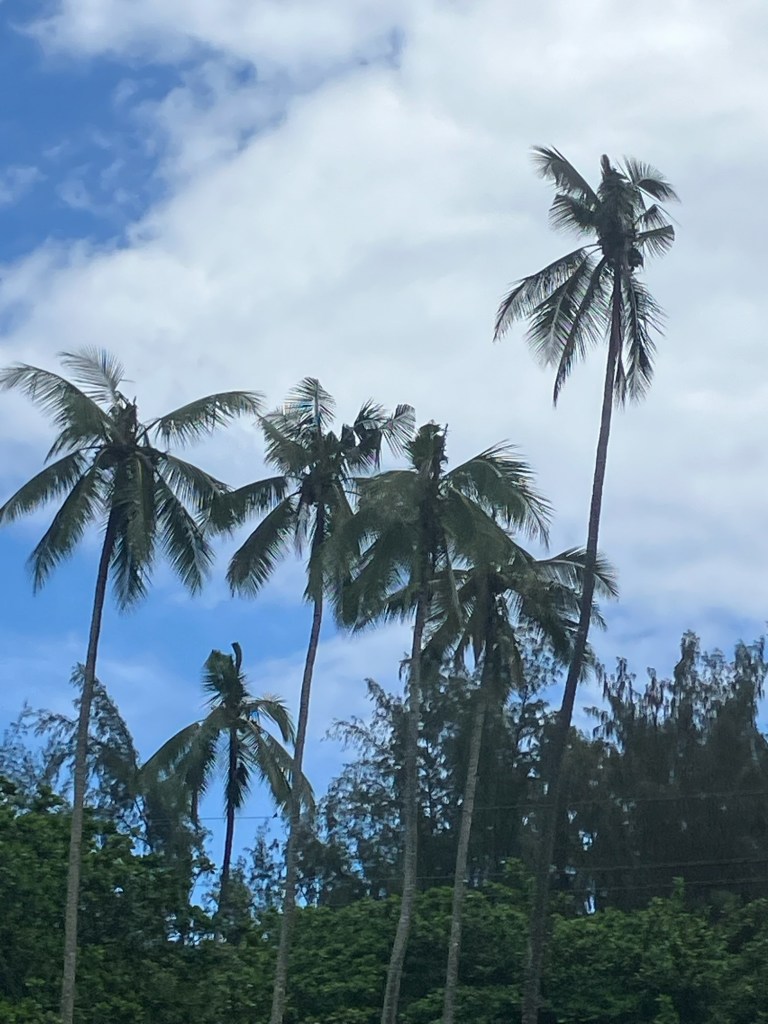
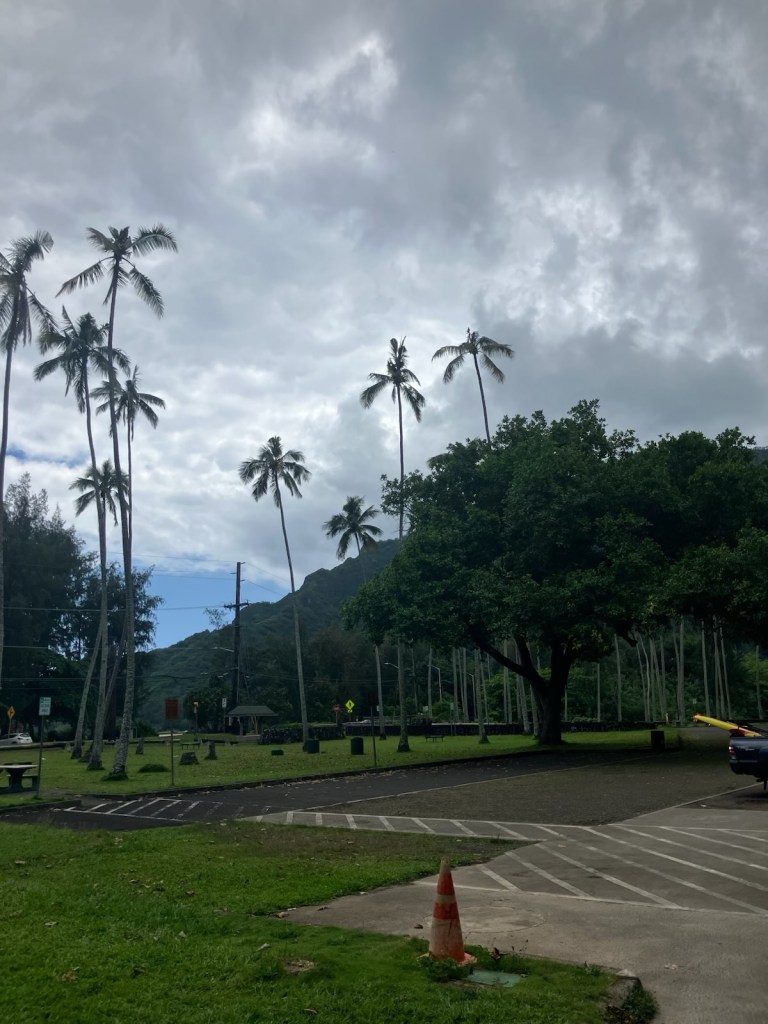
Auwe! we stopped at Kahana state park, where the precious Niu of Mary Mikahala Robinson Foster grow tall and graceful, said to be some of the best nuts for eating and drinking.
Coconuts at Kahana state park, attacked by CRB
I sadly observed the classic cut out fronds, characteristic of CRB feeding on new vulnerable growth. These Niu are iconic and getting munched to death, as I write this.
Coconuts at Kahana state park, attacked by CRB
We need to get everyone to pay attention and help with control. Our Governor Green and Mayor need to get behind these efforts: Education and control.
Neighbor islands are getting hit with CRB too.
Know the life cycle, they spend the bulk of their life feeding on and in, rotting vegetation, compost piles and the like.
It should be on the News every night, along with other crimes affecting Hawaii.
Here are some of the immediate steps we can all take:
No mulch piles
No dead stumps
Netting
Traps with lights and netting
Public awareness and education
Government support and action
Search for Biocontrol
Education
Chemical treatment to save Coconut palms (Must label as treated, and cut off any flower and fruit on treated palms!) A high lift or skilled coconut climber is key for this.
Everybody’s dog, chickens and pigs can find and eat the grubs.
A Gourmet opportunity for an innovative local chef?
Nui/Coconut, Cocos nucifera is the Tree of life for Hawaiians, do we really appreciate and treasure Niu in Hawaii as well as we could?
Can you imagine Hawaii with no Coconuts? CRB also attack Hala, Loulu palms, banana and more.
Let’s get together and scientifically, attack this pest.
Netting all around the vulnerable crown of the palm. Netting of mulch piles. Nets with Lights
As my friend Mari Zane says Ho! Beneficial use for those illegal gill nets! (Her Loulu and Niu on the north shore were early casualties, but there is hope for the shorter ones.)
Wrap the nets around the crown. The nets will get the ones inside coming out of the bore holes, and get any on their way in.
Contemporary Landscaping, a nursery in Waimanalo, uses a low net about four feet tall, lit at night. This attracts and captures beetles.
Trapped beetles attract more beetles to the light, and a chance for more control.
Brown Cannon made a trap using a netted Hula hoop and is capturing them out in Waialua. He sets this hula hoop net (great recycling!) over a barrel of woody mulch.
We can all get smart and do our part!
Just when Hawaiian gardeners, City parks folks and landscapers were convinced to wisely use mulch, we find that mulch piles are endangering NIU.
CRB grubs love rotting vegetation and spend most of their life there.
We can have mulch piles and mulch dishes if we are akamai.
Turn the mulch frequently disrupting the grubs.
HOT mulch will help to kill them.
Turn your mulch and have animal helpers, keiki or your arborist ready to spot and capture the grubs.
(Dogs, pigs and chickens can be trained to eat the grubs of CRB)
Mulch and green waste piles are perfect habitat for these alien pests and their voracious grubs.
Hot mulch is OK: turn it and burn it!
Or spread mulch and compost thinly. Water it and look for CRB grubs.
As always water and nurture your palms, keep them as healthy as possible.
Let’s work together to protect and save this vital part of Hawaii. !!!
Aloha Hawai`i Gardeners: are we ready to plant and nurture a miniature forest Revolution?
I have wanted to learn about the Miyawaki method for a while. Thanks to generous friends: Chirstine and Pokey, I got my hands on one of the books about the Miyawaki miniature forest method, and plunged in.
The book I just read is called, “Miniature Forest Revolution”, by Hannah Lewis.
Developed in Japan and now spread around the world this is a new and akamai way of forest restoration.
Dr Akira Miyawaki was a Botanist, ecologist, and researcher. He networked with others in Japan and around the world to plant mini climax forests and nurture them.
I have advocated for years, to simply plant a tree, nurture a garden, keep one plant alive, Volunteer at a garden. Go hiking, learn about our Hawaiian forest. Nurture our Hawaiian forests and learn more.
Learn about and nurture our living soils.
This is a new way to do it and is very inspiring.
Trees and forests really do heal our land. Compost really does work. Watersheds can be restored by the forest. Healthy forests of multi layers cover the soil and nourish it.
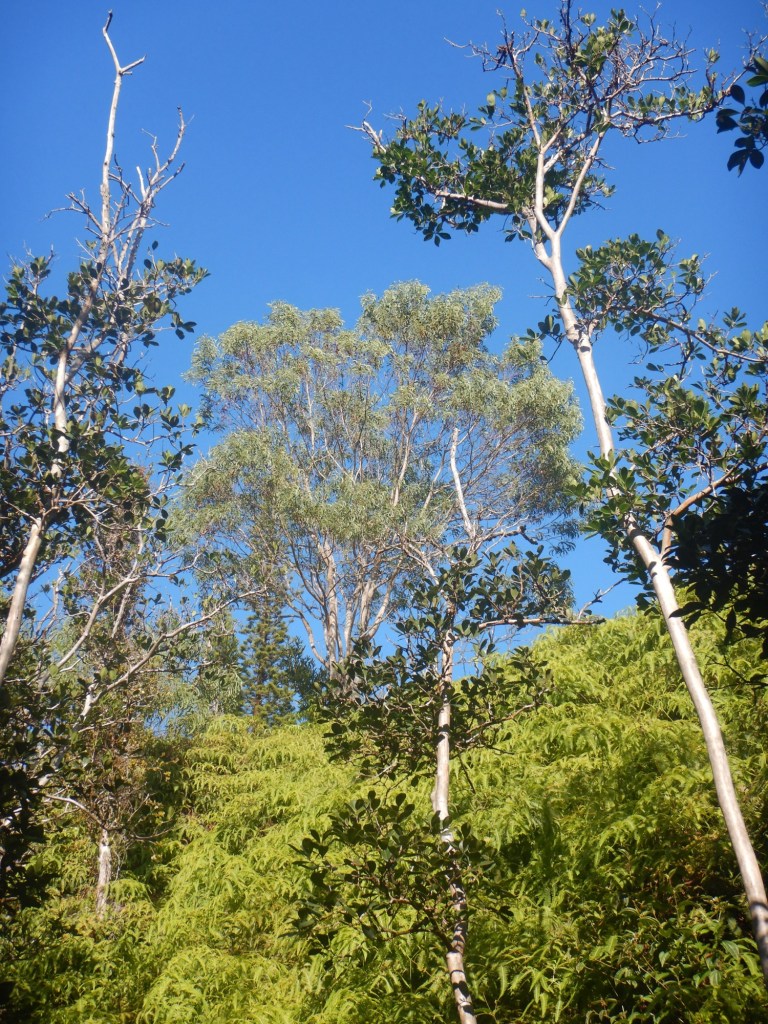
Koa tree and Uluhe ferns
With plants covering soil and adding their leaves to the living soil mix, we have less runoff when it rains.
We like to keep soil alive and where it belongs: on Land
When soil washes into the ocean after heavy rains we have fresh water killing the reef and silt and mud smothering the reef, clouding the water and adversely affecting fish, honu and all the saltwater living life forms.
Healthy forests funnel rainwater down into the ground enhancing our water sources.
There are so many benefits.
To follow the Miyawaki method you get rid of grass and weeds and plant climax species really close together like how they occur in nature.
(Koa and `Ohi`a lehua trees are two Climax species that we do now know how to nurture and grow)
Soil preparation is key. Get rid of weeds and grass and mix in compost. Lots of compost and organic matter gets incorporated into the original soil. Drainage is also very important.
Adding mycorrhizae or native soil from a healthy forest area might be advisable.
Soil tests help determine what soil type and fertility you have.
After all this planning and preparation, the fun begins: Planting the forest.
The plant mix is trees, shrubs, ferns and ground covers, throw in some vines. A different plant mix would be suitable for various soil types, rainfall amounts and elevation. We have so many microclimates and soil types in Hawai`i.
Elevation is a very important consideration for growing native Hawaiian plants.
For example, Koa seeds collected at 5000 feet on the richly soiled flanks of Mauna loa, would probably not thrive in Kapi’olani park. It is partly soil (they do not like sandy salty soil), but even more it’s elevation. Cool night temperatures and other factors
Often lowland plants can grow at higher elevations, but high elevation plants struggle and lower, hotter elevations.
For the first few years you tend the forest, watering, and weeding. The book says you do this for three years. Maybe in Hawaii we need to tend to it longer with watering and weeding and adding to the mulch beds.
Then it can basically care for itself but it’s still good to do some nurturing.
That is what horticulture is: Close monitoring, observation, and careful tending of your plants.
Like in a natural forest, leave the leaves. They nurture the soil.
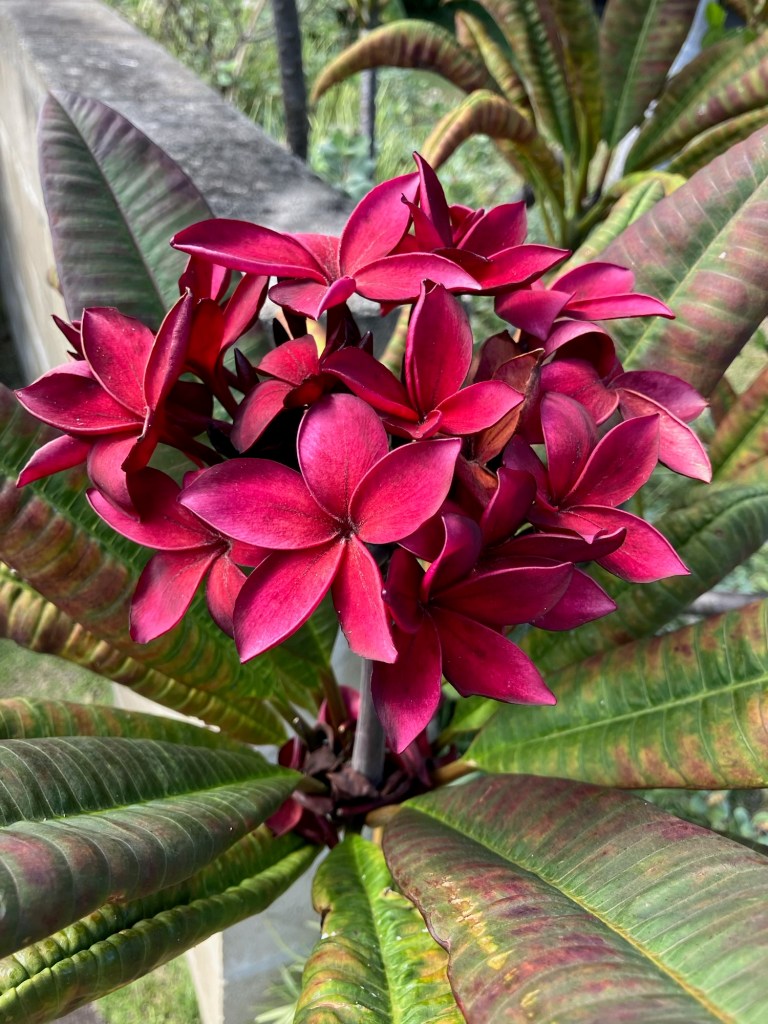
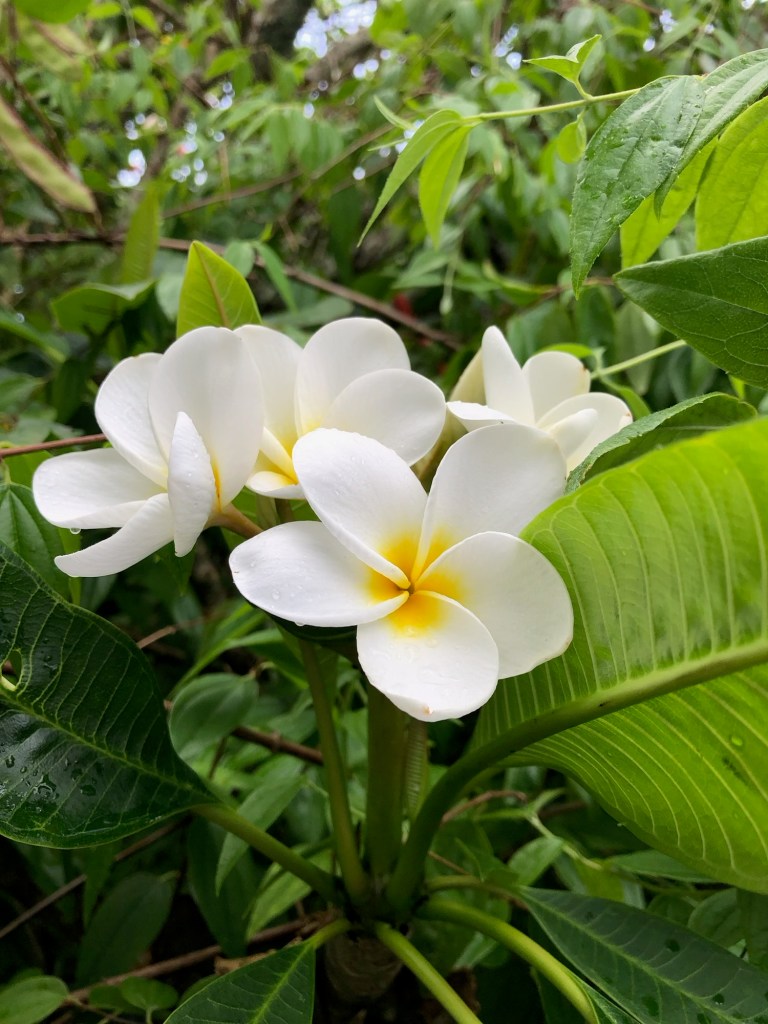
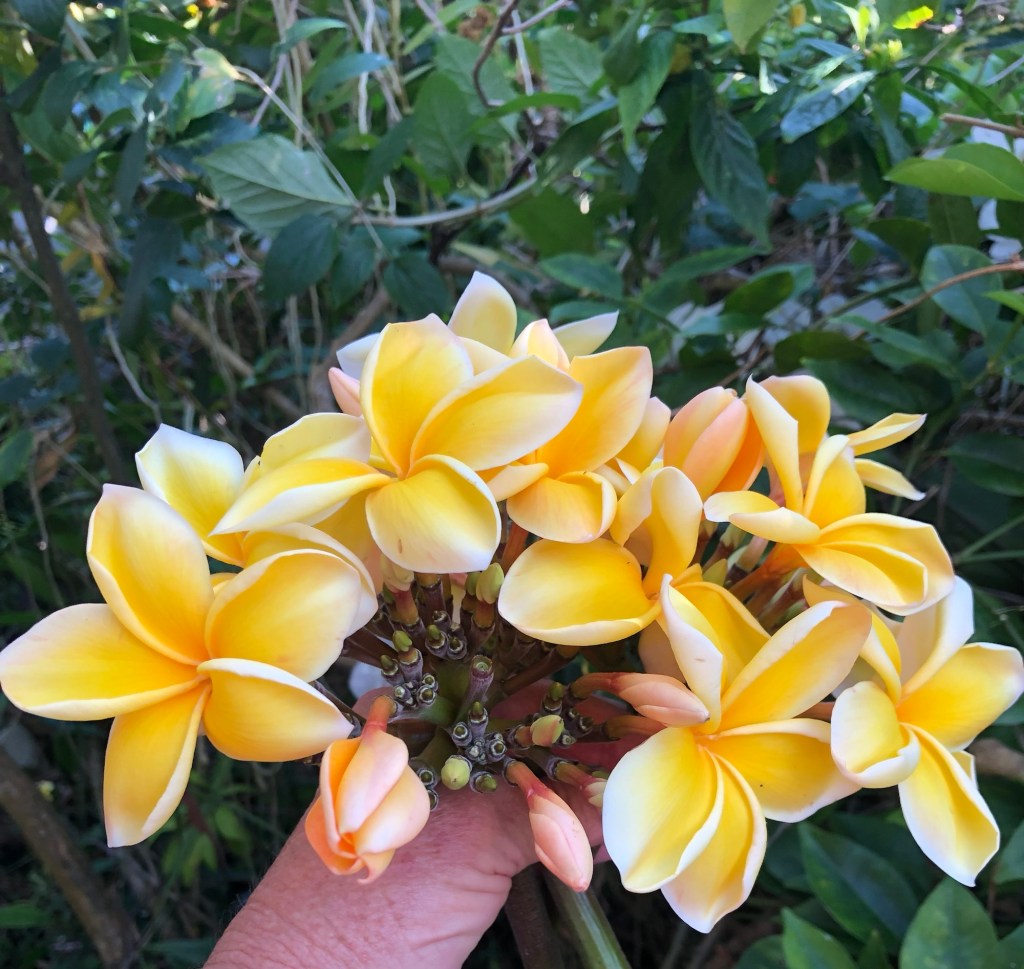
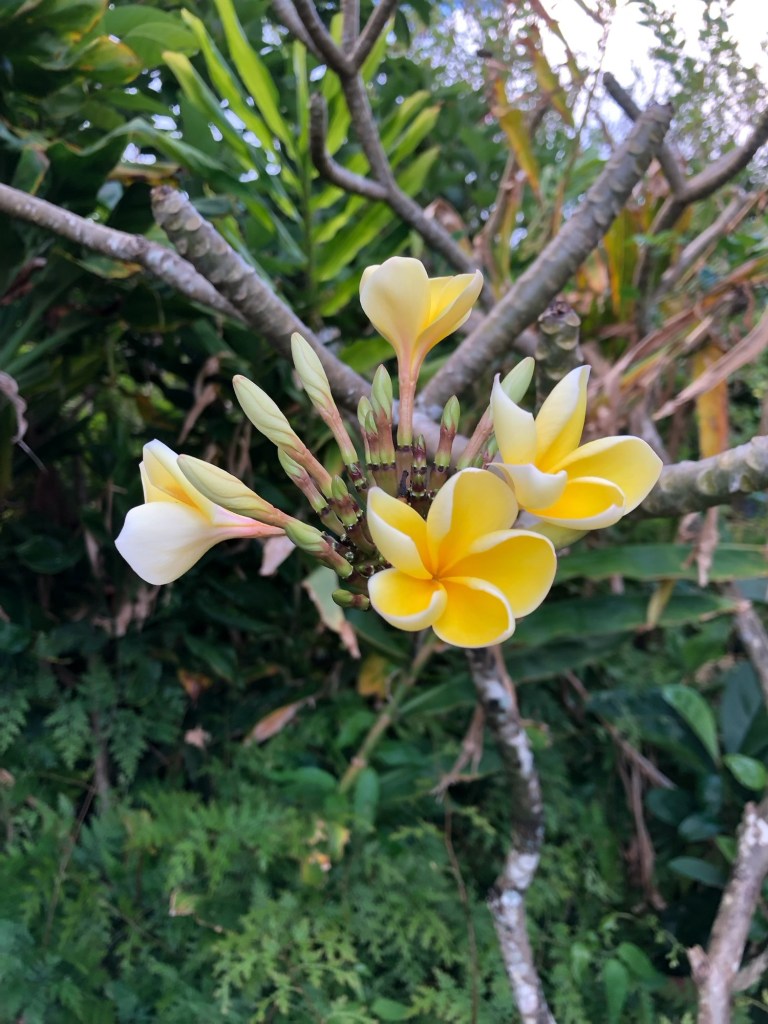
My tita, Mimi, was incensed when two women drove up and just helped themselves to her Plumeria flowers. This was not casual ‘one for my hair, one for my sister’s hair,’ but full on taking of a lot of blossoms, she said they even had fancy flower picking baskets!
When she confronted them, they said they thought it was ok because the tree was adjacent to the street. After a bit of discussion, they told her that if she didn’t want anyone to pick the flowers, she should put up a sign.
A few days later a neighbor she casually knew came up the street, reminded her that our mother and her grandmother had been friends and nicely asked if she could pick some flowers so she could make a lei. Mimi invited her into the yard and happily shared the pua.
She explained the ones on the inside are nicer and less sun and wind burnt. As they chatted Mimi went and picked a bag of her famous Tahitian limes to give to the neighbor.
What a difference! We love to share if asked nicely.
I remember back when we lived up Wahiawa, I heard some noises and came outside. There was a man, instructing his kid to not only pick my front flowers, but also to CUT some pink gingers.
Without thinking too much (gotta be careful these flower thieves know where you live!) Tita mode came out and I chastised the man, saying my flowers were not just randomly growing and teaching his kid to steal flowers is not pono!
On another occasion I heard some women admiring my Madeira, Portuguese roses, they were so nice that I carefully clipped them a bouquet, and shared propagation advice. We all became friends because they asked nicely when admiring my flowers.
Gardeners and Horticulturists love to share and talk story with fellow plant lovers.
One thing I always knew, which was reinforced when I worked at Foster Botanic Gardens and Honolulu Botanical gardens, is to share plants and to keep records of garden specimens.
With good records if you lose a plant, your plant friends or cooperating botanic garden will have backup. It can be as simple as a note on a calendar, or full on in your garden diary.
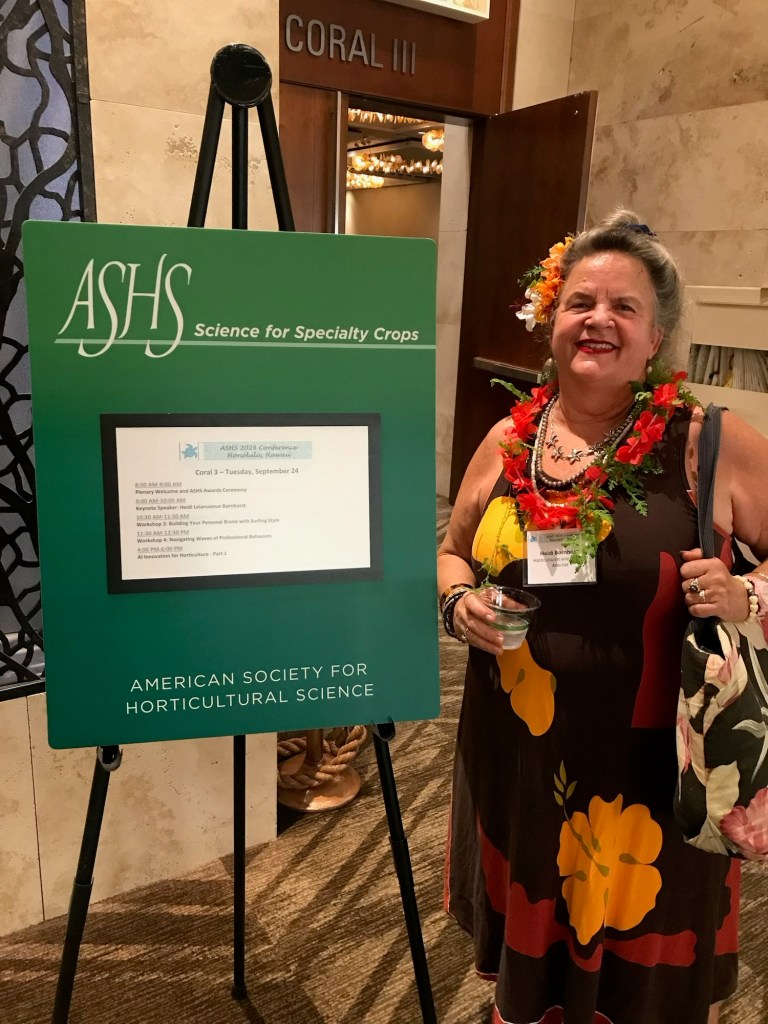
A prestigious Horticulture group is coming to Hawaii for a weeklong conference.
The American Society for Horticulture Science will be here on Oahu for a week long conference beginning Monday September 23, 2024, closing on Friday September 27.
Over one thousand attendees are signed up and registration is still open. (1067) at last count.
This is great for Hawaii gardeners, Horticulturists, Botanists, and plant scientists.
The conference will be held at the Hilton HawaiianVillage hotel, right on the beach in beautiful Waikiki.
Renowned for its extensive gardens, featuring many native Hawaiian plants, along with canoe plants and tropical exotics, it is a great venue for these plant loving scientists to enjoy.
The Hilton is also right next to the Hale Koa Hotel (where I served for over 10 years as Landscape Director).
The extensive landscaped grounds of the Hale Koa were designed as a botanical garden and the plantings there are very impressive and worth a stroll.
There are many wonderful gardens in Waikiki, amidst all of the hotels and high-rises.
I was very honored to be invited to be the keynote speaker for this conference and I plan to be talking about my favorite: Growing native Hawaiian plants.
There are over one thousand native Hawaiian plant species, and we now are growing about 100 of these Hawaiian plant species. We can grow more!
We have 1367 native Hawaiian plant species. Over 90% of them are endemic, meaning they only grow naturally here in Hawaii. About 9% of them are extinct, and many are rare and endangered.
Some are common and easy to grow, and we see them all around. Examples are: Hala, beach naupaka, `ilima, Hapu`u or Hawaiian tree ferns, and Kou and Milo trees.
Other native plants are less common in our gardens and landscape, but horticulturists are working to change that.
My friend, Dr. Mike Opgenorth, who is the Director of Kahanu Botanic Garden in Hana, Maui will be speaking on Thursday about his PhD work on our endangered native Hawaiian Gardenias
Many more students and graduate student at the U.H. are studying how to grow and perpetuate native Hawaiian plants.
The landscape or “Green industry” here in Hawaii is doing the groundwork with native plants.
Home gardens now feature native Hawaiian plants especially those loved by lei makers such as `Ohi`a lehua, `ilima, Palapalai and Pala`a ferns, and our native fragrant Hawaiian white Hibiscus, Koki`o ke`o ke`o.
Our public parks and urban forests are growing more native plants too.
Ren MacDonald-Balasia of RENKO did a Floral demo with the GCH on Wed March 13, 2024.
She likes to use wild, weird and foraged florals, and rare, strange fruit from gardens or Chinatown.
RENKO Floral dragon
This was such an inspiration! We can all gather florals and foliage from our own gardens, from friends and even from wild weeds. Weeds can be beautiful.
We don’t have to import florals. Imported materials have a Carbon footprint big time. They also can be the source of harmful alien pests and diseases.
Many imported florals (e.g. roses without perfume) can last a long time, yet they are substantially dosed with chemical poisons insecticides and fungicides. Since they are not a food crop, they are not heavily regulated.
Some countries which grow imported florals don’t have the chemical safety regulations that we do, and this poisons the growers and us the consumers.
Read the Book Floral Confidential, if you really want to be informed (and Scared!) by this overuse of toxic chemicals.
And as we say: Buy Local! Or even better, Forage Locally. Glean from Local gardens.
The Floral event was at the Halekulani, and I invited my siter Mimi Bornhorst Gaddis.
As we were getting ready to go, my honey Clark Leavitt said, ‘set me up with a lei needle?’
He had gone on the roof and foraged for pua keni keni. So romantic. Our anniversary was the day before and he took his nephew Mark to lunch at Kailua Nico’s.
Mimi and I used the valet service at the Halekulani and walked through the flower filled lobby.
Two women were sitting in an alcove stringing Blue jade lei. “Wow kewl Blue jade!’ I remarked as we walked by (it turned out that these women were our speaker and her helper!)
We went to check in at the Garden Club desk, and as there was no usual flowers on second floor lobby, we walked around.
There was a woman sitting on a bench. Mimi and I introduced out selves and I gave her a tiare li`I li`i.
Her name was Pam and turns out she’s Ren’s mother, just home to care for her 97-year-oldmother who was a journalist for the star Bulletin.
The first AJA writer in Hawaii!
Soon the floral fun begins.
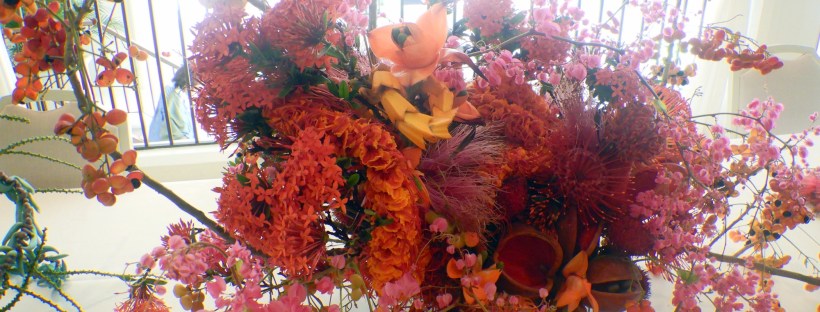
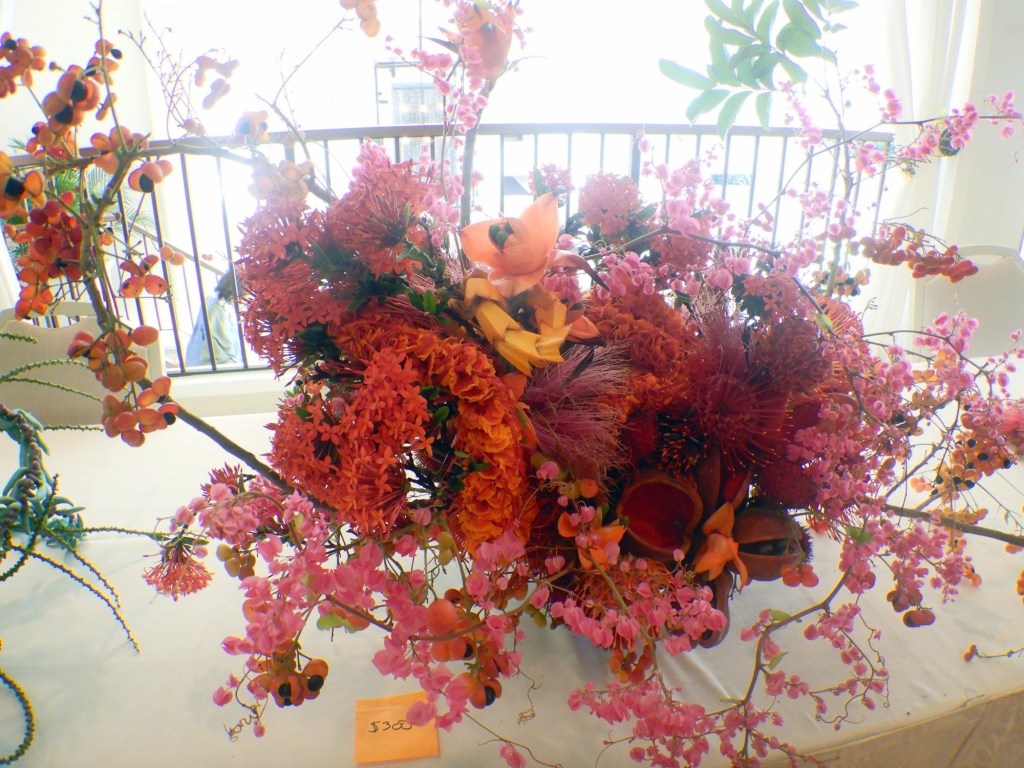
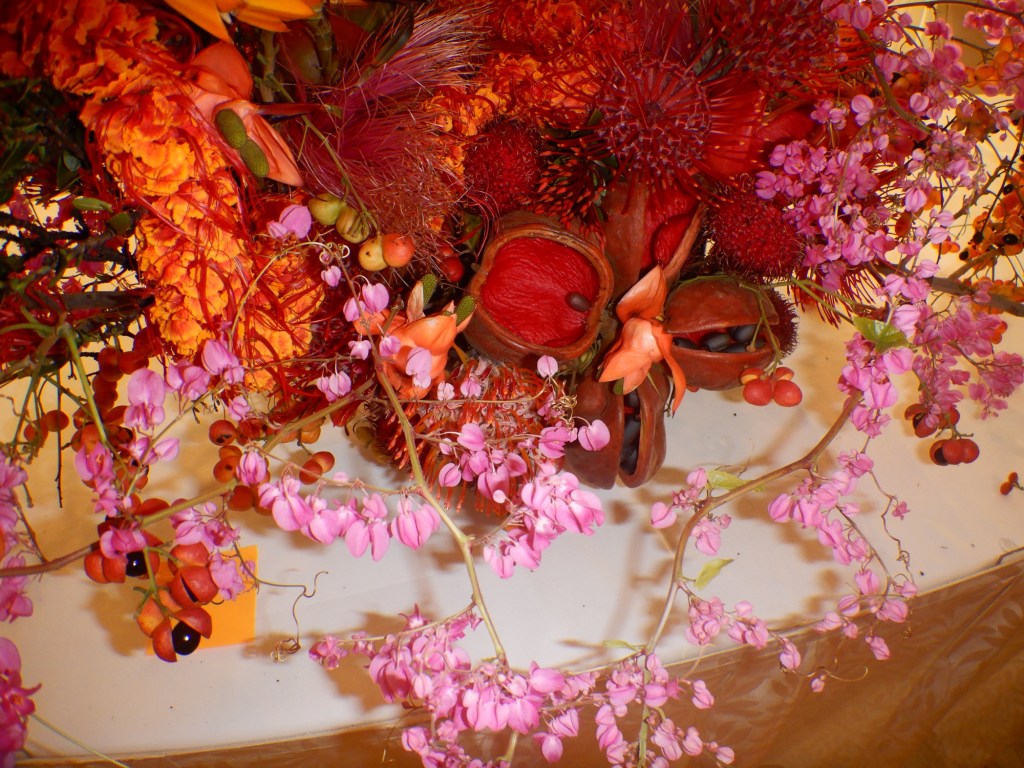
The first arrangement is in a wide tall bowl. She puts in what she called sea tamarind. We were in back and it was hard to see but I’m thinking that doesn’t look like tamarind. I kept trying to figure out what the orange bouncy floral might be. (Turnsout Harpulia, a common street tree in the Lychee family, Sapindaceae.
sterculia Mexican creeper lei Ohai Ali`i Harpulia AKA sea tamarind
She anchors the branches into folded up chicken wire set in the bowl. (Oasis is environmentally out. Mimi and I both have some stashed, just in case)
She then added Sterculia, Skunk tree pods, these are heavy and help to weight the other materials down.
Ixora is added. We got these at a gas station, Ren remarks.
Mexican creeper, which used to grow in our Makiki garden is draped all around. She calls it coral vine.
Bombax or shaving brush tree flowers like big puffs of pink added to the flora mix, next the lei she bought at Cindy’s Lei in Chinatown are added, ohai alii and a golden hala. She cuts and drapes and winds them into the arrangement.
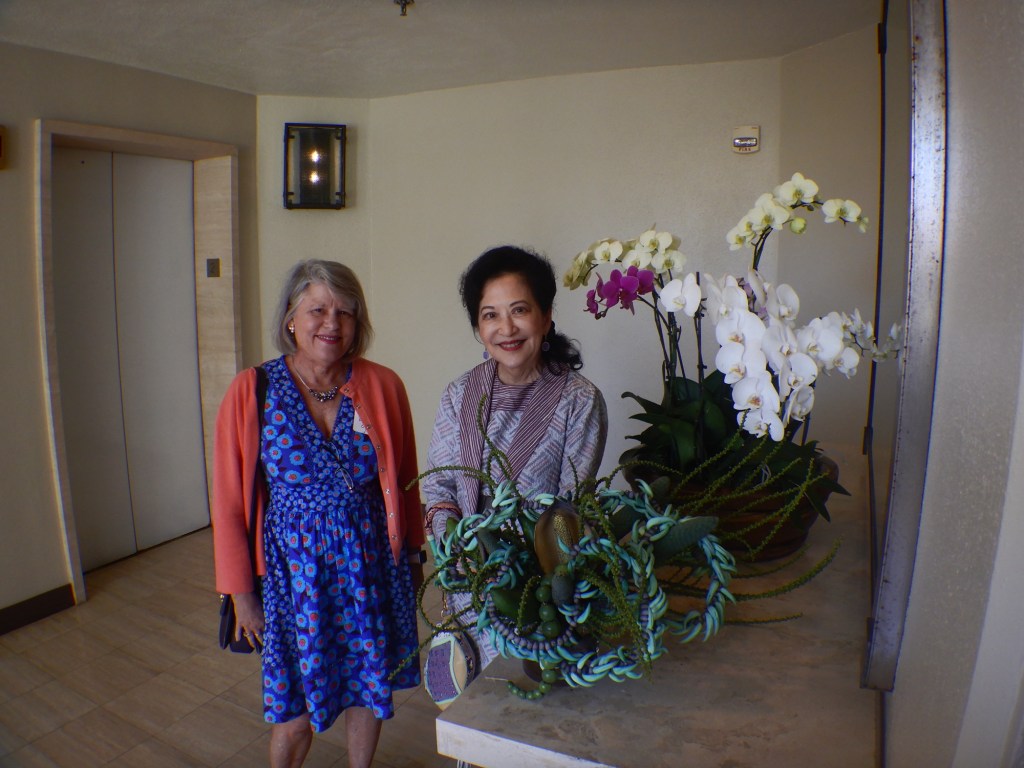
Blue jade lei were added and draped over the arrangement. Such a lovely seasonal Spring beauty from Hawaii gardens!
blue jade and tita Mimi
She scouted for wonderful and strange fruit in Chinatown markets:
Fruiting Clusters of Longan, rambutan and Salak palm. Mimi said that they call it SALAT in SE Asia and it’s really ono. Pretty and scaly in an arrangement.
She had some nice blooming orchid plants that she bought from Kawamoto orchids in Palolo Valley. We kind of gasped when she cut the floral stems and put them in the arrangement. (they would last for a month or more on the plant). But this is what florists do for that wonderful Ephemeral special occasion.
CONSERVATION: instead of imported, chemically laden treated florals these were gathered in gardens in wild places and in local lei shops.
Such a good message we can get so much from our own Hawaii GARDENS!
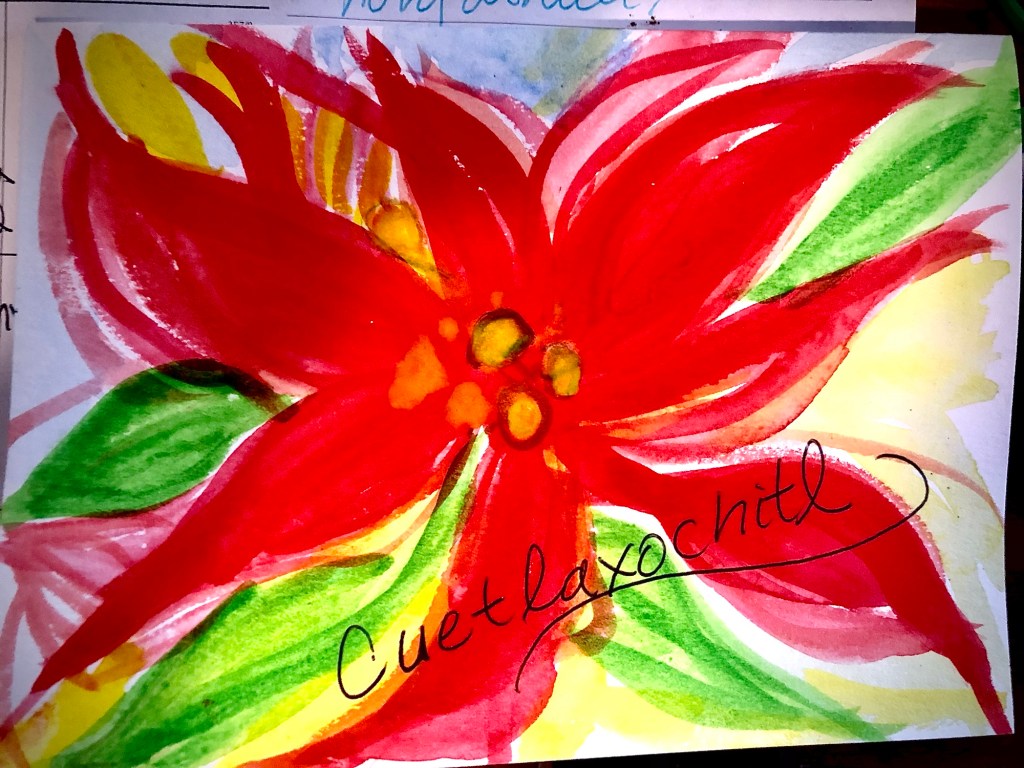
The first time I saw the real native name, I went no, WAY too hard to say! But learning to spell Latin names is not that much easier. So maybe we should practice using the real name.
Break it down and it’s easier to say. Write it and your brain will remember it.
It is pronounced: Kwet La sho Chel
Sing it! Let’s try and remember and use it.
Just like we respectfully use, and properly pronounce ohelo Hawai’i words, we probably shouldlearn to use the real name.
Not only is it a seasonal festive plant for us (and a big production for our nursery growers), starting in Hawaii about June with little plugs, it is a very special and significant plant in its native Mexico and Central America.
Red is original color, and many new variations now exist. I like the new colors for their novelty, but the rich red is so seasonal and joyous.
In Mexico they were symbolic and were also used for medicine (A special recipe induced breast milk). they are not as poisonous as some rumors suggest. Red and purple fabric dyes come from the colorful. bracts.
The “flowers” we see so brightly are actually bracts, modified leaves. The true flowers are yellow and green and are nestled in the center of the bracts.
For the past few years, I have been buying them from the UH Manoa Horticulture club, to help support and encourage students in the fine art of intensely growing and studying plants.
I love going up to Manoa to buy them and then sharing this growing gift with family, friends, and neighbors.
We also have the old-fashioned hedge type of Cuetlaxochitl in some Hawaii gardens. They are becoming a more rare plant to see. In Foster Village, where my husband grew up, we’d love to see all the pretty tall plants growing in gardens as we drove out to visit his folks. A particular house had green walls and it was so striking to see the plants growing there.
If you see one like this, you might ask the gardener for a cutting to grow. This is not among varieties growers produce today. This hedge type one is more of a perennial and will grow and bloom every year.
Who remembers the old hedge that the Board of Water supply grew along the Pali Highway in Nuuanu?
For many of us this was the true sign of the season.
These seasonal flowers can last for months if you treat them right. They like light but not baking sunlight. Water them about once a week. Take off any decorative foil. Fill the pot with water and let it drain all the way out. Then put it back with your other Holiday decorations. They may last and stay red all the way to April!
An old gardener trick is to trim them back in the A months, April, and August. This holds true more for the hedge type.
Although I keep them alive a full year, these newer cultivars don’t look great. Nurseries use all kinds of special fertilizer and lighting to get them looking so pretty and perfect.




 Heidi Bornhorst