Dear Governor Ige, Famers, and back yard gardeners, do you want to increase local Healthy food production? Eat more nutritious locally grown safe food? Breadfruit is one of the best solutions for sustainable Food security, better health, and natural beauty.
Breadfruit aka`Ulu is a beautiful tree with great Cultural significance here in Hawaii, and across the Pacific. Hawaiians and many other local cultures have a long tradition (including varied recipes and preservation techniques) with breadfruit.
`Ulu has many
healthy body benefits, it is rich in fiber, calcium, potassium, B vitamins, and pro-vitamin A carotenoids. It is a “resistant starch”, it does not spike your blood sugar like white rice or white potatoes. If more people ate breadfruit we would cut down on diabetes and other health issues related to refined starch and high sugar diet.
When people tell me they don’t like the taste, I figure they have not had it properly cooked, or it was picked at the wrong time – too green or too ripe. Yes, the over ripe smashed on the ground ones from an over tall non-pruned tree, are not too ono!
As a Certified Arborist, I recommend keeping backyard trees at a medium height for safe and easy harvesting via careful pruning starting after the first harvest (about three to five years in the ground).
If you have a farm, and a tree climber or cherry picker you can let the tree grow larger, but keep in mind, well-managed trees are far more productive.
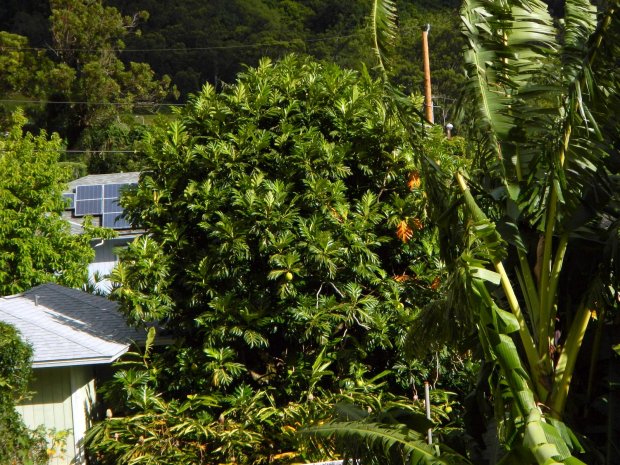
Ulu is a beautiful and simple tree to grow, harvest and care for. It’s easier to grow, harvest and cook than kalo (taro). There is no need to dig up and replant like root and tuber crops. `Ulu are highly regarded as pest and disease resistant, especially when grown in mixed plantings with other crops and useful plants.
For a number of years I have worked with and learned from Dr. Diane Ragone of the Breadfruit Institute (BFI) of the National Tropical Botanical Garden (NTBG). We have given away over 12,000 keiki trees here in Hawaii and sponsored numerous breadfruit cooking contests. Our local participating chefs and gourmets are so talented and creative.
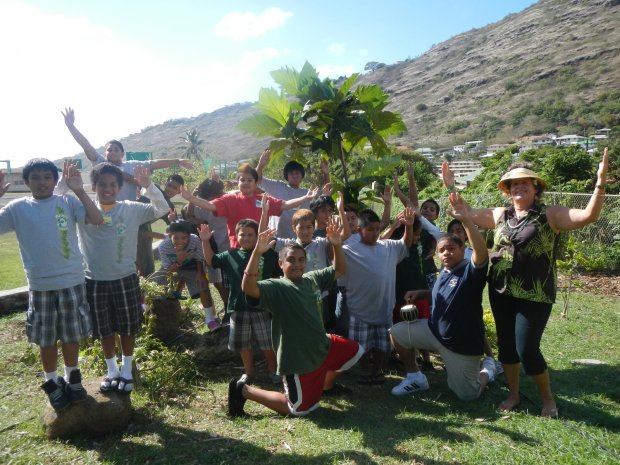
Chef Sam Choy is one of our amazing and totally giving back to the community Chefs. For such a famous chef he is so humble, hard-working and just plain fun to partner with. We did the Wai’anae Eat Local Food Challenge, cook off and Breadfruit tree give away with him, Ragone, the Ho’oulu ka ‘Ulu project, and other community partners.
I have participated in numerous Arbor Day breadfruit tree giveaways over the years, these can be like a feeding frenzy, everybody wants a free tree. Unfortunately not everyone who took a tree actually planted it.
Because our precious `ulu trees are propagated by tissue culture, we decided to make the process of getting one similar to adoption, hoping to attract people committed to and able to grow the trees. We asked people to promise to plant them in the ground within a few months, this gives the family time to make a decision about where in plant and to properly prepare the planting puka (clear away grass and weeds and use compost or stone mulching to make a clear area for the baby tree to thrive).
We utilize social media by sharing pictures and posts to reflect how well the keiki ulu trees are growing and producing healthy ono food.
Mahalo for all those who adopted a tree, keep sharing your feedback and great posts!
Helpful Growing Tips
How to plant:
- Find a sunny spot away from wires
- Clear away grass and weeds
- Use hot mulch to help kill off the grass and weeds
- Plant the keiki tree
- Make a ring of mulch
- Water daily to establish
- Replenish the mulch every few month
How to cook:
- Harvest at mature firm green stage
- Gently scrub and clean the skin (no need to peel)
- Oil a big sharp knife
- Slice ‘ulu into quarters
- Steam for 20 minutes (or until fork tender)
- Cool and freeze for future use
Or you can cook to your own liking, I make a simple curry with sautéed onions, garlic and Olena (turmeric).
Please check out the Breadfruit institute page on-line to learn even more about planting, harvesting cooking and the various varieties of ulu that we can grow here in Hawaii.
If you received a tree, please participate in our survey to let us know how your tree is doing.
You can also visit NTBG, they have gardens on Kauai, and Kahanu Garden in Hana that have amazing breadfruit collections for visiting and for inspiration. You can also join and support the NTBG in its important work on our “living library” of valuable trees and plants.
Learn more about when fruit is ready to harvest and how to handle in the Breadfruit Production Guide by Elevitch, Ragone, and Cole. 2014. Available free Download: http://ntbg.org/breadfruit/resources/cms_uploads/Breadfruit_Production_Guide_web_edition_2014.pdf or http://hawaiihomegrown.net/breadfruit-publications
Heidi Leianuenue Bornhorst is a landscaping consultant, gardener trainer and specialty VIP garden guide. She has been a professional horticulturist for more than 33 years. She is also a Certified Arborist. You can contact her via email at heidibornhorst@gmail.com or at 739-5594.

 Heidi Bornhorst