CRB, what we can all do to save Niu and other trees.

By Heidi Bornhorst

Alien Coconut Rhinoceros Beetles are currently Endangering our Niu (coconut palms), native Hawaiian Loulu palms, hala, banana and more.
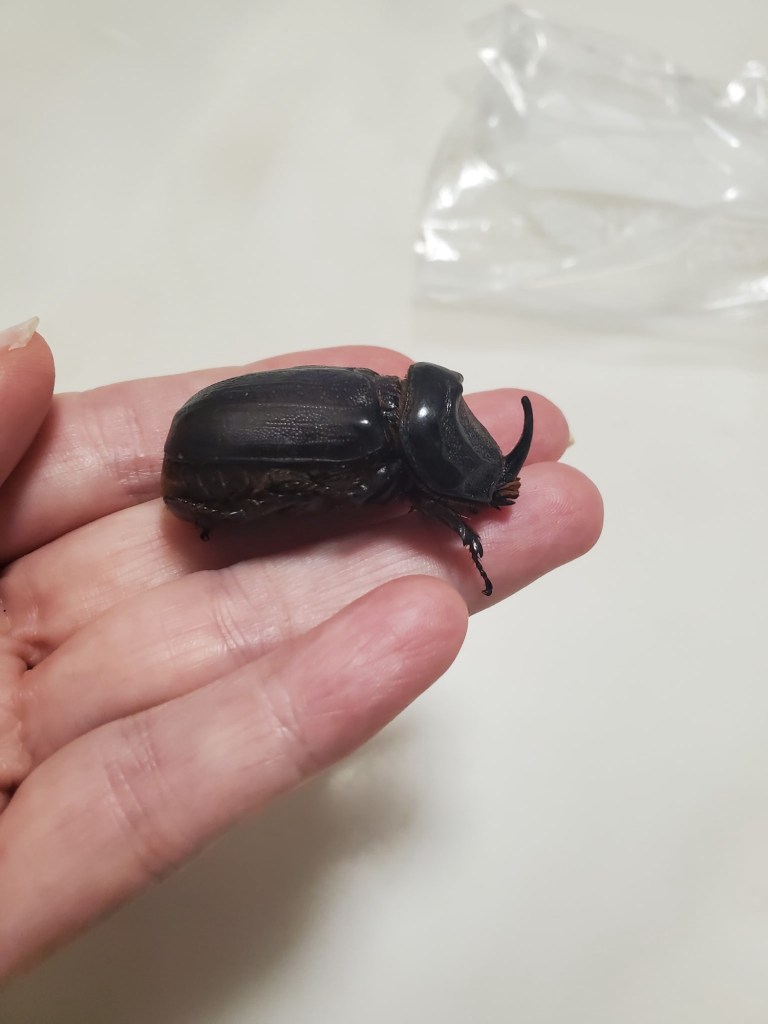
Coconut Rhinoceros Beetle

This is an existential threat, not only for beauty, but for life.

Without Niu we may starve.

​Imagine Hawaii with no Niu. 

Coconut Rhinoceros beetles (CRB) are a serious alien pest. We really need to take this problem seriously and attack / control them on all fronts.

For years, At Every Arborist and landscape conference, we were warned about these chunky hungry beetles and warned to KAPU !! keep them out of Hawaii.

CRB are Major and serious pests in other places such as Polynesia and overall world tropics.

Now they have spread from a Navy site in 2013, to the west side, devastating the north shore and Waialua. They are bad in Waimanalo.

I was at Wahiawa Botanic Garden recently and so devastated to see all of our native Loulu palms being munched and destroyed. This upland Botanic Garden has a collection of rare Loulu palms (CRB love our native Loulu palms even more than Niu or coconuts). They also attack Royal palms. 

(We have the famous ET grove of Royals, on Royal palm drive in Wahiawa.)

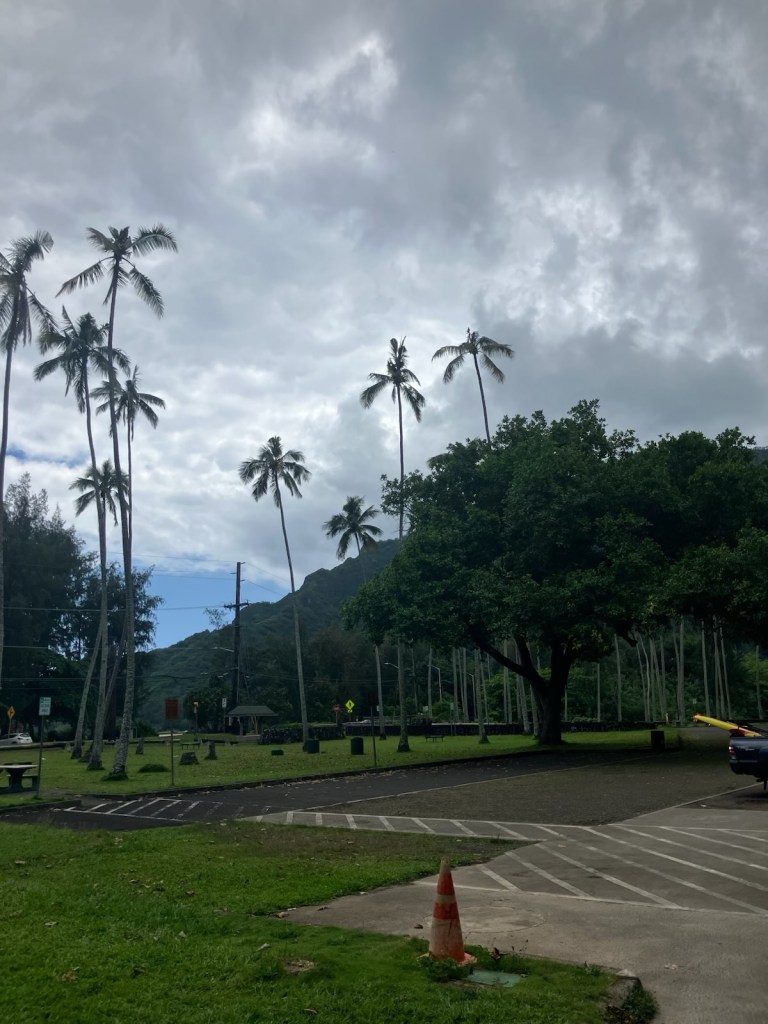
Auwe! we stopped at Kahana state park, where the precious Niu of Mary Mikahala Robinson Foster grow tall and graceful, said to be some of the best nuts for eating and drinking. 
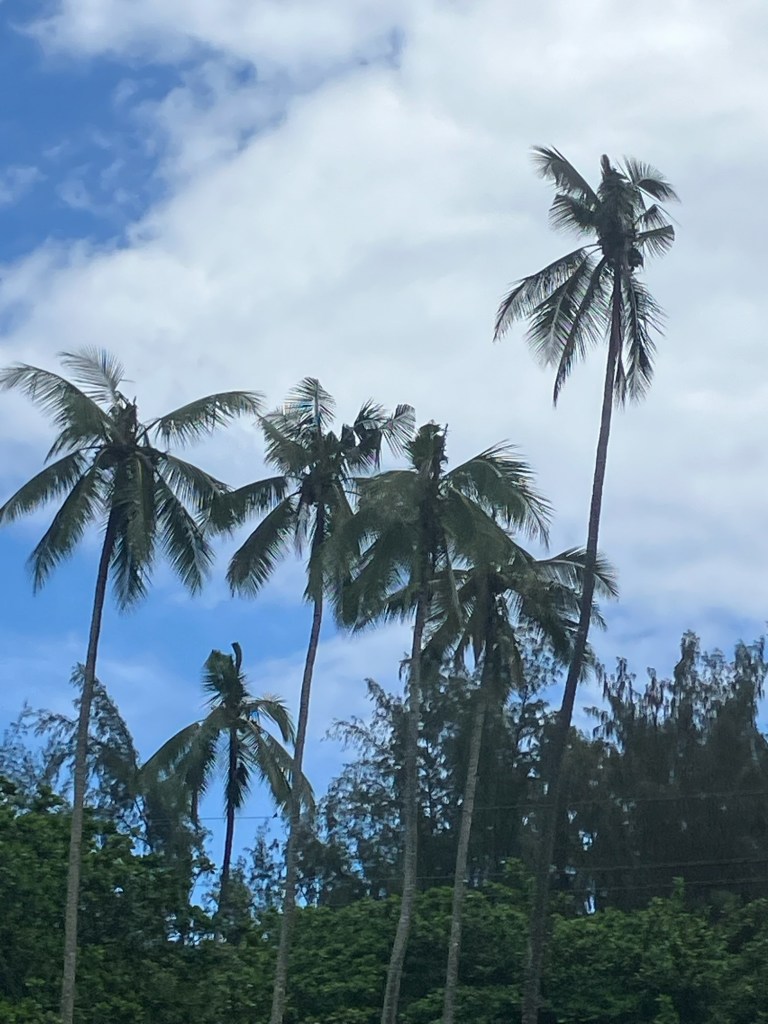

 Coconuts at Kahana state park,
attacked by CRB

I sadly observed the classic cut out fronds, characteristic of CRB feeding on new vulnerable growth. These Niu are iconic and getting munched to death, as I write this. 

 Coconuts at Kahana state park,
attacked by CRB

We need to get everyone to pay attention and help with control. Our Governor Green and Mayor need to get behind these efforts: Education and control.

Neighbor islands are getting hit with CRB too.

Know the life cycle, they spend the bulk of their life feeding on and in, rotting vegetation, compost piles and the like.

It should be on the News every night, along with other crimes affecting Hawaii. 

Here are some of the immediate steps we can all take:

No mulch piles

No dead stumps

Netting 

Traps with lights and netting

Public awareness and education

Government support and action 

Search for Biocontrol 

Education


 Coconuts at Kahana state park,
attacked by CRB

Chemical treatment to save Coconut palms (Must label as treated, and cut off any flower and fruit on treated palms!) A high lift or skilled coconut climber is key for this.

Everybody’s dog, chickens and pigs can find and eat the grubs.  

A Gourmet opportunity for an innovative local chef?

Nui/Coconut, Cocos nucifera is the Tree of life for Hawaiians, do we really appreciate and treasure Niu in Hawaii as well as we could? 

Can you imagine Hawaii with no Coconuts? CRB also attack Hala, Loulu palms, banana and more.  

Let’s get together and scientifically, attack this pest.

Netting all around the vulnerable crown of the palm. Netting of mulch piles. Nets with Lights 

As my friend Mari Zane says Ho! Beneficial use for those illegal gill nets!  (Her Loulu and Niu on the north shore were early casualties, but there is hope for the shorter ones.)

Wrap the nets around the crown.  The nets will get the ones inside coming out of the bore holes, and get any on their way in.

Contemporary Landscaping, a nursery in Waimanalo, uses a low net about four feet tall, lit at night. This attracts and captures beetles. 

Trapped beetles attract more beetles to the light, and a chance for more control.

Brown Cannon made a trap using a netted Hula hoop and is capturing them out in Waialua. He sets this hula hoop net  (great recycling!) over a barrel of woody mulch.

We can all get smart and do our part!

Just when Hawaiian gardeners, City parks folks and landscapers were convinced to wisely use mulch, we find that mulch piles are endangering NIU.

CRB grubs love rotting vegetation and spend most of their life there.

​We can have mulch piles and mulch dishes if we are akamai.

Turn the mulch frequently disrupting the grubs. 

HOT mulch will help to kill them.

Turn your mulch and have animal helpers, keiki or your arborist ready to spot and capture the grubs. 

(Dogs, pigs and chickens can be trained to eat the grubs of CRB)

Mulch and green waste piles are perfect habitat for these alien pests and their voracious grubs.

Hot mulch is OK:  turn it and burn it!

Or spread mulch and compost thinly. Water it and look for CRB grubs.

As always water and nurture your palms, keep them as healthy as possible.

Let’s work together to protect and save this vital part of Hawaii. !!!
What will Wild West winds bring? More flowers and fruit?

By Heidi Leianuenue Bornhorst

We had such a weird windstorm with those super strong and gusty west winds! So different then normal.

Up in our valley we lost power twice to the wind and HECO did not restore power until 9:30 p.m. on Wednesday 3/8/2023.

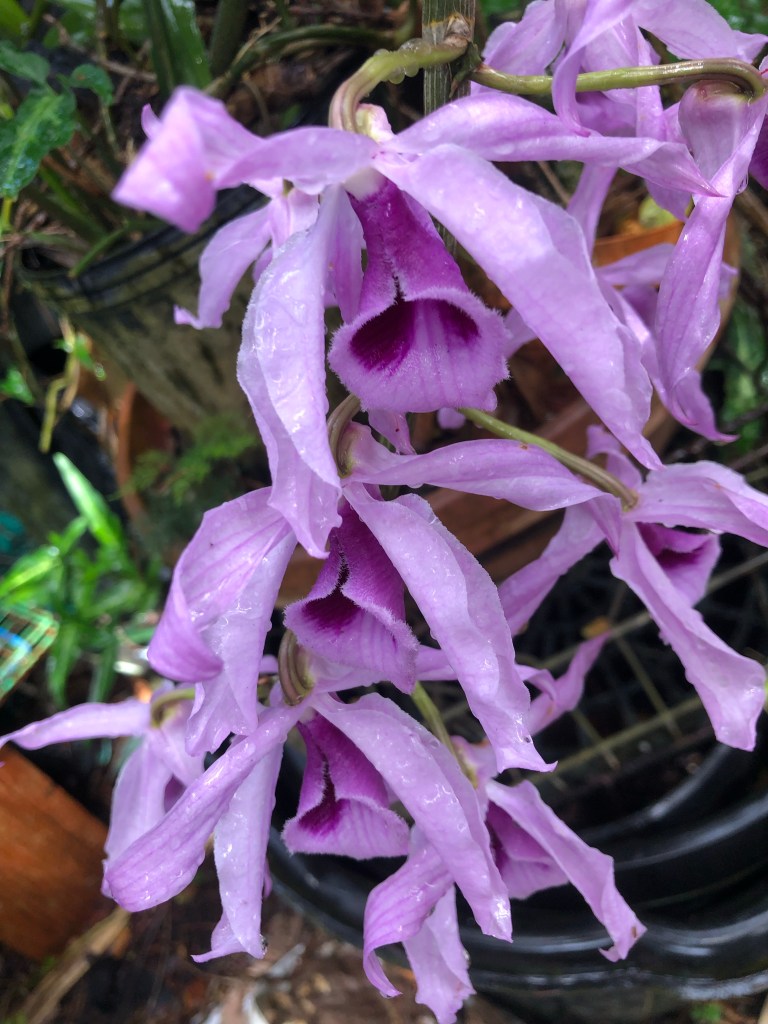
Mangoes and avocados were full of blossoms, Honohono orchids were in bud and some in bloom.

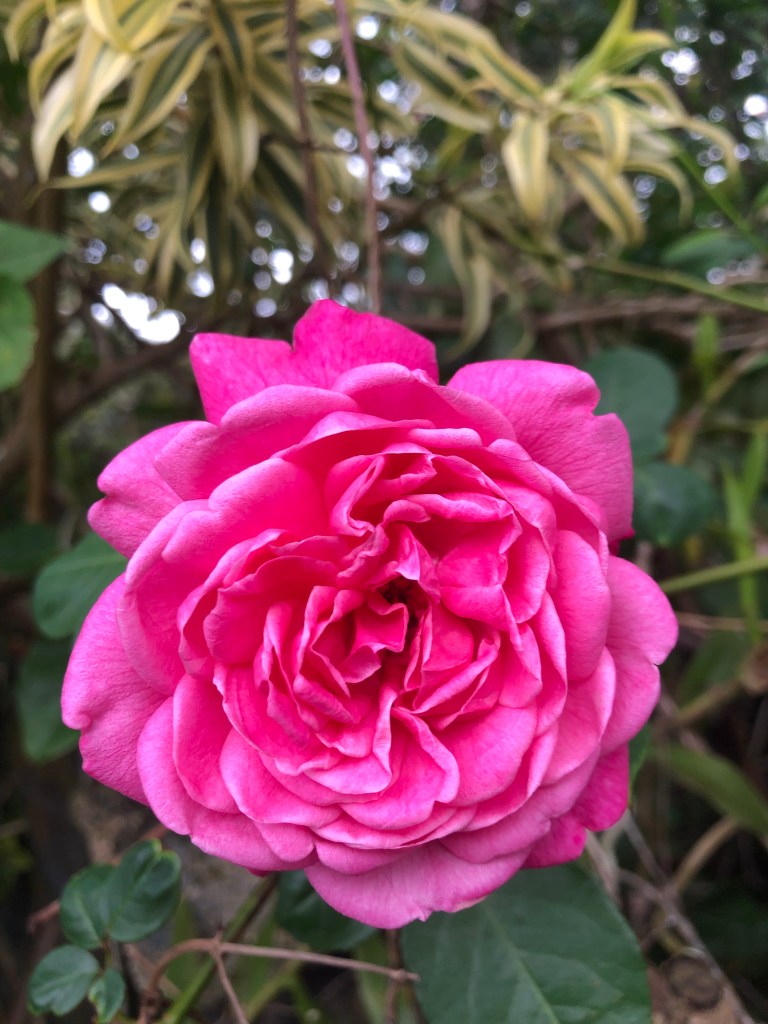
My Portuguese Madeira roses, and native Hawaiian gardenia Na`u have been blooming well, loving the cool and rainy winter were are finally having.

As I clean up the storm debris, (Mahalo for nature’s Arboriculture) including blown down dead twigs and branches, and lots of leaves, some I notice are from my mauka neighbors.

One of the tenets of true Horticulture is to OBSERVE nature and plants, to track the moon, winds, rain and other weather phenomena as see how the plants respond.

I am still reflecting on how the plants would respond.

What do you see? How are your plants after the winds?

Did you have any big tree failures? Or just small or dead branches?

The leaves are whipped on my gingers, Surinam cherries, mulberries, and ohia shed a few flowering branches. A young popolo plant got totally blasted on one side, it was just coming into fruit.

So, we shall see!

Honohono orchids had been in full glorious fragrant bloom as they budded and bloomed early this year. Originally I thought the orchids stood the wind storm but after a few days those in the main wind tunnel area of my garden wilted and withered prematurely.

Went to a neighborhood watch potluck pa`ina and a nice lady, Lokelani, that I always say hi to on my walks was there, with a gorgeous papale lauhala. She admired my honohono and said she caught a whiff of fragrance, from way across the yard, and she looked for the source of this favorite old time Hawaii fragrance, and from where? My hair!

Since she admired the orchids, I had to give them to her, along with maire ferns!

Now a couple weeks after the winds, I’m observing some of my favorite flowers and fruit trees in my garden and neighborhood:

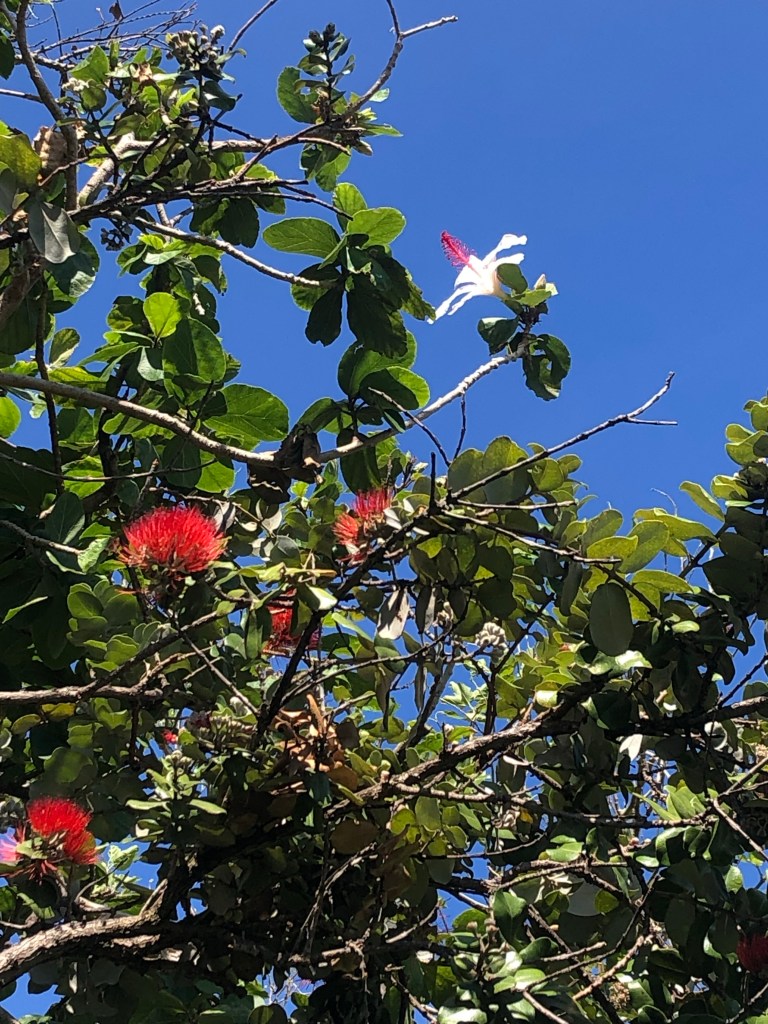
• ‘Ohi’a lehua  Blooming profusely, some dead wood branches and twigs broke in the winds

• Native White Hibiscus wind whipped leaves, a few blooms at the very top of the tree

• Tahitian mountain apples were blooming before, still many flowers and now small fruit.

• Gardenias surprise early blooms two on one stem, but no other apparent buds yet. (they usually bloom for me in May).

• Na`u, native Hawaiian Gardenia lots of flowers and buds (also triggered by abundant soft rains before the winds)

• Madeira roses Blooming profusely.

• Mangoes my Friend Dawn Shim from Makakilo brought me a gift of Haden mangoes, super early for this to fruit.

• Mulberries wind whipped leaves, lots of young fruit

• Pua Keni keni usually Bloom less in winter, BUT after the storm mine are full of Buds, flowers and lots of developing green “ball” fruit.  I made some lei for a fundraiser, and plucked and cut off all the young fruit, to encourage more blooms from the tree 

What are YOU observing, in your garden in your unique microclimate? I would love to hear back from my Gardening Readers …..

Arbor Day 2022, Brachychiton acerifolium, Illawarra Flame Trees

By Heid Bornhorst

Heidibornhorst.blog

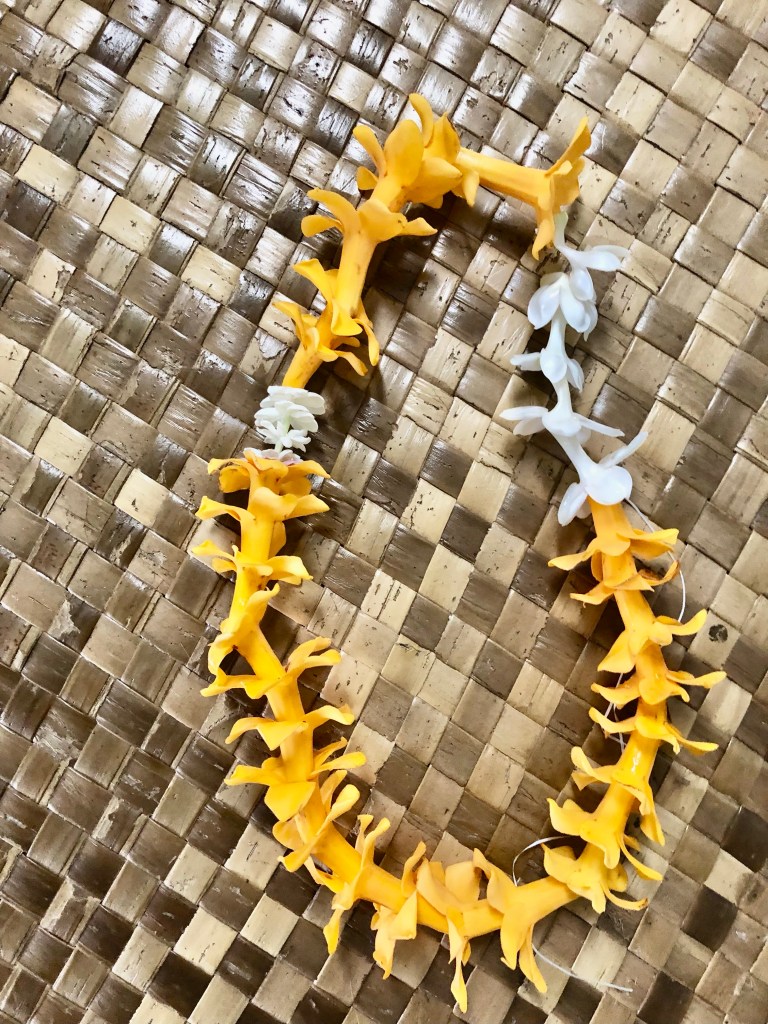
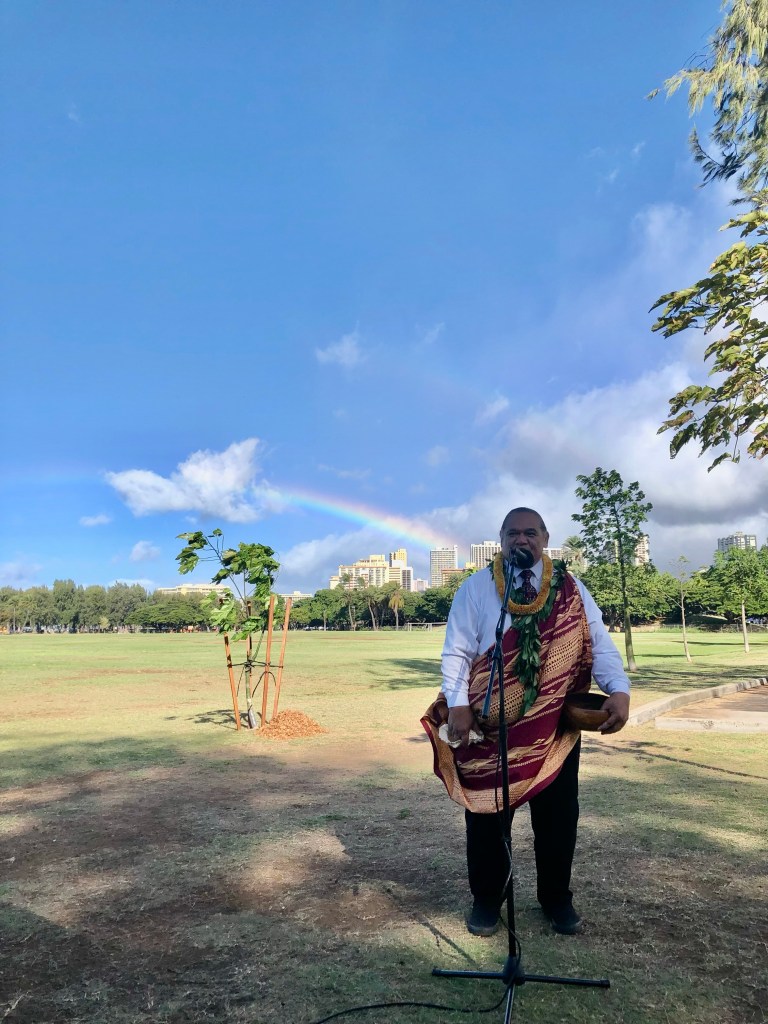
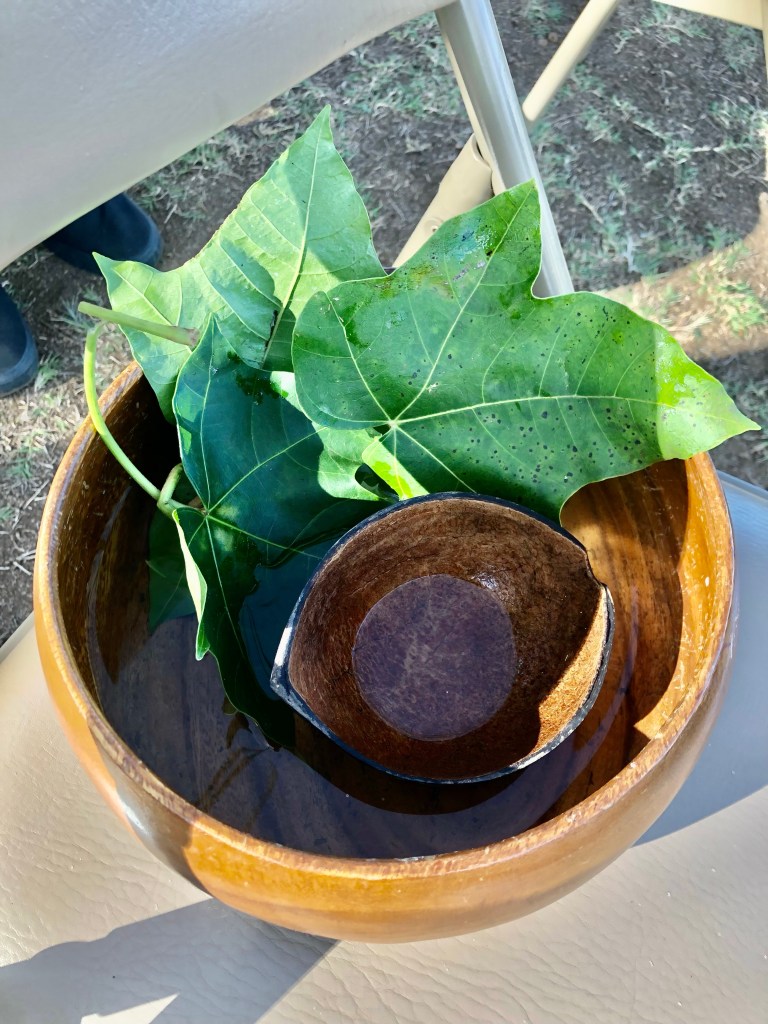
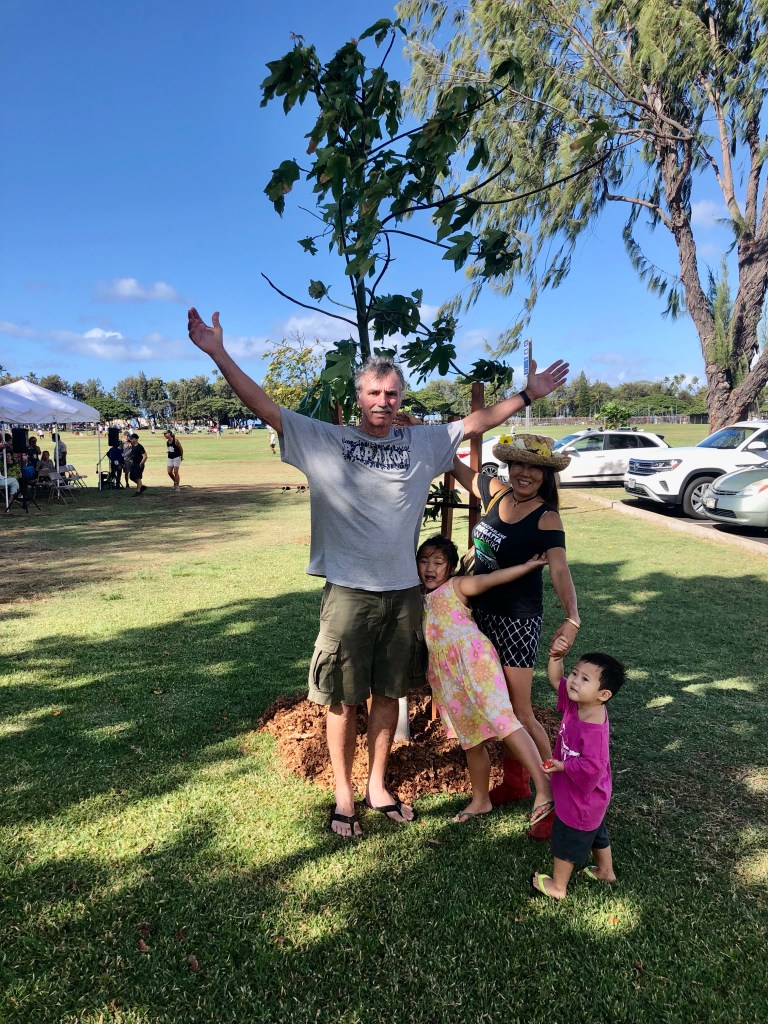
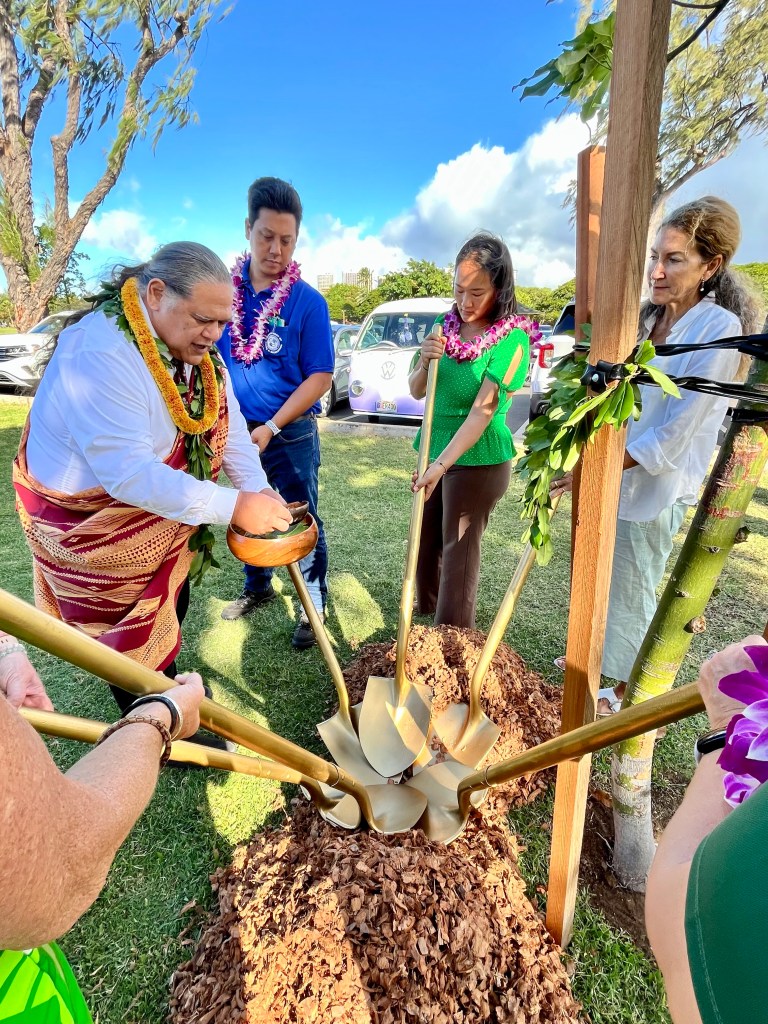
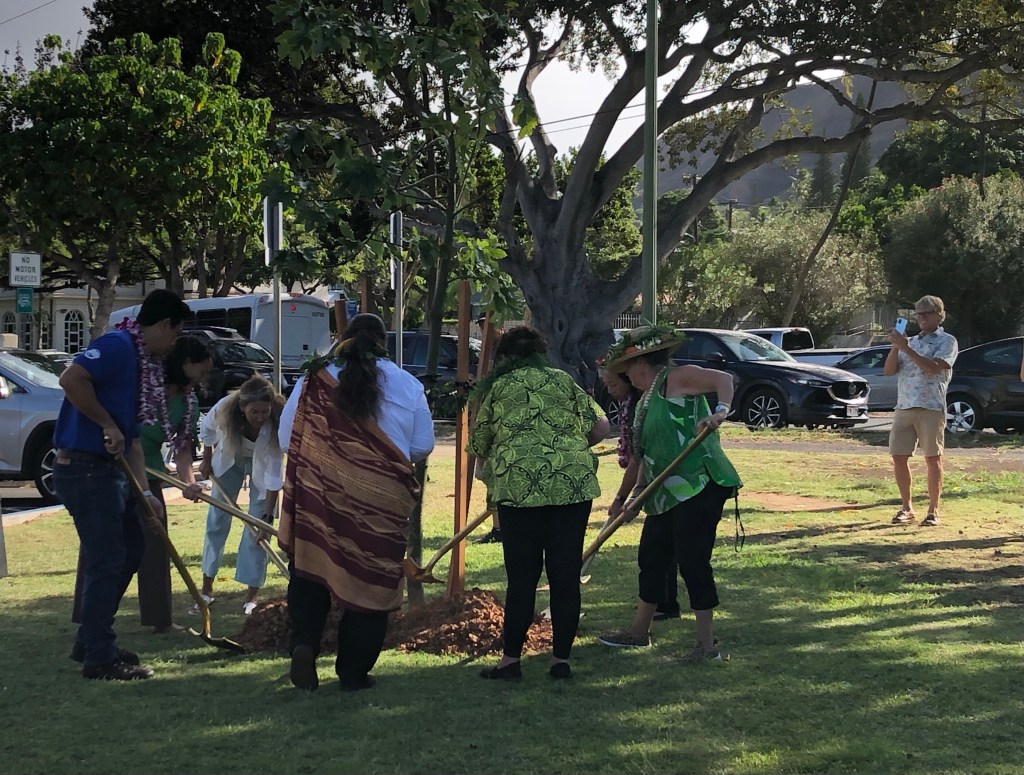
After three years of lockdown, we are finally, Happily, able to celebrate Arbor Day in Kapi`olani Park once again.

On Saturday November 19, 2022, we will gather with ScenicHawaii, Inc., Kapi`olani Park Preservation society, some Dedicated City tree workers and Arborists, Volunteers, and all of us who love and cherish trees and our Park.

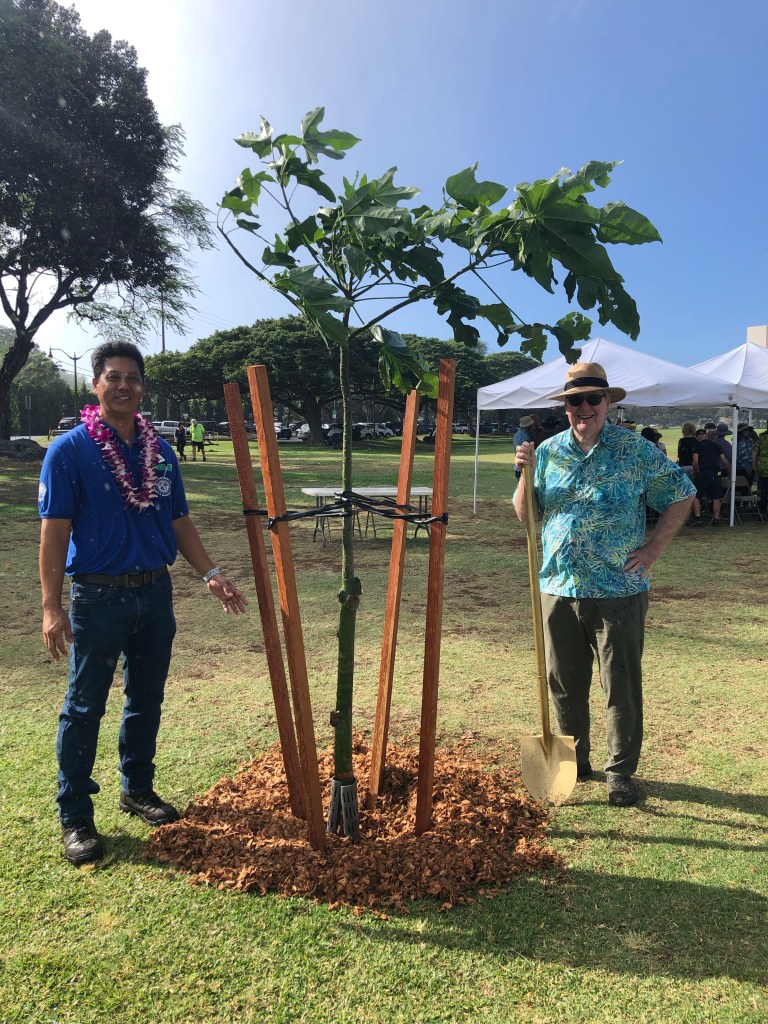
We will be planting and ceremonially mulching four new trees courtesy of the Division of UrbanForestry led by Certified Arborist Brandon Au and DUF/ City and County of Honolulu Parks Department.

Citizen Forester Emily Perry will be representing our busy parks director Laura Thielen.

The trees are drought tolerant and are native to coastal subtropical forests of Australia.

The common name is FLAME Tree, or Illawarra Flame tree. Also called the lacebark tree.

One thing our mentor Paul Weissich, Director Emeritus of the Honolulu BotanicalGardens taught us, is to look beyond flowers when you view trees.

What does the bark look like? How is the truck shaped? What is the growth pattern? What kind of shade pattern does it adorn the ground with? What are the leaves like? Are they good for mulch and soil nurturing? For Keiki art projects?

As we Arborists say, “Touch trees”. Place your hand on the trunk and look UP! What do you see, in the Tree Canopy? I love doing this with keiki of all ages!

When we plant a tree, we are investing in, and finding out about the future. This small tree, grown from a tiny seed and planted today. What will it grow into in the Future?

We can read about the size and growth habits in a book, but how big will it really get here in Hawaii? Will it grow big and strong with proper nurturing and akami tree maintenance?

Will it withstand the abuse that trees sometimes take in public park spaces? Will most people be happy and respect the growing young trees? We sure hope so! Trees ensure a healthy, happy future for all of us.

Known in Scientific Latin as Brachychitonacerifolium, the Illawarra Flame trees are in the Sterculiaceae plant family.

We don’t have many of these trees in Hawaii.  A few grow at Foster and Ho’omaluhia Botanical gardens. These were grown from seed by the Horticulturist and Plant propagators at Foster Botanical Garden.

They are particularly striking when in bloom,with bright red orange or scarlet flowers. The flowers look like a hanging red bell when viewed from the side. If you look directly at them, they look like stars.

The leaves are shaped like a kukui leaf, or a mainland maple tree leaf.  This is what the species name acerifolium means.  Acer is the Latin name for Maple, and folium as you might guess is referring to the foliage or leaves, maple shaped leaves.

The trees will grow up and into a pyramid shapewith a tall, greenish grey, smooth round shapedtrunk. In time they can grow up to about 100feet tall (30 – 35 meters). They are a popular street tree in Australia and around the subtropical world.

The seeds of Brachychiton species are edible. But like many plants in the sterculia family they have irritating hairs, which must be removed or carefully removed to get to the edible seeds. Native Australians ate them raw or roasted. They are nutritious, containing 18% protein and 25% fat with high levels of zinc and magnesium.

There are uses for this tree in its native Australia. Fiber is made from the bark and a kind of gum can be extracted. The wood is soft but dries hard. Shingles, among other things, are made from the wood. The roots of young trees are edible, but let’s not do this in our park!

A related tree, Brachychiton rupestris is called the bottle tree.  It grows a big fat water retaining trunk over time, somewhat like the Baobab tree from Africa.

Mahalo to Wikipedia for some of this info, I also referred to our old standard book: In Gardens of Hawaii, by Marie C. Neal.

Growing Cashew Trees for Hawaii

 Growing Cashew Trees for Hawaii

By Heidi Bornhorst

I found out writing this that you can eat the fruit of cashews and its high in vitamin C and good for your teeth and gums.

Linda Neumann who has a farm on Kaua’i helped me learn more.

It would be a pretty, and fun fruit tree to add to our gardens. Lots of other useful and yummy things come from Cashew trees.

For years we had a Cashew tree growing at Foster Botanic Garden. It’s in the Economic section of the garden. In this section we grow plants with various economic value or potential such as herbs, spices, medicines, food, and even poisons.

The main thing we were taught about cashews, is “Handle with extreme care”. If it is not ripe enough, or too ripe Abunai! (Danger in Japanese) It is hard, and possibly toxic to harvest and process the hard-shelled seeds (nuts). You need to harvest at just the right time, and then extract the seed carefully. Juice from the shell around the fruit may burn your skin.

That is why I’m happy to buy this heart healthy nut at the store!

Interestingly the toxic principles in the shell may make a good insecticide! Research continues.

The Latin name is Anacardium occidentale, (“Ana’ means upward, and “Cardium” refers to the heart). Cashew is in the Mango family, Anacardiaceae. Cashews are native to Brazil and Tropical America

Relatives include Fruit trees like Mango, Wi or Otaheite apple, Hog plum (my Honey’s favorite, one grows and Fruits in Foster Garden). Christmas berry tree is related. Poisonous relatives are poison ivy and sumac, and the Marking nut tree.

Flowers are greenish yellow, fragrant and grow in panicles. Bees like to visit and pollinate the flowers. The trees can grow up to 40 feet in ideal conditions, we usually find shorter, wider trees here in Hawaii.

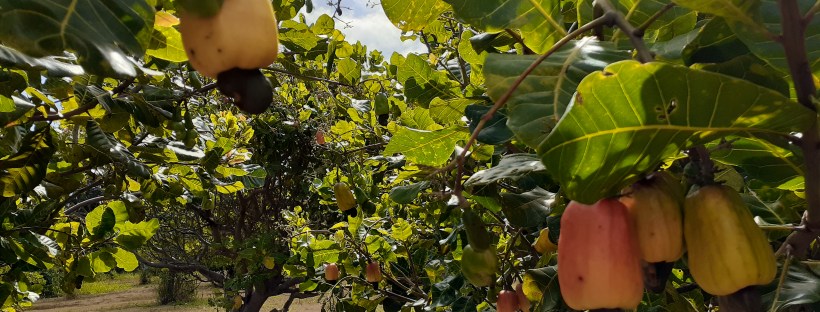
The fruit and nut are very interesting to see. The “fruit” that catches our eye is actually a “false fruit” or pseudocarp. Some call this a “cashew apple” Being Eurocentric they called all kinds of tropical fruits “apples”!

The actual fruit (botanically speaking) of the cashew tree is a yellow or red kidney shaped drupe that grows at the end of the cashew apple. The drupe develops first on the tree, and then the pedicel expands to become the cashew apple. The true fruit contains a single seed, which is generally considered to be a nut.

Aren’t plants wonderful and Complex?!

The attractive colorful and juicy fruit is an adaptation to attract fruit eating animals to aid in seed dispersal.

Although it is perishable, we can eat the fruit and make value added products like wine and fruit roll ups.

Cashew trees favor well drained soils and regular watering to get established. The flowers like it dry, just like mangoes. They benefit from leafy mulch. Keep turf grass well away from the root zone.

Today it is mainly grown commercially in Brazil and India. We do have some intrepid farmers in Hawaii who are growing trees and even selling products. I salute their courage. Farming and marketing etc., is not easy!

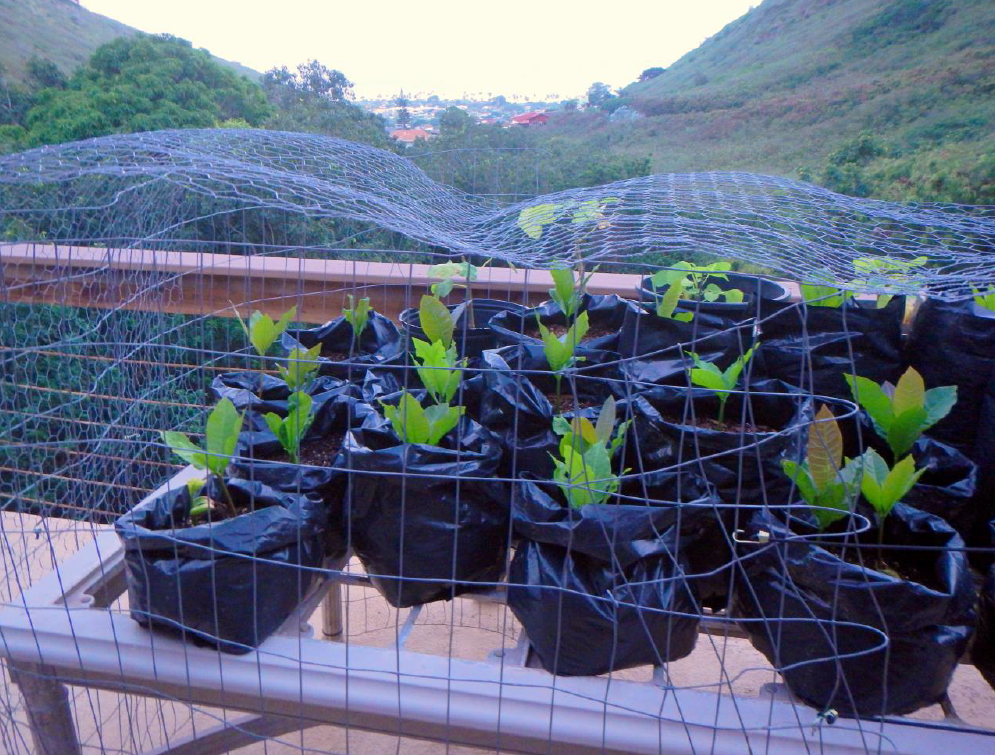
Recently my friend Kaui Lucas, who is a Trained Permaculturist, was talking to me about her Cashew keiki trees. She showed me these cute and vigorous keiki, that she is growing on her sunny lanai, protected with chicken wire.

Lucas got an email from the Department of Agriculture about a seed giveaway from Hinshaw Farms. She said “Frank Hinshaw is the cashew guy. He invited me to go visit, we could make a holoholo day out of that ! Super sweet guy and he was so helpful. The farm is at “Poamoho”.

A few years ago, My Friend Elizabeth Reigels and I went on a kalo and farm kokua, Gourmet Foodie and Educational event and on the Reppun farm. We visited a gorgeous tree that was loaded with ripe fruit. The fruit are very pretty and interesting to see.

This tree was so attractive and productive that it got me thinking cashew might be a viable crop for backyard growers and even for diverse mixed Fruit tree farms.

This would maybe be a good crop to grow more of in Hawaii. Especially if we grew it like old-time Hawaii farmers did, and like Permaculture and Regenerative Agroforestry plant scientists do now.

That is, grow a diversity of tree species, not a single Monoculture or plantation style. Layers of tall and short trees, shrubs, and groundcovers all grown together. Leave the leaves and let them naturally decompose and enliven the soil.

This diversity keeps the plants and soil health and helps capture rainwater and let it percolate down to our aquifer. It’s also more enjoyable to work in the Diverse cool shady spaces, cultivate and harvest than in a Monoculture, plantation, chemical using style of tree farming.

Besides eating cashews raw, roasted or salted, have you ever had cashew cheese? It is a bit labor and time intensive to make but it is so creamy and delicious. And it has less of some of the less healthy parts of yummy cheese: no cholesterol (since it is from a plant) and only healthy nut fats.

There is a farm in Moloa`a on Kauai with more than 200 Cashew trees. Linda and Scott Neuman started in 2002, are learning about which varieties grow best and how to harvest, dry and roast. Check them out online and buy some of their locally grown products. The Farm is called Neu Mana Hui farm.

They have an abundance of other crops too, including figs. Interestingly they used a ‘chicken tractor’, a mobile coop that lets the chicken’s control, and eat weedy grass and fertilize trees and crops too. Akamai, no?!

The oil around the nut is toxic and needs to be handled with care.

As Neumann says: “Our farm has 2 employees: my husband and myself. We do all the planting maintenance and production of our product. I have spent a lot of time trying to educate on the “toxic” product….

People get confused. Old school way is to throw the nuts into a fire and then crack to get inside. That smoke is toxic.

The cashew is fruit where the seed grows outside the fruit. The nut is the seed. The seed itself is covered by testa a covering like you see on a peanut. That protects it from CSL fluid which is in between the exterior shell and the testa. (cashew seed liquid)

That substance is used for many products in paint, brake fluid and other products. Some methods of processing capture the CSL we do not. The CSL will peel the skin on your hands.

We use gloves when handling the shells. A lot of people ask about growing cashew, cashew grow well in most areas of Hawaii, but the equipment is costly and difficult to obtain.”

The CSL fluid, or cashew seed liquid, and it has insecticidal properties (Makes sense no, since it would protect the seed from insects and grazing munching herbivores).

Traditionally the nuts would be thrown on a fire and smoked open. This smoke extremely toxic.

There is now an expensive machine to open the nuts safely. The Neumann’s do this and don’t bother with the seed oil

BUT what a diverse and useful crop for Hawaii’s future as we wean ourselves off toxic tourism. 30,000 visitors a day is way too many. Let us grow some nuts instead, and support local farmers, chefs, and True value-added businesses.

Keiki Cashew trees grown by Kaui Lucas. Wire protects them from pests. And they enjoy an ocean view.

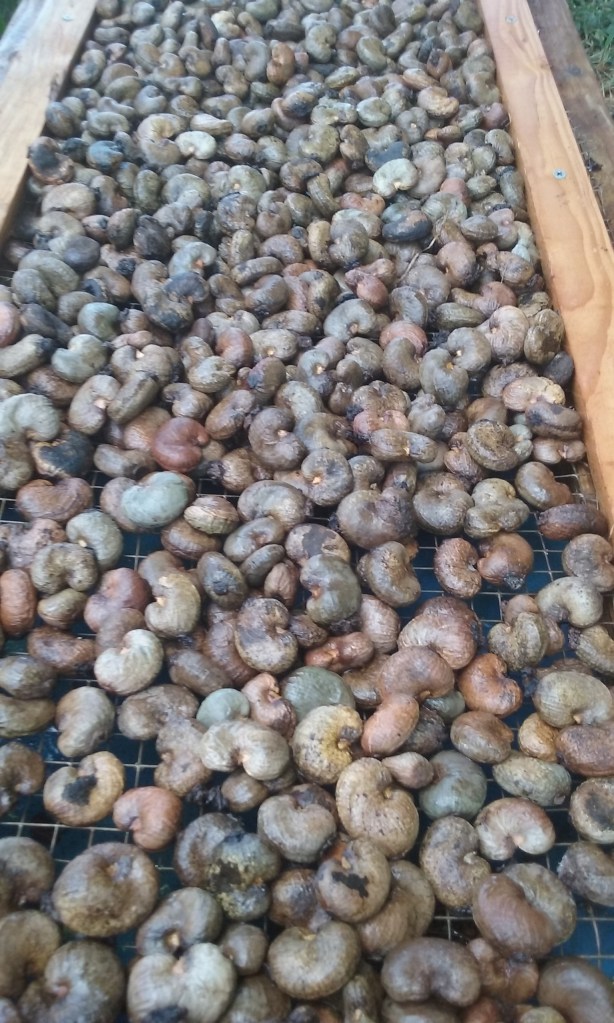
Cashew nuts photo mahalo to Linda Neumann

Pretty fruit on Cashew trees Mahalo Linda Neumann