Question: Heidi, what can we grow in rocky Nanakuli as a replacement for lawn grass? We don’t have the time or money to fertilize, mow, and water and we don’t like the thought of polluting our aquifer or ocean with chemical fertilizers.
Kupuna M.A., Nanakuli
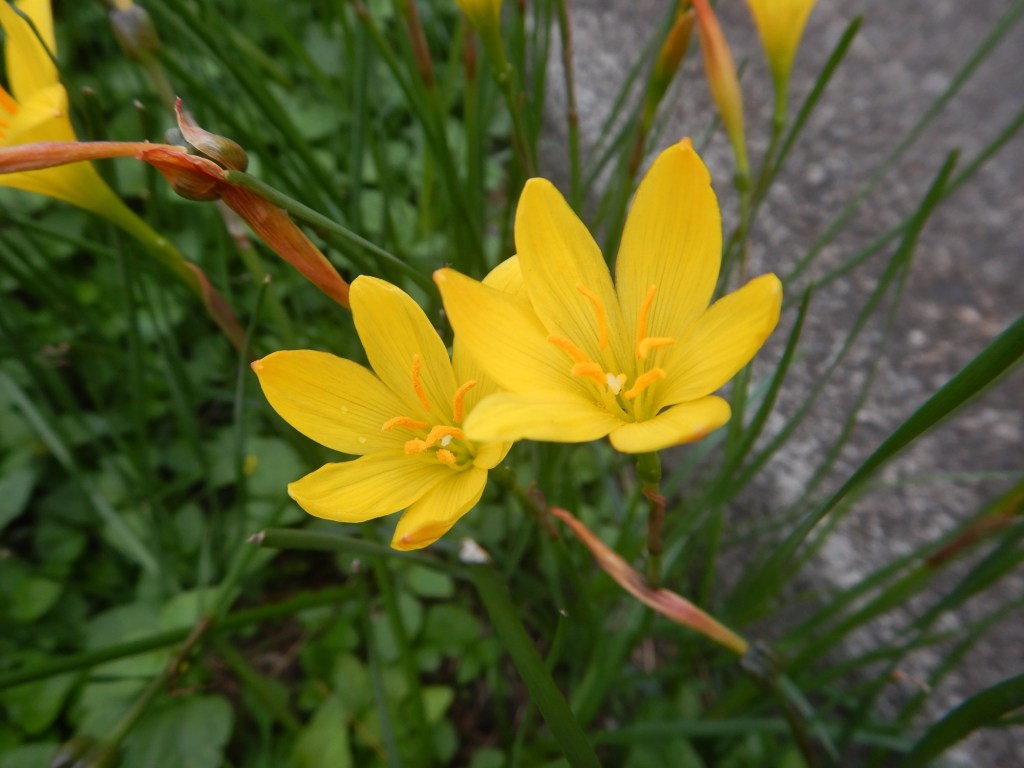
Answer: Zephranthes lilies might be just the thing. They look like grass and also have gorgeous flowers, an added benefit. The pretty lily flowers tell us and the taxonomists that they are a lily, just like mondo “grass”, and Liriope.
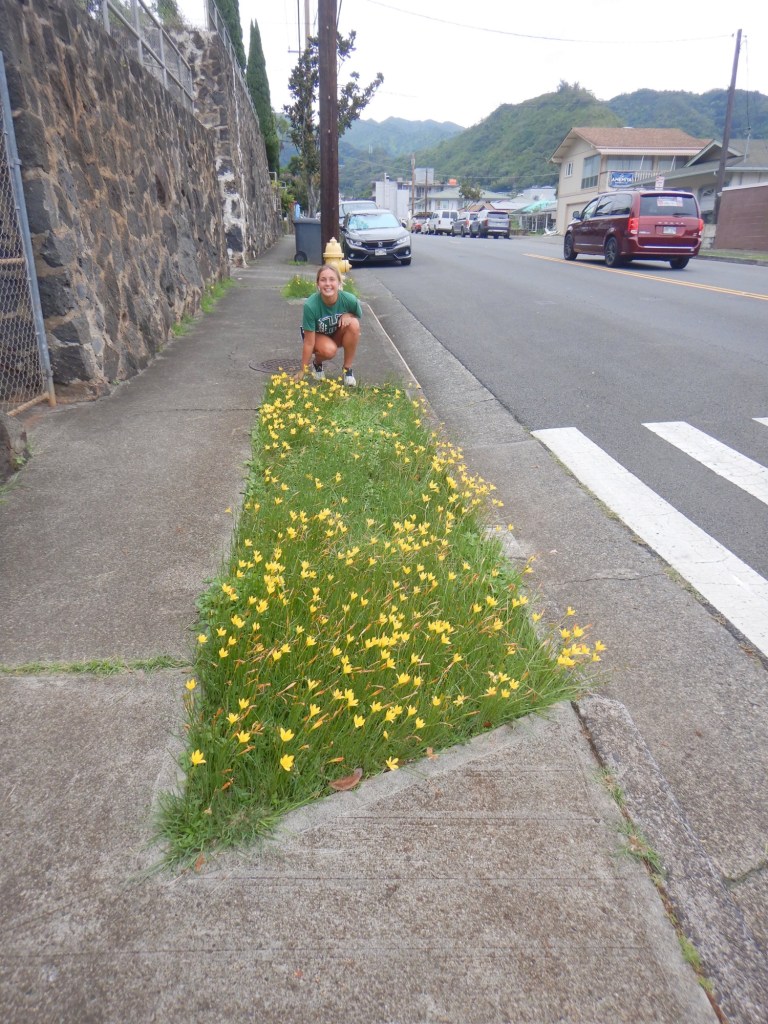
After a good rain you sometimes see yellow lilies popping up. I feel like this is a floral visit from May Moir. One good place to see them is along Palolo Avenue. They may have been the original akamai wai groundcover, planted along with gorgeous and low fuss no muss Magnolia trees, which are our City street trees.
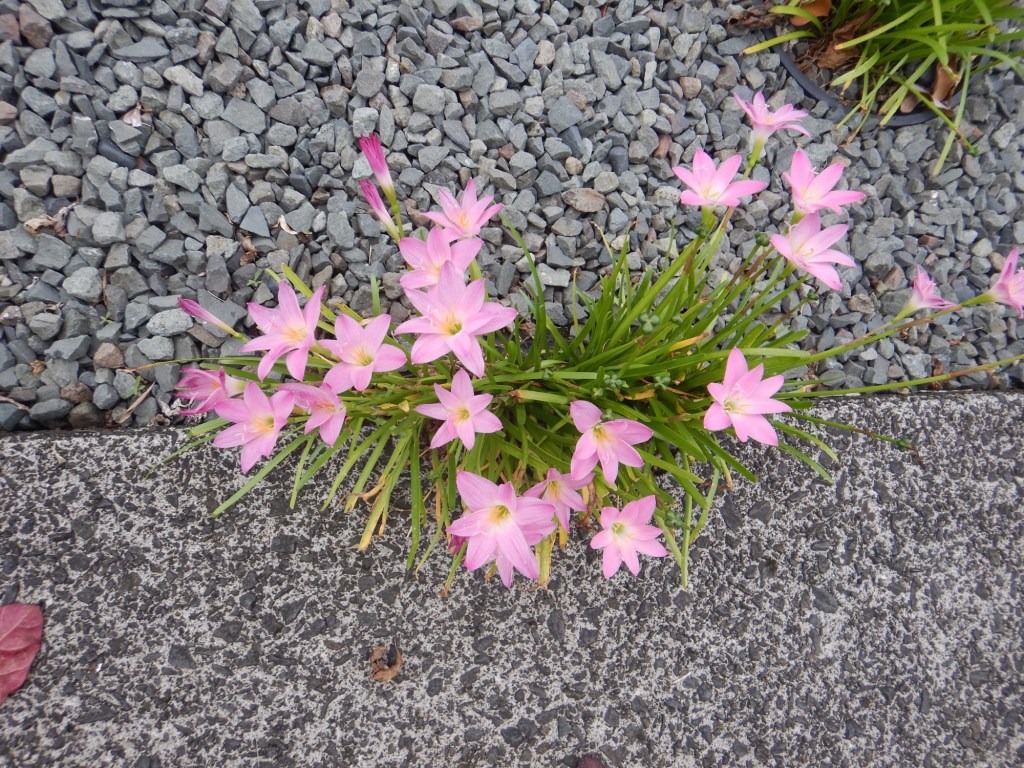
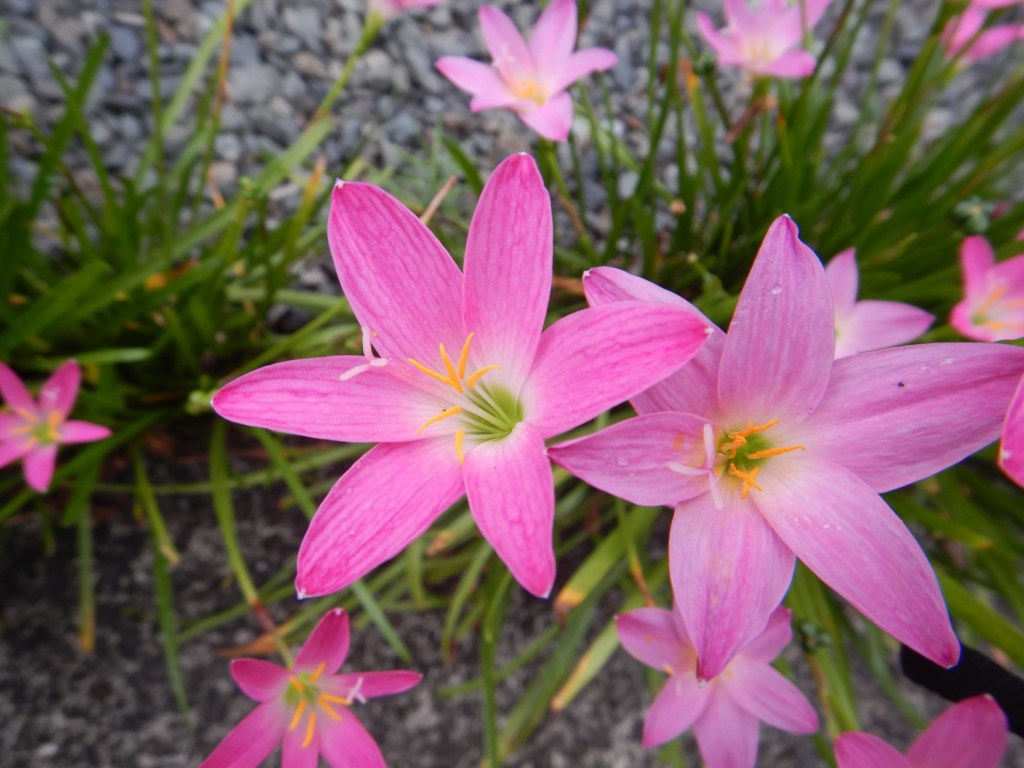
May Moir, the late great Art Academy volunteer flower arranger, and natural Hawaiian gardener, was a big proponent of this simple plant. They are lilies and they come in yellow, pink and white. Check out the book “Floral traditions” if you want to learn more about May Moir and other volunteers who made floral designs of epic proportions for our local art center. This book makes a great Holiday gift for the gardeners, flower and art lovers on your list.
They are perfect in a Japanese or Chinese rock garden. Most of the time they look like a nice healthy mondo (also a lily) but sometimes they flower and then they are so pretty and striking.
After flowering is pau, don’t cut off the flower heads. They will form seed pods with lots of flat black seeds stacked inside They are easy to plant and grow. They also don’t need much water so we like them in our less thirsty or xeriscape gardens.
Perfect in a rock garden, edge of driveway, in a pot.
The yellow Zephyr lilies are really choice and it’s such a cheerful color. They respond to rain and a carpet of gold sprouts up. This is one of those old-fashioned plants that lend itself well to low input gardening.
Aloha Hawai`i Gardeners: are we ready to plant and nurture a miniature forest Revolution?
I have wanted to learn about the Miyawaki method for a while. Thanks to generous friends: Chirstine and Pokey, I got my hands on one of the books about the Miyawaki miniature forest method, and plunged in.
The book I just read is called, “Miniature Forest Revolution”, by Hannah Lewis.
Developed in Japan and now spread around the world this is a new and akamai way of forest restoration.
Dr Akira Miyawaki was a Botanist, ecologist, and researcher. He networked with others in Japan and around the world to plant mini climax forests and nurture them.
I have advocated for years, to simply plant a tree, nurture a garden, keep one plant alive, Volunteer at a garden. Go hiking, learn about our Hawaiian forest. Nurture our Hawaiian forests and learn more.
Learn about and nurture our living soils.
This is a new way to do it and is very inspiring.
Trees and forests really do heal our land. Compost really does work. Watersheds can be restored by the forest. Healthy forests of multi layers cover the soil and nourish it.
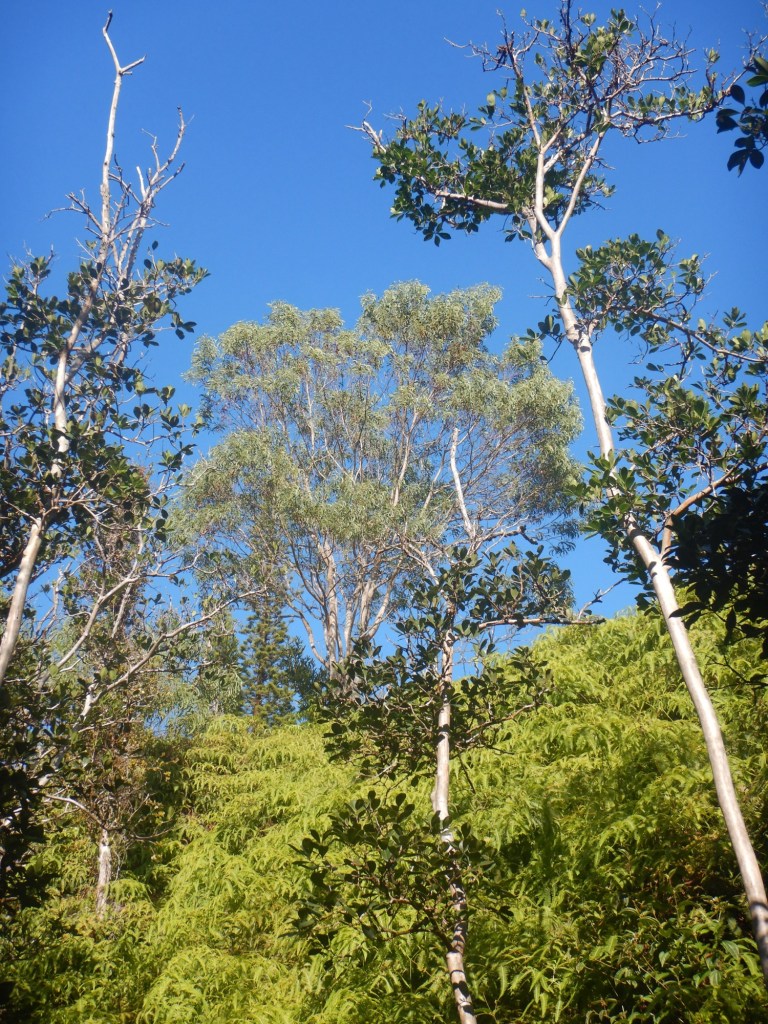
Koa tree and Uluhe ferns
With plants covering soil and adding their leaves to the living soil mix, we have less runoff when it rains.
We like to keep soil alive and where it belongs: on Land
When soil washes into the ocean after heavy rains we have fresh water killing the reef and silt and mud smothering the reef, clouding the water and adversely affecting fish, honu and all the saltwater living life forms.
Healthy forests funnel rainwater down into the ground enhancing our water sources.
There are so many benefits.
To follow the Miyawaki method you get rid of grass and weeds and plant climax species really close together like how they occur in nature.
(Koa and `Ohi`a lehua trees are two Climax species that we do now know how to nurture and grow)
Soil preparation is key. Get rid of weeds and grass and mix in compost. Lots of compost and organic matter gets incorporated into the original soil. Drainage is also very important.
Adding mycorrhizae or native soil from a healthy forest area might be advisable.
Soil tests help determine what soil type and fertility you have.
After all this planning and preparation, the fun begins: Planting the forest.
The plant mix is trees, shrubs, ferns and ground covers, throw in some vines. A different plant mix would be suitable for various soil types, rainfall amounts and elevation. We have so many microclimates and soil types in Hawai`i.
Elevation is a very important consideration for growing native Hawaiian plants.
For example, Koa seeds collected at 5000 feet on the richly soiled flanks of Mauna loa, would probably not thrive in Kapi’olani park. It is partly soil (they do not like sandy salty soil), but even more it’s elevation. Cool night temperatures and other factors
Often lowland plants can grow at higher elevations, but high elevation plants struggle and lower, hotter elevations.
For the first few years you tend the forest, watering, and weeding. The book says you do this for three years. Maybe in Hawaii we need to tend to it longer with watering and weeding and adding to the mulch beds.
Then it can basically care for itself but it’s still good to do some nurturing.
That is what horticulture is: Close monitoring, observation, and careful tending of your plants.
Like in a natural forest, leave the leaves. They nurture the soil.
Ren MacDonald-Balasia of RENKO did a Floral demo with the GCH on Wed March 13, 2024.
She likes to use wild, weird and foraged florals, and rare, strange fruit from gardens or Chinatown.
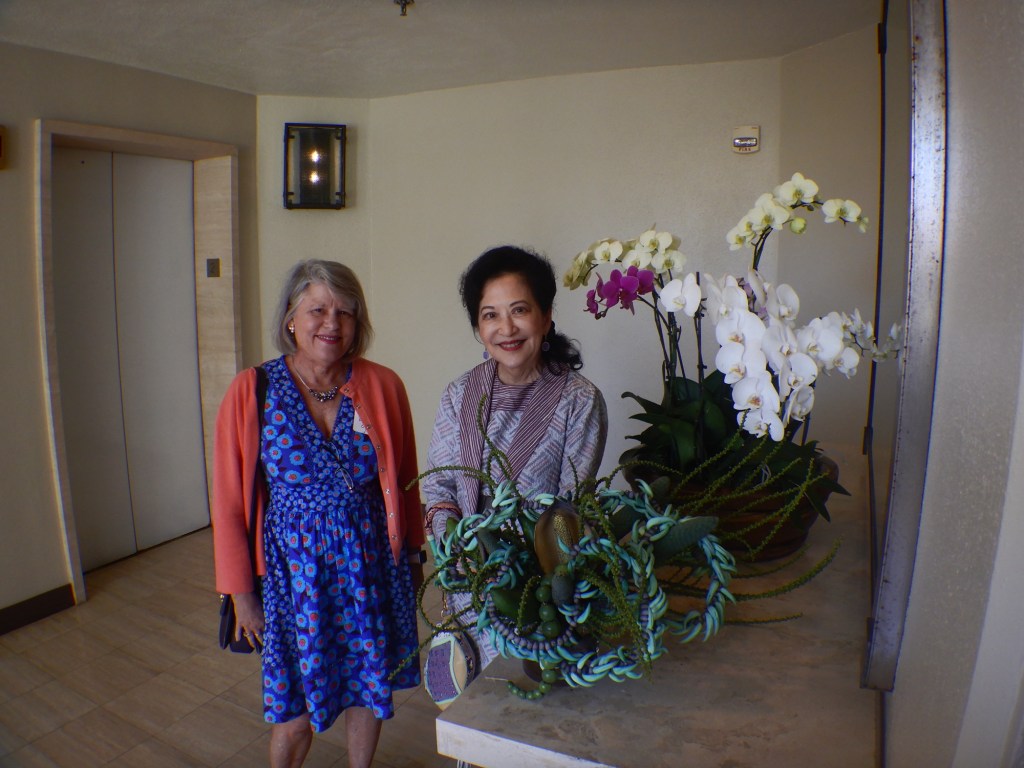
RENKO Floral dragon
This was such an inspiration! We can all gather florals and foliage from our own gardens, from friends and even from wild weeds. Weeds can be beautiful.
We don’t have to import florals. Imported materials have a Carbon footprint big time. They also can be the source of harmful alien pests and diseases.
Many imported florals (e.g. roses without perfume) can last a long time, yet they are substantially dosed with chemical poisons insecticides and fungicides. Since they are not a food crop, they are not heavily regulated.
Some countries which grow imported florals don’t have the chemical safety regulations that we do, and this poisons the growers and us the consumers.
Read the Book Floral Confidential, if you really want to be informed (and Scared!) by this overuse of toxic chemicals.
And as we say: Buy Local! Or even better, Forage Locally. Glean from Local gardens.
The Floral event was at the Halekulani, and I invited my siter Mimi Bornhorst Gaddis.
As we were getting ready to go, my honey Clark Leavitt said, ‘set me up with a lei needle?’
He had gone on the roof and foraged for pua keni keni. So romantic. Our anniversary was the day before and he took his nephew Mark to lunch at Kailua Nico’s.
Mimi and I used the valet service at the Halekulani and walked through the flower filled lobby.
Two women were sitting in an alcove stringing Blue jade lei. “Wow kewl Blue jade!’ I remarked as we walked by (it turned out that these women were our speaker and her helper!)
We went to check in at the Garden Club desk, and as there was no usual flowers on second floor lobby, we walked around.
There was a woman sitting on a bench. Mimi and I introduced out selves and I gave her a tiare li`I li`i.
Her name was Pam and turns out she’s Ren’s mother, just home to care for her 97-year-oldmother who was a journalist for the star Bulletin.
The first AJA writer in Hawaii!
Soon the floral fun begins.
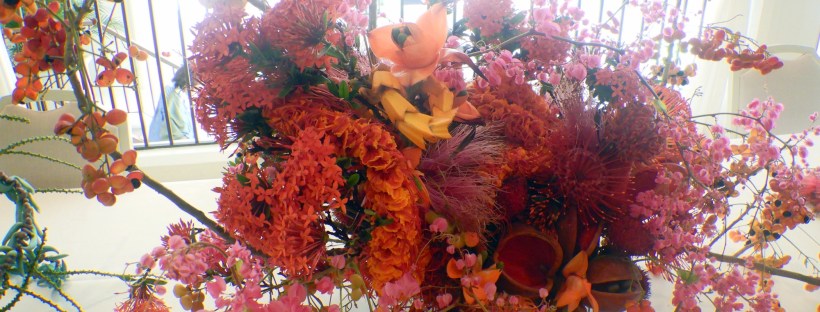
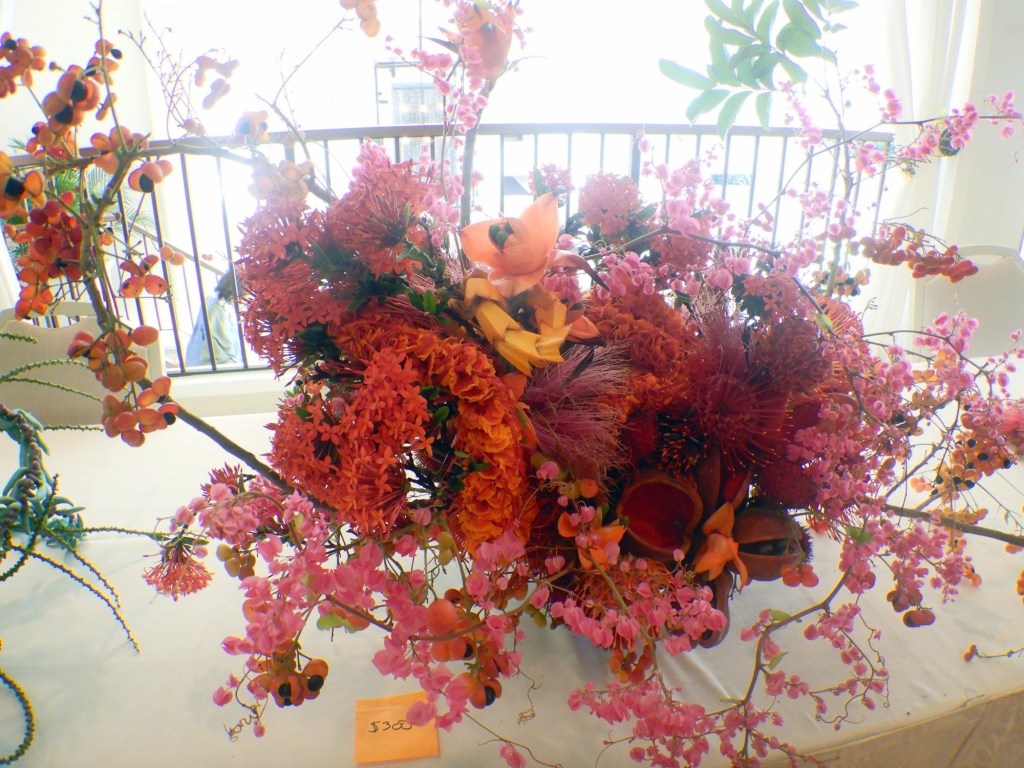
The first arrangement is in a wide tall bowl. She puts in what she called sea tamarind. We were in back and it was hard to see but I’m thinking that doesn’t look like tamarind. I kept trying to figure out what the orange bouncy floral might be. (Turnsout Harpulia, a common street tree in the Lychee family, Sapindaceae.
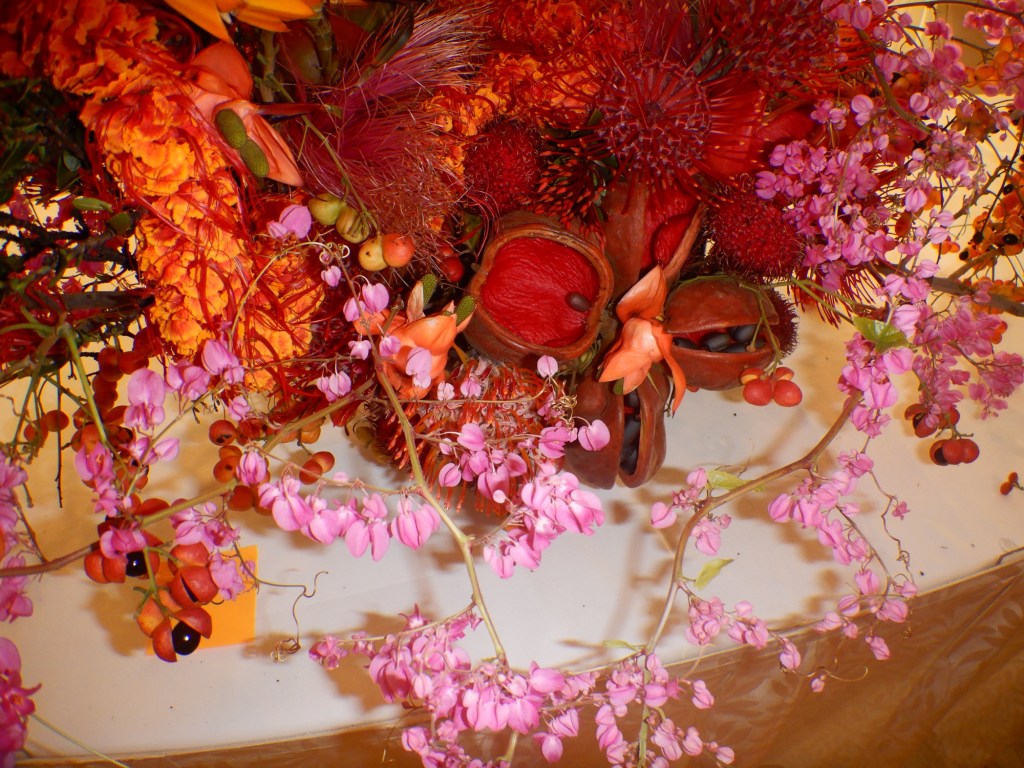
sterculia Mexican creeper lei Ohai Ali`i Harpulia AKA sea tamarind
She anchors the branches into folded up chicken wire set in the bowl. (Oasis is environmentally out. Mimi and I both have some stashed, just in case)
She then added Sterculia, Skunk tree pods, these are heavy and help to weight the other materials down.
Ixora is added. We got these at a gas station, Ren remarks.
Mexican creeper, which used to grow in our Makiki garden is draped all around. She calls it coral vine.
Bombax or shaving brush tree flowers like big puffs of pink added to the flora mix, next the lei she bought at Cindy’s Lei in Chinatown are added, ohai alii and a golden hala. She cuts and drapes and winds them into the arrangement.
Blue jade lei were added and draped over the arrangement. Such a lovely seasonal Spring beauty from Hawaii gardens!
blue jade and tita Mimi
She scouted for wonderful and strange fruit in Chinatown markets:
Fruiting Clusters of Longan, rambutan and Salak palm. Mimi said that they call it SALAT in SE Asia and it’s really ono. Pretty and scaly in an arrangement.
She had some nice blooming orchid plants that she bought from Kawamoto orchids in Palolo Valley. We kind of gasped when she cut the floral stems and put them in the arrangement. (they would last for a month or more on the plant). But this is what florists do for that wonderful Ephemeral special occasion.
CONSERVATION: instead of imported, chemically laden treated florals these were gathered in gardens in wild places and in local lei shops.
Such a good message we can get so much from our own Hawaii GARDENS!
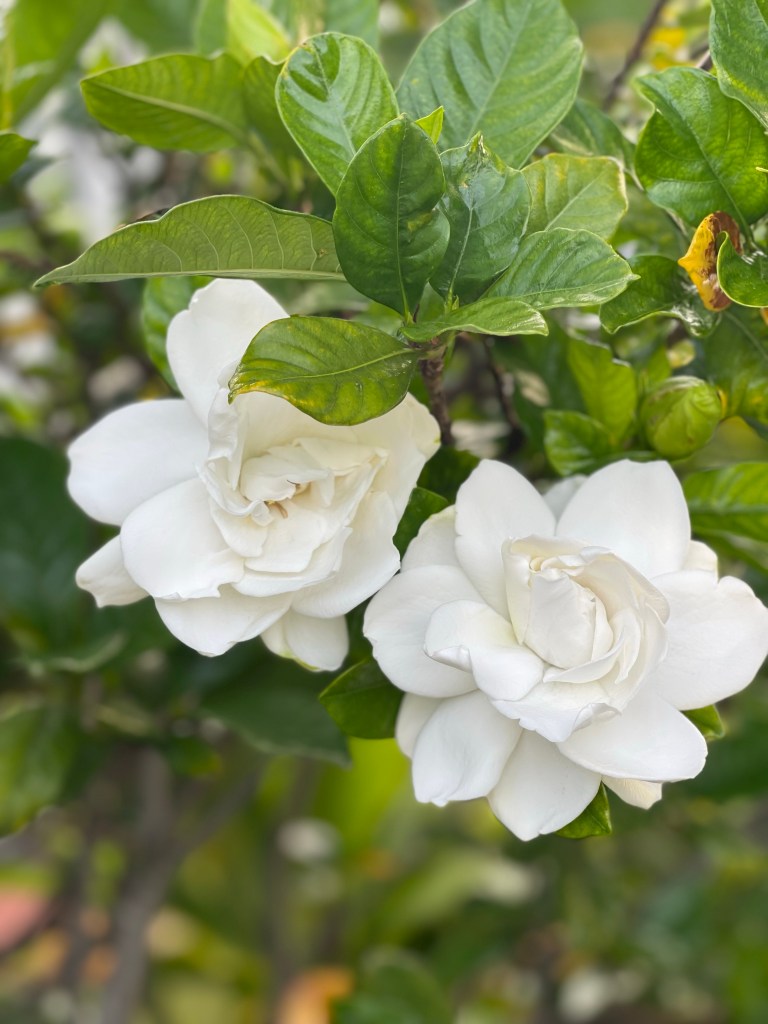
Q: my Gardenias are blooming a lot right now! I even put some of the dead brown flowers back around the plant, like mulch.
That’s the right thing to do, right Heidi?
Mahalo Debbie Azama Park
(Our fave Yoga teacher)
A; Brief answer: the spent flowers are good for mulch if they are pest free. Leafy mulch is also greatly beneficial for Gardenias.
Gardenias are called KIELE in Hawaiian.
They came to us from tropical China. The scientific name is Gardenia chinensis. They are in the RUBIACEAE plant family.
Did you know that there are over 200 species of Gardenias in the world?
Gardenias are easy to grow and bloom if you follow a few basics:
• Grow them in full sun.
• Pick every flower.
• Use soapy water to control ants and other insect pests.
• Cut long stems with blossoms if your plant is tall and flourishing!
• Cut the stems in the right place!
• Water!
• Shoot the undersides of the leaves to rinse off pests.
• Foliar fertilizer
• MirAcid
The more sun the better, for Gardenias and most flowering plants. Study your sun and shade patterns and try to find the sunniest spot. Wind is good too. Air circulation helps get CO2 to the leaves of the plants and helps reduce insect pests.
You will have way fewer pest insects: thrips, aphids, scale, if you pick every blossom, look for a swirl of white on the green fat kiele bud, that’s the time to get your clippers and cut the bud and some stem.
Put that bud with stem, right into a vase of cool water.
If you see any pests on the buds or flowers, rinse them gently at the sink. If the pests are stubborn or plentiful, squirt some dish soap (1-2 drops) in some water and swirl it around, rinse off the pests.
Soapy water for the plant pests outside one tablespoon per gallon.
You can use a pump sprayer or handheld spray bottle. Spray the soapy solution onto the leaves and young stems, get the undersides of leaves, as that is often where the pests seek shelter and hide.
Leave the soap to sit on the leaves for at least an hour.
You can then rinse the leaves and shoot off the now smothered and dead pests and rinse the sooty mold off of the leaves. Or you can just leave the soapy residue on the plants.
If you really want clean shiny Gardenia leaves, take a soft rag, dip that in the soapy solution and rub off the sooty mold and any insects or their eggs.
Watering and rinsing, like a strong windy rainstorm would do, is a great way to keep your plants healthy and pest free.
Observing while watering is also good; look for any buds coming along, and think about the best place to cut the stem to enjoy the blooms (and Fragrance!) inside your home.
GARDENIA Basics: THEY LIKE RICH, ACID SOIL, RED DIRT MIXED WITH GOOD LEAFY COMPOST. DIG OUT THE GRASS AND TOPDRESS WITH GOOD SOIL, MAKE AN EDGE TO THE PLANTER BED LIKE FLUSH BRICKS OR STONE, AND THEN JUST MOW AROUND THE BIG EDGE. KEEP THE GARDENIAS WEED FREE.No grass next to the stem.
Make a good soil zone area for the Gardenia roots with no competition from turf grass.
Gardenias also will bloom more if you fertilize with MirAcid. It’s the miracle gro in a blue box. If you fertilize with this each time you water, or at least a month or two before the main blooming season in May in Hawaii, you will get lots of lovely gardenia blossoms.
We had such a weird windstorm with those super strong and gusty west winds! So different then normal.
Up in our valley we lost power twice to the wind and HECO did not restore power until 9:30 p.m. on Wednesday 3/8/2023.
Mangoes and avocados were full of blossoms, Honohono orchids were in bud and some in bloom.
My Portuguese Madeira roses, and native Hawaiian gardenia Na`u have been blooming well, loving the cool and rainy winter were are finally having.
As I clean up the storm debris, (Mahalo for nature’s Arboriculture) including blown down dead twigs and branches, and lots of leaves, some I notice are from my mauka neighbors.
One of the tenets of true Horticulture is to OBSERVE nature and plants, to track the moon, winds, rain and other weather phenomena as see how the plants respond.
I am still reflecting on how the plants would respond.
What do you see? How are your plants after the winds?
Did you have any big tree failures? Or just small or dead branches?
The leaves are whipped on my gingers, Surinam cherries, mulberries, and ohia shed a few flowering branches. A young popolo plant got totally blasted on one side, it was just coming into fruit.
So, we shall see!
Honohono orchids had been in full glorious fragrant bloom as they budded and bloomed early this year. Originally I thought the orchids stood the wind storm but after a few days those in the main wind tunnel area of my garden wilted and withered prematurely.
Went to a neighborhood watch potluck pa`ina and a nice lady, Lokelani, that I always say hi to on my walks was there, with a gorgeous papale lauhala. She admired my honohono and said she caught a whiff of fragrance, from way across the yard, and she looked for the source of this favorite old time Hawaii fragrance, and from where? My hair!
Since she admired the orchids, I had to give them to her, along with maire ferns!
Now a couple weeks after the winds, I’m observing some of my favorite flowers and fruit trees in my garden and neighborhood:
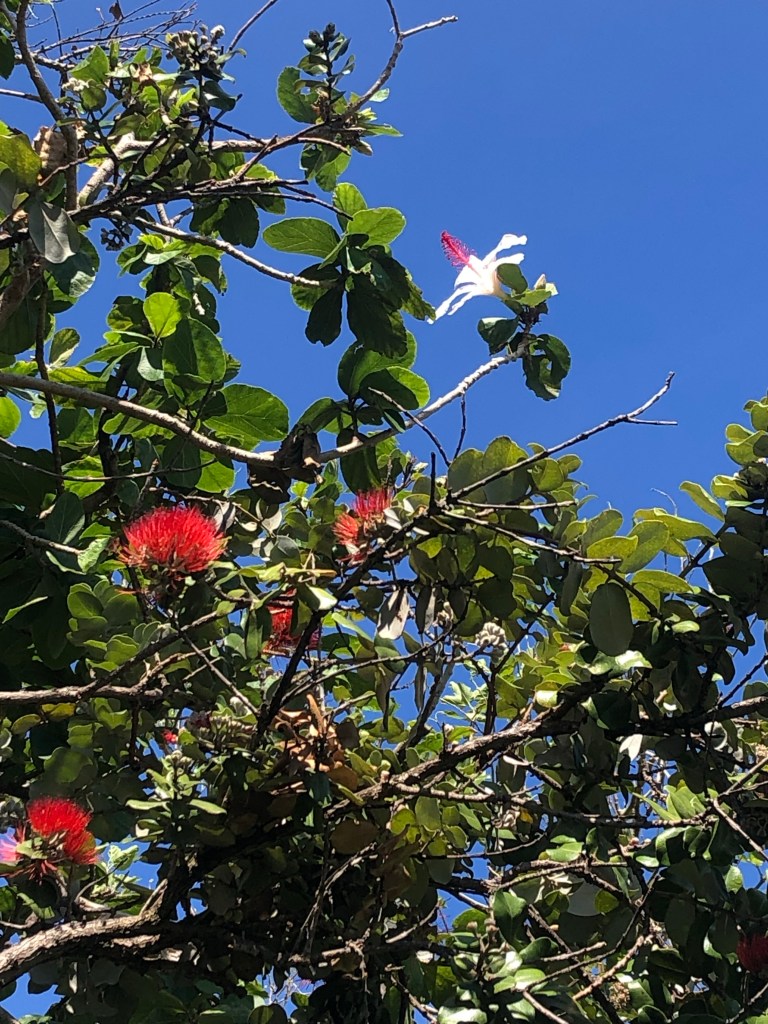
• ‘Ohi’a lehua Blooming profusely, some dead wood branches and twigs broke in the winds
• Native White Hibiscus wind whipped leaves, a few blooms at the very top of the tree
• Tahitian mountain apples were blooming before, still many flowers and now small fruit.
• Gardenias surprise early blooms two on one stem, but no other apparent buds yet. (they usually bloom for me in May).
• Na`u, native Hawaiian Gardenia lots of flowers and buds (also triggered by abundant soft rains before the winds)
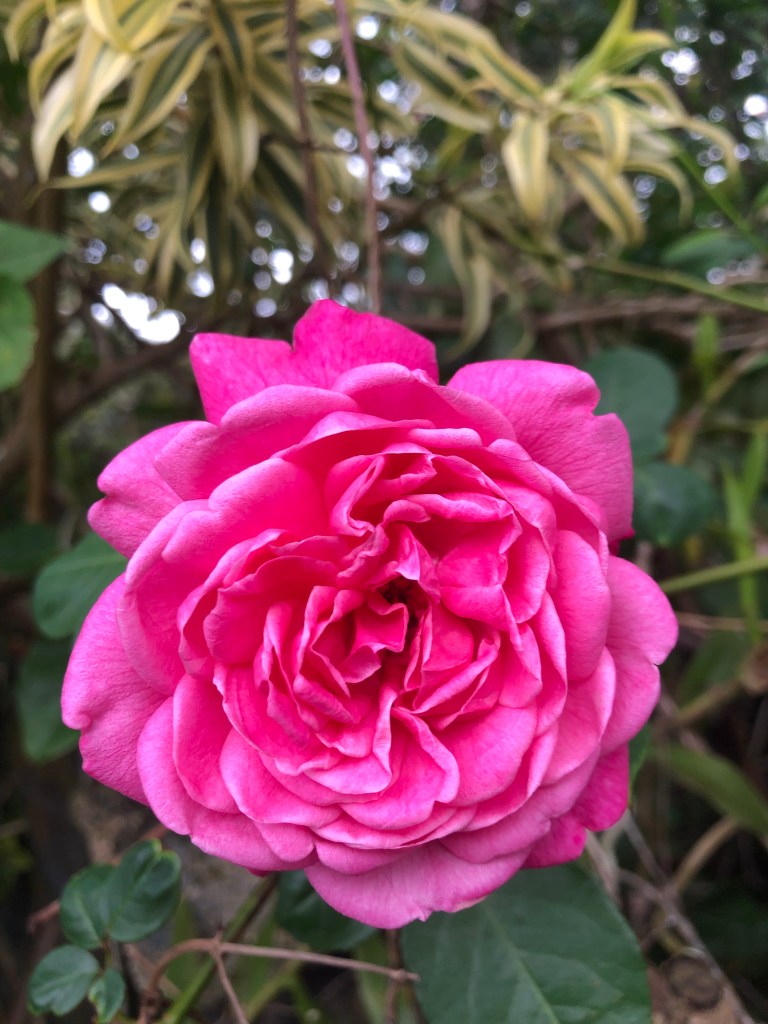
• Madeira roses Blooming profusely.
• Mangoes my Friend Dawn Shim from Makakilo brought me a gift of Haden mangoes, super early for this to fruit.
• Mulberries wind whipped leaves, lots of young fruit
• Pua Keni keni usually Bloom less in winter, BUT after the storm mine are full of Buds, flowers and lots of developing green “ball” fruit. I made some lei for a fundraiser, and plucked and cut off all the young fruit, to encourage more blooms from the tree
What are YOU observing, in your garden in your unique microclimate? I would love to hear back from my Gardening Readers …..
I asked my friend and great Gardener, Mari who lives Mauka of Sunset beach how bad the shoreline erosion was, and can she access her beach?
NO, she said sadly, It’s still blocked off and there is a steep Cliff, and dangerous drop off, it is too dangerous to walk down to Sunset Beach or Kammieland.
Plus, she continues, there’s so much beach litter and trash everywhere that are a result of “temporary” sandbag burritos and black saran shade cloth.
Along with the liter there are multiple safety issues including rebar, concrete and other structural debris from coastal houses. These houses are now too close to our North shore surf swells, breaking waves and high tides.
BUT, says Mari, there is one upside to this trash and mis-use of our public beach.
My friends and I gather up the black matting erosion control debris that is floating in the ocean. (And yes, its very heavy when waterlogged).
What do you do with it then? We dry it out and SOLARIZE a most hated weed. You know that Asparagus pokey groundcover? Or sometimes called Asparagus Fern?
Asparagus “fern” is not a fern, Asparagus sprengeri is actually in the Lily family and is related ot our edible asparagus. It is very pokey, and if it pokes your bare gloveless hands, it’s kind of toxic.
I used to favor it for landscaping because it is extremely tough, xeric, and a good ground cover in a dry neglected garden.
But as a maintenance gardener I HATE it! Its pokey and the pokes from the minute thorns on the stems, can get infected. (remember to put on your garden gloves!) It has underground storage tubers, like little potatoes that make it a drought tolerant survivor plant and also Supremely difficult to eradicate.
You can dig and dig it out, but if one small tuber is left behind, Auwe! It will all sprout up again.
And it has RED FRUIT, with several black seeds inside. Birds love to find and eat red fruit and then they poop out the seeds everywhere.
AN ALL AROUND PESTY PLANT !!
We were talking about the wave erosion, high tides and overly heated water, and global warming change to north shore and illegals things people are doing..
How’s about the guy pouring concrete and rebar on the beach? Didn’t someone see it and report the Concrete Company?! Really unfortunate and unsafe issues here. Something needs to be done to save our beaches and Kai for everyone. Hard to watch.
Though there are many things we cannot control, the reuse of this beach trash to help eliminate a weedy plant in the garden, this is AKAMAI!
SOLARAZATION is a great way to control weeds without using dangerous chemical herbicides.
Often we use layers of wet newspaper, cardboard or even carpet to smother and solarize weeds, and turf grass where we don’t want it etc. Then after the weeds are safely killed, you can peel them away, restore the soil, and plant useful plants in place of alien weeds.
The black saran or shade cloth which some use as weed controlling ground cover, or in this case to slow down the power of wave erosion, can be used to solarize and kill weeds in our gardens.
This a beach clean up with a purpose!
Mahalo to Mari and her North shore friends who help clean our beaches and then grow good productive gardens.
Q: Is pua kenikeni native to Hawaii? Or did the ancient Polynesians bring it? I LOVE that pua and the leis we can make. Please share more about this favorite fragrant garden and lei plant.
Aunty D, Kane`ohe
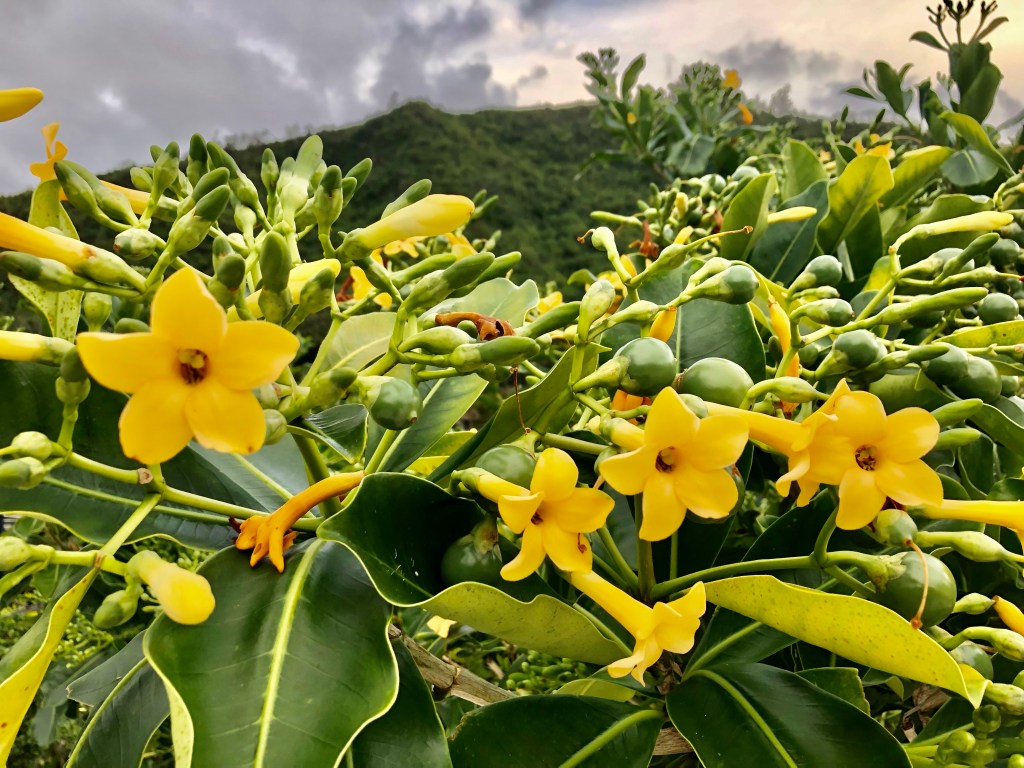
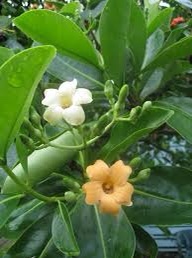
A: Pua kenikeni is not native to Hawaii, nor did the ancient voyagers bring it on their great sea travelling canoes. It only got to Hawaii in the late 1800s and became widely popular in about 1920. It was given the name pua keni keni (10 cents flower) because the flowers were so highly prized that they sold for 10 cents each!
The scientific name is Fagraea berteriana and it is in the Loganiaceae plant family.
The first pua tree in Hawaii was planted in Maunawili and it was propagated and shared on the windward side of Oahu where it grows well, given some good horticultural TLC. It became known as the flower of Kane`ohe in the early days.
My Mom Marilyn Bornhorst and I got to visit what is probably the original tree. It was quite a sight to see! My calabash Uncle, Ben Lum, could be called ‘Mr. Puakenikeni’.
He has nurtured this tree and made hundreds of not thousands of air layered trees to share over the years. He gives them away and also sells them at Ko`olau farmers. We find that sometimes people appreciate a plant more and will plant it in the ground and malama (cherish and care for) if they paid for it.
Free plants can languish in pots, whereas if you paid hard earned money for it, you are more likely to plant it and water it daily to get it established.
Pua kenikeni do best in the ground, in fertile soil with regular water. They do better in red dirt or rich brown forest type soils than in sandy or beach kind of soils.
The tree is mentioned in the classic book NA LEI by Marie McDonald.
McDonald writes that it was brought to Hawaii from other south pacific islands by Jarrett P. Wilder.
You can grow it from seeds but that will take a while. Some people can grow it from cuttings but the most popular way to propagate pua kenikeni is from air layers.
The sooner you plant it in the ground, the quicker it will bloom. Regular water and compost, from leaves or tree chips will build healthy fertile soil for your tree.
Cheap chemical fertilizer, especially lawn fertilizer with heavy nitrogen (the first number on the fertilizer bag) will not promote blooming. You can even burn or kill pua kenikeni with harsh chemical fertilizers, so use the old-fashioned Hawaiian soil building techniques of re-using your garden “opala” or green wastes, mulch and compost, to build up your soil and save water too.
Keep your tree pruned low and wide spreading so you can pick the flowers. You can use a bonsai technique and bend the branches low while they are young and flexible. I’ve seen some Akamai lei flower growers use pretty Pohaku (rocks) on a rope, to weigh the branches down and train them to be in pickable range.
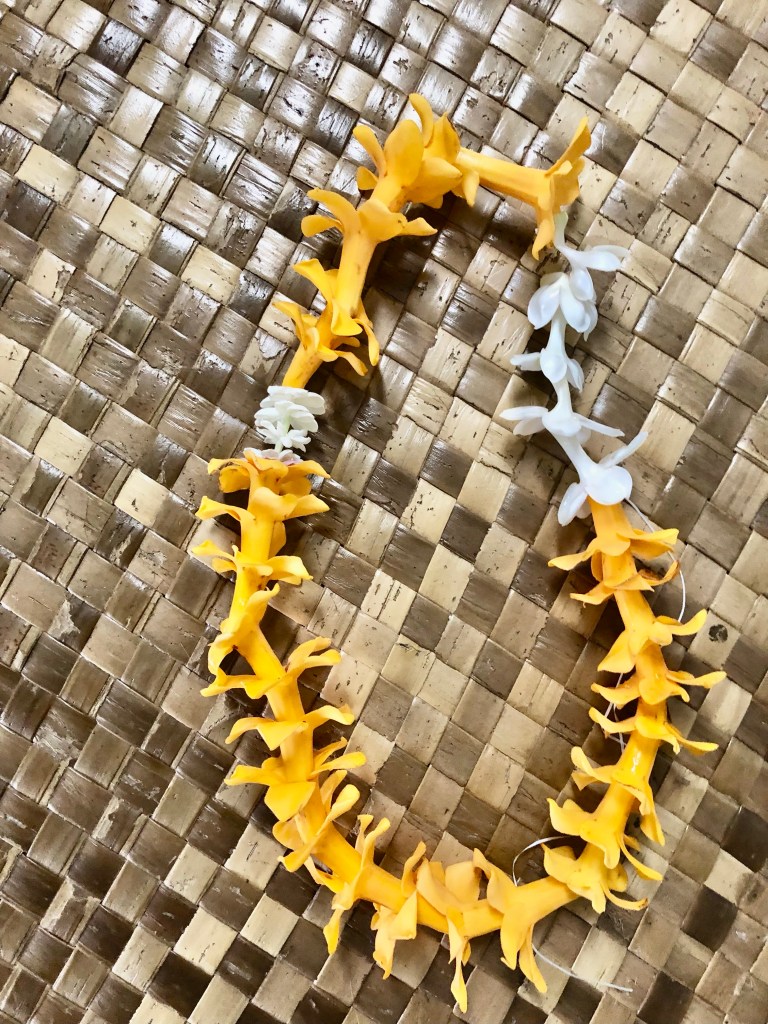
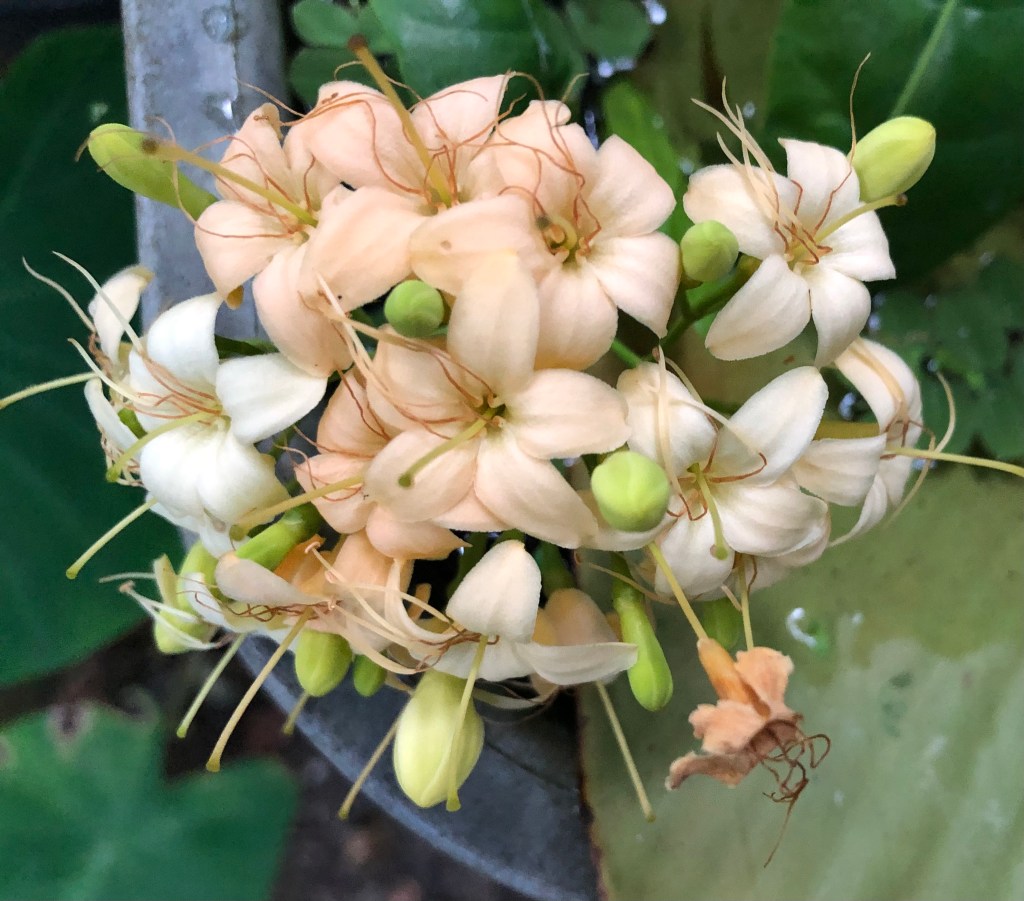
Pua kenikeni flowers first open and bloom creamy white and turn to a subtle light orange on the second day. You can pick mature buds or flowers and keep them fresh and firm in a vase of water. Or sprinkle water into the plastic bag with the flowers
The flowers are somewhat fragile and lei makers need to handle them carefully.
Uncle Ben told me a neat technique that one of his friends uses. He takes a big leaf, makes some pukas and inserts the pua into the pukas. He then carries the flower adorned leaf and gives away the fragrant blossoms to folks who admire them. Isn’t that an awesome way to share some aloha?
Lei makers usually clip off the bottom green part of the flower and then string the lei. The lei is pretty with fresh white flowers or second day light orange. To refresh a lei puakenikeni, put it in a clear plastic bag, blow some air in the bag and seal it. Float this in a bowl of cool water.
NEVER put puakenikeni in the refrigerator the lei will not last. It will turn black and then to mush (we had an inexperienced florist that did put them in the fridge and Auwe! The next morning those lovely carefully plucked and strung blossoms were all black and yucky.
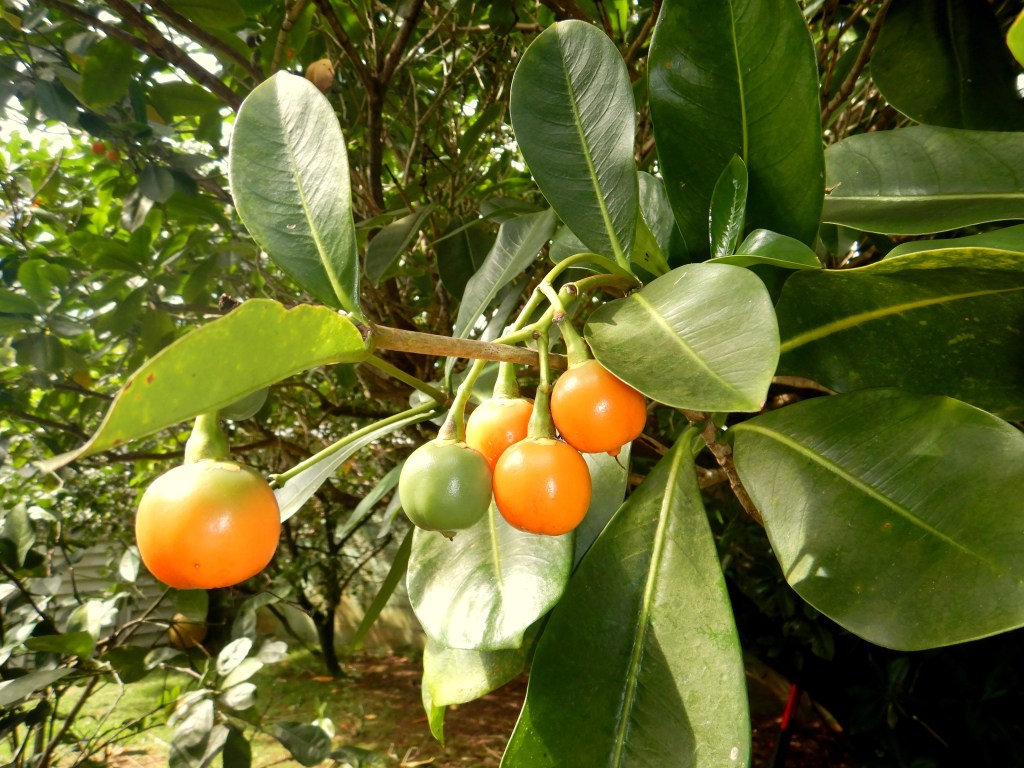
To promote flowers on your tree, clip or pinch off the developing fruit which look like green balls and then turn orange when ripe. If you cut open a ripe one you will see hundreds of small black seeds inside. It kind of looks like the insides of a cut papaya – orange flesh and black seeds.
I sometimes clip off bunches of the green or orange fruit with their stems and use them for a long-lasting flower arrangement. I love them for Fall arrangements, and they are pretty at Christmas time too.
Developing fruit takes energy from the tree. If you clip off the fruits that tree energy will go into producing more flowers. Akamai lei flower growers pinch off every green fruit and then have an abundance of the fragrant pretty flowers.
A classic old fashioned, fragrant hedge and special plant. Maybe a LEI plant? for small fingers and with a delicate lei needle…..
‘What kind of pikake is this?’, asked my friend Joan Takamori as she walked by our front planting strip.
I had propagated some from Mary Osorio’s house when she moved away to Wahiawa, and stuck it out front for others to enjoy too.
Its flowering so nicely in winter and it does have the great pikake perfume!
So tough
so pretty
so reminiscent ….
My parents planted a star jasmine hedge and Singapore Plumeria trees outside their bedroom window.
So Akamai my Mom, on Landscape Design!
Our family yard in Makiki was pretty bare at first, except for tons of coconut trees, a date palm, Chinese banyan, giant yellow poinciana tree and more. My folks carefully edited out some of the excess and overly large, big trees as time went by so we could grow more food and more fragrant and fun flowers.
My Dad chiseled out a parking spot by chiseling and sledge hammering out the rock cliff below and he carried up the rocks and made rock walls to keep us kolohe kids contained. (Good cross-training for a Surfer!)
And what a great Landscape Design Concept: Fragrance outside your bedroom window• To waft in on the lovely brisk Tradewinds• To float in gently on warm kona winds•
Star jasmine is an old kama`aina favorite that we don’t see planted so often these days
It’s tough, easy to grow, fragrant and has nice fuzzy leaves. It has a “clean” look with its olive-green leave and clusters of bright white fragrant blossoms. It’s easy to propagate and pretty much pest free.
And the Flowers are fragrant.
As Joan intrinsically knew; it is related to pikake.
Amazingly the fragrance is very similar to our cherished pikake Jasminum sambac.
As true pikake has some bad bud stinging pests now (an alien fly) and growers sometimes overspray insecticide on the buds. Lei making is not FOOD so there are no legal restrictions on how recently it was sprayed with insect poison.
Growers have gotten sick from this, and recently when I wear a pikake lei, though I love the fragrance, my stomach feels a bit sick after a while.)
Maybe we could make a fragrant lei of Star jasmine instead?
Another name for star jasmine is Poet’s jasmine. The Latin name is Jasminum officinale. Star Jasmine is native from the Trans Caucasus to Southern Central China.
It is in the Oleaceae or Olive plant family
You can Grow it from Cuttings.
Star jasmine is Pretty easy to grow from cuttings. Harvest semi-woody branches, about 4-6” inches long, stickthem directly in the ground or in a pot of highquality potting mix and soil. Water daily.


 Heidi Bornhorst