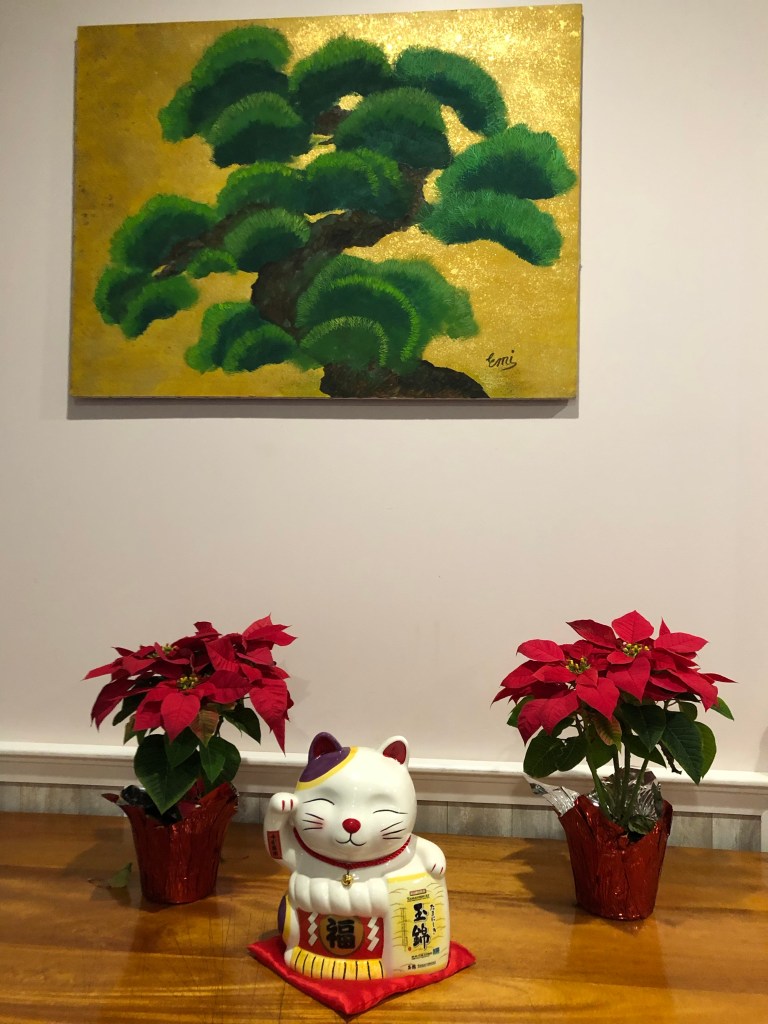
DÉCOR! Brightens up a gloomy rainy day. Lights, trees, poinsettias it’s as simple or as complex as you want to make it.
Decorating with, and gifting plants and flowers is fun for gardeners and the plant lovers on our lists. I started looking around my garden for what I can give to whom and totally “Shop Local”. I Love to check out local garden shops for living plant gifts.
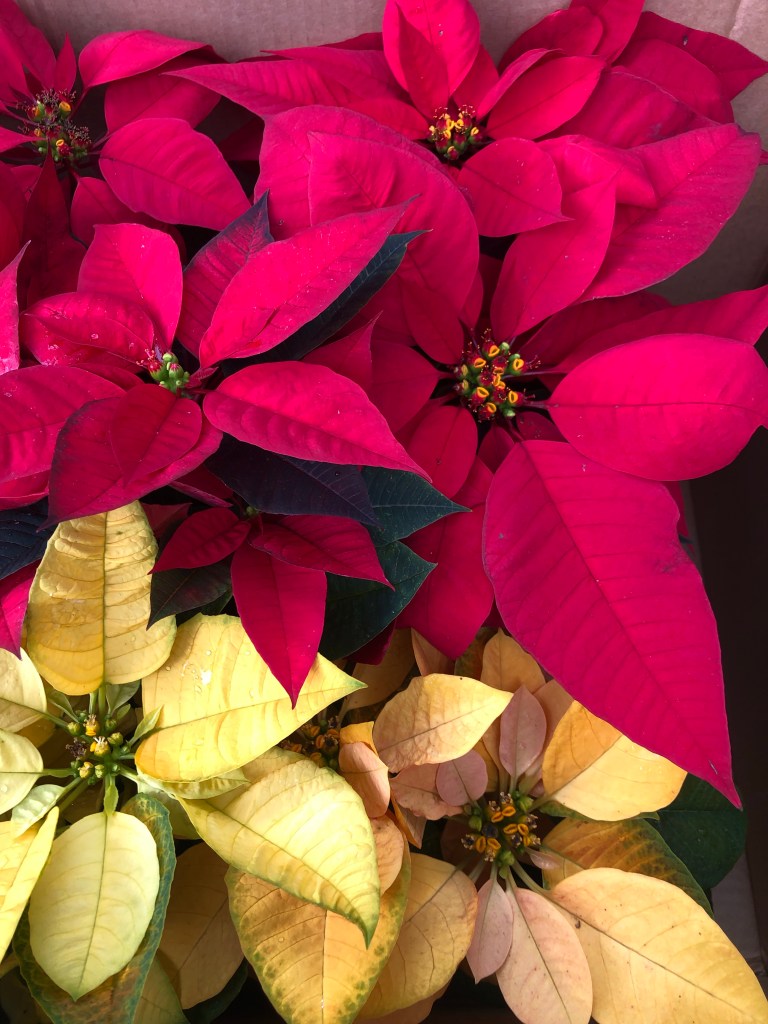
POINSETTIAS can last a long time in a pot if you water them correctly. Once a week carry the pot to the sink (take off the foil) run water and soak the planting media, let it drain and then put it back in its decorative spot.
If you have the old fashioned hedge type Poinsettia growing outside KEEP it! Grow it, and share it, so can perpetuate this kama’aina classic. These are different from the ones the nurseries grow today.
WHITE POINSETTIEA or Euphorbia leucocephala is another outdoor hedge plant that is gorgeous and fragrant! It has many fun common names like Snow on the mountain, Puno puno, Flor de Nino, White-laced Euphorbia, Snowflake Euphorbia, Pascuita, Snows of Kilimanjaro, and Little Christmas Flower. Sometimes you can find this in pots as well, but it really is most glorious grown in the ground.
LIPSTICK PLANT OR ACHIOTE this old fashioned kama’aina favorite comes in at least three colors: red, super bright red (my fave) and yellow. The fuzzy pods are attractive when fairly young and they keep well as a cut flower arrangement. The more mature ones are good in a dry arrangement, and most fun of all are the red coated seeds. You can make achiote oil for making true Spanish rice and other gourmet treats. Rather than red food coloring or other dyes, grow and use the real thing. Easy to grow from seeds, cuttings or buy a plant at your favorite nursery. You can see all of the colors at Ho’omaluhia Botanic Garden; they grown on the trail heading down to the lake, Waimaluhia, from the visitors’ center.
KALAMANSI AND TANGERINES both fruit at this time of year and the trees are so pretty and festive. I especially love kalamansi for smaller gardens and for versatility in cooking, from drinks, to fish marinades to that special acidic citric touch in salad dressings.
NORFOLK or Cook pines can be grown in pots or in your yard. They don’t smell like the mainland ones but they don’t risk importing any new noxious alien pests either and you can get them for free. They also stay green for months and you can treat them like a houseplant for months (if you like!) and as my Mom says, “No needles on the floor!”
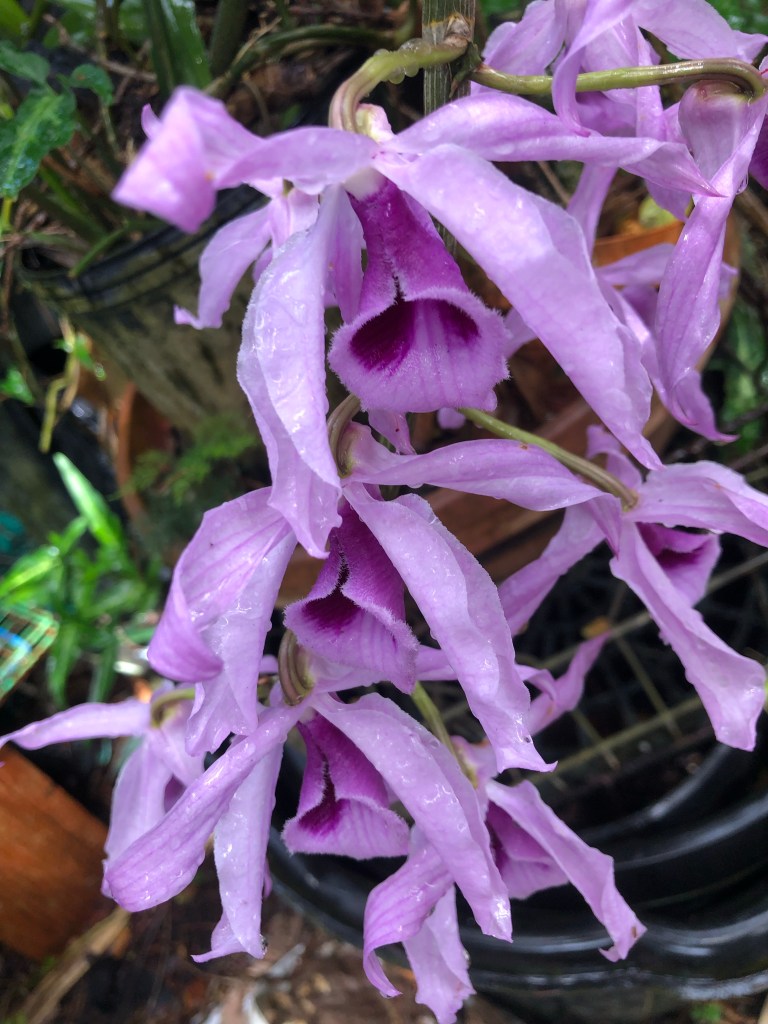
Orchids are so decorative and make the best gifts. Water them like you do Poinsettias.
Q: Heidi when did dragon fruit come to us here in Hawaii? Seems kinda recent to me but one of my gardening writing friends tells me its been here since the late 1800s.
Pls inform
Mahalo
KD, Kahala
A: Like you, I think it’s recent. I know night blooming cereus, a relative of dragon fruit, has been here for a long time and has an interesting survival at sea/ revival by Horticulture story. So, I did some digging.
Ken Love, one of my go to Fruit experts, informs me that yes, it’s a recent arrival to our shores and gardens.
Love says that Greg Adams brought them from Vietnam in the late 60s or early 70s. Since then others have introduced cultivars from places like Israel.
They are native to Mexico and Central America where we get the common name pitaya. Now widely grown by masterful Horticulturists and entrepreneurial Farmers in Thailand and Vietnam, we are seeing more in Hawaii home gardens and fruit markets.
There are some reports of it getting here early, maybe by that epic plantsman and translator for Alii, Don Francisco de Paula Marin. He brought us our first mango, grapes and Yellow Plumeria, among many other wonderful plants that now enhance our Hawaii gardens.
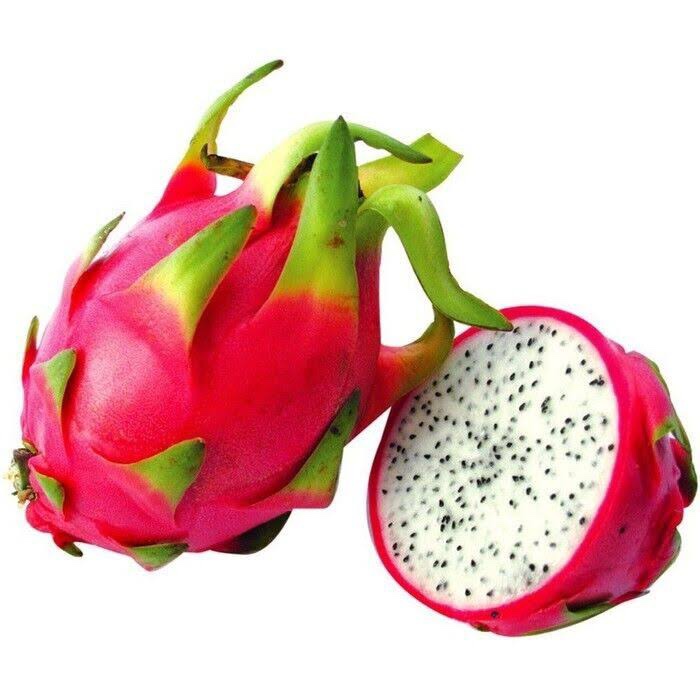
I think the red fleshed one is gorgeous especially in a mixed fruit platter. To me the white one is more ono but less colorful and pretty. I’m still waiting to try the yellow fruited one.
Scientists call it Hylocereus. H. undatas is the white fleshed one, H. roja is the red fruited one and H. amarilla has yellow flesh. All are in the Cactus family, Cactaceae.
They are fun to grow if you don’t mind thorns. The stalks are heavy and need support on a sturdy trellis or fence. You get more fruit if you hand pollinate.
We always wonder how nutritious our Hawaii grown fruit are and dragon fruit has some great nutrients. It is high in lycopene, as are tomatoes and watermelon. It’s a good source of calcium and iron.
Night-blooming cereus or panini o ka Punahou is a kind of cactus. The most famous planting of it in Hawaii is on the rock wall surrounding Punahou School in Makiki.
Night-blooming cereus
The plant, Hylocereus undatus, is from Mexico, where it is called pitahaya. It first landed in Hawaii around 1830 on the brig Ivanhoe, which was carrying plants collected in Mexico. Most of them died and were tossed overboard, and the nearly dead, dried-out cereus cutting looked like a goner, but First Officer Charles Brewer took care of it on the long voyage and planted it in Honolulu.
Dr. Richard Criley of UH Manoa, has been monitoring the night blooming cereus flowering cycles at Punahou school, for about 20 years, and sometimes sees fruit. Maybe young scientists are hand pollinating them. He contends that hand pollination is needed for them to set fruit here in Hawaii.
They set fruit in Mexico where they are naturally bat pollinated. Our native bats are insect eaters and they are rare.
Its thorny stems send out aerial roots from the nodes or sections of stem. You can grow it from cuttings but watch out. It looks innocent at first but as it grows it can take over your rock wall, climb up slopes or trees, or even up your utility poles and lines.
(This happened at my parents’ home and they were without a phone for three weeks! I told my mom to keep it in a pot, but she is too kindhearted and said, “It looked so cute and helpless in the pot.”)
Q: my Gardenias are blooming a lot right now! I even put some of the dead brown flowers back around the plant, like mulch.
That’s the right thing to do, right Heidi?
Mahalo Debbie Azama Park
(Our fave Yoga teacher)
A; Brief answer: the spent flowers are good for mulch if they are pest free. Leafy mulch is also greatly beneficial for Gardenias.
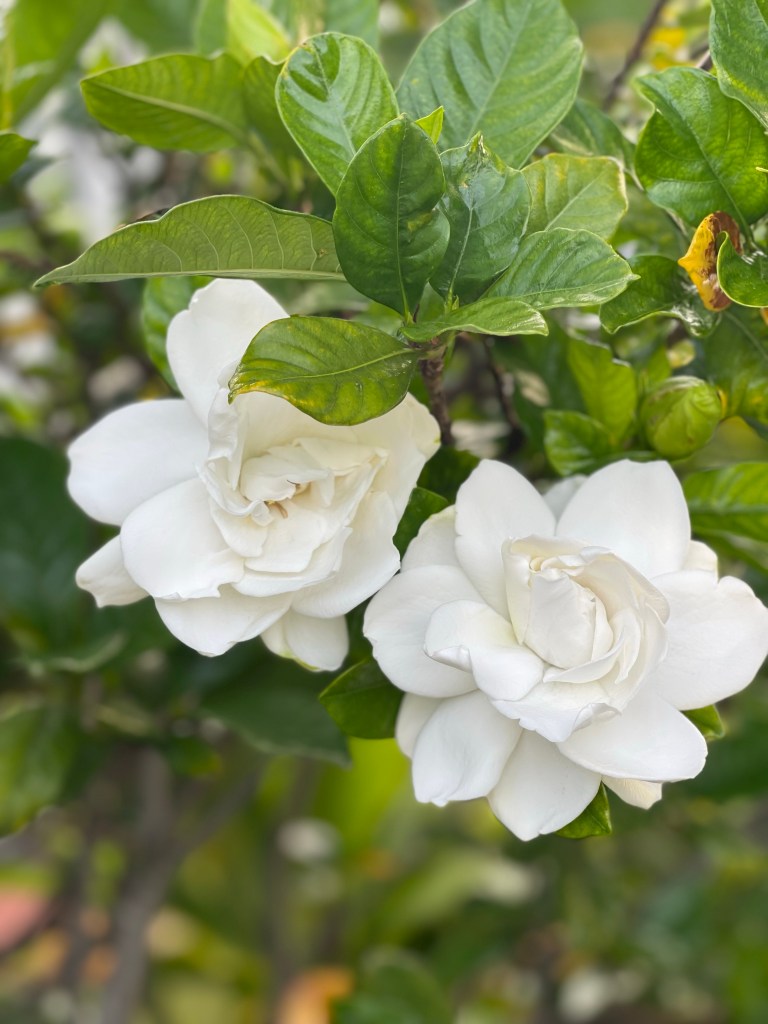
Gardenias are called KIELE in Hawaiian.
They came to us from tropical China. The scientific name is Gardenia chinensis. They are in the RUBIACEAE plant family.
Did you know that there are over 200 species of Gardenias in the world?
Gardenias are easy to grow and bloom if you follow a few basics:
• Grow them in full sun.
• Pick every flower.
• Use soapy water to control ants and other insect pests.
• Cut long stems with blossoms if your plant is tall and flourishing!
• Cut the stems in the right place!
• Water!
• Shoot the undersides of the leaves to rinse off pests.
• Foliar fertilizer
• MirAcid
The more sun the better, for Gardenias and most flowering plants. Study your sun and shade patterns and try to find the sunniest spot. Wind is good too. Air circulation helps get CO2 to the leaves of the plants and helps reduce insect pests.
You will have way fewer pest insects: thrips, aphids, scale, if you pick every blossom, look for a swirl of white on the green fat kiele bud, that’s the time to get your clippers and cut the bud and some stem.
Put that bud with stem, right into a vase of cool water.
If you see any pests on the buds or flowers, rinse them gently at the sink. If the pests are stubborn or plentiful, squirt some dish soap (1-2 drops) in some water and swirl it around, rinse off the pests.
Soapy water for the plant pests outside one tablespoon per gallon.
You can use a pump sprayer or handheld spray bottle. Spray the soapy solution onto the leaves and young stems, get the undersides of leaves, as that is often where the pests seek shelter and hide.
Leave the soap to sit on the leaves for at least an hour.
You can then rinse the leaves and shoot off the now smothered and dead pests and rinse the sooty mold off of the leaves. Or you can just leave the soapy residue on the plants.
If you really want clean shiny Gardenia leaves, take a soft rag, dip that in the soapy solution and rub off the sooty mold and any insects or their eggs.
Watering and rinsing, like a strong windy rainstorm would do, is a great way to keep your plants healthy and pest free.
Observing while watering is also good; look for any buds coming along, and think about the best place to cut the stem to enjoy the blooms (and Fragrance!) inside your home.
GARDENIA Basics: THEY LIKE RICH, ACID SOIL, RED DIRT MIXED WITH GOOD LEAFY COMPOST. DIG OUT THE GRASS AND TOPDRESS WITH GOOD SOIL, MAKE AN EDGE TO THE PLANTER BED LIKE FLUSH BRICKS OR STONE, AND THEN JUST MOW AROUND THE BIG EDGE. KEEP THE GARDENIAS WEED FREE.No grass next to the stem.
Make a good soil zone area for the Gardenia roots with no competition from turf grass.
Gardenias also will bloom more if you fertilize with MirAcid. It’s the miracle gro in a blue box. If you fertilize with this each time you water, or at least a month or two before the main blooming season in May in Hawaii, you will get lots of lovely gardenia blossoms.
We had such a weird windstorm with those super strong and gusty west winds! So different then normal.
Up in our valley we lost power twice to the wind and HECO did not restore power until 9:30 p.m. on Wednesday 3/8/2023.
Mangoes and avocados were full of blossoms, Honohono orchids were in bud and some in bloom.
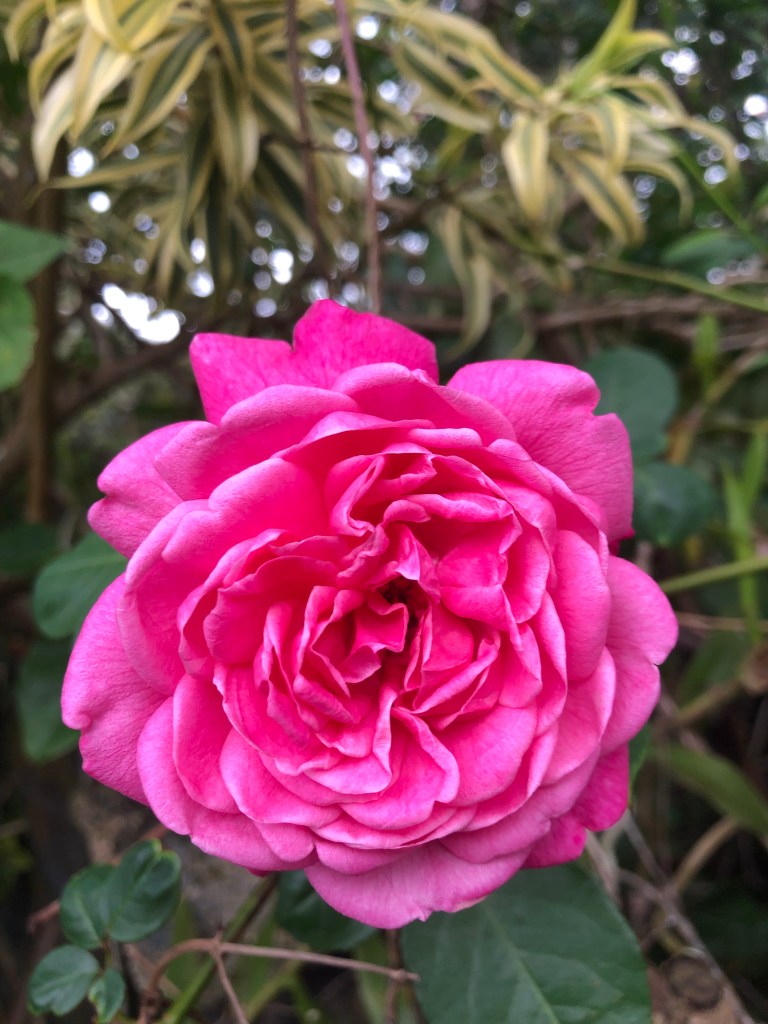
My Portuguese Madeira roses, and native Hawaiian gardenia Na`u have been blooming well, loving the cool and rainy winter were are finally having.
As I clean up the storm debris, (Mahalo for nature’s Arboriculture) including blown down dead twigs and branches, and lots of leaves, some I notice are from my mauka neighbors.
One of the tenets of true Horticulture is to OBSERVE nature and plants, to track the moon, winds, rain and other weather phenomena as see how the plants respond.
I am still reflecting on how the plants would respond.
What do you see? How are your plants after the winds?
Did you have any big tree failures? Or just small or dead branches?
The leaves are whipped on my gingers, Surinam cherries, mulberries, and ohia shed a few flowering branches. A young popolo plant got totally blasted on one side, it was just coming into fruit.
So, we shall see!
Honohono orchids had been in full glorious fragrant bloom as they budded and bloomed early this year. Originally I thought the orchids stood the wind storm but after a few days those in the main wind tunnel area of my garden wilted and withered prematurely.
Went to a neighborhood watch potluck pa`ina and a nice lady, Lokelani, that I always say hi to on my walks was there, with a gorgeous papale lauhala. She admired my honohono and said she caught a whiff of fragrance, from way across the yard, and she looked for the source of this favorite old time Hawaii fragrance, and from where? My hair!
Since she admired the orchids, I had to give them to her, along with maire ferns!
Now a couple weeks after the winds, I’m observing some of my favorite flowers and fruit trees in my garden and neighborhood:
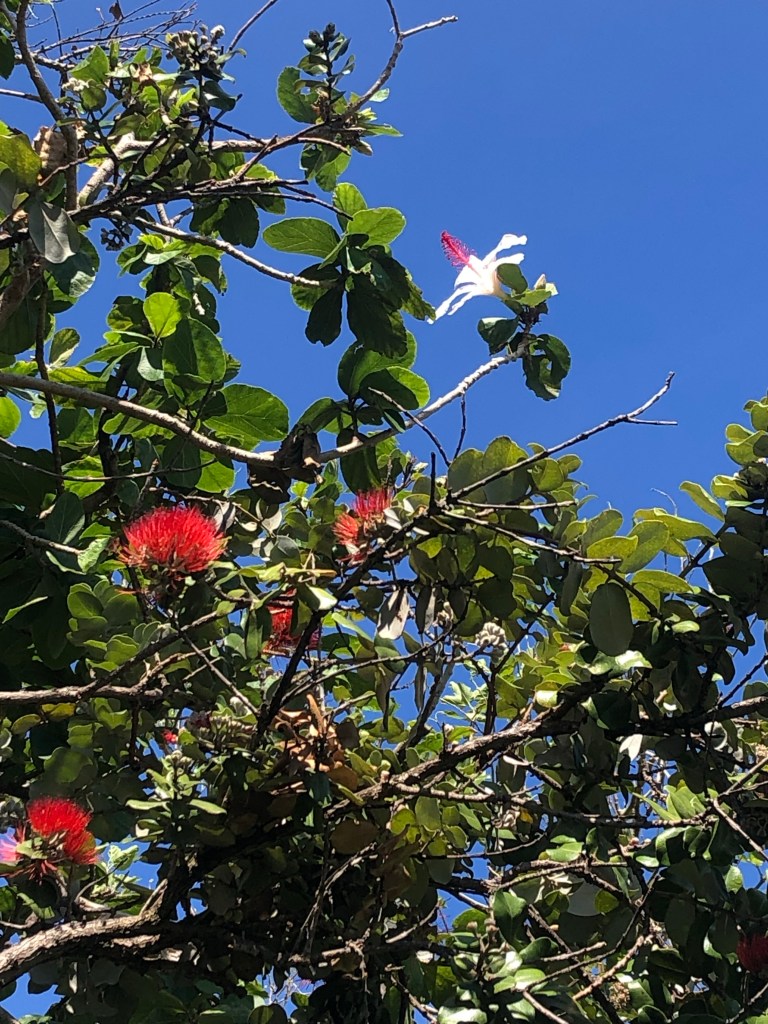
• ‘Ohi’a lehua Blooming profusely, some dead wood branches and twigs broke in the winds
• Native White Hibiscus wind whipped leaves, a few blooms at the very top of the tree
• Tahitian mountain apples were blooming before, still many flowers and now small fruit.
• Gardenias surprise early blooms two on one stem, but no other apparent buds yet. (they usually bloom for me in May).
• Na`u, native Hawaiian Gardenia lots of flowers and buds (also triggered by abundant soft rains before the winds)
• Madeira roses Blooming profusely.
• Mangoes my Friend Dawn Shim from Makakilo brought me a gift of Haden mangoes, super early for this to fruit.
• Mulberries wind whipped leaves, lots of young fruit
• Pua Keni keni usually Bloom less in winter, BUT after the storm mine are full of Buds, flowers and lots of developing green “ball” fruit. I made some lei for a fundraiser, and plucked and cut off all the young fruit, to encourage more blooms from the tree
What are YOU observing, in your garden in your unique microclimate? I would love to hear back from my Gardening Readers …..
I asked my friend and great Gardener, Mari who lives Mauka of Sunset beach how bad the shoreline erosion was, and can she access her beach?
NO, she said sadly, It’s still blocked off and there is a steep Cliff, and dangerous drop off, it is too dangerous to walk down to Sunset Beach or Kammieland.
Plus, she continues, there’s so much beach litter and trash everywhere that are a result of “temporary” sandbag burritos and black saran shade cloth.
Along with the liter there are multiple safety issues including rebar, concrete and other structural debris from coastal houses. These houses are now too close to our North shore surf swells, breaking waves and high tides.
BUT, says Mari, there is one upside to this trash and mis-use of our public beach.
My friends and I gather up the black matting erosion control debris that is floating in the ocean. (And yes, its very heavy when waterlogged).
What do you do with it then? We dry it out and SOLARIZE a most hated weed. You know that Asparagus pokey groundcover? Or sometimes called Asparagus Fern?
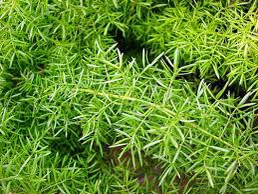
Asparagus “fern” is not a fern, Asparagus sprengeri is actually in the Lily family and is related ot our edible asparagus. It is very pokey, and if it pokes your bare gloveless hands, it’s kind of toxic.
I used to favor it for landscaping because it is extremely tough, xeric, and a good ground cover in a dry neglected garden.
But as a maintenance gardener I HATE it! Its pokey and the pokes from the minute thorns on the stems, can get infected. (remember to put on your garden gloves!) It has underground storage tubers, like little potatoes that make it a drought tolerant survivor plant and also Supremely difficult to eradicate.
You can dig and dig it out, but if one small tuber is left behind, Auwe! It will all sprout up again.
And it has RED FRUIT, with several black seeds inside. Birds love to find and eat red fruit and then they poop out the seeds everywhere.
AN ALL AROUND PESTY PLANT !!
We were talking about the wave erosion, high tides and overly heated water, and global warming change to north shore and illegals things people are doing..
How’s about the guy pouring concrete and rebar on the beach? Didn’t someone see it and report the Concrete Company?! Really unfortunate and unsafe issues here. Something needs to be done to save our beaches and Kai for everyone. Hard to watch.
Though there are many things we cannot control, the reuse of this beach trash to help eliminate a weedy plant in the garden, this is AKAMAI!
SOLARAZATION is a great way to control weeds without using dangerous chemical herbicides.
Often we use layers of wet newspaper, cardboard or even carpet to smother and solarize weeds, and turf grass where we don’t want it etc. Then after the weeds are safely killed, you can peel them away, restore the soil, and plant useful plants in place of alien weeds.
The black saran or shade cloth which some use as weed controlling ground cover, or in this case to slow down the power of wave erosion, can be used to solarize and kill weeds in our gardens.
This a beach clean up with a purpose!
Mahalo to Mari and her North shore friends who help clean our beaches and then grow good productive gardens.
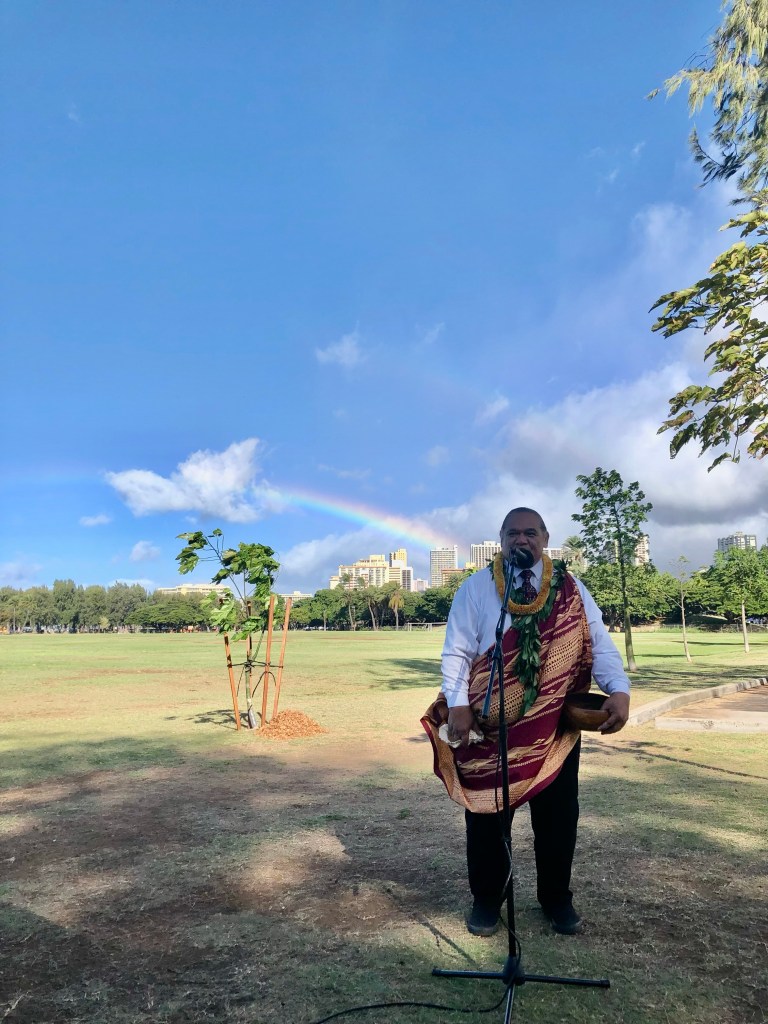
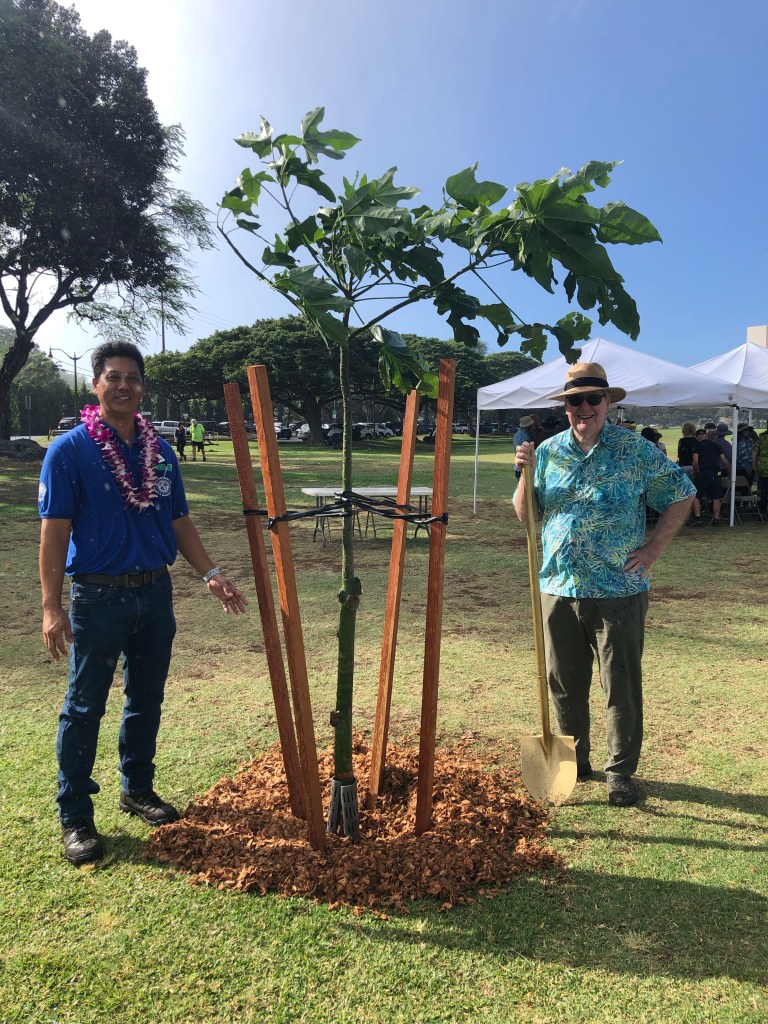
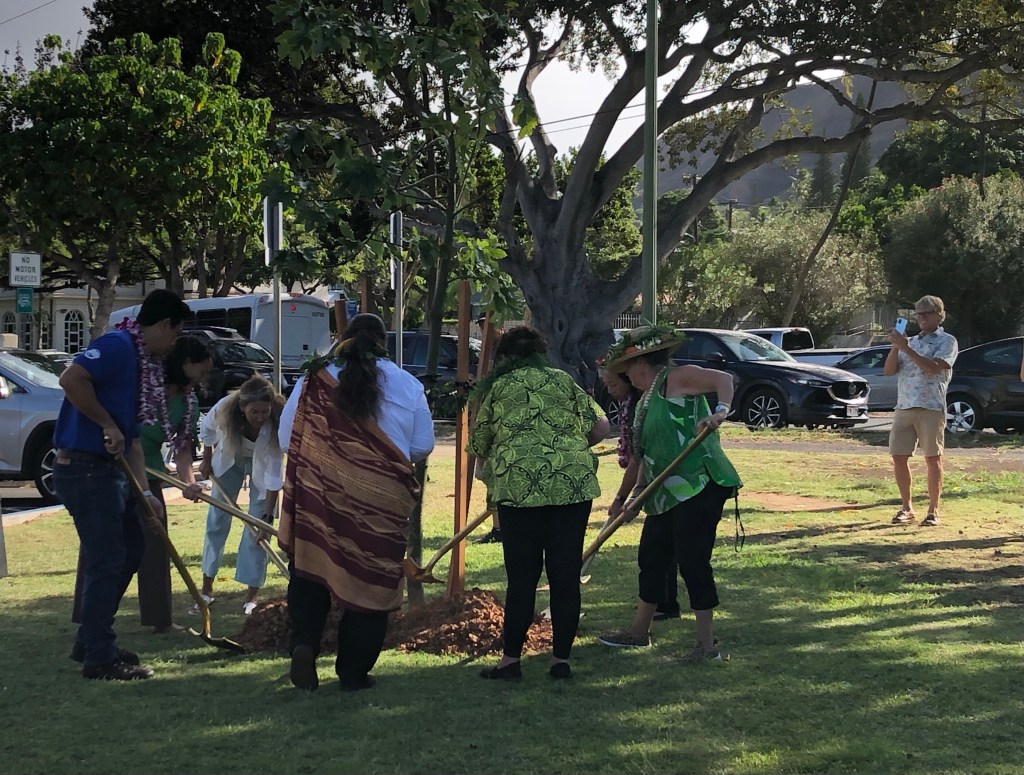
After three years of lockdown, we are finally, Happily, able to celebrate Arbor Day in Kapi`olani Park once again.
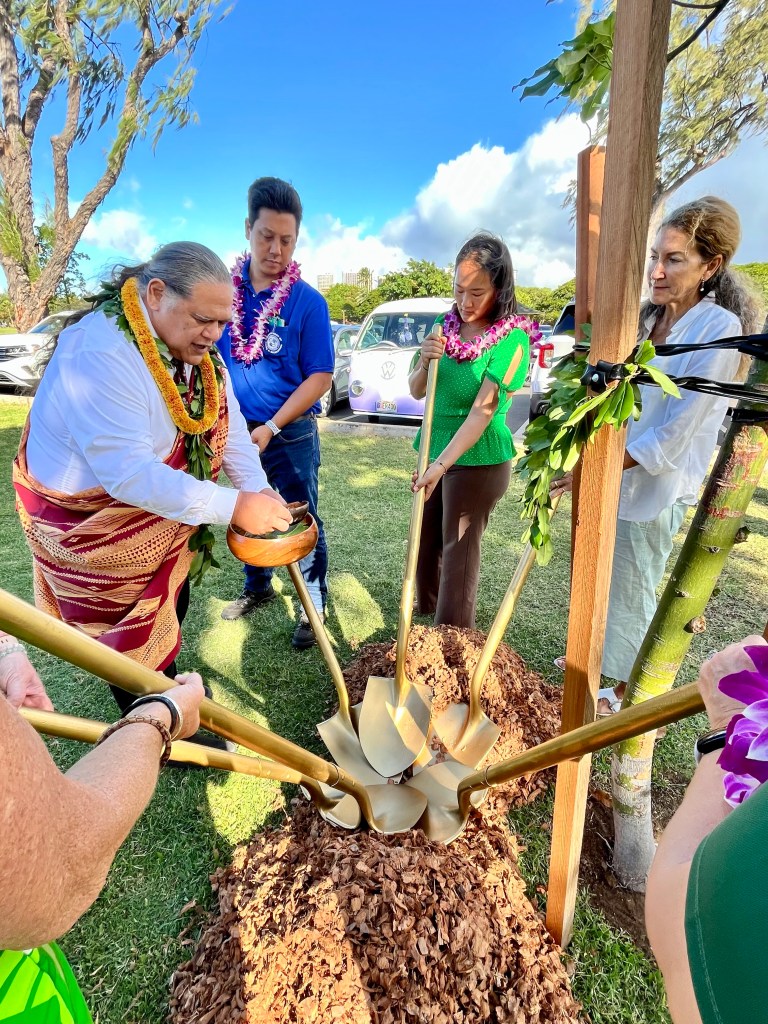
On Saturday November 19, 2022, we will gather with ScenicHawaii, Inc., Kapi`olani Park Preservation society, some Dedicated City tree workers and Arborists, Volunteers, and all of us who love and cherish trees and our Park.
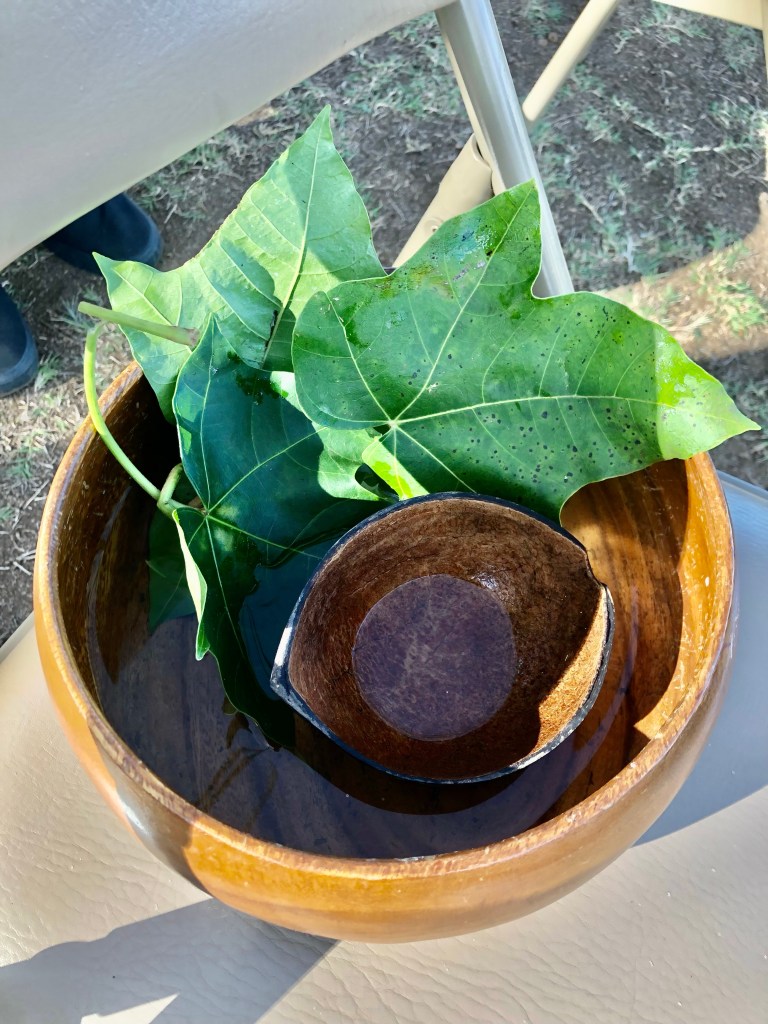
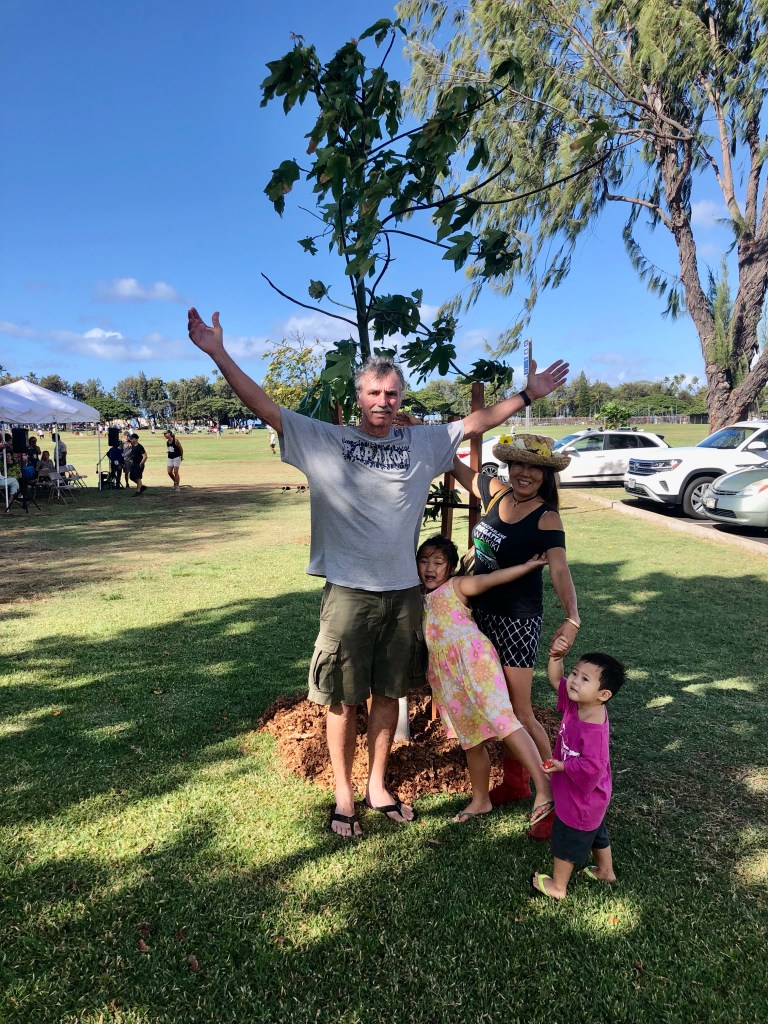
We will be planting and ceremonially mulching four new trees courtesy of the Division of UrbanForestry led by Certified Arborist Brandon Au and DUF/ City and County of Honolulu Parks Department.
Citizen Forester Emily Perry will be representing our busy parks director Laura Thielen.
The trees are drought tolerant and are native to coastal subtropical forests of Australia.
The common name is FLAME Tree, or Illawarra Flame tree. Also called the lacebark tree.
One thing our mentor Paul Weissich, Director Emeritus of the Honolulu BotanicalGardens taught us, is to look beyond flowers when you view trees.
What does the bark look like? How is the truck shaped? What is the growth pattern? What kind of shade pattern does it adorn the ground with? What are the leaves like? Are they good for mulch and soil nurturing? For Keiki art projects?
As we Arborists say, “Touch trees”. Place your hand on the trunk and look UP! What do you see, in the Tree Canopy? I love doing this with keiki of all ages!
When we plant a tree, we are investing in, and finding out about the future. This small tree, grown from a tiny seed and planted today. What will it grow into in the Future?
We can read about the size and growth habits in a book, but how big will it really get here in Hawaii? Will it grow big and strong with proper nurturing and akami tree maintenance?
Will it withstand the abuse that trees sometimes take in public park spaces? Will most people be happy and respect the growing young trees? We sure hope so! Trees ensure a healthy, happy future for all of us.
Known in Scientific Latin as Brachychitonacerifolium, the Illawarra Flame trees are in the Sterculiaceae plant family.
We don’t have many of these trees in Hawaii. A few grow at Foster and Ho’omaluhia Botanical gardens. These were grown from seed by the Horticulturist and Plant propagators at Foster Botanical Garden.
They are particularly striking when in bloom,with bright red orange or scarlet flowers. The flowers look like a hanging red bell when viewed from the side. If you look directly at them, they look like stars.
The leaves are shaped like a kukui leaf, or a mainland maple tree leaf. This is what the species name acerifolium means. Acer is the Latin name for Maple, and folium as you might guess is referring to the foliage or leaves, maple shaped leaves.
The trees will grow up and into a pyramid shapewith a tall, greenish grey, smooth round shapedtrunk. In time they can grow up to about 100feet tall (30 – 35 meters). They are a popular street tree in Australia and around the subtropical world.
The seeds of Brachychiton species are edible. But like many plants in the sterculia family they have irritating hairs, which must be removed or carefully removed to get to the edible seeds. Native Australians ate them raw or roasted. They are nutritious, containing 18% protein and 25% fat with high levels of zinc and magnesium.
There are uses for this tree in its native Australia. Fiber is made from the bark and a kind of gum can be extracted. The wood is soft but dries hard. Shingles, among other things, are made from the wood. The roots of young trees are edible, but let’s not do this in our park!
A related tree, Brachychiton rupestris is called the bottle tree. It grows a big fat water retaining trunk over time, somewhat like the Baobab tree from Africa.
Mahalo to Wikipedia for some of this info, I also referred to our old standard book: In Gardens of Hawaii, by Marie C. Neal.
My friend Lexi Hada contacted me about a volunteer opportunity. When Lexi calls you know it’s going to be a FUN and interesting time!
We joined some fellow volunteers, including some famous Lei makers at 9:00 a.m. at Linekona.
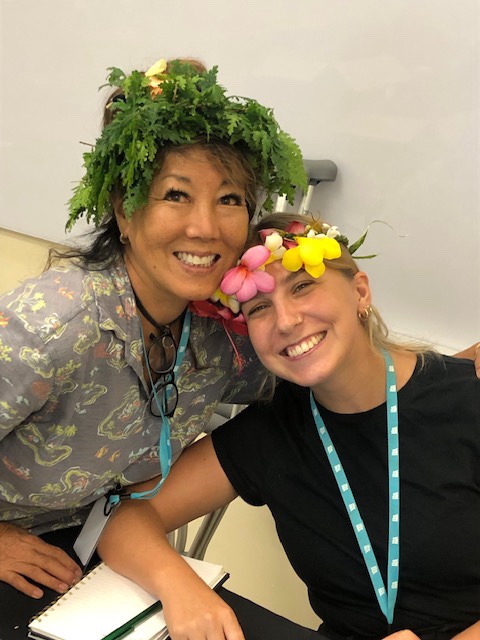
Lexi and Kaylee
I was so impressed with the Volunteers and staff joining with the Artist Rebecca Loise Law and her bouncy fun entertaining husband Andy.
Just being in Linekona is a gift and it brings back memories of other art projects, Classes in Art, wood shows, teaching and learning moments with art and our Honolulu Community.
Rebecca and Andy had asked for flowers which they would dry (in an upstairs room with newspapers spreadout on the floor)
We had brought big bags of floral gifts, tasty treats, and lei that we made to share from our gardens.
The Laws and HoMA worked with the Honolulu Botanical Gardens for a collection of great florals from Foster and Koko Crater Botanical gardens, including Quipo, which is a huge, stout trunked tree from South America, and is related to the African Baobab. The big, winged seeds of the Quipo which we’ve used as intriguing decorations over the years were strung into giant lei for the Awakening art show.
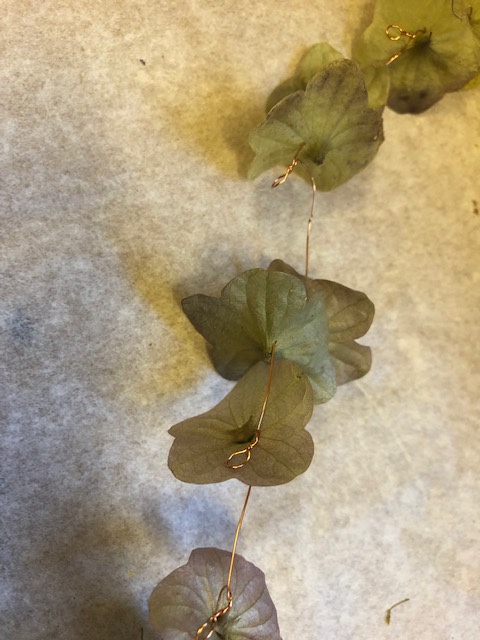
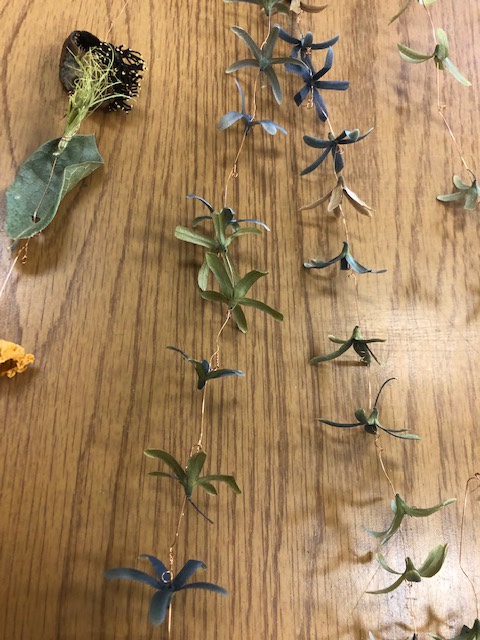
Cup and saucer plant on copper wire for exciting art show Awakening
We were given various dried flowers to work with:
Phalaenopsis orchids
RAINBOW SHOWER flowers
Cup and saucer
Cook pine needles
Sandpaper vine
Strands of super fine copper wire is used for stringing. We would carefully poke through the flower, like using a lei needle, or wrap the plant material with the fine wire. We spaced out the flowers by making an artful twist in the wire.
Sandpaper Vine
It sounds tedious but the time passed quickly, it was fun to learn a new style, which I likened to Lei making. Andy Law (husband of the artist) came bouncing into the room, and talked to us about the process, Life and gardens in England, Wales, and Scotland.
Three hours sounded like a long time to volunteer but Andy kept us entertained and the process was fascinating. I was so busy crafting and learning, visiting with the other volunteers and seeing their workmanship, that time flew by.
I congratulate the Honolulu Museum of Art staff for nurturing us volunteers; from free parking, snacks, and working together on such an engaging Floral Art project. There were several staffers to greet and orient us volunteers and Volunteer coordinator Kaylee Clark stayed with us in our lei making session, encouraging us, and sharing about art exhibits and other events at the Museum.
Clark stayed with us in our lei making session, encouraging us, and sharing about art exhibits and other events at the Museum.
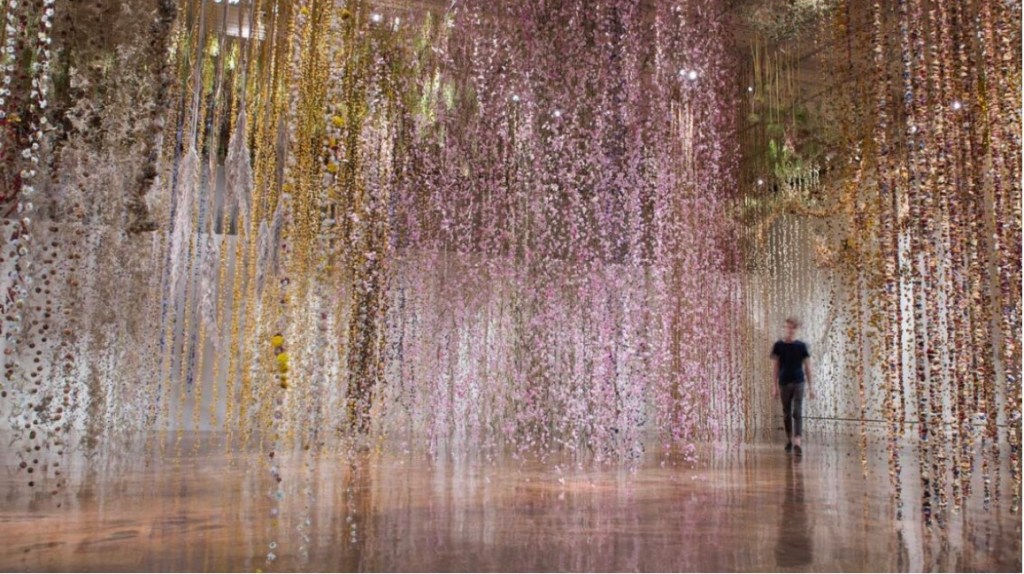
Awakening is a year long exhibit in the upstairs L-wing. The Laws have produced these kinds of floral exhibits and art work previously but this is the first time in Hawaii. They brought dried materials and continued the process of gathering and drying flowers from Hawaii.
The main volunteer tasks for this project were cutting and bending of wire along with stinging of flowers. Flower donations came from volunteers. Flowers used each day varied on availability. The process was collecting, drying, and then a 3-day freeze. HoMA tried to keep each day different, as there were a lot of repeat volunteers and they wanted to keep the experience new and interesting. Approximately 250 Volunteers helped from August 16- September 16, 2022.
Andy and Rebecca arrived in Hawaii in early August 2022 and will stay and coordinate the assembly and opening of the art exhibit, which will be up for a year to enjoy.
They have had similar floral exhibits all over the world, including England.
Artful friends Marin Philipson, Debbie Choo, and Patty Mowat joined Lexi and me.
Amazing long time and Awesome lei makers Joyce Spoehr a HBG Retiree and active volunteer, Iris Fukunaga who still works at HBG (Honolulu Botanic gardens) and Dyanne Taylor a Master lei maker, famous for her tiare bud lei, is another City Parks and Recreation retiree(and fellow surfer) who Volunteers at all the fun plant and lei events. My Friend and great gardener Rosemary was there too. It was so fun to have the master craftswomen there, as we all learned this new technique.
I had so much fun making my lei, first with Phaleonopsis or Butterfly Orchids, then one with red cup and saucer and then with the Lavender cup and saucer. I had never noticed before, working with this as a fresh floral, the different shapes of the dried petals.
Loved the garlic vine flowers for a strand too. This is an old fashioned kama`aina plant that we do not see too often these days. I love the striking lavender color when it is fresh, and it dries very nicely. Seems like the petals are tough enough to hold up
As we completed each long strand (sixty inches measured by the length of our worktables), the lei strands were gently laid into big, long floral boxes, with the layers separated by tissue paper.
The process, of drying the flowers first was something like how botanists and taxonomists, like at the Bishop Museum or National Tropical Botanical Gardens, or even Kew Gardens in the U.K. make dried Herbarium specimens of plants to document and study.
Such a process and so many Na lima Kokua (helping hands) putting the art exhibit together.
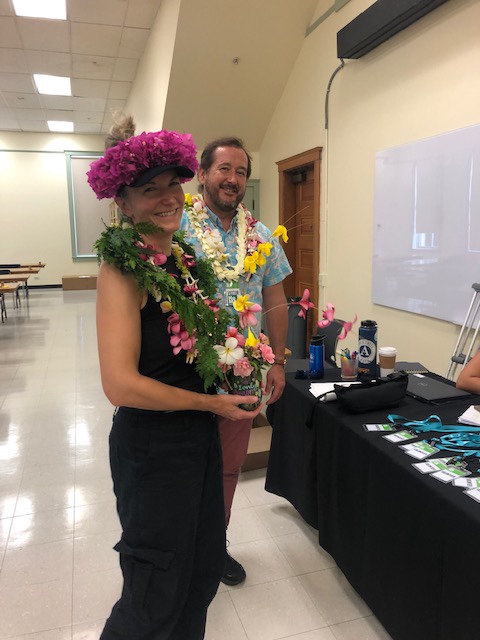
As we were wrapping up, the artist herself joined us and we bedecked her with lei and floral gifts. Slender and dressed in black, Rebecca Louise Law looked amazing and happy with our floral adornments. She spoke a few quiet words thanking us.
Rebecca Louise and Andy Law
I thought about what a wonderful team she and her husband Andy make, him warm and bouncy and super enthusiastic, and she reserved and artistic.
Another amazing thing that happened was that the Director of the museum, Halona Norton-Westbrook, joined us to say mahalo, and spoke briefly with us volunteers.
I was talking with my neighbors on their sunset stroll and found that Julia Weiting was also volunteering. Every time she went, they gave her different florals to work with.
I was so inspired after about what I could make next! I also thought a lot about the process and which other flowers or foliage we might incorporate. A fresh style of lei making! A quick and fun one to teach keiki, a way to decorate homes or papale!
I am so excited to see the completed exhibit, called “Awakening.” Its opens to the public on Saturday September 17, 2022, and continues to be on display until September 2023.
Q: Is pua kenikeni native to Hawaii? Or did the ancient Polynesians bring it? I LOVE that pua and the leis we can make. Please share more about this favorite fragrant garden and lei plant.
Aunty D, Kane`ohe
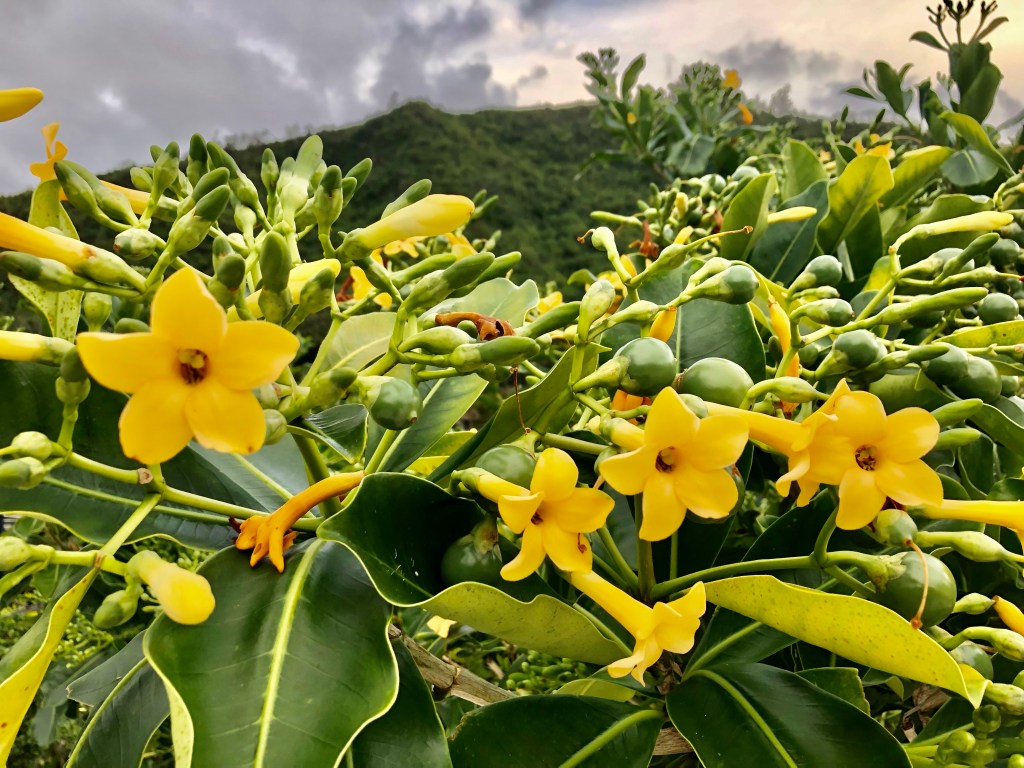
A: Pua kenikeni is not native to Hawaii, nor did the ancient voyagers bring it on their great sea travelling canoes. It only got to Hawaii in the late 1800s and became widely popular in about 1920. It was given the name pua keni keni (10 cents flower) because the flowers were so highly prized that they sold for 10 cents each!
The scientific name is Fagraea berteriana and it is in the Loganiaceae plant family.
The first pua tree in Hawaii was planted in Maunawili and it was propagated and shared on the windward side of Oahu where it grows well, given some good horticultural TLC. It became known as the flower of Kane`ohe in the early days.
My Mom Marilyn Bornhorst and I got to visit what is probably the original tree. It was quite a sight to see! My calabash Uncle, Ben Lum, could be called ‘Mr. Puakenikeni’.
He has nurtured this tree and made hundreds of not thousands of air layered trees to share over the years. He gives them away and also sells them at Ko`olau farmers. We find that sometimes people appreciate a plant more and will plant it in the ground and malama (cherish and care for) if they paid for it.
Free plants can languish in pots, whereas if you paid hard earned money for it, you are more likely to plant it and water it daily to get it established.
Pua kenikeni do best in the ground, in fertile soil with regular water. They do better in red dirt or rich brown forest type soils than in sandy or beach kind of soils.
The tree is mentioned in the classic book NA LEI by Marie McDonald.
McDonald writes that it was brought to Hawaii from other south pacific islands by Jarrett P. Wilder.
You can grow it from seeds but that will take a while. Some people can grow it from cuttings but the most popular way to propagate pua kenikeni is from air layers.
The sooner you plant it in the ground, the quicker it will bloom. Regular water and compost, from leaves or tree chips will build healthy fertile soil for your tree.
Cheap chemical fertilizer, especially lawn fertilizer with heavy nitrogen (the first number on the fertilizer bag) will not promote blooming. You can even burn or kill pua kenikeni with harsh chemical fertilizers, so use the old-fashioned Hawaiian soil building techniques of re-using your garden “opala” or green wastes, mulch and compost, to build up your soil and save water too.
Keep your tree pruned low and wide spreading so you can pick the flowers. You can use a bonsai technique and bend the branches low while they are young and flexible. I’ve seen some Akamai lei flower growers use pretty Pohaku (rocks) on a rope, to weigh the branches down and train them to be in pickable range.
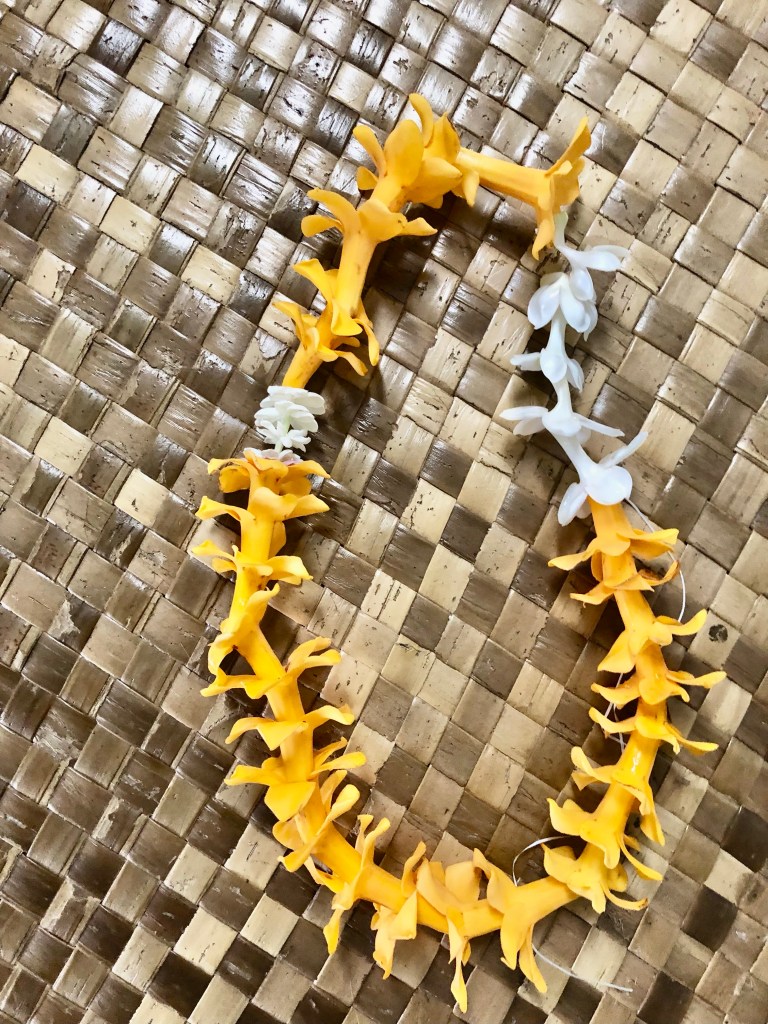
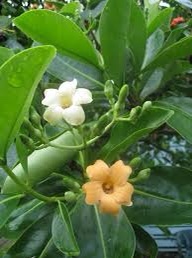
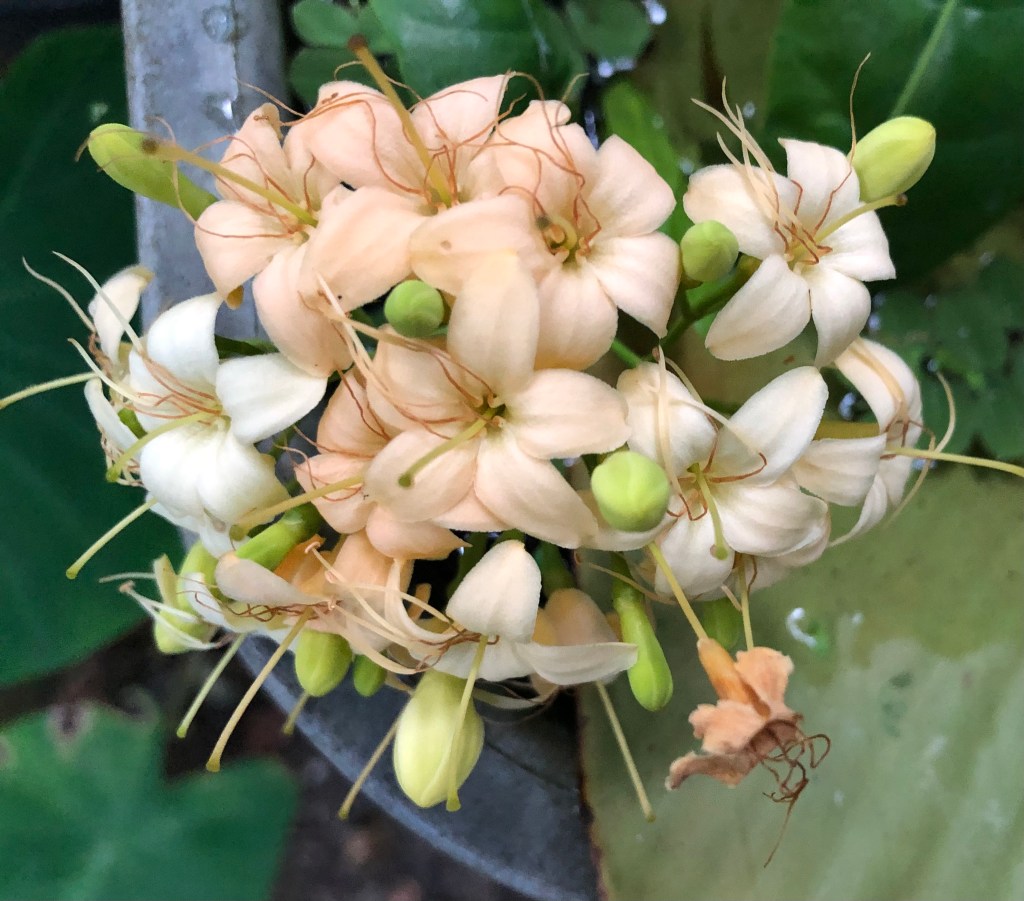
Pua kenikeni flowers first open and bloom creamy white and turn to a subtle light orange on the second day. You can pick mature buds or flowers and keep them fresh and firm in a vase of water. Or sprinkle water into the plastic bag with the flowers
The flowers are somewhat fragile and lei makers need to handle them carefully.
Uncle Ben told me a neat technique that one of his friends uses. He takes a big leaf, makes some pukas and inserts the pua into the pukas. He then carries the flower adorned leaf and gives away the fragrant blossoms to folks who admire them. Isn’t that an awesome way to share some aloha?
Lei makers usually clip off the bottom green part of the flower and then string the lei. The lei is pretty with fresh white flowers or second day light orange. To refresh a lei puakenikeni, put it in a clear plastic bag, blow some air in the bag and seal it. Float this in a bowl of cool water.
NEVER put puakenikeni in the refrigerator the lei will not last. It will turn black and then to mush (we had an inexperienced florist that did put them in the fridge and Auwe! The next morning those lovely carefully plucked and strung blossoms were all black and yucky.
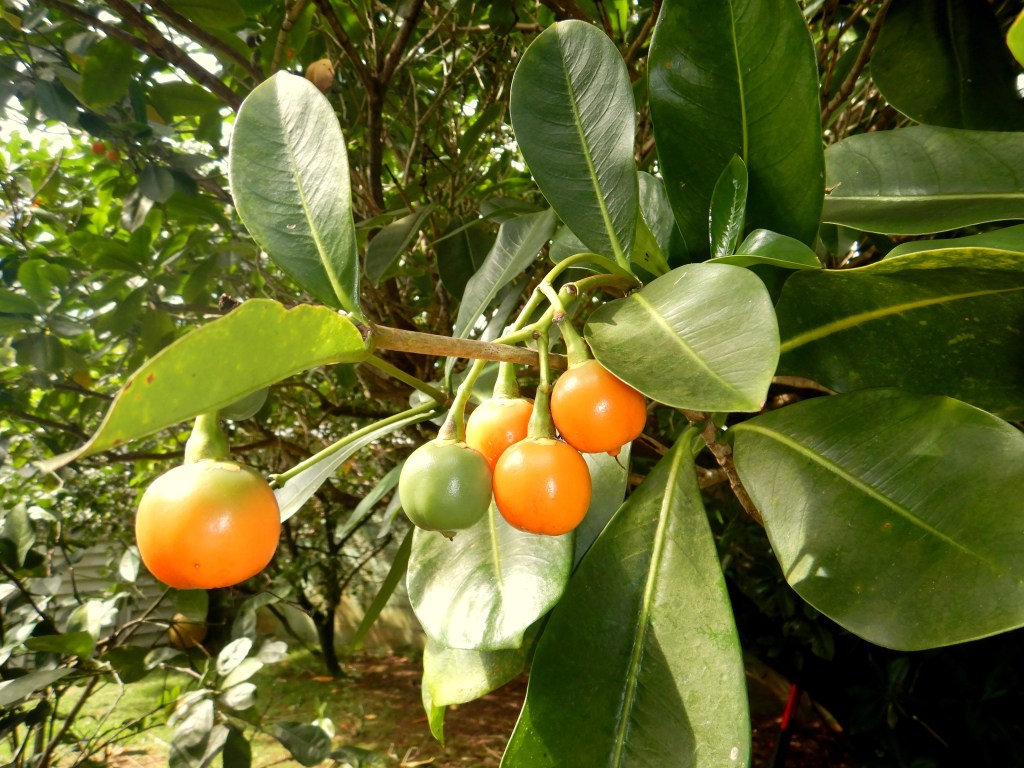
To promote flowers on your tree, clip or pinch off the developing fruit which look like green balls and then turn orange when ripe. If you cut open a ripe one you will see hundreds of small black seeds inside. It kind of looks like the insides of a cut papaya – orange flesh and black seeds.
I sometimes clip off bunches of the green or orange fruit with their stems and use them for a long-lasting flower arrangement. I love them for Fall arrangements, and they are pretty at Christmas time too.
Developing fruit takes energy from the tree. If you clip off the fruits that tree energy will go into producing more flowers. Akamai lei flower growers pinch off every green fruit and then have an abundance of the fragrant pretty flowers.



 Heidi Bornhorst