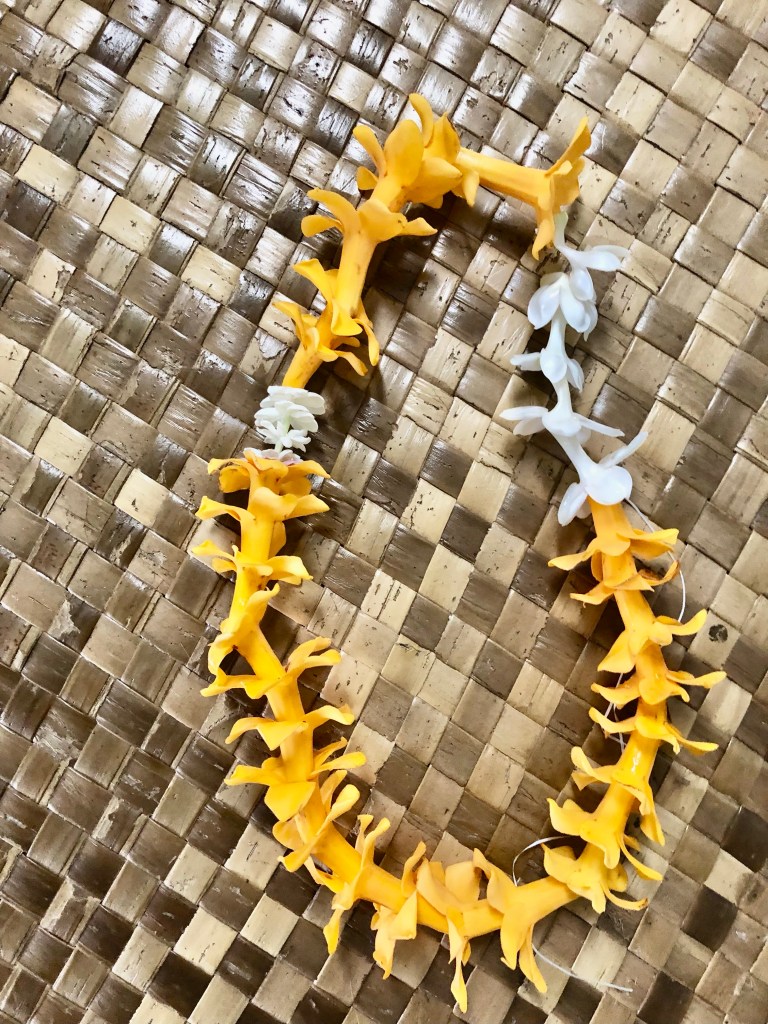
CRB, what we can all do to save Niu and other trees.

By Heidi Bornhorst

Alien Coconut Rhinoceros Beetles are currently Endangering our Niu (coconut palms), native Hawaiian Loulu palms, hala, banana and more.
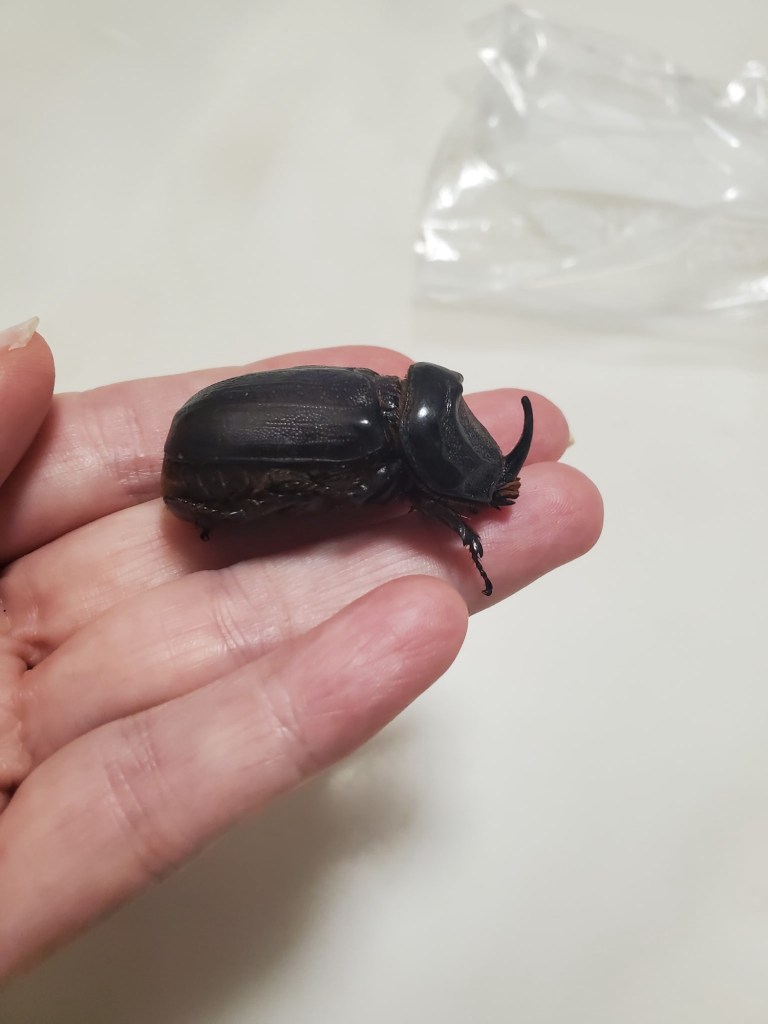
Coconut Rhinoceros Beetle

This is an existential threat, not only for beauty, but for life.

Without Niu we may starve.

​Imagine Hawaii with no Niu. 

Coconut Rhinoceros beetles (CRB) are a serious alien pest. We really need to take this problem seriously and attack / control them on all fronts.

For years, At Every Arborist and landscape conference, we were warned about these chunky hungry beetles and warned to KAPU !! keep them out of Hawaii.

CRB are Major and serious pests in other places such as Polynesia and overall world tropics.

Now they have spread from a Navy site in 2013, to the west side, devastating the north shore and Waialua. They are bad in Waimanalo.

I was at Wahiawa Botanic Garden recently and so devastated to see all of our native Loulu palms being munched and destroyed. This upland Botanic Garden has a collection of rare Loulu palms (CRB love our native Loulu palms even more than Niu or coconuts). They also attack Royal palms. 

(We have the famous ET grove of Royals, on Royal palm drive in Wahiawa.)

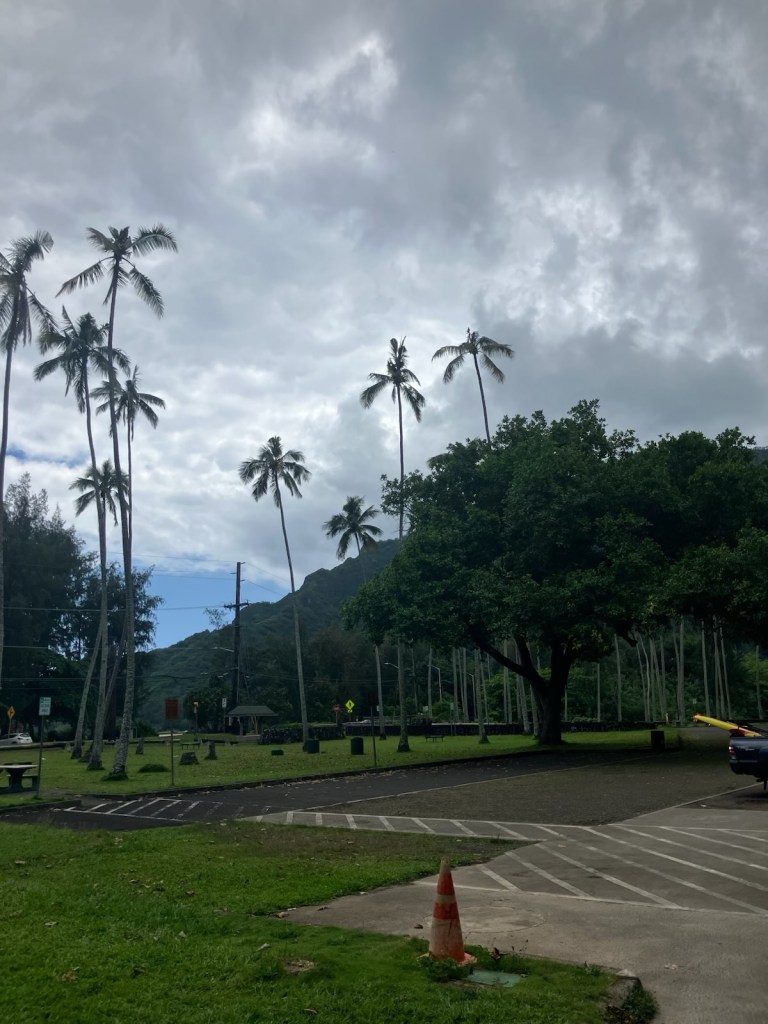
Auwe! we stopped at Kahana state park, where the precious Niu of Mary Mikahala Robinson Foster grow tall and graceful, said to be some of the best nuts for eating and drinking. 
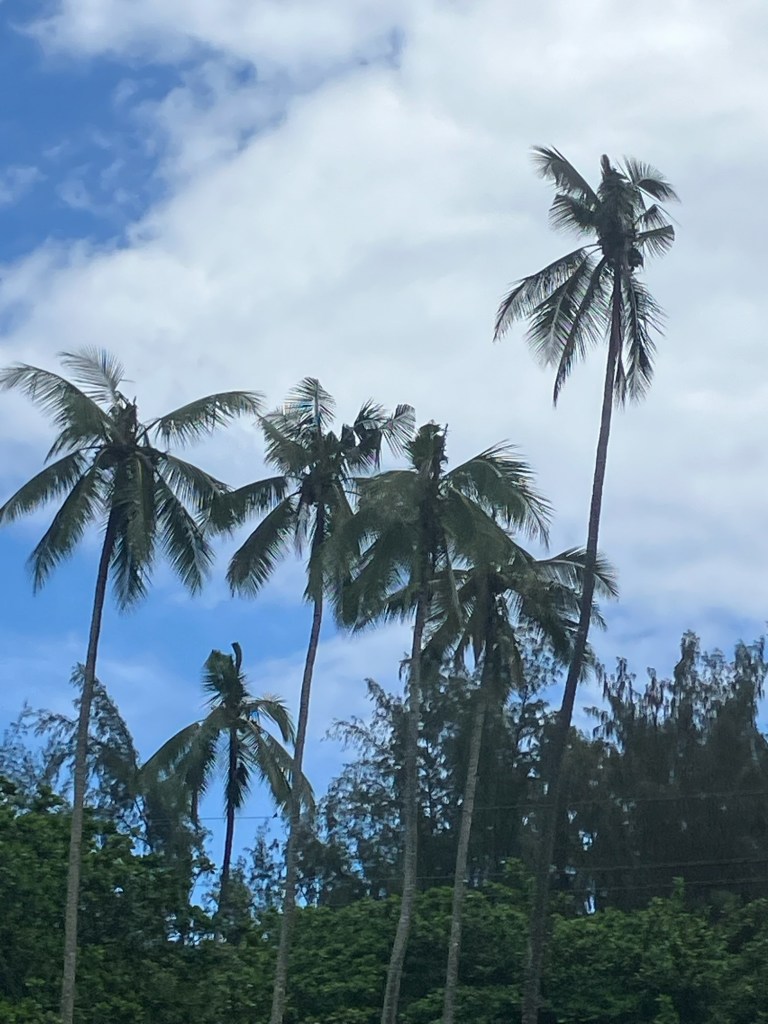

 Coconuts at Kahana state park,
attacked by CRB

I sadly observed the classic cut out fronds, characteristic of CRB feeding on new vulnerable growth. These Niu are iconic and getting munched to death, as I write this. 

 Coconuts at Kahana state park,
attacked by CRB

We need to get everyone to pay attention and help with control. Our Governor Green and Mayor need to get behind these efforts: Education and control.

Neighbor islands are getting hit with CRB too.

Know the life cycle, they spend the bulk of their life feeding on and in, rotting vegetation, compost piles and the like.

It should be on the News every night, along with other crimes affecting Hawaii. 

Here are some of the immediate steps we can all take:

No mulch piles

No dead stumps

Netting 

Traps with lights and netting

Public awareness and education

Government support and action 

Search for Biocontrol 

Education


 Coconuts at Kahana state park,
attacked by CRB

Chemical treatment to save Coconut palms (Must label as treated, and cut off any flower and fruit on treated palms!) A high lift or skilled coconut climber is key for this.

Everybody’s dog, chickens and pigs can find and eat the grubs.  

A Gourmet opportunity for an innovative local chef?

Nui/Coconut, Cocos nucifera is the Tree of life for Hawaiians, do we really appreciate and treasure Niu in Hawaii as well as we could? 

Can you imagine Hawaii with no Coconuts? CRB also attack Hala, Loulu palms, banana and more.  

Let’s get together and scientifically, attack this pest.

Netting all around the vulnerable crown of the palm. Netting of mulch piles. Nets with Lights 

As my friend Mari Zane says Ho! Beneficial use for those illegal gill nets!  (Her Loulu and Niu on the north shore were early casualties, but there is hope for the shorter ones.)

Wrap the nets around the crown.  The nets will get the ones inside coming out of the bore holes, and get any on their way in.

Contemporary Landscaping, a nursery in Waimanalo, uses a low net about four feet tall, lit at night. This attracts and captures beetles. 

Trapped beetles attract more beetles to the light, and a chance for more control.

Brown Cannon made a trap using a netted Hula hoop and is capturing them out in Waialua. He sets this hula hoop net  (great recycling!) over a barrel of woody mulch.

We can all get smart and do our part!

Just when Hawaiian gardeners, City parks folks and landscapers were convinced to wisely use mulch, we find that mulch piles are endangering NIU.

CRB grubs love rotting vegetation and spend most of their life there.

​We can have mulch piles and mulch dishes if we are akamai.

Turn the mulch frequently disrupting the grubs. 

HOT mulch will help to kill them.

Turn your mulch and have animal helpers, keiki or your arborist ready to spot and capture the grubs. 

(Dogs, pigs and chickens can be trained to eat the grubs of CRB)

Mulch and green waste piles are perfect habitat for these alien pests and their voracious grubs.

Hot mulch is OK:  turn it and burn it!

Or spread mulch and compost thinly. Water it and look for CRB grubs.

As always water and nurture your palms, keep them as healthy as possible.

Let’s work together to protect and save this vital part of Hawaii. !!!
What will Wild West winds bring? More flowers and fruit?

By Heidi Leianuenue Bornhorst

We had such a weird windstorm with those super strong and gusty west winds! So different then normal.

Up in our valley we lost power twice to the wind and HECO did not restore power until 9:30 p.m. on Wednesday 3/8/2023.

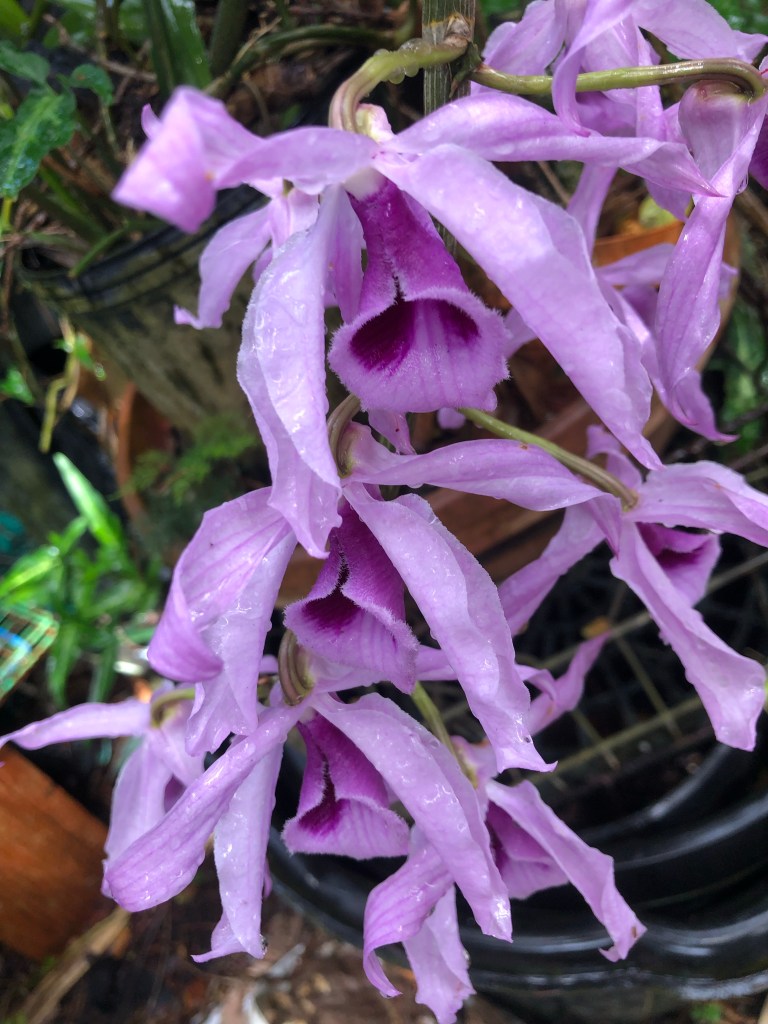
Mangoes and avocados were full of blossoms, Honohono orchids were in bud and some in bloom.

My Portuguese Madeira roses, and native Hawaiian gardenia Na`u have been blooming well, loving the cool and rainy winter were are finally having.

As I clean up the storm debris, (Mahalo for nature’s Arboriculture) including blown down dead twigs and branches, and lots of leaves, some I notice are from my mauka neighbors.

One of the tenets of true Horticulture is to OBSERVE nature and plants, to track the moon, winds, rain and other weather phenomena as see how the plants respond.

I am still reflecting on how the plants would respond.

What do you see? How are your plants after the winds?

Did you have any big tree failures? Or just small or dead branches?

The leaves are whipped on my gingers, Surinam cherries, mulberries, and ohia shed a few flowering branches. A young popolo plant got totally blasted on one side, it was just coming into fruit.

So, we shall see!

Honohono orchids had been in full glorious fragrant bloom as they budded and bloomed early this year. Originally I thought the orchids stood the wind storm but after a few days those in the main wind tunnel area of my garden wilted and withered prematurely.

Went to a neighborhood watch potluck pa`ina and a nice lady, Lokelani, that I always say hi to on my walks was there, with a gorgeous papale lauhala. She admired my honohono and said she caught a whiff of fragrance, from way across the yard, and she looked for the source of this favorite old time Hawaii fragrance, and from where? My hair!

Since she admired the orchids, I had to give them to her, along with maire ferns!

Now a couple weeks after the winds, I’m observing some of my favorite flowers and fruit trees in my garden and neighborhood:

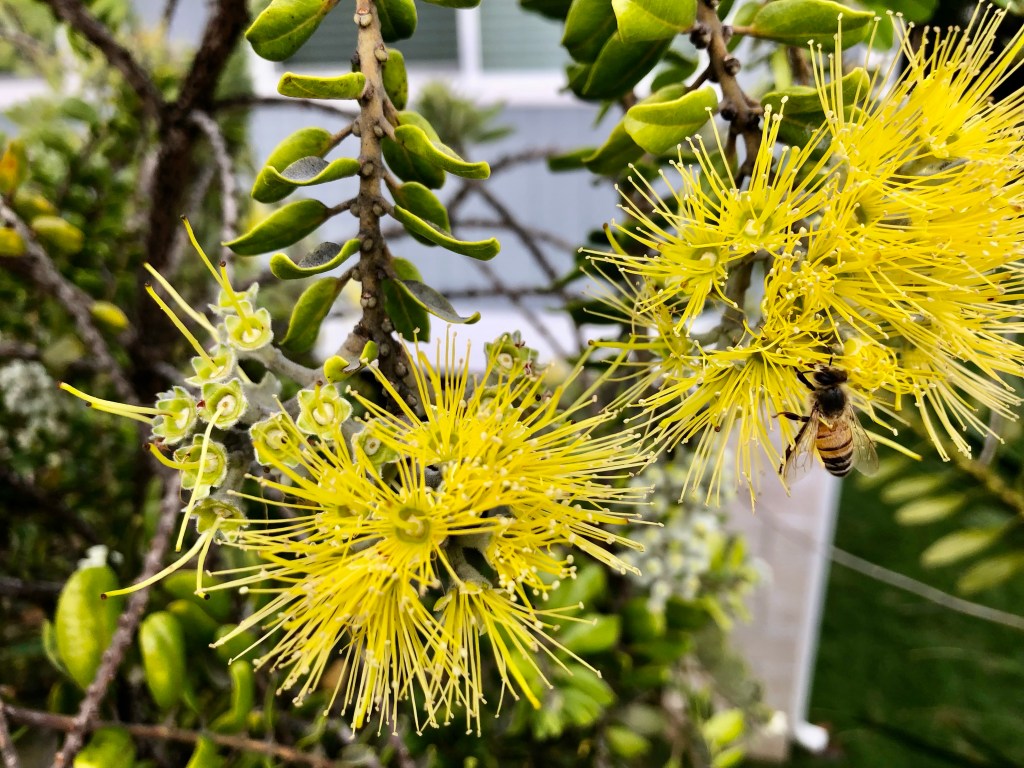
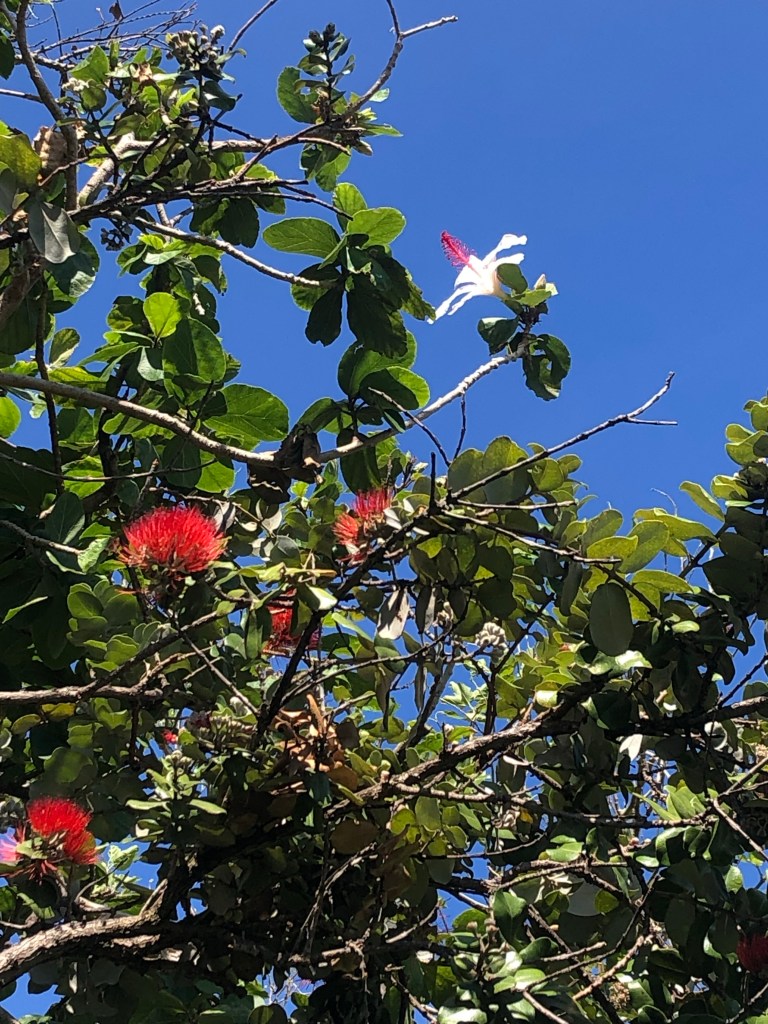
• ‘Ohi’a lehua  Blooming profusely, some dead wood branches and twigs broke in the winds

• Native White Hibiscus wind whipped leaves, a few blooms at the very top of the tree

• Tahitian mountain apples were blooming before, still many flowers and now small fruit.

• Gardenias surprise early blooms two on one stem, but no other apparent buds yet. (they usually bloom for me in May).

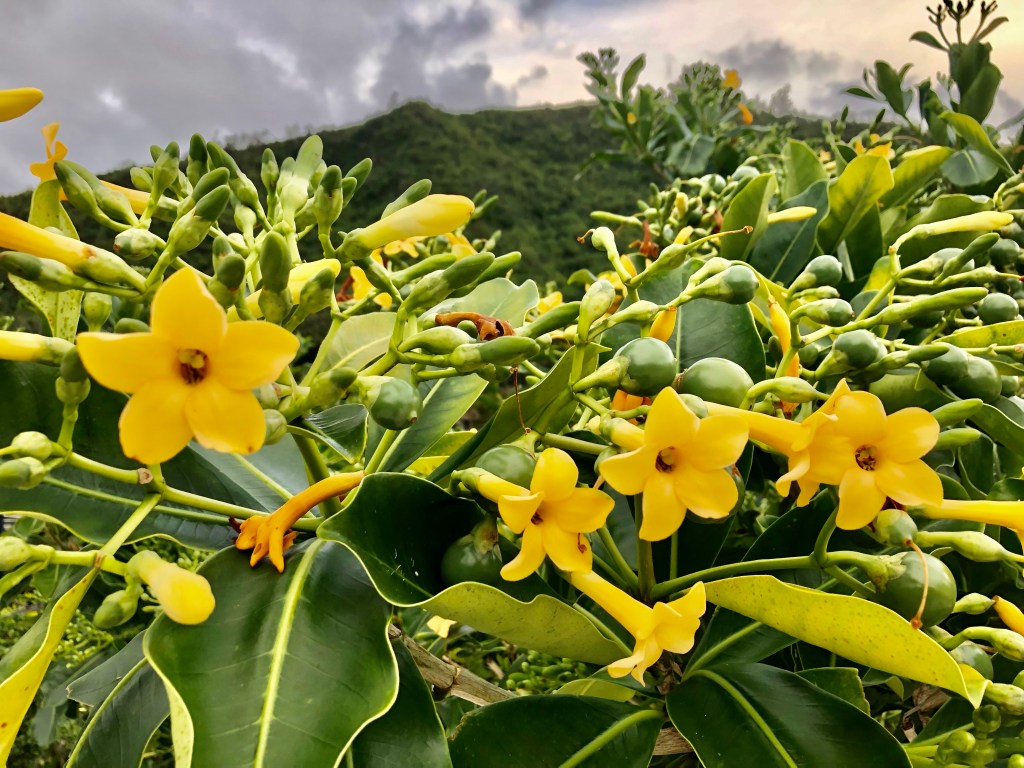
• Na`u, native Hawaiian Gardenia lots of flowers and buds (also triggered by abundant soft rains before the winds)

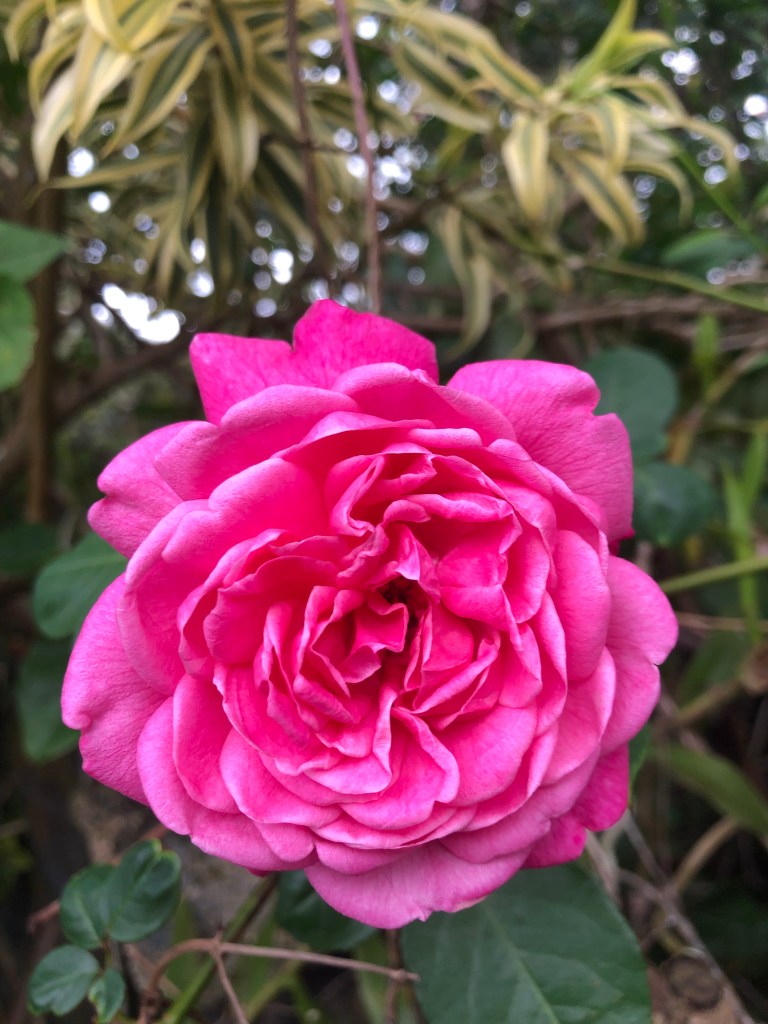
• Madeira roses Blooming profusely.

• Mangoes my Friend Dawn Shim from Makakilo brought me a gift of Haden mangoes, super early for this to fruit.

• Mulberries wind whipped leaves, lots of young fruit

• Pua Keni keni usually Bloom less in winter, BUT after the storm mine are full of Buds, flowers and lots of developing green “ball” fruit.  I made some lei for a fundraiser, and plucked and cut off all the young fruit, to encourage more blooms from the tree 

What are YOU observing, in your garden in your unique microclimate? I would love to hear back from my Gardening Readers …..

Deadheading Benefits for Hawaii Plants

Tiare benefit greatly from deadheading

By Heidi Bornhorst

Q: What is deadheading and which Hawaii plants would benefit?

A: Deadheading is where you remove spent flowers to increase blooming and benefit the health of the plant.

Pua Keni Keni comes to mind, as cutting or snapping off the green and orange “balls”, AKA the developing fruit, will increase blooming.

Fruit formation and seed development take a lot of time and energy for the plant, just like a woman being pregnant.

So, if we want more flowers, don’t let the fruit form.  In the case of Pua Keni Keni, the fruit on the stems makes for great décor in a flower arrangement.  You can even string the “balls” into lei, as my akamai lei making buddy Dede Replinger Sutherland does.

Tiare or Tahitian gardenia nowadays needs deadheading.  We didn’t use to have a pollinator for Tiare but now it seems we do, as the old flower calyces (the bottom green part of the flower) don’t fall off after blooming. They now form fruit and it takes about a year to fully develop and form mature seeds inside.

We need to snap off that part on a daily or weekly basis or Tiare plants will have fruit developing and fewer blooms.

Tiare buds make an epic lei, that can last for several days or nights with a most heavenly perfume.  When you pick the buds, pick the calyx too and save yourself some time and energy.

My friend Donna Chuck has a prolific and sunny garden with many flowers for lei. She collects the Tiare buds and stores them carefully in a plastic bag with a damp paper towel in the fridge until she has enough for a special lei for a special someone.

We spent some time cleaning up and deadheading her plants and now she gets way more Tiare flowers for her lei creations.

I first learned the word and horticultural practice known as deadheading when I was an apprentice Gardener at Longwood Gardens in Pennsylvania, in my junior year of college.

‘Go deadhead the Rhodies’, I was instructed by the Horticulturist at Longwood.

I wondered if it was something about the Grateful Dead; and had to ask what was deadheading and what are Rhodies?

Rhodies are Rhododendrons, related to the Azaleas that we grow here. They bloomed massively in spring there and general good garden practice was to deadhead them in early summer, to promote lots of blossoms for the following Spring show.

Some use sharp needle-nose clippers for this and some use sharp well-placed fingers and thumbnails to snap off the spent blooms.

Roses are another plant that will bloom better if you deadhead, or you can just harvest and use every flower.  Or you can let the fruit develop and you get rose hips which can be made into jam or tea.

Some kinds of Hibiscus, especially our fragrant native white Koki`o ke`o ke`o will form seed pods if you let them.  This is how early gardeners made new hybrids as they found the native Hawaiian whites were excellent “mother” plants.

Again, if you want blossoms, pluck off and clean up the old flowers.  Another benefit to this is we have lots of recent alien insect pests like scale and mealybugs that love to hide in the developing seed pods and suck sap and juices from the plants.

Deadheading helps you groom your plants, so you can rub off or cut off the pest-infested parts. Get rid of insect eggs and small sap suckers before they form a full-on infestation.

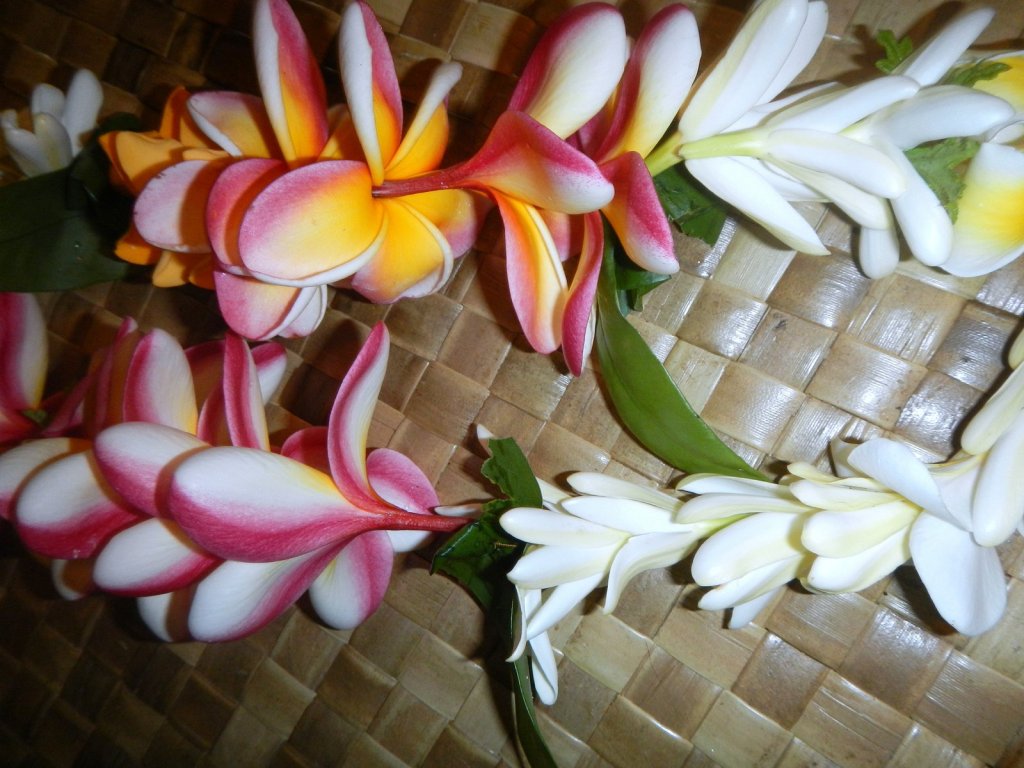
Lei rainbow pua melia tiare buds