Chaya, Togan, Marungay Interesting, Health Boosting Perennials to Grow

By Heidi Bornhorst

It’s amazing to see our Quarantined Community excited about growing vegetables.  I wish everyone success!  Neighbors engaging Keiki, and sharing.

Every day I’m grateful for my ohana, neighborhood and Community.  Mahalo Hawai’i folks !

Who thinks we need more Community gardens, for those with no land? 

Three generations of my neighbors; Sarah, Avery and Alina Rosier, went shopping together and reported 3 stores were out of potting mix!  Some nice big expensive potted plants followed them home !  They did endeavor to persevere and found the potting mix.  They are growing `uala or sweet potato in pots in the back yard.  And sharing rooted slips with our neighbors.

I reminded them gently that vegetables, herbs and most flowering plants grow most productively in full sun and with daily gentle watering.  Morning is the best time to water and now many of us can do that because we’re not rushing off to work or taking kids to school in the morning.

So, get up early enjoy the sunrise and give your plants a drink.

As you water, LOOK and observe your plants.  Turn over the leaves as you water and search for incipient pests.  Rub them off the undersides, shoot with water.  If the insect pests are bad, spray with soapy water (one tablespoon per gallon of liquid Dish soap) this smothers and kills sap-sucking insects like aphids, scale, and whiteflies.

Do a slug and snail patrol :

Don’t touch them!  Teach your Keiki. 

My kolohe neighbor Li’i Pat likes to gleefully salt them or stomp on them and watch their colorful guts come out.  BUT this still exposes him and everyone else to Rat lung worm disease (spread by those yucky aliens: slugs, snails and rats)

Not to be mean, but every one of these pests eliminated, and Cleanly disposed of,  is good for us and our Hawaiian environment.

My landscape architect and Natural Gardener friend, Brenda Lam has the tools and techniques down, and I add a bit of plastic recycling (if you have plastic, use it more than once and then properly dispose):

  1. Small bucket or jar of salt
  2. Tongs
  3. Chopsticks
  4. Plastic bags
  5. Plastic forks (recycled from your plate lunch)
  6. Sluggo Plus
  7. Sanitation – dispose of them, bagged in the rubbish can.
  8. Patrol early or late and after it rains
  9. Capture, salt, and bag
  10. Trash the salted, jarred slugs, in a plastic bag.

I worry that many will have limited success and give up on food gardening.  I have some tricks and hacks to help:

  • Grow perennials
  • Grow plants adapted to Hawaii and to Your micro-climate
  • Buy Keiki starter plants
  • Full sun
  • Hose nearby
  • Daily tending
  • Observation
  • Perennial vs Annuals for Hawaii gardens
  • Daily Slug patrol

What is a perennial

A Long-Lived plant, vs. an annual.   Annual plants grow for just one season or one year.

Here in Hawaii some of them don’t follow those rules !  we could just call them “fairly short-lived plants”.  But we might as well learn the right Horticultural terminology as we educate ourselves and our ever inquisitive and Akamai keiki!

My friend Ben Kam shared Chaya with me.  This must be cooked, boiled for 20 minutes first.  It has milky sap, which is a caution for us, but it is super ONO!  Before cooking it is high in hydrocyanic acid.  Some say you can safely eat up to five leaves raw a day but cooking works for me!

 I made an `ulu lasagna, with Chaya “spinach” the other day.  Lasagna is my husband Clark’s favorite but HO! Lots of work and dishes!  But with Covid 19 quarantine, it is good to practice long slow cooking skills, rather than getting depressed watching TV or online news.

Chaya is also called Tree spinach and scientists call it Cnidoscolus aconitifolius and place it in the Euphorbiaceae plant family.

 It is easy to grow stick a big cutting (1/2” wide by 6-12” long into the ground or a big pot and water daily.

Togan or Green long squash.   Retired Fire Captain, John Drake grew one and was excitedly asking when to harvest it? You want it not too big or it will be junk, too tough and woody  for eating.  

One name is Tabugnao according to Gourmet chef and gardener Carol Hasegawa

The Smooth one is Hyotan and the Fuzzy one is Togan  according to  Corliss Yamasaki

Long green squash

Recipes from Carol Hasegawa  5/28/2020: 

Filipino style

Tabugnao Carol Hasegawa

  1. Brown pork (or use roast pork – I like this better) in garlic and little oil till caramelized
  2. Add sliced squash w/a  half-cup water
  3. Let steam till squash slightly cooked
  4. Add sliced tomato (gives flavor to dish)
  5. add some shoyu for final flavoring
  6. Simmer till soft to your liking 

Japanese style: 

Add dried ebi (dry shrimp) in water ( not sure how much you are making but maybe 1 c of water)

Add sliced squash – cook till slightly cooked

Add ¼ c shoyu and 1/8 c sugar

Simmer

Marungay, Kalamungay or Moringa, the Ben tree native to India but now a “new” superfood for all

You can grow it from Seeds, I did this for my Dad when he mentioned that all the great native Hawaiian plants, I was growing were not much good for human food and that Food plants were important to him.

Generally, we grow Kalamungay from Cuttings,   Jimmy Lorenzo, my  Epic Waianae farmer mentor recommends one-inch cuttings about two feet long.  Poke them directly into the ground and water daily.

Once it is growing well, harvest regularly and keep the plants in pick-able reach.

Traditionally we eat this in stews, in soups and so on.  As Robin Sunio taught me, add the leaves to your soup at the end.  Just a gentle simmer for a minute and they won’t be bitter, and this preserves more nutrients.

The Green juicers discovered Moringa and add it to juices and smoothies.  I thought, Yikes!  You can’t eat that raw!  But you can, the young tender leaves are fine.  Ono and nutritious.

You can eat the flowers, leaves, and young seed pods.  The root is also edible and tastes like horseradish.

Nobody that I know of in Hawaii has eaten the root, we are too busy growing and eating the other good parts !  But we do love horseradish, so one day I plan to sample some of the roots.
Fruit + Nut Trees | Hawaii Gardens

By Heidi Bornhorst

  One of our goals for simple sustainability, is a Fruit tree in every yard, even on your apartment lanai.  For years Mark and Candy Suiso and their extensive extended ohana, participated in the epic Fruit sharing event known as Mangoes at the Moana.

This was Mark’s simple message for all the ten years we staged this educational and fun, Ono for Mango fruit, local fun foodie event.  Remember when every yard had at least one fruit tree, lots of vegetables, all kinds of things for the family to eat and to share?

Share with ohana, gifts for the neighbors, take a generous bag to work, etc.

Kupuna Pua Mendonca of Hawaii island shared some simple wisdom with me at an Aquaponics training conference in Hilo: survival trees to grow are avocado, niu or coconut, and `ulu or breadfruit.  Those healthy fats and oils will get you through times of hardship and scarcity.

You’ve heard the scary news that we have one week of food on grocery shelves in Hawaii.  Should we get cut off from imports, its handy to have some degree of self-sufficiency.

So, lets grow some survivor supplies in our gardens.  I was visiting my great gardener neighbor Joan Takamori and admiring her plush and fruitful garden.  She always has something to share and we learn from each other as we talk garden story.

Takamori asked me about a macadamia nut cracker.  She had an abundance of macadamias from her mother’s garden.

I laughed, recounting our nutcracker as kids.  It was a big pohaku in the dry stack rock wall, that was flat on top and had an almost perfectly sized mac nut puka.  We would set in a nut, and hit it “just right” with a small sledge hammer.   Sometimes it cracked open perfect, sometimes we smashed too hard and sometime the nut went flying!

This is how I learned (without knowing it) about scarification, a technique to help tough thick shelled seed to germinate and grow.  The nuts we nicked that flew down the side sloping yard, were able to grow into seedlings.

Once when we had a cousin swap, I took a big paper bag of macadamia nuts to my Aunty Ruth in California (what a hostess gift, such an elegant bountiful paper bag!)

I told them how we cracked mac nuts at home.  But no!  Californians have a better plan!  And my Uncle Merle was an Engineer.  He had a vise in the garage.  It was a big thrill for my cousins’ many friends in their neighborhood, to come over and everyone got a turn cracking a nut. (Sort of like Tom Sawyer getting all his pals to paint the fence, I later thought, with a laugh!)  Akamai uncle Merle!

My Aunty then roasted the nuts in the oven and covered them with chocolate.  Back home we generally just ate them raw.

I told Joan all of this and how my friend Nyna Weisser had researched nut crackers online and found a great one.  Not cheap but perfect cracking.  Nyna would hand us nuts and the cracker at a party.  Fun for all the friends!

Joan Takamori and I also spoke about how macadamia nuts are another tree that more of us should propagate and grow.

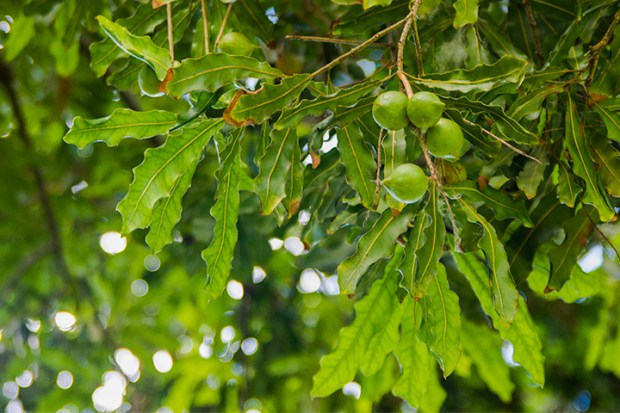
They are a pretty tree with deep green ruffly leaves and very pretty and fragrant flower stalks.  If you look closely at the flowers you will see that they look like miniatures of one of our favorite modern-day Florist ornamentals: Proteas.

Mac nuts are in the Proteaceae plant family and they are native to Australia.

 I asked Joan about where her folks got their macadamia tree.  She didn’t remember it being in the yard forever, and She has a theory. 

‘My dad did bonsai  my mom didn’t drive; she knew how to catch bus everywhere. I think she stole that tree from him and set it free in the yard’ says Takamori.

We never had it growing up.   I think mom planted it, maybe about 10-15 years ago.  She wanted to see it flower and fruit, although it would’ve made a kewl bonsai. Its now a very fruitful tree. I want to grow more of them, so I’ve been collecting seedlings, from under her tree to grow and share and plant in my current garden.

Mac nuts need to be scarified to germinate.  The thick hard shell is nicked or filed down a bit so water can penetrate and activate the embryo of the seed to grow.  Plant them in pots with quality potting mix, and water daily, until they get big enough to go into the ground.

You can also buy them already growing.  Ask for them at your favorite garden shop.  Or for even more fun, call ahead and visit a fruit tree specialty nursery.  Buy some mac nut trees to grow  and maybe another fruit tree for a friend or neighbor to grow.

Deadheading Benefits for Hawaii Plants

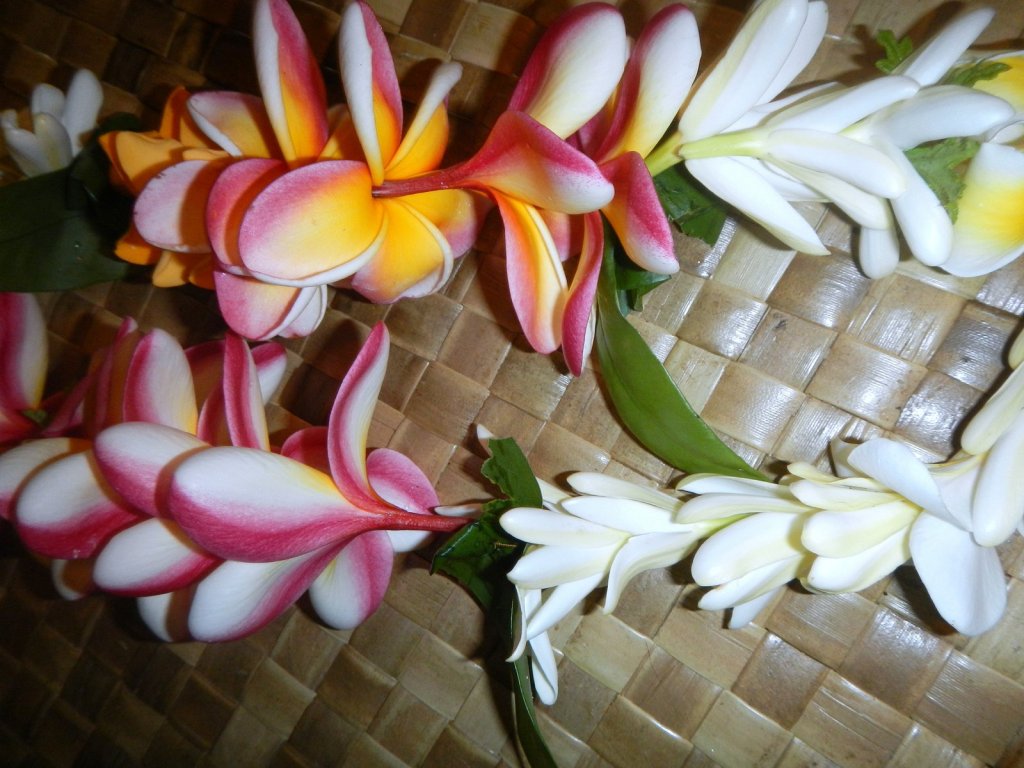
Tiare benefit greatly from deadheading

By Heidi Bornhorst

Q: What is deadheading and which Hawaii plants would benefit?

A: Deadheading is where you remove spent flowers to increase blooming and benefit the health of the plant.

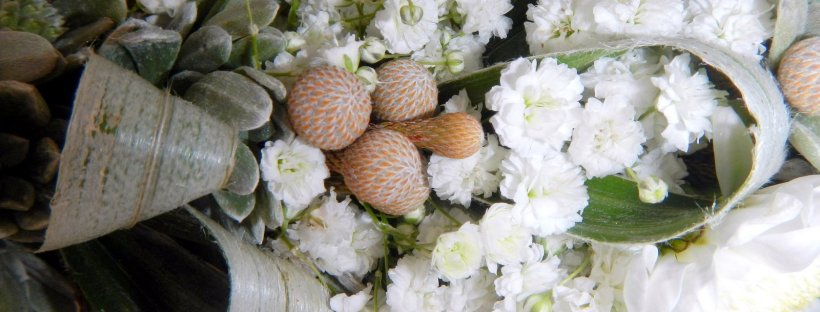
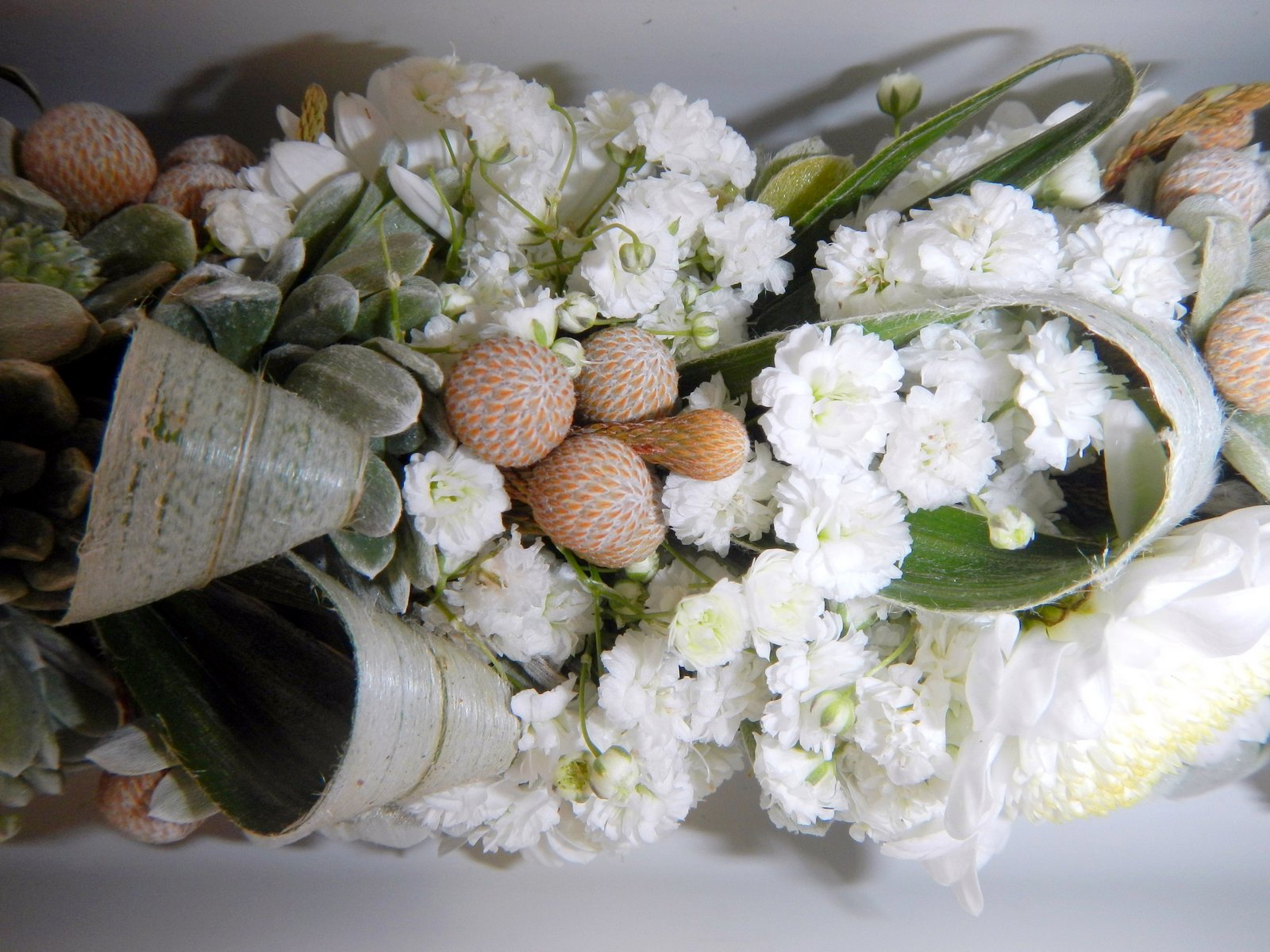
Pua Keni Keni comes to mind, as cutting or snapping off the green and orange “balls”, AKA the developing fruit, will increase blooming.

Fruit formation and seed development take a lot of time and energy for the plant, just like a woman being pregnant.

So, if we want more flowers, don’t let the fruit form.  In the case of Pua Keni Keni, the fruit on the stems makes for great décor in a flower arrangement.  You can even string the “balls” into lei, as my akamai lei making buddy Dede Replinger Sutherland does.

Tiare or Tahitian gardenia nowadays needs deadheading.  We didn’t use to have a pollinator for Tiare but now it seems we do, as the old flower calyces (the bottom green part of the flower) don’t fall off after blooming. They now form fruit and it takes about a year to fully develop and form mature seeds inside.

We need to snap off that part on a daily or weekly basis or Tiare plants will have fruit developing and fewer blooms.

Tiare buds make an epic lei, that can last for several days or nights with a most heavenly perfume.  When you pick the buds, pick the calyx too and save yourself some time and energy.

My friend Donna Chuck has a prolific and sunny garden with many flowers for lei. She collects the Tiare buds and stores them carefully in a plastic bag with a damp paper towel in the fridge until she has enough for a special lei for a special someone.

We spent some time cleaning up and deadheading her plants and now she gets way more Tiare flowers for her lei creations.

I first learned the word and horticultural practice known as deadheading when I was an apprentice Gardener at Longwood Gardens in Pennsylvania, in my junior year of college.

‘Go deadhead the Rhodies’, I was instructed by the Horticulturist at Longwood.

I wondered if it was something about the Grateful Dead; and had to ask what was deadheading and what are Rhodies?

Rhodies are Rhododendrons, related to the Azaleas that we grow here. They bloomed massively in spring there and general good garden practice was to deadhead them in early summer, to promote lots of blossoms for the following Spring show.

Some use sharp needle-nose clippers for this and some use sharp well-placed fingers and thumbnails to snap off the spent blooms.

Roses are another plant that will bloom better if you deadhead, or you can just harvest and use every flower.  Or you can let the fruit develop and you get rose hips which can be made into jam or tea.

Some kinds of Hibiscus, especially our fragrant native white Koki`o ke`o ke`o will form seed pods if you let them.  This is how early gardeners made new hybrids as they found the native Hawaiian whites were excellent “mother” plants.

Again, if you want blossoms, pluck off and clean up the old flowers.  Another benefit to this is we have lots of recent alien insect pests like scale and mealybugs that love to hide in the developing seed pods and suck sap and juices from the plants.

Deadheading helps you groom your plants, so you can rub off or cut off the pest-infested parts. Get rid of insect eggs and small sap suckers before they form a full-on infestation.

Lei rainbow pua melia tiare buds

Silver Buttonwood trees – Horticultural Legacy at our Botanical gardensHawaii


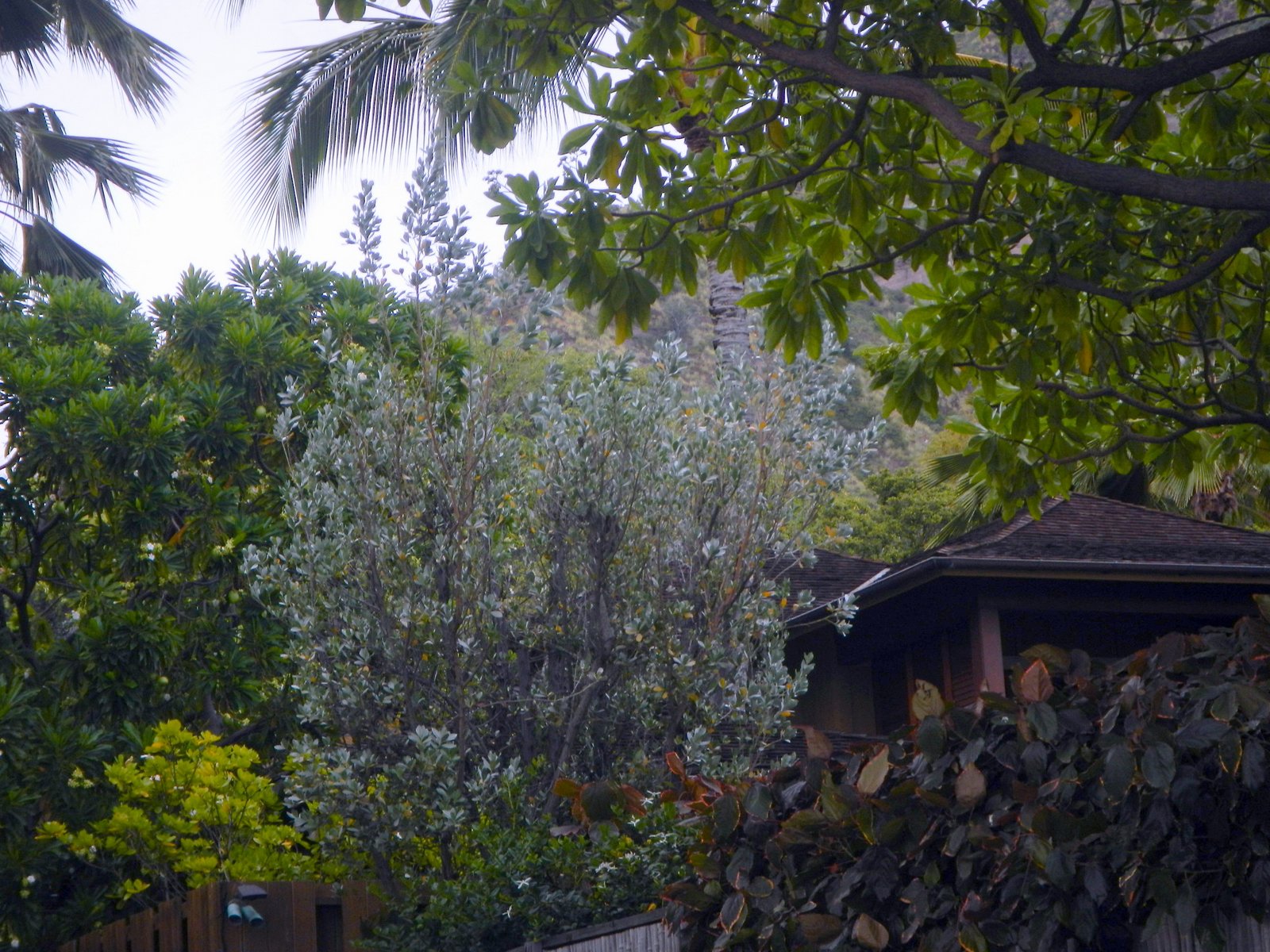
Q: What are those gorgeous silvery street and park trees?  Some are at Sandys Beach, some Giant ones are on Pa`alea street in Palolo Valley, and some are at Ala Moana beach park.  Please inform us about these

Mahalo, M. Silva, Palolo

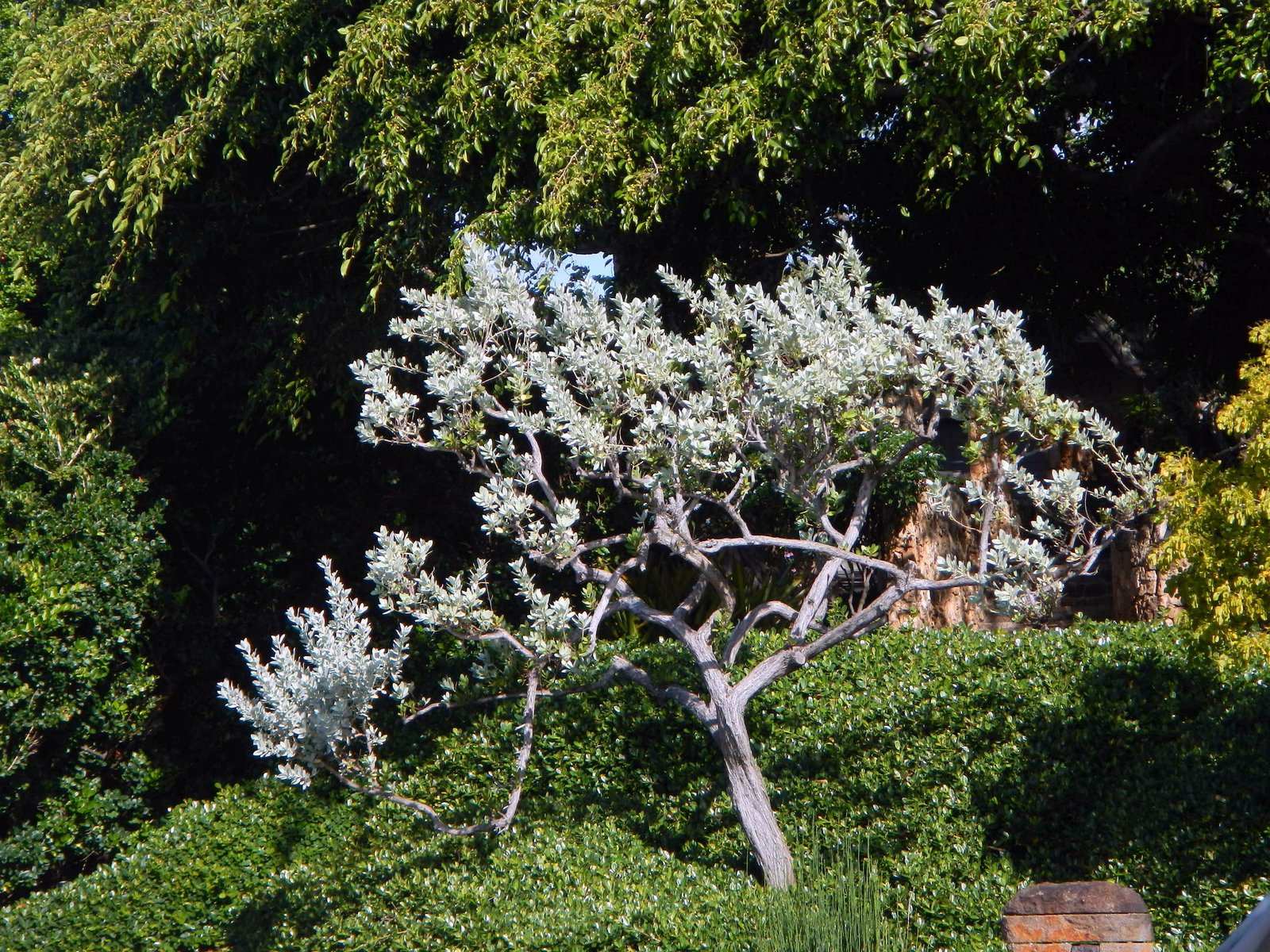
A: Silver buttonwood trees! AKA Sea Mulberry, or Button Mangrove.  Conocarpus erecta is the Latin name.  they grow naturally in mangrove swamps and are in the Combretaceae plant family, they have a very interesting horticultural history that I am happy to share.

As you may know they are very wind resistant, xeric (drought tolerant) and salt tolerant.  The bark and gnarly trunks are very attractive, especially as the trees mature.  You can make lovely lei with them.  Keiki can make a fun lei using masking tape and the leaves – easy and gorgeous!


HB- silver bttnwd tree -landscape

Silver Buttonwood amidst Carissa, Rosemary and Wax Ficus


At Lei Day in Kapiolani Park this year (and a HUGE mahalo to all the dedicated City of Honolulu, Parks and Recreation and Honolulu Botanical Garden Employees and Volunteers, who organized and coordinated that major public, free event in our park) we saw some fab lei, using various parts of silver button wood trees.  Some used the fruit clusters, some used the leaves, some crafted the leaves into silver “rose” buds and so on.

Our late mentor Paul Weissich had just become Director of the Honolulu Botanical Gardens (HBG) in 1957.  He was reviewing all of the interesting plants growing in the nursery and lath houses at Foster Botanical garden (FBG).

Weissich found a flat of seedlings.  Some were green and some were silvery.  One keiki was super silvery.


HB-silver buttonwood tree

Silver Buttonwood tree in a salt Drenched, Hot, Dry Diamond Head, coastal Garden; See How it “Lights UP” the landscape?


He selected the silveriest of the silvers and had them potted up into larger individual pots. The best, consistently silver one was selected and more were propagated from air layers. He watched over them and had the expert plant propagators nurture and grow them up. This is a prime example of ‘Horticultural selection’.

He planted a bunch of them at Ala Moana beach park, which was an adjunct Botanic garden back in those days (and still has his legacy of tough, salt tolerant interesting, rare and unusual trees growing).

A mixed silver and green hedge of them is still growing today around the tennis courts at McCoy pavilion.

One of the silveriest was planted at Foster Garden and its gnarly and sprawly and has a growth habit something like an ancient time gnarled Olive tree.  We have been talking about making this an Exceptional Tree.

Over the years more of the silvery trees were grown and planted in beach parks like Sandys and as shady tough street trees in Oahu neighborhoods. They make a tough specimen tree (especially nice when up lit with solar lights for your “Moon Light Garden”), a good hedge or windbreak.

Button woods are native to a broad area from the Bahamas, to the Caribbean coastal tropics and all the way to West tropical Africa.

This is one of the many Horticultural legacies of Paul Weissich who passed away this year at age 93.  He really grew our beautiful and amazing botanic gardens here on Oahu. His legacy is our five Honolulu Botanical Gardens: Foster Lili’uokalani, Wahiawa, Koko Crater and Ho`omaluhia, as well as people like me and my Husband Clark whose career and lives he nurtured, just like that flat of keiki silver buttonwood trees all those years ago!


HB-silver buttonwoord lei

Epic Silver themed Kupuna lei featuring Fruits of silver Buttonwood, Delicate Baby’s Breath, Hinahina and silver leaf.