ASHS coming to Honolulu!

By Heidi Bornhorst 

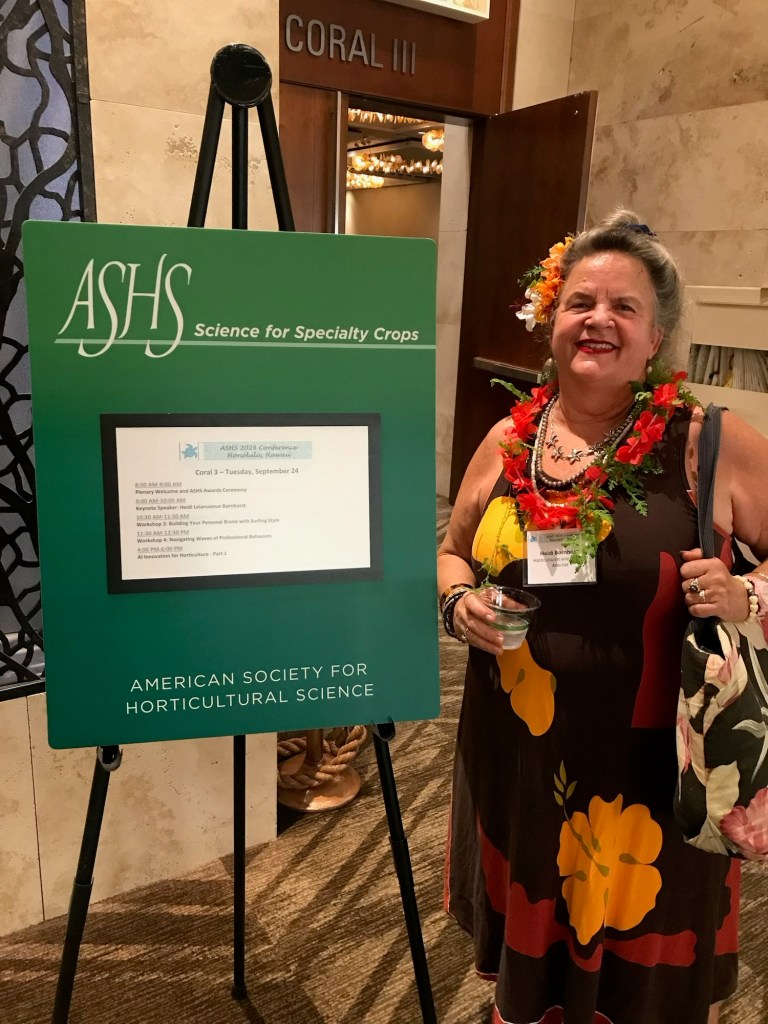
Heidi Bornhorst Keynote Speaker

A prestigious Horticulture group is coming to Hawaii for a weeklong conference.

The American Society for Horticulture Science will be here on Oahu for a week long conference beginning Monday September 23, 2024, closing on Friday September 27.

Over one thousand attendees are signed up and registration is still open. (1067) at last count.

This is great for Hawaii gardeners, Horticulturists, Botanists, and plant scientists.

The conference will be held at the Hilton HawaiianVillage hotel, right on the beach in beautiful Waikiki.

Renowned for its extensive gardens, featuring many native Hawaiian plants, along with canoe plants and tropical exotics, it is a great venue for these plant loving scientists to enjoy.

The Hilton is also right next to the Hale Koa Hotel (where I served for over 10 years as Landscape Director).

The extensive landscaped grounds of the Hale Koa were designed as a botanical garden and the plantings there are very impressive and worth a stroll.

There are many wonderful gardens in Waikiki, amidst all of the hotels and high-rises.

I was very honored to be invited to be the keynote speaker for this conference and I plan to be talking about my favorite: Growing native Hawaiian plants.

There are over one thousand native Hawaiian plant species, and we now are growing about 100 of these Hawaiian plant species. We can grow more!

We have 1367 native Hawaiian plant species. Over 90% of them are endemic, meaning they only grow naturally here in Hawaii. About 9% of them are extinct, and many are rare and endangered.

Some are common and easy to grow, and we see them all around. Examples are: Hala, beach naupaka, `ilima, Hapu`u or Hawaiian tree ferns, and Kou and Milo trees.

Other native plants are less common in our gardens and landscape, but horticulturists are working to change that.

​My friend, Dr. Mike Opgenorth, who is the Director of Kahanu Botanic Garden in Hana, Maui will be speaking on Thursday about his PhD work on our endangered native Hawaiian Gardenias 

Many more students and graduate student at the U.H. are studying how to grow and perpetuate native Hawaiian plants.

The landscape or “Green industry” here in Hawaii is doing the groundwork with native plants.

Home gardens now feature native Hawaiian plants especially those loved by lei makers such as `Ohi`a lehua, `ilima, Palapalai and Pala`a ferns, and our native fragrant Hawaiian white Hibiscus, Koki`o ke`o ke`o.

Our public parks and urban forests are growing more native plants too.

Let’s learn and grow more, let’s perpetuate our native Hawaiian plants together.

https://ashs.org/page/ASHSAnnualConference
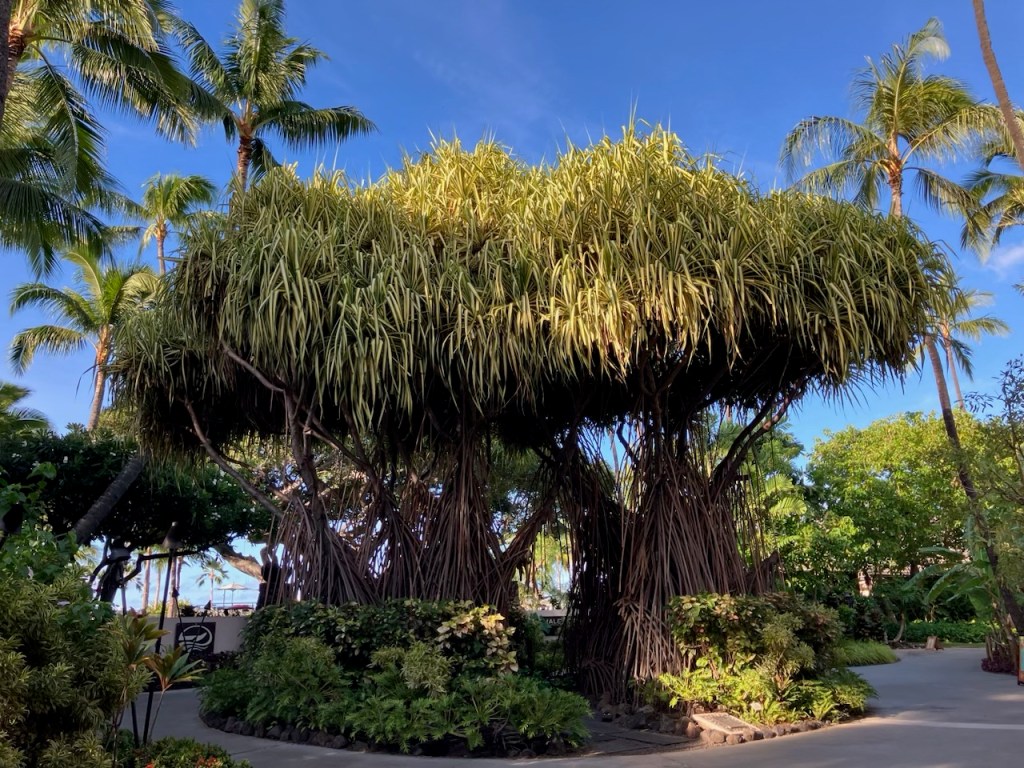
Variegated Hala tree. Pandanus. Growing happily at the Hale Koa hotel.

Deadheading Benefits for Hawaii Plants

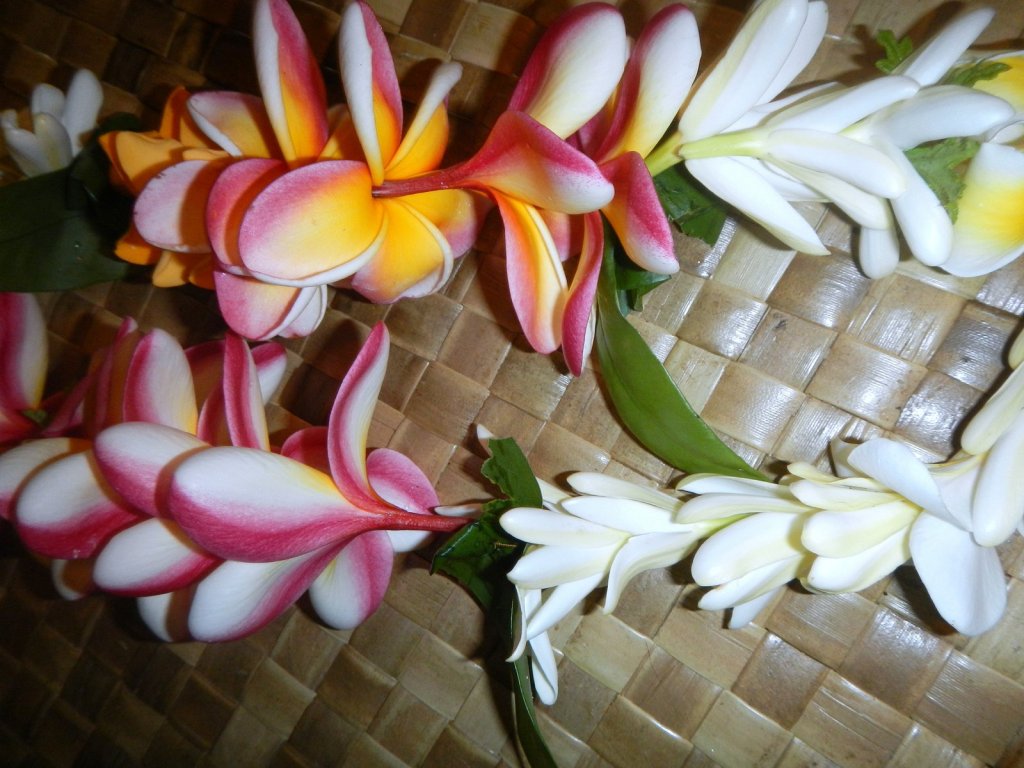
Tiare benefit greatly from deadheading

By Heidi Bornhorst

Q: What is deadheading and which Hawaii plants would benefit?

A: Deadheading is where you remove spent flowers to increase blooming and benefit the health of the plant.

Pua Keni Keni comes to mind, as cutting or snapping off the green and orange “balls”, AKA the developing fruit, will increase blooming.

Fruit formation and seed development take a lot of time and energy for the plant, just like a woman being pregnant.

So, if we want more flowers, don’t let the fruit form.  In the case of Pua Keni Keni, the fruit on the stems makes for great décor in a flower arrangement.  You can even string the “balls” into lei, as my akamai lei making buddy Dede Replinger Sutherland does.

Tiare or Tahitian gardenia nowadays needs deadheading.  We didn’t use to have a pollinator for Tiare but now it seems we do, as the old flower calyces (the bottom green part of the flower) don’t fall off after blooming. They now form fruit and it takes about a year to fully develop and form mature seeds inside.

We need to snap off that part on a daily or weekly basis or Tiare plants will have fruit developing and fewer blooms.

Tiare buds make an epic lei, that can last for several days or nights with a most heavenly perfume.  When you pick the buds, pick the calyx too and save yourself some time and energy.

My friend Donna Chuck has a prolific and sunny garden with many flowers for lei. She collects the Tiare buds and stores them carefully in a plastic bag with a damp paper towel in the fridge until she has enough for a special lei for a special someone.

We spent some time cleaning up and deadheading her plants and now she gets way more Tiare flowers for her lei creations.

I first learned the word and horticultural practice known as deadheading when I was an apprentice Gardener at Longwood Gardens in Pennsylvania, in my junior year of college.

‘Go deadhead the Rhodies’, I was instructed by the Horticulturist at Longwood.

I wondered if it was something about the Grateful Dead; and had to ask what was deadheading and what are Rhodies?

Rhodies are Rhododendrons, related to the Azaleas that we grow here. They bloomed massively in spring there and general good garden practice was to deadhead them in early summer, to promote lots of blossoms for the following Spring show.

Some use sharp needle-nose clippers for this and some use sharp well-placed fingers and thumbnails to snap off the spent blooms.

Roses are another plant that will bloom better if you deadhead, or you can just harvest and use every flower.  Or you can let the fruit develop and you get rose hips which can be made into jam or tea.

Some kinds of Hibiscus, especially our fragrant native white Koki`o ke`o ke`o will form seed pods if you let them.  This is how early gardeners made new hybrids as they found the native Hawaiian whites were excellent “mother” plants.

Again, if you want blossoms, pluck off and clean up the old flowers.  Another benefit to this is we have lots of recent alien insect pests like scale and mealybugs that love to hide in the developing seed pods and suck sap and juices from the plants.

Deadheading helps you groom your plants, so you can rub off or cut off the pest-infested parts. Get rid of insect eggs and small sap suckers before they form a full-on infestation.

Lei rainbow pua melia tiare buds