Wild Florals with a Maximust

By Heidi Bornhorst

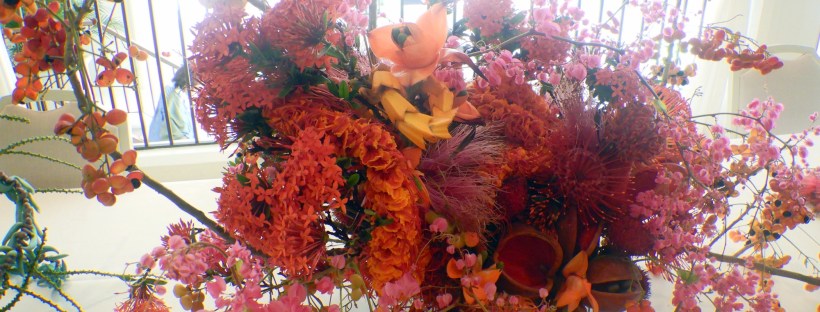
Ren MacDonald-Balasia of RENKO did a Floral demo with the GCH on Wed March 13, 2024.  

She likes to use wild, weird and foraged florals, and rare, strange fruit from gardens or Chinatown.
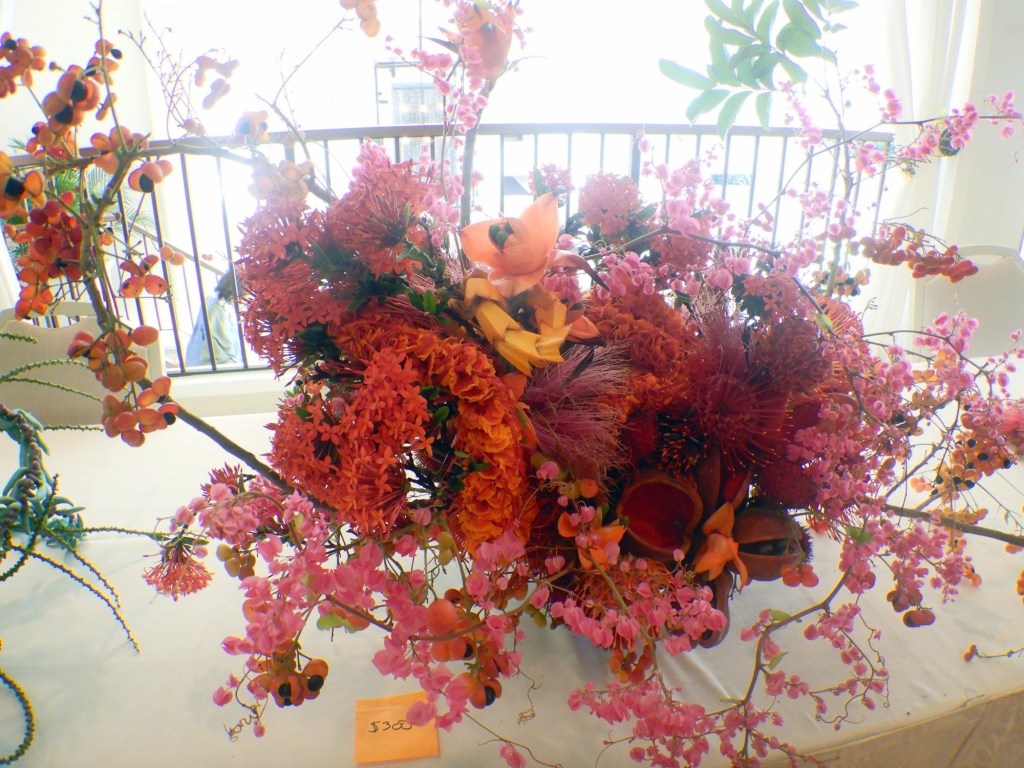
RENKO Floral dragon

This was such an inspiration!  We can all gather florals and foliage from our own gardens, from friends and even from wild weeds.  Weeds can be beautiful.

We don’t have to import florals. Imported materials have a Carbon footprint big time. They also can be the source of harmful alien pests and diseases.

Many imported florals (e.g. roses without perfume) can last a long time, yet they are substantially dosed with chemical poisons insecticides and fungicides.  Since they are not a food crop, they are not heavily regulated. 

Some countries which grow imported florals don’t have the chemical safety regulations that we do, and this poisons the growers and us the consumers.

Read the Book Floral Confidential, if you really want to be informed (and Scared!) by this overuse of toxic chemicals.

And as we say: Buy Local!  Or even better, Forage Locally.  Glean from Local gardens.

The Floral event was at the Halekulani, and I invited my siter Mimi Bornhorst Gaddis.  

As we were getting ready to go, my honey Clark Leavitt said, ‘set me up with a lei needle?’

He had gone on the roof and foraged for pua keni keni.  So romantic. Our anniversary was the day before and he took his nephew Mark to lunch at Kailua Nico’s.

Mimi and I used the valet service at the Halekulani and walked through the flower filled lobby.  

Two women were sitting in an alcove stringing Blue jade lei. “Wow kewl Blue jade!’ I remarked as we walked by (it turned out that these women were our speaker and her helper!)

We went to check in at the Garden Club desk, and as there was no usual flowers on second floor lobby, we walked around. 

There was a woman sitting on a bench. Mimi and I introduced out selves and I gave her a tiare li`I li`i.

Her name was Pam and turns out she’s Ren’s mother, just home to care for her 97-year-oldmother who was a journalist for the star Bulletin.

The first AJA writer in Hawaii!  

Soon the floral fun begins.  

The first arrangement is in a wide tall bowl. She puts in what she called sea tamarind. We were in back and it was hard to see but I’m thinking that doesn’t look like tamarind.  I kept trying to figure out what the orange bouncy floral might be. (Turnsout Harpulia, a common street tree in the Lychee family, Sapindaceae.
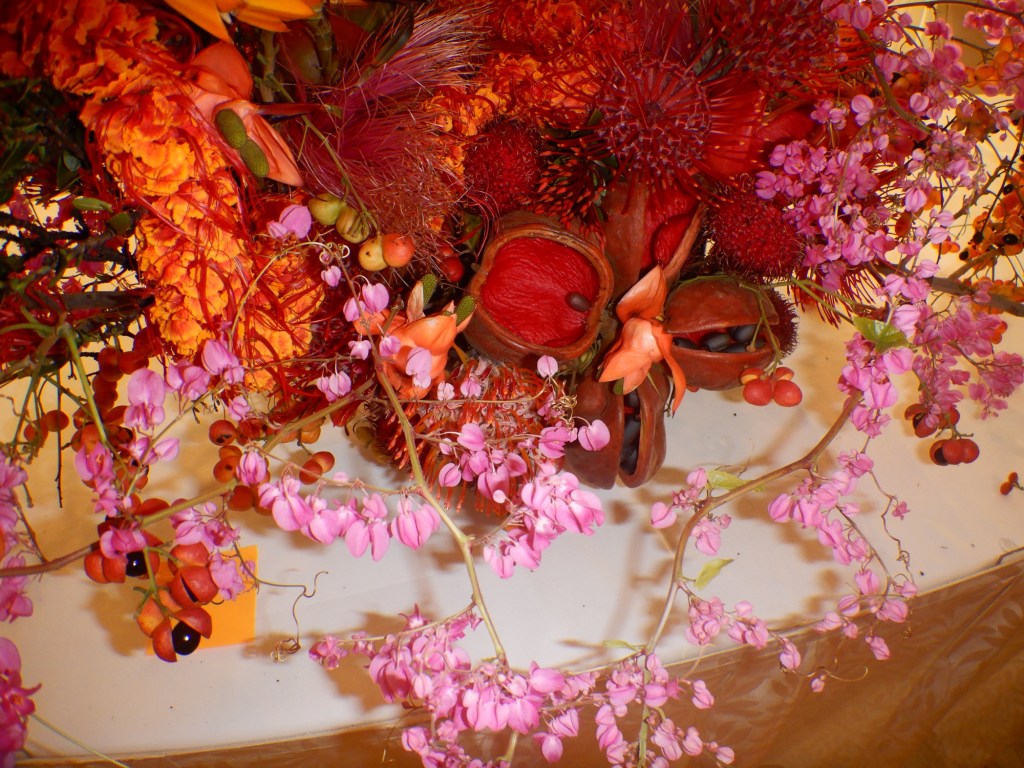
sterculia Mexican creeper lei Ohai Ali`i Harpulia AKA sea tamarind

She anchors the branches into folded up chicken wire set in the bowl.  (Oasis is environmentally out.  Mimi and I both have some stashed, just in case)

She then added Sterculia, Skunk tree pods, these are heavy and help to weight the other materials down. 

Ixora is added. We got these at a gas station, Ren remarks.

Mexican creeper, which used to grow in our Makiki garden is draped all around. She calls it coral vine.  

Bombax or shaving brush tree flowers like big puffs of pink added to the flora mix, next the lei she bought at Cindy’s Lei in Chinatown are added, ohai alii and a golden hala.  She cuts and drapes and winds them into the arrangement.

Blue jade lei were added and draped over the arrangement. Such a lovely seasonal Spring beauty from Hawaii gardens!
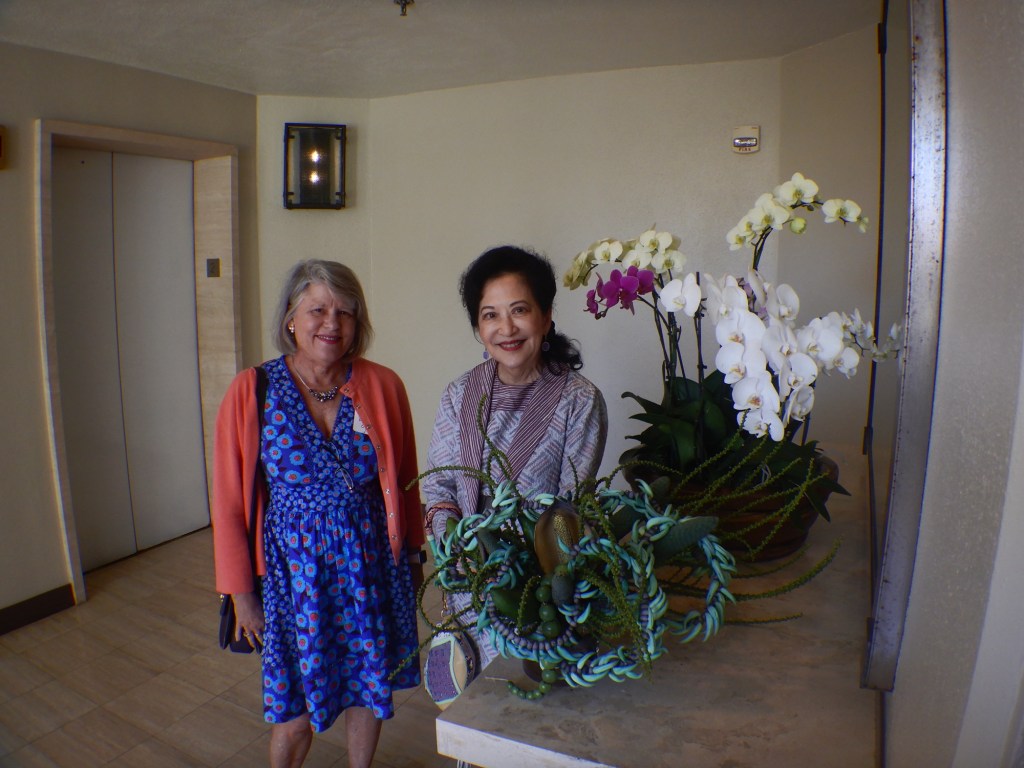
blue jade and tita Mimi

She scouted for wonderful and strange fruit in Chinatown markets: 

Fruiting Clusters of Longan, rambutan and Salak palm.  Mimi said that they call it SALAT in SE Asia and it’s really ono.  Pretty and scaly in an arrangement. 

She had some nice blooming orchid plants that she bought from Kawamoto orchids in Palolo Valley.  We kind of gasped when she cut the floral stems and put them in the arrangement.  (they would last for a month or more on the plant). But this is what florists do for that wonderful Ephemeral special occasion. 

CONSERVATION: instead of imported, chemically laden treated florals these were gathered in gardens in wild places and in local lei shops.

Such a good message we can get so much from our own Hawaii GARDENS!

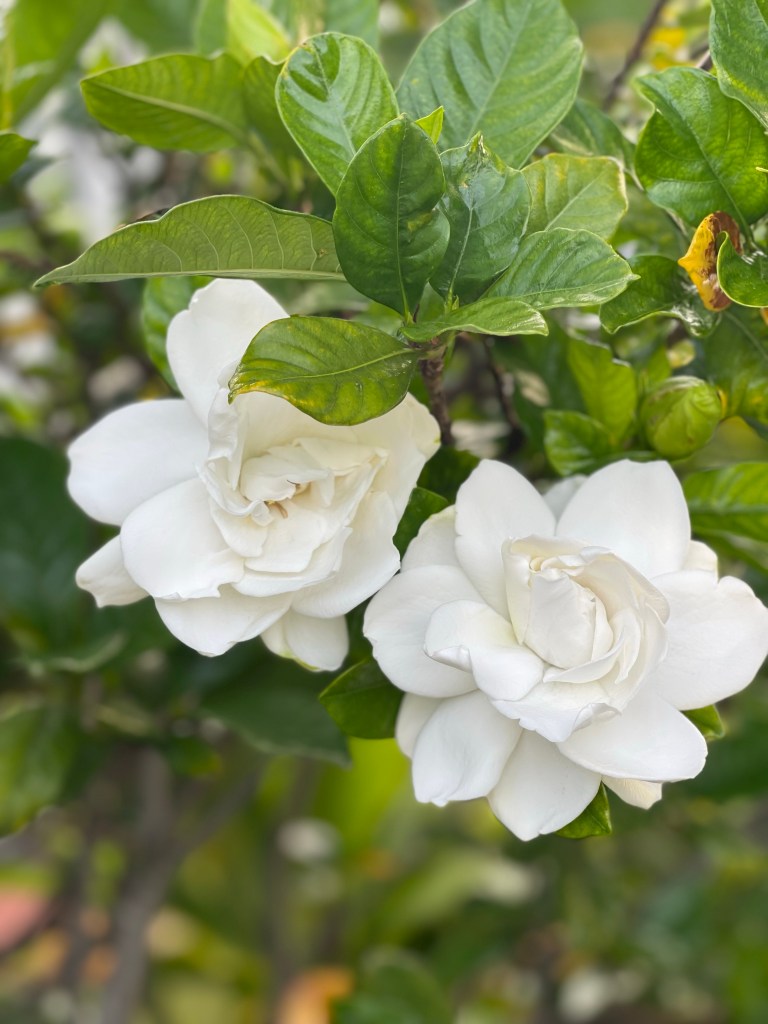
Gardenias: Blooming in May in Hawai’i Gardens

by Heidi Leianuenue Bornhorst

Q: my Gardenias are blooming a lot right now! I even put some of the dead brown flowers back around the plant, like mulch.

That’s the right thing to do, right Heidi?

Mahalo Debbie Azama Park

(Our fave Yoga teacher)

A; Brief answer: the spent flowers are good for mulch if they are pest free. Leafy mulch is also greatly beneficial for Gardenias.

Gardenias are called KIELE in Hawaiian.

They came to us from tropical China. The scientific name is Gardenia chinensis. They are in the RUBIACEAE plant family.

Did you know that there are over 200 species of Gardenias in the world?

Gardenias are easy to grow and bloom if you follow a few basics:

• Grow them in full sun.

• Pick every flower.

• Use soapy water to control ants and other insect pests.

• Cut long stems with blossoms if your plant is tall and flourishing!

• Cut the stems in the right place!

• Water!

• Shoot the undersides of the leaves to rinse off pests.

• Foliar fertilizer

• MirAcid 

The more sun the better, for Gardenias and most flowering plants. Study your sun and shade patterns and try to find the sunniest spot. Wind is good too. Air circulation helps get CO2 to the leaves of the plants and helps reduce insect pests.

You will have way fewer pest insects: thrips, aphids, scale, if you pick every blossom, look for a swirl of white on the green fat kiele bud, that’s the time to get your clippers and cut the bud and some stem.

Put that bud with stem, right into a vase of cool water.

If you see any pests on the buds or flowers, rinse them gently at the sink. If the pests are stubborn or plentiful, squirt some dish soap (1-2 drops) in some water and swirl it around, rinse off the pests.

Soapy water for the plant pests outside one tablespoon per gallon.

You can use a pump sprayer or handheld spray bottle. Spray the soapy solution onto the leaves and young stems, get the undersides of leaves, as that is often where the pests seek shelter and hide.

Leave the soap to sit on the leaves for at least an hour.

You can then rinse the leaves and shoot off the now smothered and dead pests and rinse the sooty mold off of the leaves.  Or you can just leave the soapy residue on the plants.

If you really want clean shiny Gardenia leaves, take a soft rag, dip that in the soapy solution and rub off the sooty mold and any insects or their eggs.

Watering and rinsing, like a strong windy rainstorm would do, is a great way to keep your plants healthy and pest free.

Observing while watering is also good; look for any buds coming along, and think about the best place to cut the stem to enjoy the blooms (and Fragrance!) inside your home.

GARDENIA Basics: THEY LIKE RICH, ACID SOIL, RED DIRT MIXED WITH GOOD LEAFY COMPOST. DIG OUT THE GRASS AND TOPDRESS WITH GOOD SOIL, MAKE AN EDGE TO THE PLANTER BED LIKE FLUSH BRICKS OR STONE, AND THEN JUST MOW AROUND THE BIG EDGE. KEEP THE GARDENIAS WEED FREE.No grass next to the stem.

Make a good soil zone area for the Gardenia roots with no competition from turf grass.

Gardenias also will bloom more if you fertilize with MirAcid. It’s the miracle gro in a blue box. If you fertilize with this each time you water, or at least a month or two before the main blooming season in May in Hawaii, you will get lots of lovely gardenia blossoms.


Leafy Compost

By Heidi Bornhorst

Leaves are valuable for our gardens and for living soil.  Akamai farmers of old used and valued leaves to create and maintain good soil.  Good soil is “alive” with beneficial microorganisms.

Some people rake up and throw away their leaves.   To me, leaves are way better for our gardens than chemical fertilizers.

I consider them to be GOLD for the garden.  Do you need some exercise at a safe social distance?  GO out and rake up some leaves! Raking is good for your arm muscles.

Its fun for keiki and ohana too, just keep your distance from each other, if anyone has been traveling or exposed at work or school.

What is the best kind of leaves?

  1. Monkeypod
  2. Koa
  3. Fine leaved legumes like Kiawe
  4. `Ulu
  5. Whatever you have!

Nitrogen fixers like monkeypod, koa and kiawe are great.  The smaller the leaves, the more surface area, and the more rapidly they decompose, releasing nutrients that are available for plants to uptake and use.

`Ulu or breadfruit leaves make excellent soil building compost and they are so petty too!

Any leaves will work.  Bigger leaves like those from Mango, Lychee, mountain apple and Avocado can be cut up or shredded to make them decompose more quickly.

 If you grow Anthuriums, these big leaves that don’t break down quickly are useful intact.  We grew up using hapu’u, Hawaiian tree fern trunks for Anthuriums and orchid potting medium.  But its not sustainable to use hapu`u, it better to let them grow in our gardens and rainforests.  SO, a trick I learned from my old Foster Botanical Garden Boss and sensei, Masa Yamauchi: use lychee or mango leaves for potting medium in your anthurium pots.

Cut them up with clippers and soak them in a bucket for a while.  If you have a chipper or shredder those make nice fine leaf cuts.  You can also run the leaves over with a lawn mower to get them into smaller pieces.

If you trim get your trees trimmed professionally, have them chip the leaves and branches too.  This makes excellent mulch and compost.  Make sure the chipper has sharp clean blades. 

Or mix fine textured and large leaves

I went up to my neighbor Cindy’s and harvested leaves out of her green bin.

She likes a neat yard and does daily raking. And even though she’s my good friend, and a very good tidy gardener, she THROWS THEM AWAY!

Her gardeners (grass cutters) had been there and they dumped a bunch of grass in the bin too.  I DON’T want the grass!  It might have weedy seeds and has too much nitrogen.  So, I had to separate it all and lean down into the bin to get the good leaves. And then the rain and wild winds came too!

All in all, it was quite a workout !  I loaded up the bags, buckets and boxes of leaves and brought them home to my garden.

I had priority plants that I want to give extra nurturing to:

  1. Food plants
  2. Rare Hawaiian banana variety that is struggling
  3. Rare gingers
  4. `Ohi`a lehua
  5. Palapalai ferns
  6. Rare native Hawaiian Hibiscus, koki`o ke`o ke`o, H punaluensis.

I distribute the leaves, and watered them in.  

Adding water helps “stick” the leaves in place and starts the decomposition process. With this wild wind I don’t want them blowing all around.