CRB, what we can all do to save Niu and other trees.

By Heidi Bornhorst

Alien Coconut Rhinoceros Beetles are currently Endangering our Niu (coconut palms), native Hawaiian Loulu palms, hala, banana and more.
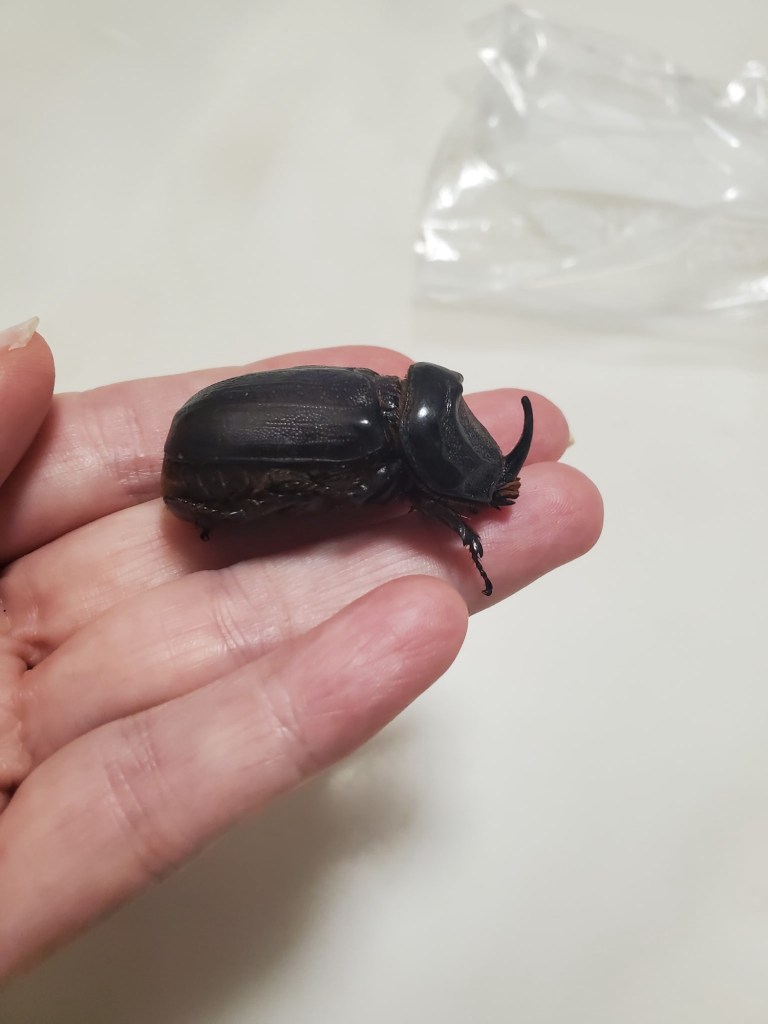
Coconut Rhinoceros Beetle

This is an existential threat, not only for beauty, but for life.

Without Niu we may starve.

​Imagine Hawaii with no Niu. 

Coconut Rhinoceros beetles (CRB) are a serious alien pest. We really need to take this problem seriously and attack / control them on all fronts.

For years, At Every Arborist and landscape conference, we were warned about these chunky hungry beetles and warned to KAPU !! keep them out of Hawaii.

CRB are Major and serious pests in other places such as Polynesia and overall world tropics.

Now they have spread from a Navy site in 2013, to the west side, devastating the north shore and Waialua. They are bad in Waimanalo.

I was at Wahiawa Botanic Garden recently and so devastated to see all of our native Loulu palms being munched and destroyed. This upland Botanic Garden has a collection of rare Loulu palms (CRB love our native Loulu palms even more than Niu or coconuts). They also attack Royal palms. 

(We have the famous ET grove of Royals, on Royal palm drive in Wahiawa.)

Auwe! we stopped at Kahana state park, where the precious Niu of Mary Mikahala Robinson Foster grow tall and graceful, said to be some of the best nuts for eating and drinking. 
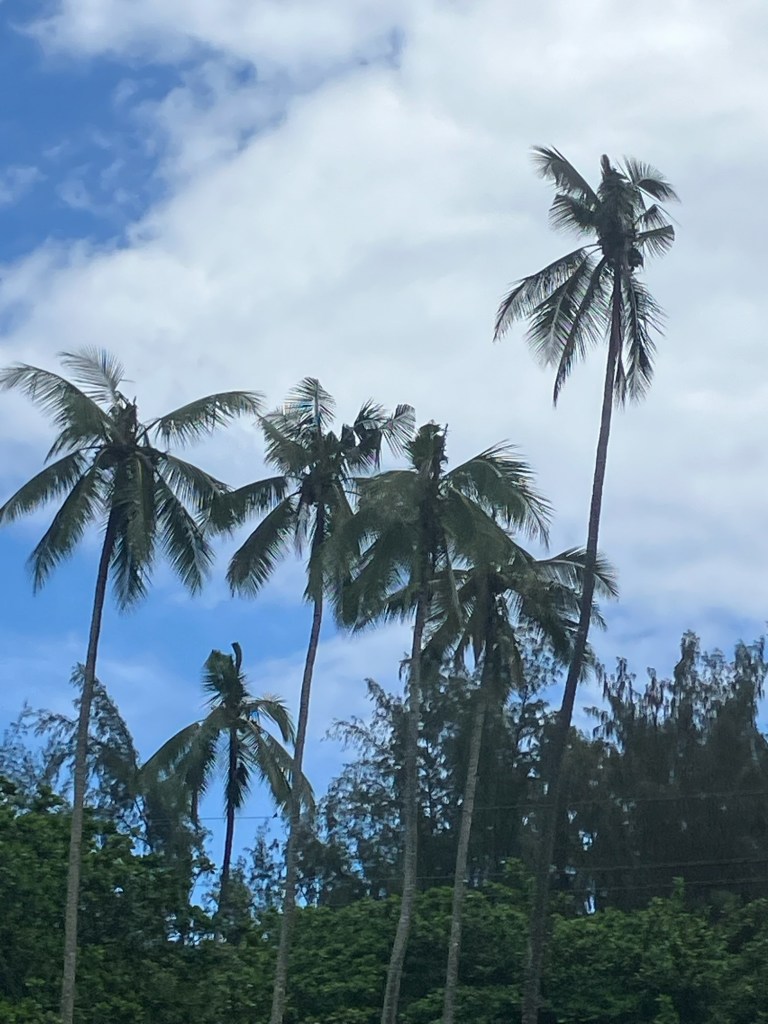

 Coconuts at Kahana state park,
attacked by CRB

I sadly observed the classic cut out fronds, characteristic of CRB feeding on new vulnerable growth. These Niu are iconic and getting munched to death, as I write this. 
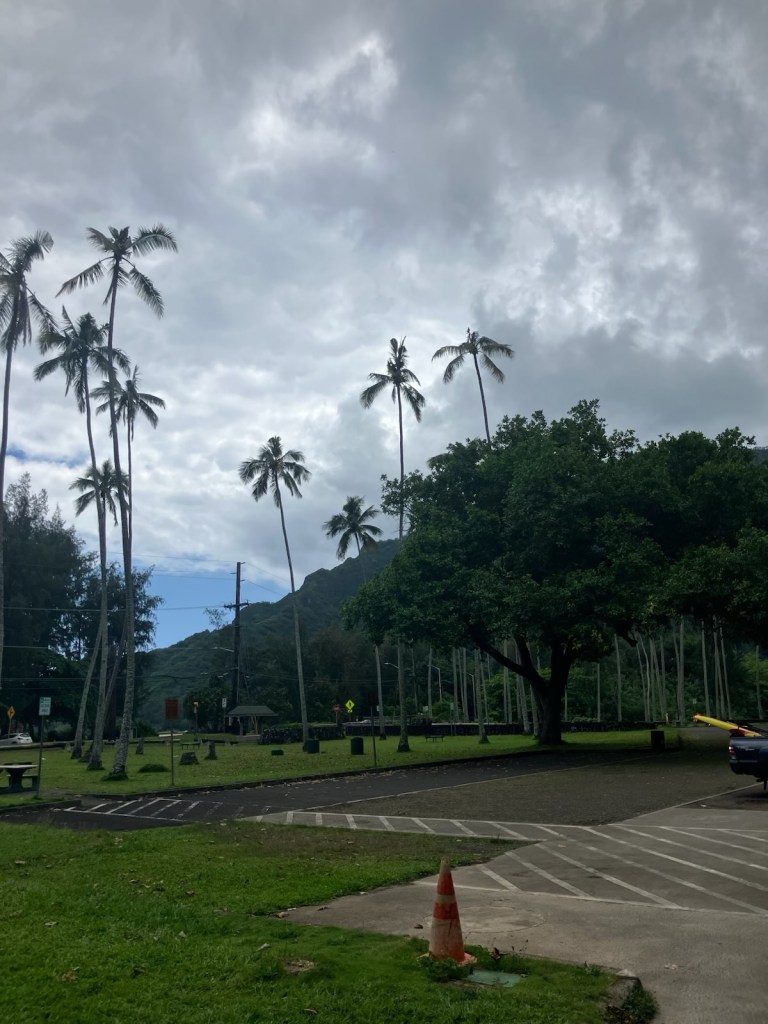

 Coconuts at Kahana state park,
attacked by CRB

We need to get everyone to pay attention and help with control. Our Governor Green and Mayor need to get behind these efforts: Education and control.

Neighbor islands are getting hit with CRB too.

Know the life cycle, they spend the bulk of their life feeding on and in, rotting vegetation, compost piles and the like.

It should be on the News every night, along with other crimes affecting Hawaii. 

Here are some of the immediate steps we can all take:

No mulch piles

No dead stumps

Netting 

Traps with lights and netting

Public awareness and education

Government support and action 

Search for Biocontrol 

Education


 Coconuts at Kahana state park,
attacked by CRB

Chemical treatment to save Coconut palms (Must label as treated, and cut off any flower and fruit on treated palms!) A high lift or skilled coconut climber is key for this.

Everybody’s dog, chickens and pigs can find and eat the grubs.  

A Gourmet opportunity for an innovative local chef?

Nui/Coconut, Cocos nucifera is the Tree of life for Hawaiians, do we really appreciate and treasure Niu in Hawaii as well as we could? 

Can you imagine Hawaii with no Coconuts? CRB also attack Hala, Loulu palms, banana and more.  

Let’s get together and scientifically, attack this pest.

Netting all around the vulnerable crown of the palm. Netting of mulch piles. Nets with Lights 

As my friend Mari Zane says Ho! Beneficial use for those illegal gill nets!  (Her Loulu and Niu on the north shore were early casualties, but there is hope for the shorter ones.)

Wrap the nets around the crown.  The nets will get the ones inside coming out of the bore holes, and get any on their way in.

Contemporary Landscaping, a nursery in Waimanalo, uses a low net about four feet tall, lit at night. This attracts and captures beetles. 

Trapped beetles attract more beetles to the light, and a chance for more control.

Brown Cannon made a trap using a netted Hula hoop and is capturing them out in Waialua. He sets this hula hoop net  (great recycling!) over a barrel of woody mulch.

We can all get smart and do our part!

Just when Hawaiian gardeners, City parks folks and landscapers were convinced to wisely use mulch, we find that mulch piles are endangering NIU.

CRB grubs love rotting vegetation and spend most of their life there.

​We can have mulch piles and mulch dishes if we are akamai.

Turn the mulch frequently disrupting the grubs. 

HOT mulch will help to kill them.

Turn your mulch and have animal helpers, keiki or your arborist ready to spot and capture the grubs. 

(Dogs, pigs and chickens can be trained to eat the grubs of CRB)

Mulch and green waste piles are perfect habitat for these alien pests and their voracious grubs.

Hot mulch is OK:  turn it and burn it!

Or spread mulch and compost thinly. Water it and look for CRB grubs.

As always water and nurture your palms, keep them as healthy as possible.

Let’s work together to protect and save this vital part of Hawaii. !!!
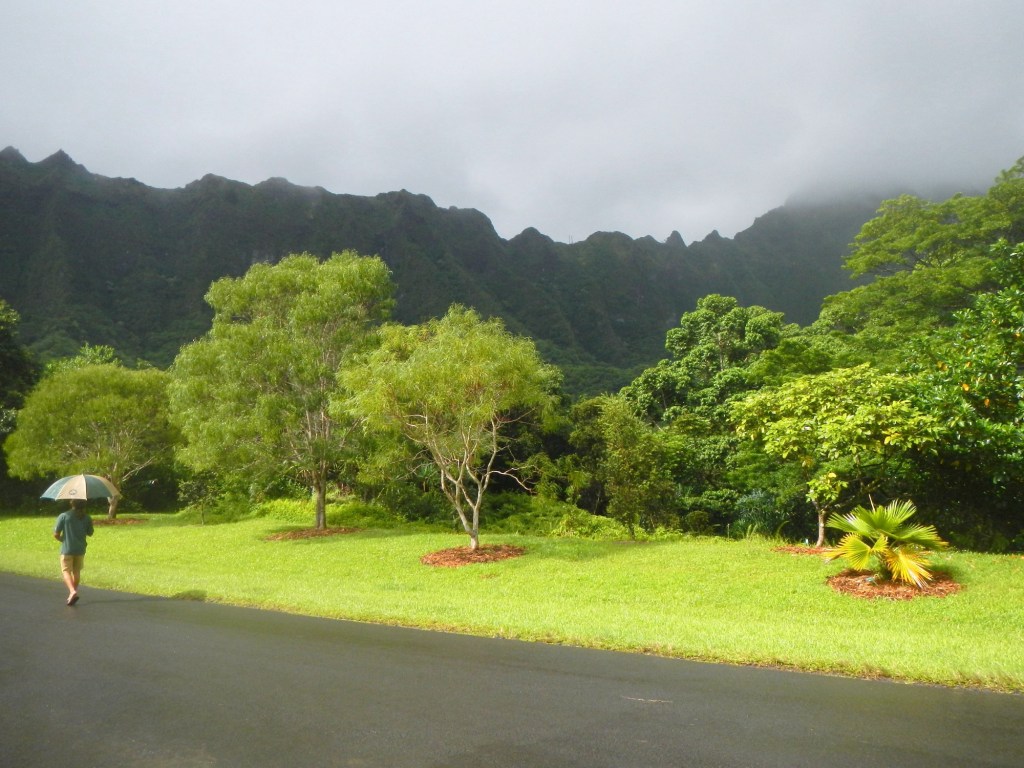
Miniature Forest Revolution

The Miyawaki method

By Heidi Bornhorst

Koa trees, Loulu palms, mulch dishes Ho`omaluhia

Aloha Hawai`i Gardeners: are we ready to plant and nurture a miniature forest Revolution?

I have wanted to learn about the Miyawaki method for a while. Thanks to generous friends: Chirstine and Pokey, I got my hands on one of the books about the Miyawaki miniature forest method, and plunged in.

The book I just read is called, “Miniature Forest Revolution”, by Hannah Lewis. 

Developed in Japan and now spread around the world this is a new and akamai way of forest restoration.

Dr Akira Miyawaki was a Botanist, ecologist, and researcher. He networked with others in Japan and around the world to plant mini climax forests and nurture them. 

I have advocated for years, to simply plant a tree, nurture a garden, keep one plant alive, Volunteer at a garden.  Go hiking, learn about our Hawaiian forest. Nurture our Hawaiian forests and learn more. 

Learn about and nurture our living soils.

This is a new way to do it and is very inspiring.

Trees and forests really do heal our land. Compost really does work. Watersheds can be restored by the forest. Healthy forests of multi layers cover the soil and nourish it. 

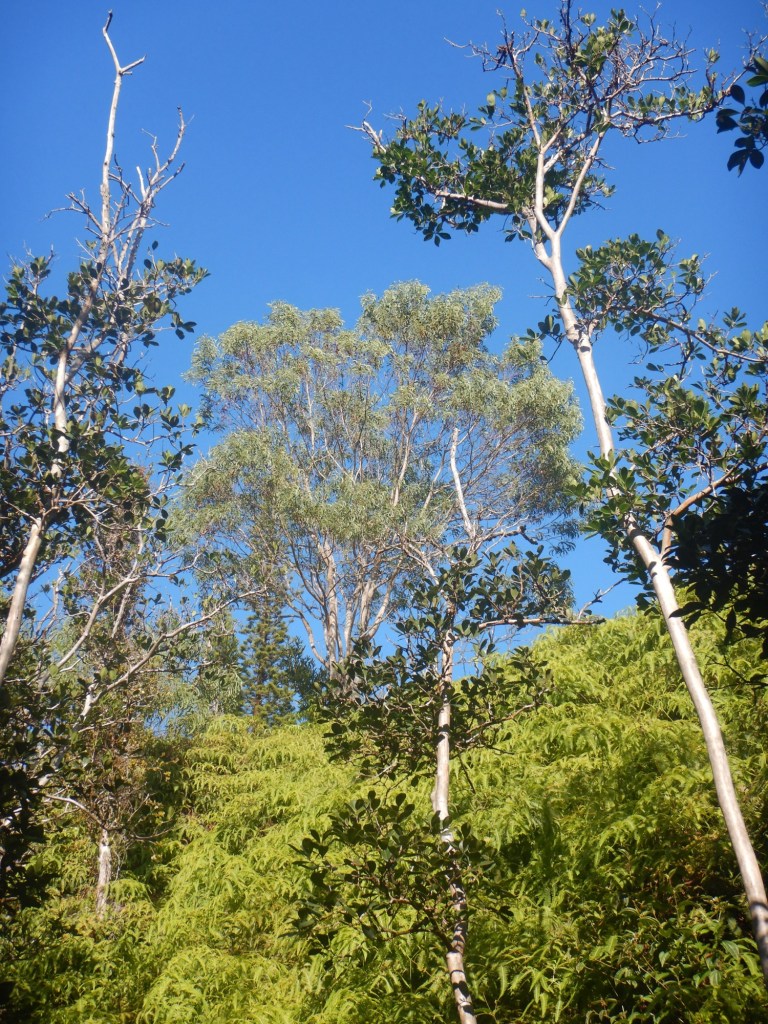
Koa tree and Uluhe ferns

With plants covering soil and adding their leaves to the living soil mix, we have less runoff when it rains.

We like to keep soil alive and where it belongs: on Land

When soil washes into the ocean after heavy rains we have fresh water killing the reef and silt and mud smothering the reef, clouding the water and adversely affecting fish, honu and all the saltwater living life forms.

Healthy forests funnel rainwater down into the ground enhancing our water sources. 

There are so many benefits. 

To follow the Miyawaki method you get rid of grass and weeds and plant climax species really close together like how they occur in nature. 

(Koa and `Ohi`a lehua trees are two Climax species that we do now know how to nurture and grow)

Soil preparation is key. Get rid of weeds and grass and mix in compost. Lots of compost and organic matter gets incorporated into the original soil. Drainage is also very important. 

Adding mycorrhizae or native soil from a healthy forest area might be advisable.

Soil tests help determine what soil type and fertility you have. 

After all this planning and preparation, the fun begins: Planting the forest.

The plant mix is trees, shrubs, ferns and ground covers, throw in some vines. A different plant mix would be suitable for various soil types, rainfall amounts and elevation. We have so many microclimates and soil types in Hawai`i.

Elevation is a very important consideration for growing native Hawaiian plants.   

For example, Koa seeds collected at 5000 feet on the richly soiled flanks of Mauna loa, would probably not thrive in Kapi’olani park.   It is partly soil (they do not like sandy salty soil), but even more it’s elevation. Cool night temperatures and other factors 

Often lowland plants can grow at higher elevations, but high elevation plants struggle and lower, hotter elevations. 

For the first few years you tend the forest, watering, and weeding. The book says you do this for three years. Maybe in Hawaii we need to tend to it longer with watering and weeding and adding to the mulch beds.

Then it can basically care for itself but it’s still good to do some nurturing. 

That is what horticulture is: Close monitoring, observation, and careful tending of your plants.

Like in a natural forest, leave the leaves. They nurture the soil.

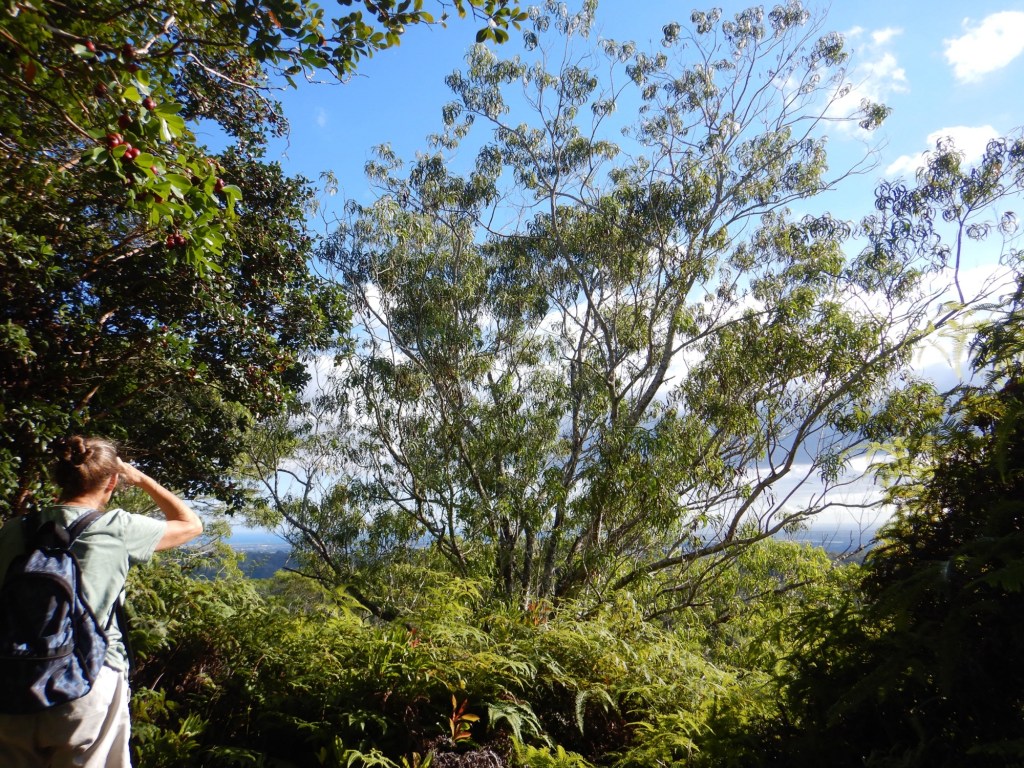
Rachel admires koa tree

Arbor Day 2022, Brachychiton acerifolium, Illawarra Flame Trees

By Heid Bornhorst

Heidibornhorst.blog

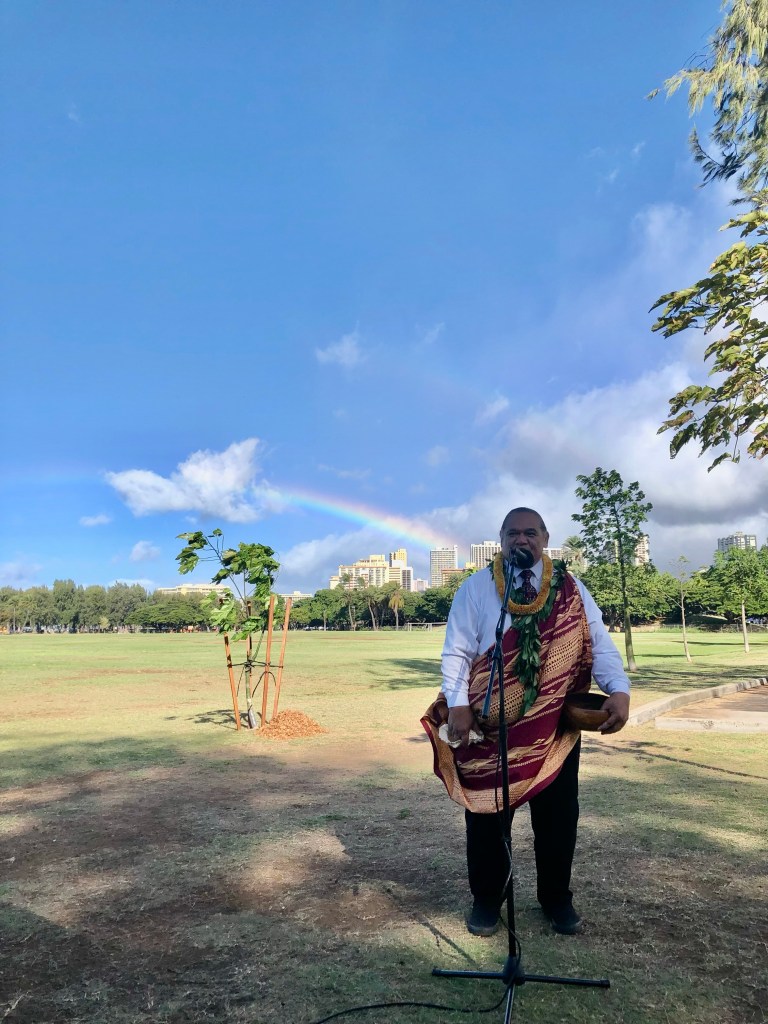
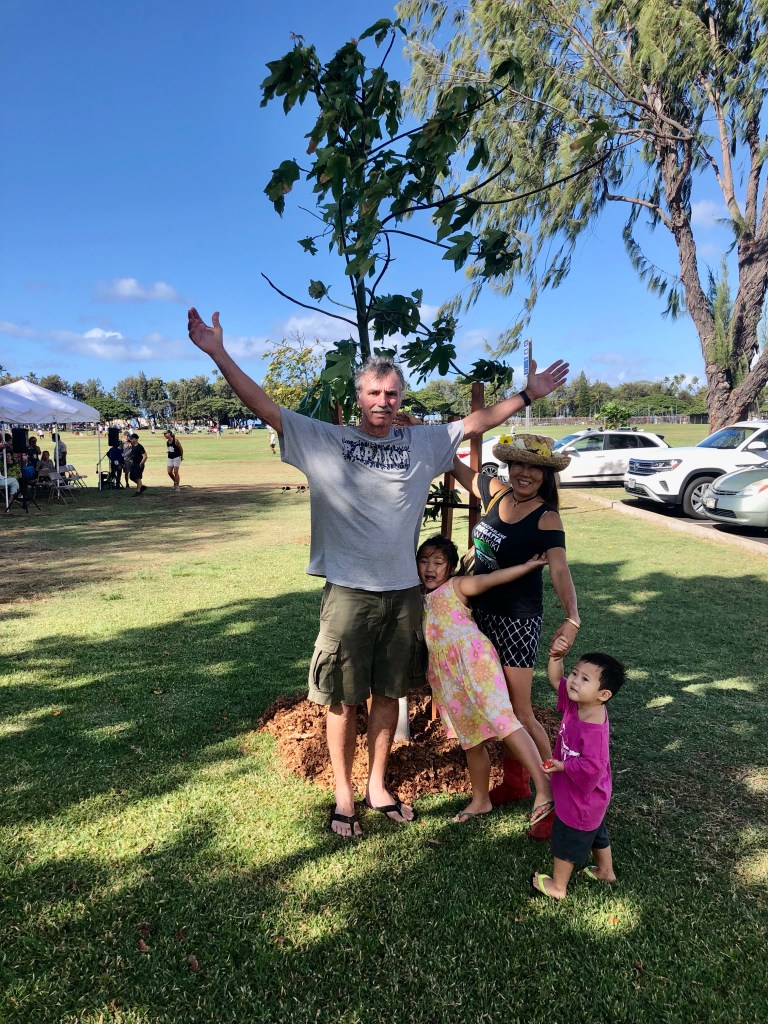
After three years of lockdown, we are finally, Happily, able to celebrate Arbor Day in Kapi`olani Park once again.

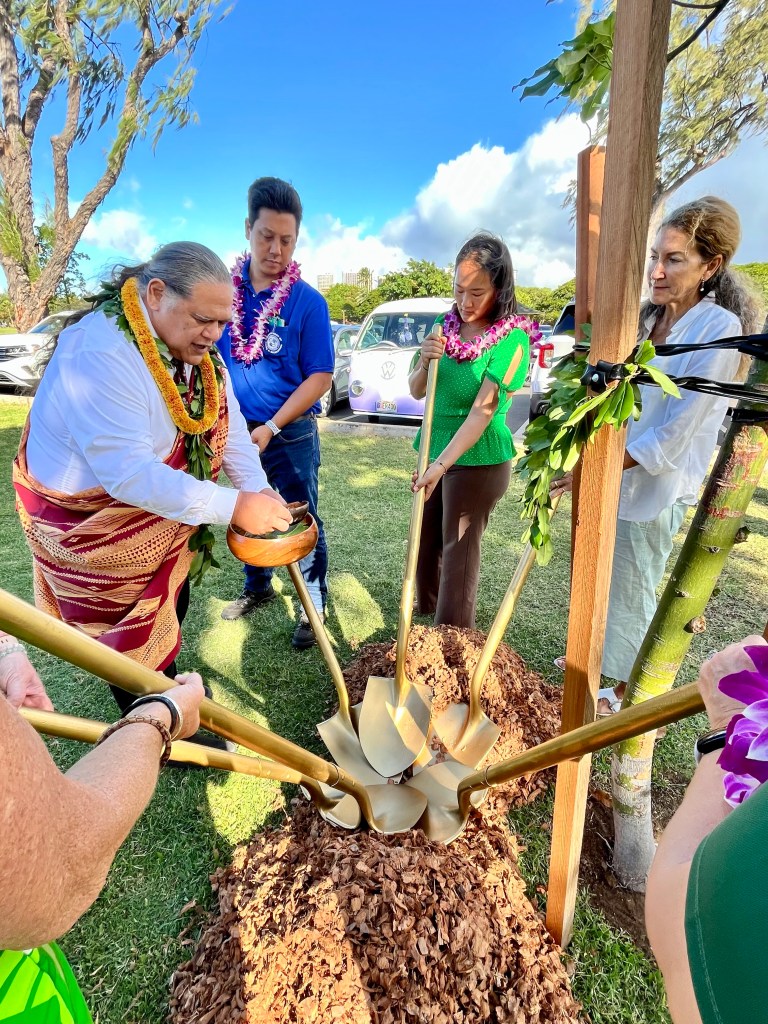
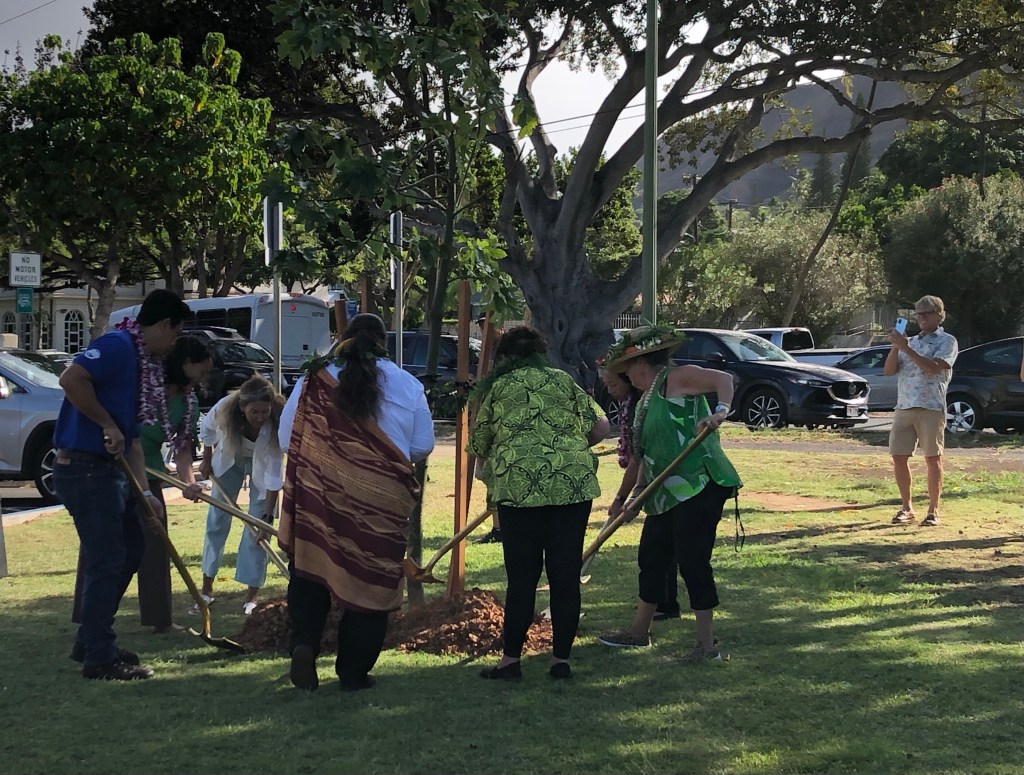
On Saturday November 19, 2022, we will gather with ScenicHawaii, Inc., Kapi`olani Park Preservation society, some Dedicated City tree workers and Arborists, Volunteers, and all of us who love and cherish trees and our Park.

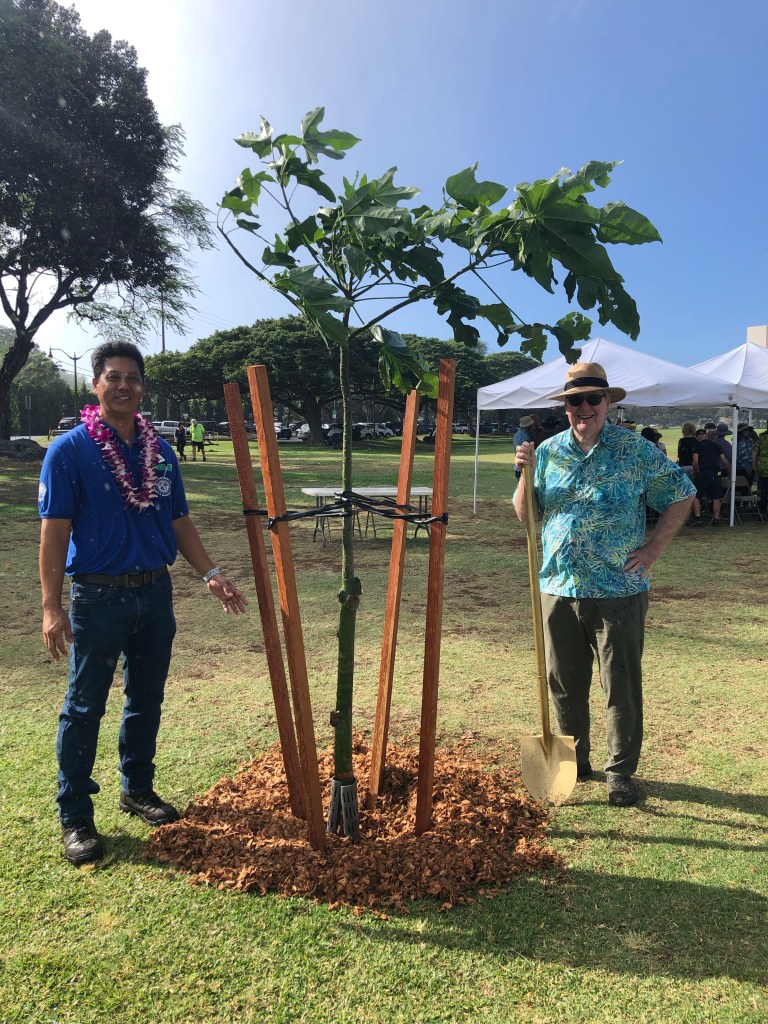
We will be planting and ceremonially mulching four new trees courtesy of the Division of UrbanForestry led by Certified Arborist Brandon Au and DUF/ City and County of Honolulu Parks Department.

Citizen Forester Emily Perry will be representing our busy parks director Laura Thielen.

The trees are drought tolerant and are native to coastal subtropical forests of Australia.

The common name is FLAME Tree, or Illawarra Flame tree. Also called the lacebark tree.

One thing our mentor Paul Weissich, Director Emeritus of the Honolulu BotanicalGardens taught us, is to look beyond flowers when you view trees.

What does the bark look like? How is the truck shaped? What is the growth pattern? What kind of shade pattern does it adorn the ground with? What are the leaves like? Are they good for mulch and soil nurturing? For Keiki art projects?

As we Arborists say, “Touch trees”. Place your hand on the trunk and look UP! What do you see, in the Tree Canopy? I love doing this with keiki of all ages!

When we plant a tree, we are investing in, and finding out about the future. This small tree, grown from a tiny seed and planted today. What will it grow into in the Future?

We can read about the size and growth habits in a book, but how big will it really get here in Hawaii? Will it grow big and strong with proper nurturing and akami tree maintenance?

Will it withstand the abuse that trees sometimes take in public park spaces? Will most people be happy and respect the growing young trees? We sure hope so! Trees ensure a healthy, happy future for all of us.

Known in Scientific Latin as Brachychitonacerifolium, the Illawarra Flame trees are in the Sterculiaceae plant family.

We don’t have many of these trees in Hawaii.  A few grow at Foster and Ho’omaluhia Botanical gardens. These were grown from seed by the Horticulturist and Plant propagators at Foster Botanical Garden.

They are particularly striking when in bloom,with bright red orange or scarlet flowers. The flowers look like a hanging red bell when viewed from the side. If you look directly at them, they look like stars.

The leaves are shaped like a kukui leaf, or a mainland maple tree leaf.  This is what the species name acerifolium means.  Acer is the Latin name for Maple, and folium as you might guess is referring to the foliage or leaves, maple shaped leaves.

The trees will grow up and into a pyramid shapewith a tall, greenish grey, smooth round shapedtrunk. In time they can grow up to about 100feet tall (30 – 35 meters). They are a popular street tree in Australia and around the subtropical world.

The seeds of Brachychiton species are edible. But like many plants in the sterculia family they have irritating hairs, which must be removed or carefully removed to get to the edible seeds. Native Australians ate them raw or roasted. They are nutritious, containing 18% protein and 25% fat with high levels of zinc and magnesium.

There are uses for this tree in its native Australia. Fiber is made from the bark and a kind of gum can be extracted. The wood is soft but dries hard. Shingles, among other things, are made from the wood. The roots of young trees are edible, but let’s not do this in our park!

A related tree, Brachychiton rupestris is called the bottle tree.  It grows a big fat water retaining trunk over time, somewhat like the Baobab tree from Africa.

Mahalo to Wikipedia for some of this info, I also referred to our old standard book: In Gardens of Hawaii, by Marie C. Neal.

Pandan Wangi

By Heidi Bornhorst

Pandanus amaryllifolius
Working at the Honolulu Zoo, we were helping move and relocate plants for the community gardens from behind the zoo on Paki, to a new garden on Leahi and Paki.  As we were helping the (unhappy) gardeners, I heard Victorino Acorda, one of our best Gardeners and true plantsman exclaim in delight!
‘Pandan wangi!  Makes the rice taste so good Heidi!  I’ve been looking for this plant since I moved here from the PI!’
He was almost crying; he was so happy!
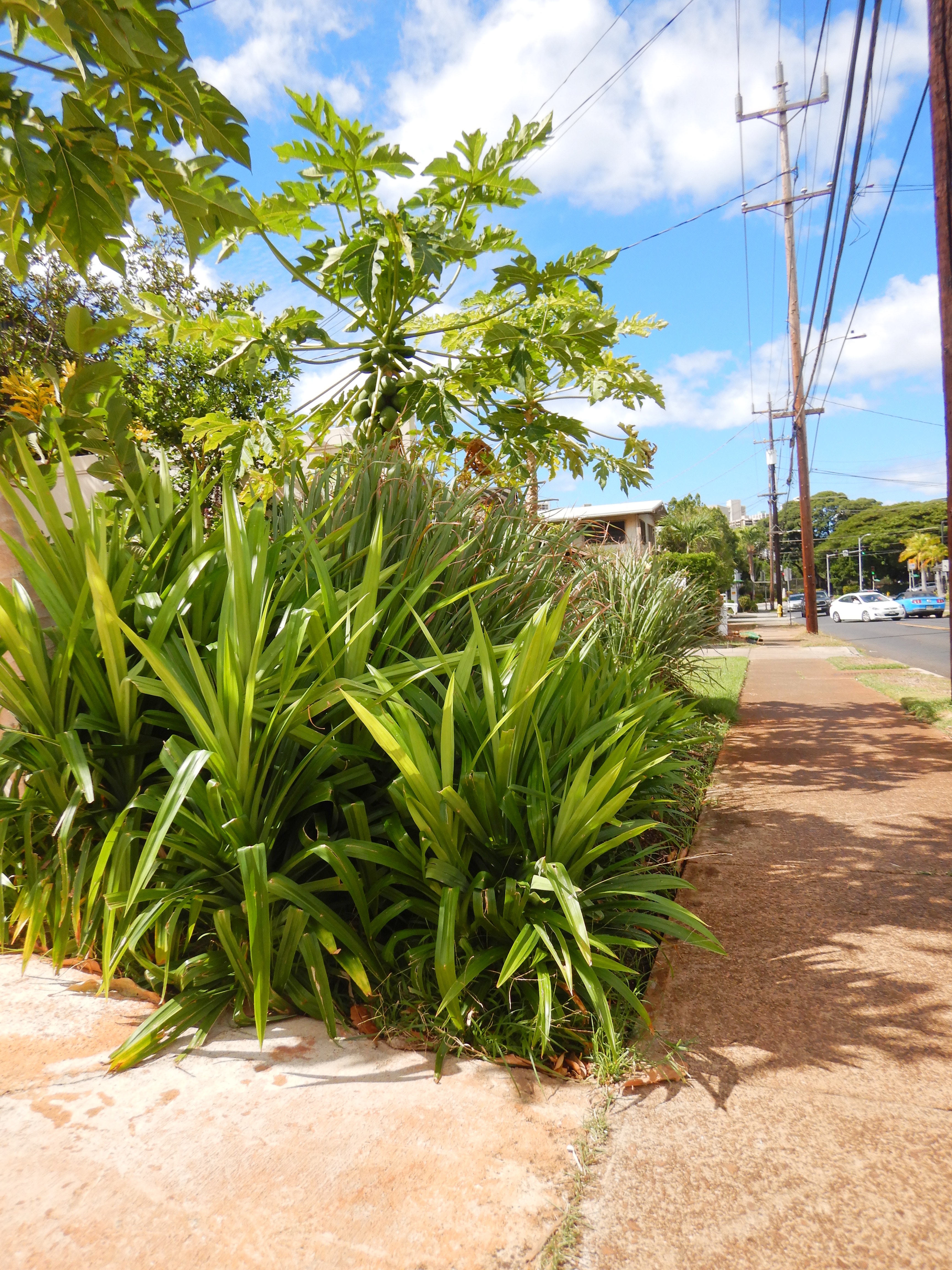
Then the other day I was stuck in morning traffic on Mo`oheau St in Kapahulu.  To amuse myself I looked closely at gardens along the street.  There was a really nice garden with a southeast Asia flavor.  First, I noticed nice clumps of lemon grass and some healthy papaya trees.
What was the clumping bright green plant in front of the lemon grass?  PANDAN WANGI!


So attractive in this landscape design and so useful.
We have it growing in the southeast Asian plant section at Ho’omaluhia Botanic Garden.  One year it was a featured plant at our plant sale, and we hope to feature it again once we can open up our gardens safely once again.
It is fairly easy to grow.  You can divide the clump and make new plants.  
 

Those who know this plant usually just call it pandan. There are many ways you can cook with it.
Some call Pandan, the Vanilla of the east, or the vanilla of Southeast Asia.
You can boil with whole leaves and combine them with other ingredients.  You can wrap foods in them and then cook them (like we do with Ti leaves).
If you’re handy with your blender, grind some fresh leaves with water and then freeze the juice in a mold or ice cube tray and use it for drinking or cooking later.
You could also add it to GREEN SMOOTHIES
Some just buy a bottle of pandan paste.  Lexi had some from Singapore, she had it quite a while I smelled it and then read the label.  It smelled really ono. The ingredients not so much.
How do we make it from the fresh leaves that we can grow in our Gardens?
You can just chop it up and add to the rice pot as you cook your rice.
You can make tea with the leaves. You can add your favorite tea like jasmine to the pot.  Pour hot water over both and let steep for Five minutes.
I made some with just hot water, poured over and steeped over leaves. it tasted ok
On 9 28 21 trying strip leaves lengthwise in 3s, add Olena and ginger powders, and three mamaki leaves, bring to a boil, then simmer for 30 minutes or so. It Smells really good!
There are lots of Creative and Foodie things you can do with pandan:
• Twist the leaves into Roses like we do with Ti leaves
• Little cups for deserts
• You can make green smoothies with it
• Pandan Chicken and Pandan Rice
• Grilled Fish stuffed with Pandan are just a few recipes that are popular.
And many desserts, variously featuring coconut milk, and various sugars like palm sugar.
If you look online there are lots of recipes, some quite layered and complex.  Some really pretty drinks and you insert a leaf tip to give it that final Flare of Gourmet Drink décor.
It gives the dish a lovely green color and subtle flavor.
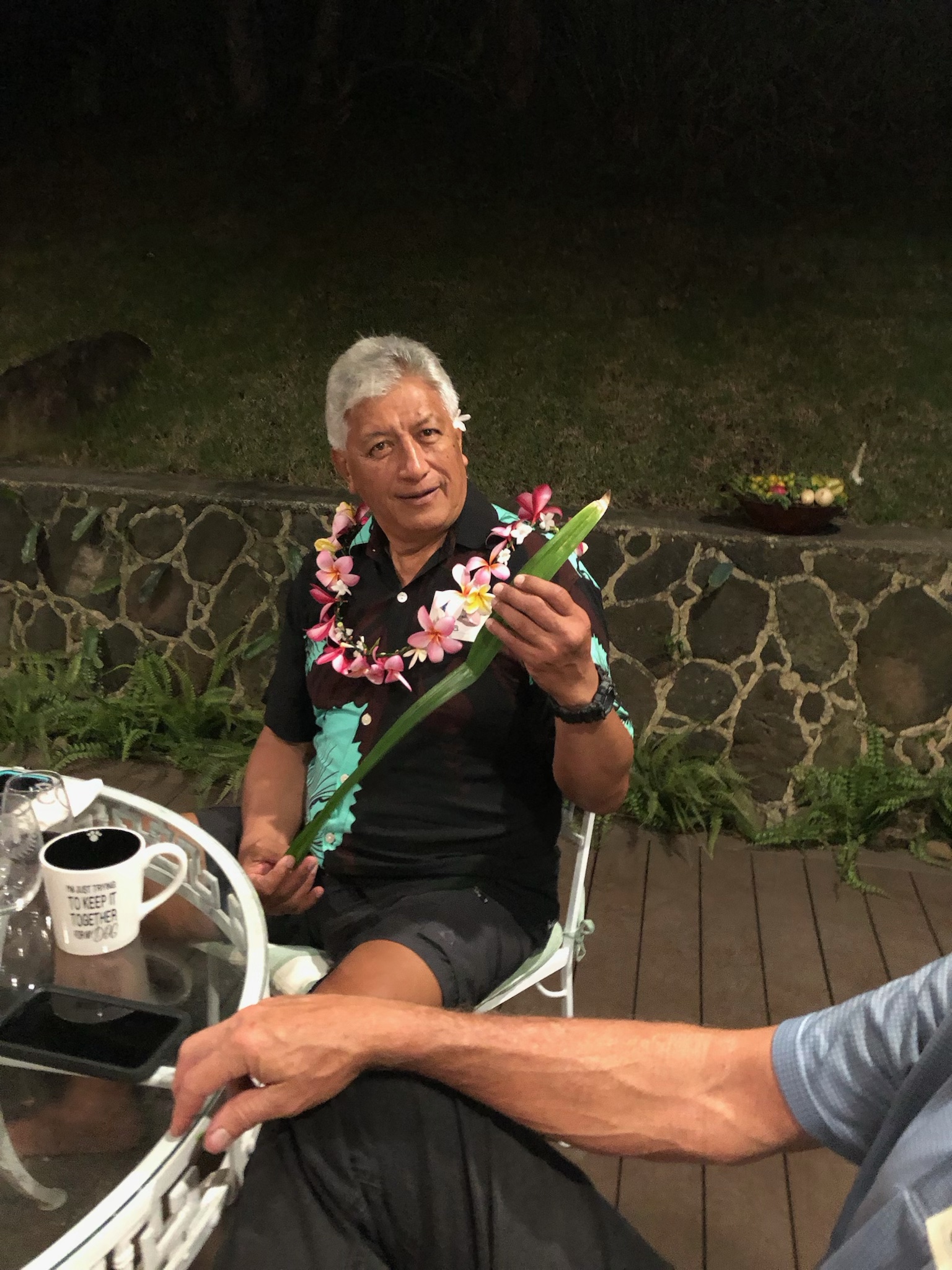
I took some in mixed arrangement as a hostess gift for Lexi Hada and Barney Robinson.  One of their guests, Teua from the Cook Islands admired it, drew it out of the arrangement and sniffed it.
As he ran his hands over the glossy thornless leaves, we talked about it.  He recognized it as a Pandanus, or HALA relative but NO THORNS! We all wondered how it would be for weaving.
The Latin name, Pandanus amaryllifolius refers to this. The growth is much like a hala, but the leaves are soft and shiny with no thorns.
Besides being ONO, it’s a very attractive garden accent or spotlight plant in your garden.
I also like it as an exciting and exotic foliage element in a Tropical Flower arrangement.
We plan to feature it at a Future Covid 19 safe FOHBG plant sale.
 

Nutrition of Mountain Apples

By Heidi Bornhorst

Local Hawaii people are so Funny!

Nowadays people go nuts for Mangos and lychee and `ULU.

Even to far as buying them in the store!

Don’t you all think we should have some fruit trees in our gardens? And share with friends and neighbors? Let’s plant and grow some fruits today!

As kids, mangoes were like stray kittens, people would beg you to take them! We got jobs raking up the fallen smashed ones from super tall trees for elderly neighbors.

I could never get enough lychee even tho the trees were abundant in Makiki where I grew up. Lychee enticed me to move to Wahiawa where we had two lychee trees and then planted a third.

When you offer people mountain apples or `ohi`a `ai some are enthusiastic, some will help you pick and rake up and some meet the offer with distain.

Funny.

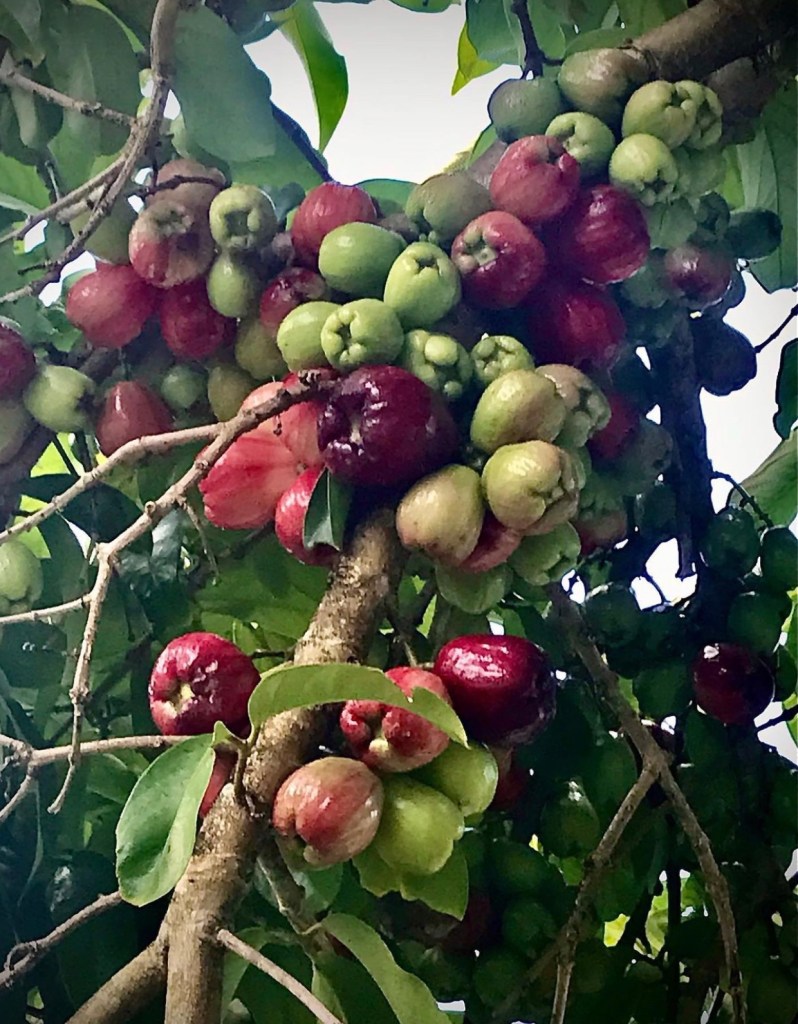
Nutritionally they are great; lots of hydration for your body, and rich in vitamins C, Calcium, magnesium, phosphorus, and super rich in potassium.

Also known as `Ohi`a `ai, the `ohi`a that you eat (`Ai) they were carried here by ancient Polynesians in their sailing canoes, an important part of our “imported” landscapes and gardens.

What a gorgeous gift to find when hiking the low moist forests. This fruit will keep you hydrated on your hike!

And you can bring home a seed and grow it to commemorate that special hike. Surprise and share with your hiking buddies at the next festive occasion.

They are nice to grow in our gardens too. A small to medium tree with pretty leaves and bark most of the year and then BOOM! in flower so pretty magenta pom poms

A month or two later you will have that juicy ono fruit. Like jewels up in the tree canopy.

Besides eating them straight off the tree, you can slice and add to fruit salads.

Or as my niece Jalene found out for us, you can make pickles from them to savor for another day. 

My friend and akamai farmer Deborah Ward makes a mean mountain apple pie and you can also make mountain apple sauce.

Add some slices to your favorite cold beverage.

You can make a lei with the smaller green and white fruit.  Store the lei in the fridge and when you wear it “Fruit cooling air conditioning” !  I made one for my then boss, Sydney Iaukea at a Kupuna Hawaiian studies training session and the lei kept her cool all day.

It’s an unusual lei today.   But easy to make and fun and unusual to wear.

​The scientific name is Eugenia mallaccensis and they are in the MYRTACEAE plant family along with `Ohi`a lehua, guavas, rose apples, Eucalyptus, and more.

Some call them Malay apple as they are native to the Malay peninsula and southeast Asia.

We have different varieties in Hawaii, a pure white one, a seedless one, squat plump Hawaiian variety and long and big Tahitian variety.

Many grew naturally in the wet lowland tropics of Ho`omaluhia Botanic Garden and then we planted more in the “Kahua Kukui” Polynesian plants section of this amazing and FREE botanic garden in Kane`ohe.

They are easy and fun to grow from seeds.  Save a seed from an ono one and plant it right away.

Besides the ono fruit and attractive flowers and tree, bringing shade and birds to yoru garden, mountain apples have medicinal uses.

The bark is a sore throat cure.   If you feel a sore throat coming on or are getting a cold, scrape off some young bark, rinse it and chew it.  It has lots of tannins and this truly can help ward off a cold.

The nutritious fruit will also help keep you healthy !

Leafy Compost

By Heidi Bornhorst

Leaves are valuable for our gardens and for living soil.  Akamai farmers of old used and valued leaves to create and maintain good soil.  Good soil is “alive” with beneficial microorganisms.

Some people rake up and throw away their leaves.   To me, leaves are way better for our gardens than chemical fertilizers.

I consider them to be GOLD for the garden.  Do you need some exercise at a safe social distance?  GO out and rake up some leaves! Raking is good for your arm muscles.

Its fun for keiki and ohana too, just keep your distance from each other, if anyone has been traveling or exposed at work or school.

What is the best kind of leaves?

  1. Monkeypod
  2. Koa
  3. Fine leaved legumes like Kiawe
  4. `Ulu
  5. Whatever you have!

Nitrogen fixers like monkeypod, koa and kiawe are great.  The smaller the leaves, the more surface area, and the more rapidly they decompose, releasing nutrients that are available for plants to uptake and use.

`Ulu or breadfruit leaves make excellent soil building compost and they are so petty too!

Any leaves will work.  Bigger leaves like those from Mango, Lychee, mountain apple and Avocado can be cut up or shredded to make them decompose more quickly.

 If you grow Anthuriums, these big leaves that don’t break down quickly are useful intact.  We grew up using hapu’u, Hawaiian tree fern trunks for Anthuriums and orchid potting medium.  But its not sustainable to use hapu`u, it better to let them grow in our gardens and rainforests.  SO, a trick I learned from my old Foster Botanical Garden Boss and sensei, Masa Yamauchi: use lychee or mango leaves for potting medium in your anthurium pots.

Cut them up with clippers and soak them in a bucket for a while.  If you have a chipper or shredder those make nice fine leaf cuts.  You can also run the leaves over with a lawn mower to get them into smaller pieces.

If you trim get your trees trimmed professionally, have them chip the leaves and branches too.  This makes excellent mulch and compost.  Make sure the chipper has sharp clean blades. 

Or mix fine textured and large leaves

I went up to my neighbor Cindy’s and harvested leaves out of her green bin.

She likes a neat yard and does daily raking. And even though she’s my good friend, and a very good tidy gardener, she THROWS THEM AWAY!

Her gardeners (grass cutters) had been there and they dumped a bunch of grass in the bin too.  I DON’T want the grass!  It might have weedy seeds and has too much nitrogen.  So, I had to separate it all and lean down into the bin to get the good leaves. And then the rain and wild winds came too!

All in all, it was quite a workout !  I loaded up the bags, buckets and boxes of leaves and brought them home to my garden.

I had priority plants that I want to give extra nurturing to:

  1. Food plants
  2. Rare Hawaiian banana variety that is struggling
  3. Rare gingers
  4. `Ohi`a lehua
  5. Palapalai ferns
  6. Rare native Hawaiian Hibiscus, koki`o ke`o ke`o, H punaluensis.

I distribute the leaves, and watered them in.  

Adding water helps “stick” the leaves in place and starts the decomposition process. With this wild wind I don’t want them blowing all around.

Silver Buttonwood trees – Horticultural Legacy at our Botanical gardensHawaii


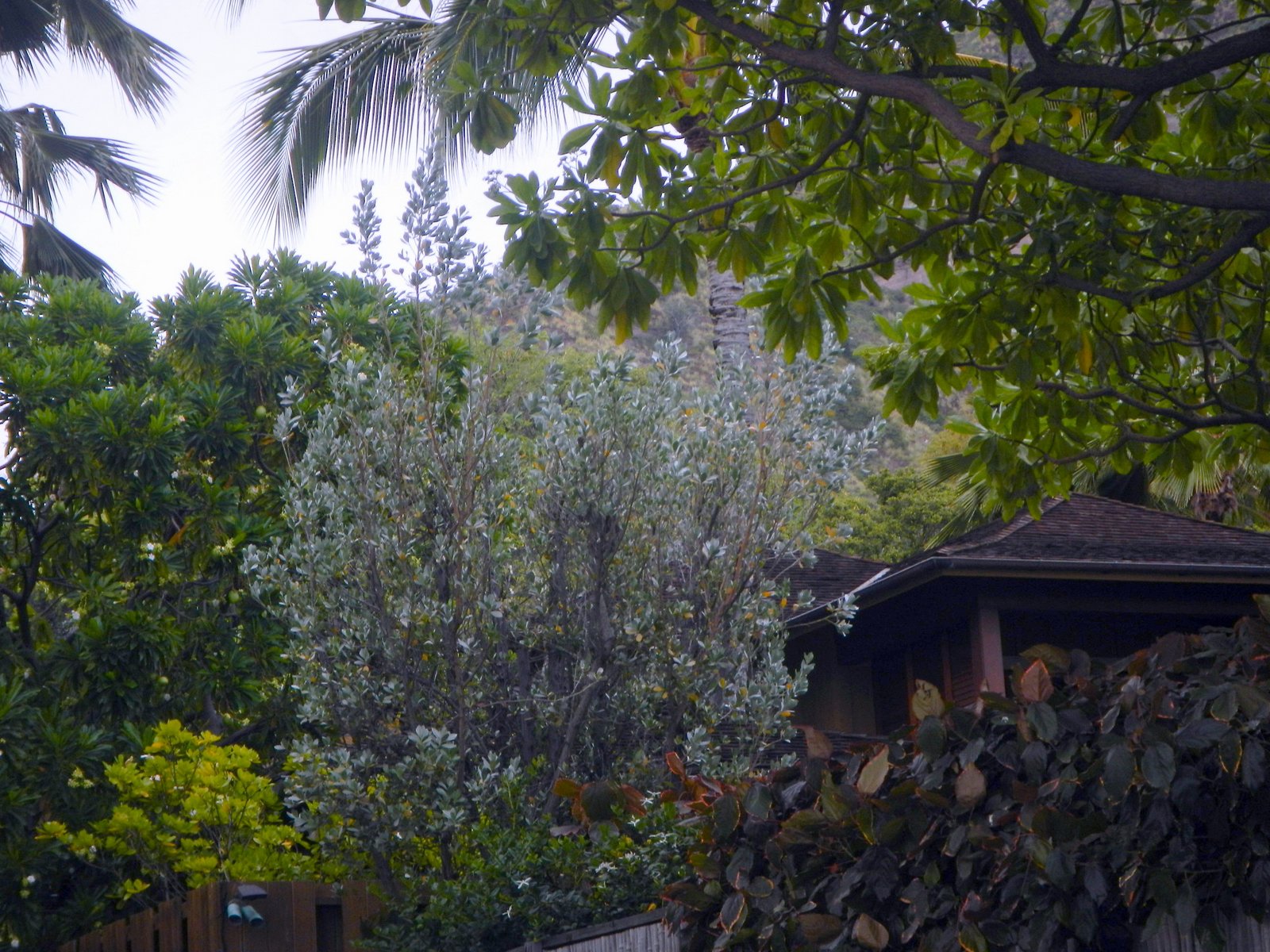
Q: What are those gorgeous silvery street and park trees?  Some are at Sandys Beach, some Giant ones are on Pa`alea street in Palolo Valley, and some are at Ala Moana beach park.  Please inform us about these

Mahalo, M. Silva, Palolo

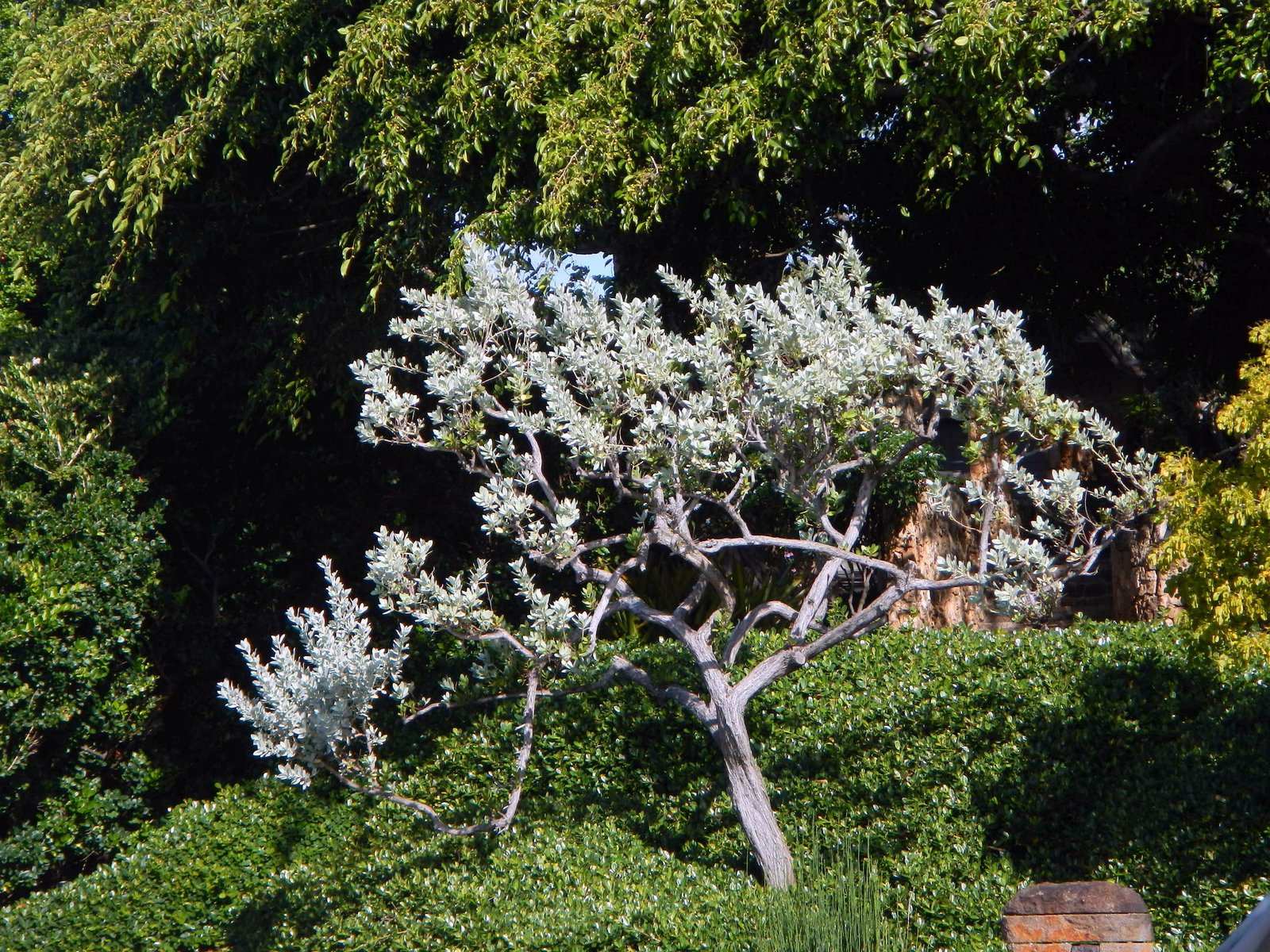
A: Silver buttonwood trees! AKA Sea Mulberry, or Button Mangrove.  Conocarpus erecta is the Latin name.  they grow naturally in mangrove swamps and are in the Combretaceae plant family, they have a very interesting horticultural history that I am happy to share.

As you may know they are very wind resistant, xeric (drought tolerant) and salt tolerant.  The bark and gnarly trunks are very attractive, especially as the trees mature.  You can make lovely lei with them.  Keiki can make a fun lei using masking tape and the leaves – easy and gorgeous!


HB- silver bttnwd tree -landscape

Silver Buttonwood amidst Carissa, Rosemary and Wax Ficus


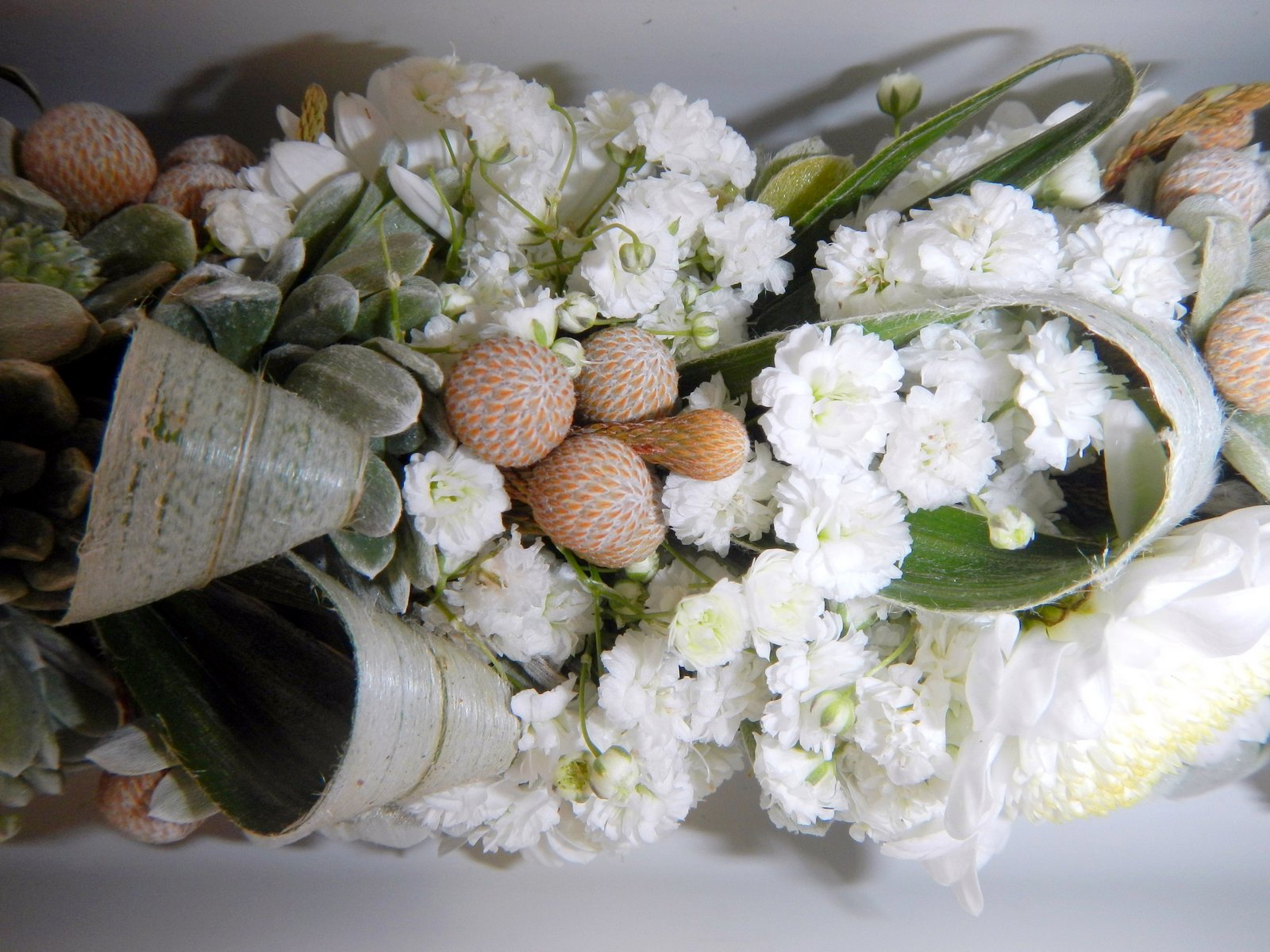
At Lei Day in Kapiolani Park this year (and a HUGE mahalo to all the dedicated City of Honolulu, Parks and Recreation and Honolulu Botanical Garden Employees and Volunteers, who organized and coordinated that major public, free event in our park) we saw some fab lei, using various parts of silver button wood trees.  Some used the fruit clusters, some used the leaves, some crafted the leaves into silver “rose” buds and so on.

Our late mentor Paul Weissich had just become Director of the Honolulu Botanical Gardens (HBG) in 1957.  He was reviewing all of the interesting plants growing in the nursery and lath houses at Foster Botanical garden (FBG).

Weissich found a flat of seedlings.  Some were green and some were silvery.  One keiki was super silvery.


HB-silver buttonwood tree

Silver Buttonwood tree in a salt Drenched, Hot, Dry Diamond Head, coastal Garden; See How it “Lights UP” the landscape?


He selected the silveriest of the silvers and had them potted up into larger individual pots. The best, consistently silver one was selected and more were propagated from air layers. He watched over them and had the expert plant propagators nurture and grow them up. This is a prime example of ‘Horticultural selection’.

He planted a bunch of them at Ala Moana beach park, which was an adjunct Botanic garden back in those days (and still has his legacy of tough, salt tolerant interesting, rare and unusual trees growing).

A mixed silver and green hedge of them is still growing today around the tennis courts at McCoy pavilion.

One of the silveriest was planted at Foster Garden and its gnarly and sprawly and has a growth habit something like an ancient time gnarled Olive tree.  We have been talking about making this an Exceptional Tree.

Over the years more of the silvery trees were grown and planted in beach parks like Sandys and as shady tough street trees in Oahu neighborhoods. They make a tough specimen tree (especially nice when up lit with solar lights for your “Moon Light Garden”), a good hedge or windbreak.

Button woods are native to a broad area from the Bahamas, to the Caribbean coastal tropics and all the way to West tropical Africa.

This is one of the many Horticultural legacies of Paul Weissich who passed away this year at age 93.  He really grew our beautiful and amazing botanic gardens here on Oahu. His legacy is our five Honolulu Botanical Gardens: Foster Lili’uokalani, Wahiawa, Koko Crater and Ho`omaluhia, as well as people like me and my Husband Clark whose career and lives he nurtured, just like that flat of keiki silver buttonwood trees all those years ago!


HB-silver buttonwoord lei

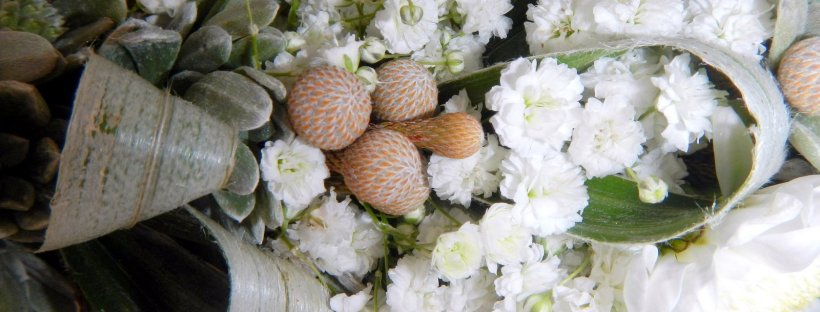
Epic Silver themed Kupuna lei featuring Fruits of silver Buttonwood, Delicate Baby’s Breath, Hinahina and silver leaf.