Naupaka

By Heidi Leianuenue Bornhorst

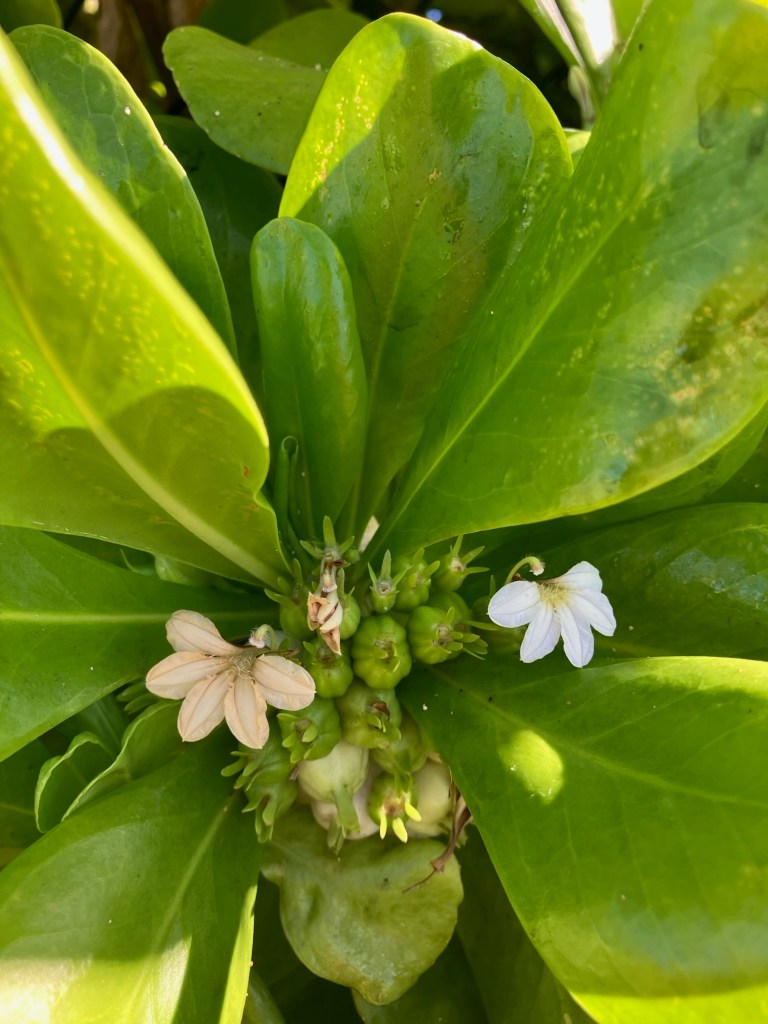
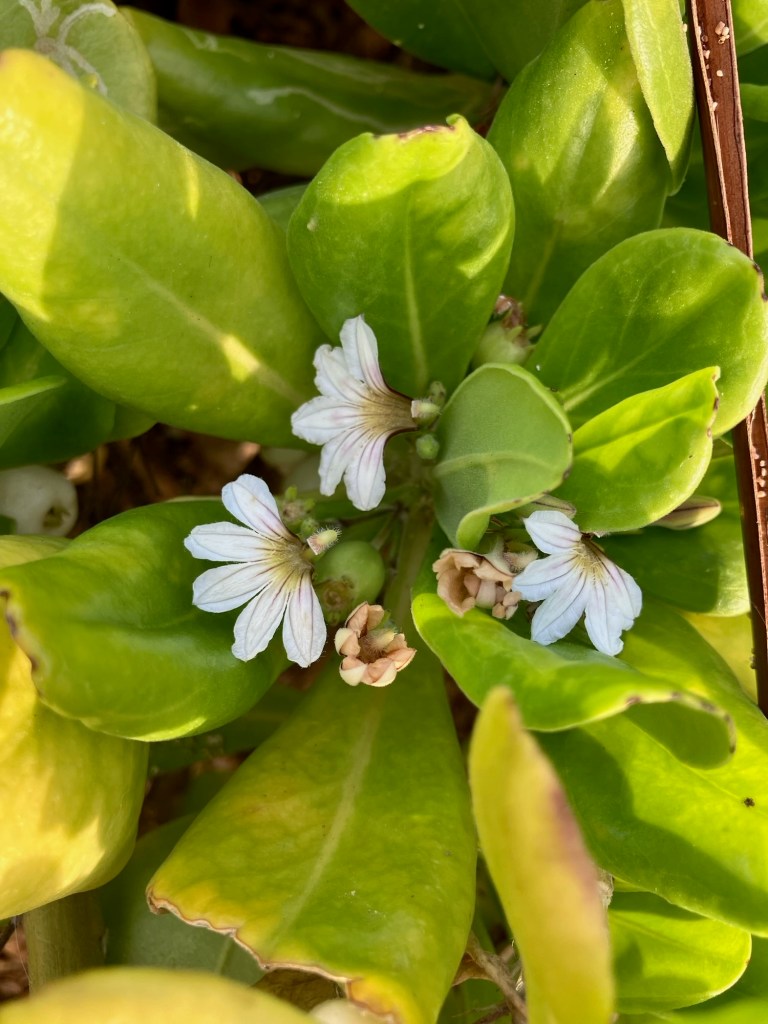
Naupaka is such a simple and elegant native Hawaiian plant to grow in beach gardens, xeriscapes, and to nurture in the wild.

It makes a great hedge, or specimen plant.  It protects our coast and holds onto the sand.  You can also grow it in large pots.  

Naupaka is a less thirsty plant, perfect for your xeriscape garden. It is also salt and wind tolerant.

Grow it from seeds or cuttings or buy some potted ones and support your favorite local nursery.

Strategic landscape designed naupaka hedges can protect beach homes from the strong ehukai, salty winds. 

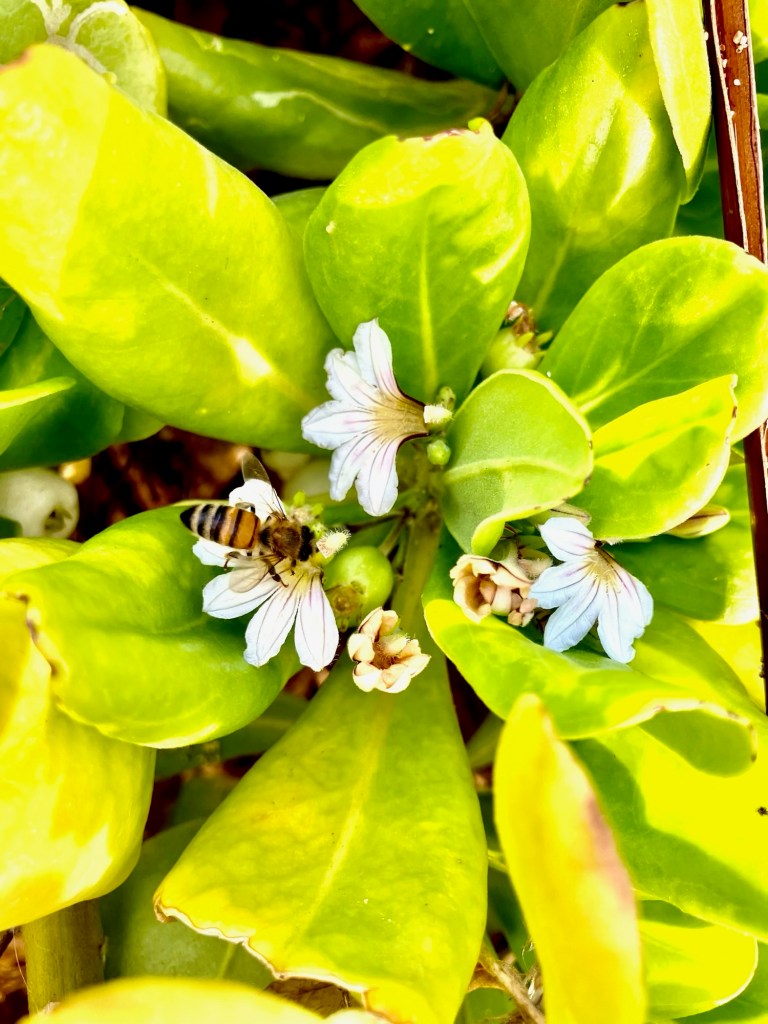
It is beautiful with its soft green leaves and half flowers which are white with a hint of purple. White fruit follow the flowers.

Beach Naupaka, Naupaka kahakai is known as Scaevola taccada to scientists.

It is an indigenous Hawaiian plant, which means it got here on its own, but it grows in other tropical areas too.

We also have native endemic species of Scaevola, Naupaka kuahiwi that inhabit our uplands. They too have a half flower, which features in Hawaiian love legends. 

It is the easiest plant to care for if we keep it simple:

• Minimal water once established.

• No fertilizer.

• Keep turf grass away from the root zone.

• Minimal trimming, and only by hand.

As with many of our native Hawaiian plants, modern ‘mow blow and go’ landscape techniques do not agree with naupaka.

The worst is gas powered hedge trimmers, this will mutilate naupaka. Do minimal trimming and shaping with hand clippers or loppers.

Do not TOP naupaka.  Prune carefully, and minimally and only when you are in a good mood. 

​Topping is where you mindlessly cut trees or plants.

The new growth is soft, and the older branches are very woody and tough.  

Power equipment trimming shakes up the roots and then makes the branches grow too dense, making habitat for insect and disease pests.

Turf grass should be physically separated from the Naupaka planting area.  Use a nice stone, coral, or brick edging to keep grass and naupaka separated.

Hand weed out any invading grass. Grass will compete and rob water, nutrients, light and space from the naupaka.

An edge also makes it easier to mow the lawn.

Thoughtful Landscape design and old fashioned garden maintenance will help you keep your naupaka thriving and Beautiful, as nature designed.

Try ASK if you like pick!

By Heidi Bornhorst

My tita, Mimi, was incensed when two women drove up and just helped themselves to her Plumeria flowers.  This was not casual ‘one for my hair, one for my sister’s hair,’ but full on taking of a lot of blossoms, she said they even had fancy flower picking baskets!

When she confronted them, they said they thought it was ok because the tree was adjacent to the street.  After a bit of discussion, they told her that if she didn’t want anyone to pick the flowers, she should put up a sign.  

A few days later a neighbor she casually knew came up the street, reminded her that our mother and her grandmother had been friends and nicely asked if she could pick some flowers so she could make a lei.  Mimi invited her into the yard and happily shared the pua.

She explained the ones on the inside are nicer and less sun and wind burnt. As they chatted Mimi went and picked a bag of her famous Tahitian limes to give to the neighbor.

What a difference!  We love to share if asked nicely.

I remember back when we lived up Wahiawa, I heard some noises and came outside.  There was a man, instructing his kid to not only pick my front flowers, but also to CUT some pink gingers.

Without thinking too much (gotta be careful these flower thieves know where you live!) Tita mode came out and I chastised the man, saying my flowers were not just randomly growing and teaching his kid to steal flowers is not pono!

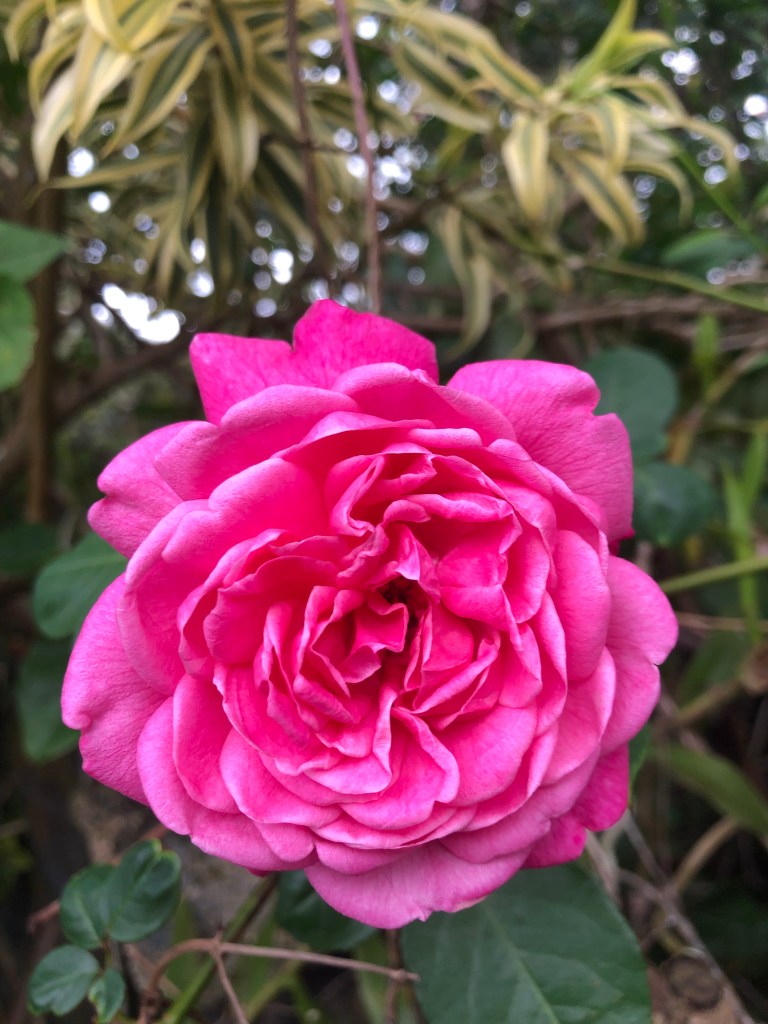
On another occasion I heard some women admiring my Madeira, Portuguese roses, they were so nice that I carefully clipped them a bouquet, and shared propagation advice.  We all became friends because they asked nicely when admiring my flowers.

Gardeners and Horticulturists love to share and talk story with fellow plant lovers. 


One thing I always knew, which was reinforced when I worked at Foster Botanic Gardens and Honolulu Botanical gardens, is to share plants and to keep records of garden specimens. 

With good records if you lose a plant, your plant friends or cooperating botanic garden will have backup. It can be as simple as a note on a calendar, or full on in your garden diary.

Wild Florals with a Maximust

By Heidi Bornhorst

Ren MacDonald-Balasia of RENKO did a Floral demo with the GCH on Wed March 13, 2024.  

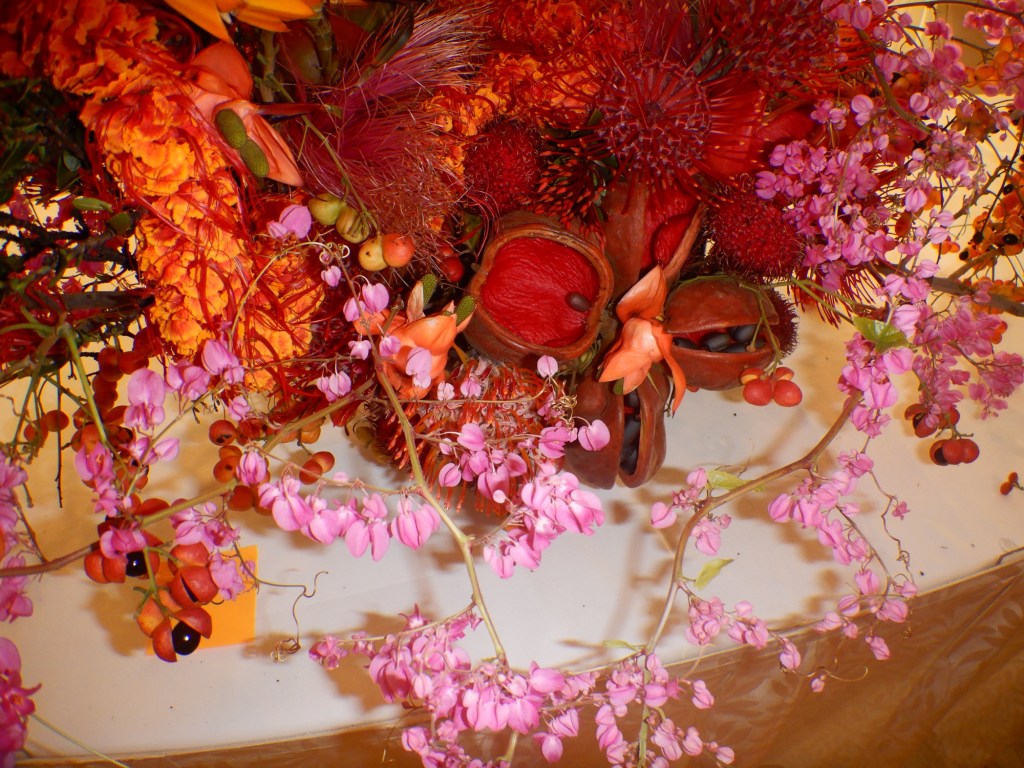
She likes to use wild, weird and foraged florals, and rare, strange fruit from gardens or Chinatown.

RENKO Floral dragon

This was such an inspiration!  We can all gather florals and foliage from our own gardens, from friends and even from wild weeds.  Weeds can be beautiful.

We don’t have to import florals. Imported materials have a Carbon footprint big time. They also can be the source of harmful alien pests and diseases.

Many imported florals (e.g. roses without perfume) can last a long time, yet they are substantially dosed with chemical poisons insecticides and fungicides.  Since they are not a food crop, they are not heavily regulated. 

Some countries which grow imported florals don’t have the chemical safety regulations that we do, and this poisons the growers and us the consumers.

Read the Book Floral Confidential, if you really want to be informed (and Scared!) by this overuse of toxic chemicals.

And as we say: Buy Local!  Or even better, Forage Locally.  Glean from Local gardens.

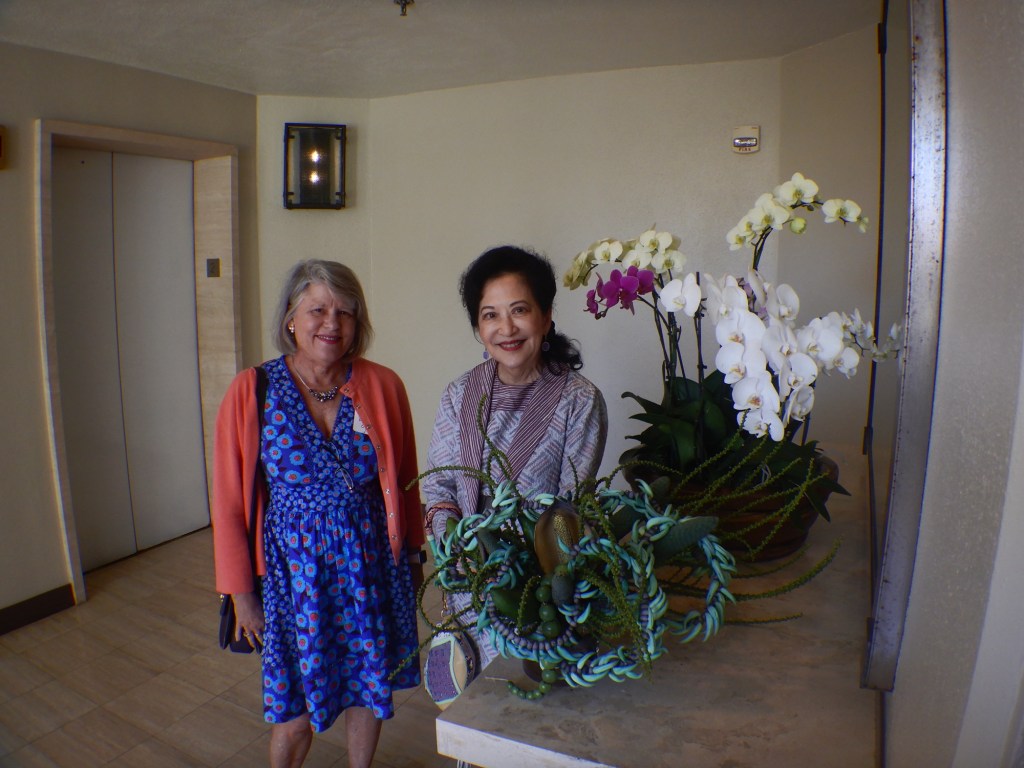
The Floral event was at the Halekulani, and I invited my siter Mimi Bornhorst Gaddis.  

As we were getting ready to go, my honey Clark Leavitt said, ‘set me up with a lei needle?’

He had gone on the roof and foraged for pua keni keni.  So romantic. Our anniversary was the day before and he took his nephew Mark to lunch at Kailua Nico’s.

Mimi and I used the valet service at the Halekulani and walked through the flower filled lobby.  

Two women were sitting in an alcove stringing Blue jade lei. “Wow kewl Blue jade!’ I remarked as we walked by (it turned out that these women were our speaker and her helper!)

We went to check in at the Garden Club desk, and as there was no usual flowers on second floor lobby, we walked around. 

There was a woman sitting on a bench. Mimi and I introduced out selves and I gave her a tiare li`I li`i.

Her name was Pam and turns out she’s Ren’s mother, just home to care for her 97-year-oldmother who was a journalist for the star Bulletin.

The first AJA writer in Hawaii!  

Soon the floral fun begins.  

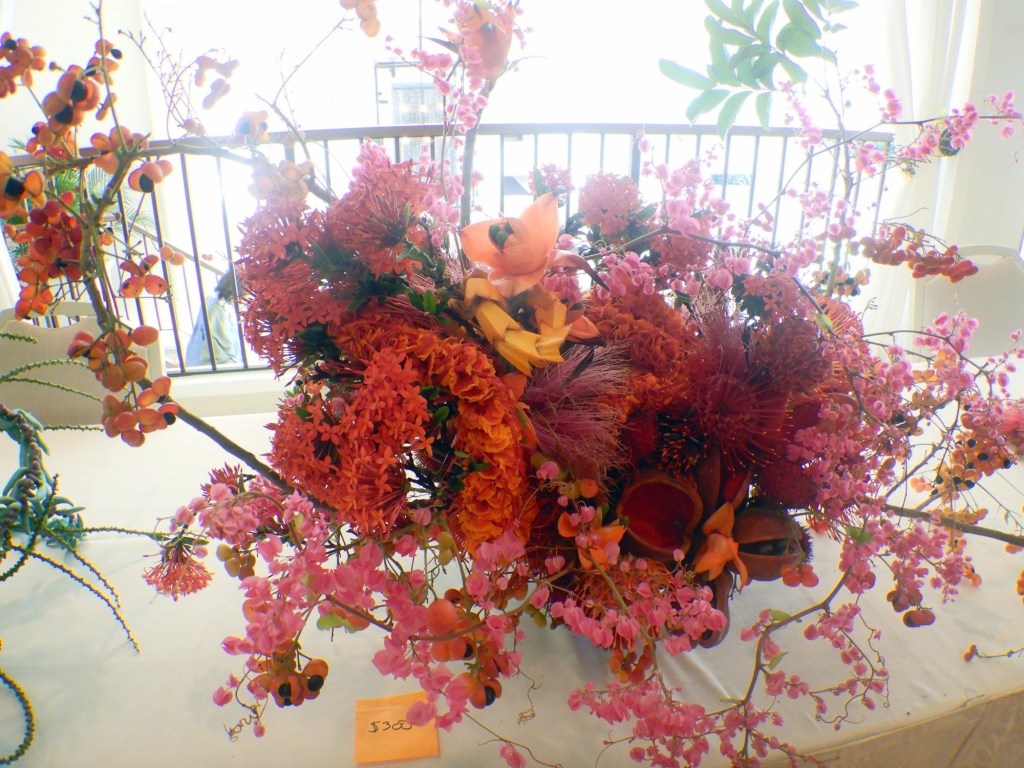
The first arrangement is in a wide tall bowl. She puts in what she called sea tamarind. We were in back and it was hard to see but I’m thinking that doesn’t look like tamarind.  I kept trying to figure out what the orange bouncy floral might be. (Turnsout Harpulia, a common street tree in the Lychee family, Sapindaceae.

sterculia Mexican creeper lei Ohai Ali`i Harpulia AKA sea tamarind

She anchors the branches into folded up chicken wire set in the bowl.  (Oasis is environmentally out.  Mimi and I both have some stashed, just in case)

She then added Sterculia, Skunk tree pods, these are heavy and help to weight the other materials down. 

Ixora is added. We got these at a gas station, Ren remarks.

Mexican creeper, which used to grow in our Makiki garden is draped all around. She calls it coral vine.  

Bombax or shaving brush tree flowers like big puffs of pink added to the flora mix, next the lei she bought at Cindy’s Lei in Chinatown are added, ohai alii and a golden hala.  She cuts and drapes and winds them into the arrangement.

Blue jade lei were added and draped over the arrangement. Such a lovely seasonal Spring beauty from Hawaii gardens!

blue jade and tita Mimi

She scouted for wonderful and strange fruit in Chinatown markets: 

Fruiting Clusters of Longan, rambutan and Salak palm.  Mimi said that they call it SALAT in SE Asia and it’s really ono.  Pretty and scaly in an arrangement. 

She had some nice blooming orchid plants that she bought from Kawamoto orchids in Palolo Valley.  We kind of gasped when she cut the floral stems and put them in the arrangement.  (they would last for a month or more on the plant). But this is what florists do for that wonderful Ephemeral special occasion. 

CONSERVATION: instead of imported, chemically laden treated florals these were gathered in gardens in wild places and in local lei shops.

Such a good message we can get so much from our own Hawaii GARDENS!

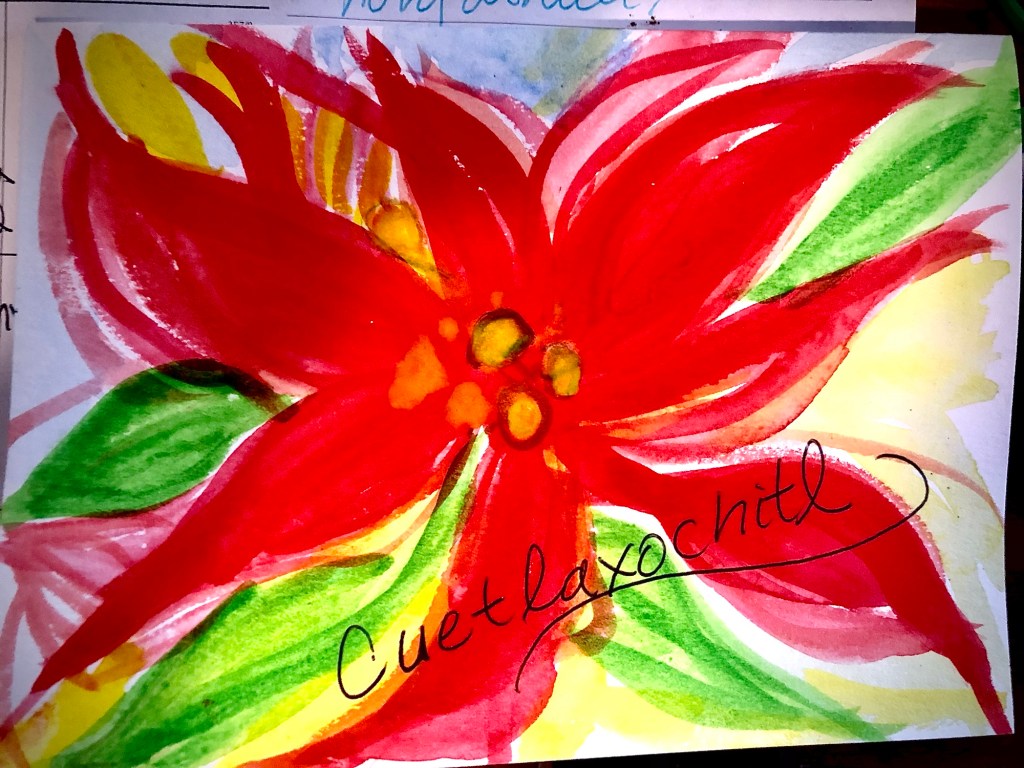
Should we use the REAL name of Poinsettias? CUETLAXOCHITL

By Heidi Bornhorst

The first time I saw the real native name, I went no, WAY too hard to say!  But learning to spell Latin names is not that much easier. So maybe we should practice using the real name.

Break it down and it’s easier to say.  Write it and your brain will remember it.

It is pronounced: Kwet La sho Chel

Sing it! Let’s try and remember and use it.

Just like we respectfully use, and properly pronounce ohelo Hawai’i words, we probably shouldlearn to use the real name.

Not only is it a seasonal festive plant for us (and a big production for our nursery growers), starting in Hawaii about June with little plugs, it is a very special and significant plant in its native Mexico and Central America.

Red is original color, and many new variations now exist. I like the new colors for their novelty, but the rich red is so seasonal and joyous.

In Mexico they were symbolic and were also used for medicine (A special recipe induced breast milk). they are not as poisonous as some rumors suggest. Red and purple fabric dyes come from the colorful. bracts.

The “flowers” we see so brightly are actually bracts, modified leaves. The true flowers are yellow and green and are nestled in the center of the bracts.

For the past few years, I have been buying them from the UH Manoa Horticulture club, to help support and encourage students in the fine art of intensely growing and studying plants.

I love going up to Manoa to buy them and then sharing this growing gift with family, friends, and neighbors.

We also have the old-fashioned hedge type of Cuetlaxochitl in some Hawaii gardens. They are becoming a more rare plant to see. In Foster Village, where my husband grew up, we’d love to see all the pretty tall plants growing in gardens as we drove out to visit his folks. A particular house had green walls and it was so striking to see the plants growing there.

If you see one like this, you might ask the gardener for a cutting to grow. This is not among varieties growers produce today. This hedge type one is more of a perennial and will grow and bloom every year.

Who remembers the old hedge that the Board of Water supply grew along the Pali Highway in Nuuanu?

For many of us this was the true sign of the season.

​These seasonal flowers can last for months if you treat them right. They like light but not baking sunlight. Water them about once a week. Take off any decorative foil. Fill the pot with water and let it drain all the way out. Then put it back with your other Holiday decorations. They may last and stay red all the way to April!

An old gardener trick is to trim them back in the A months, April, and August. This holds true more for the hedge type.

Although I keep them alive a full year, these newer cultivars don’t look great. Nurseries use all kinds of special fertilizer and lighting to get them looking so pretty and perfect.

What will Wild West winds bring? More flowers and fruit?

By Heidi Leianuenue Bornhorst

We had such a weird windstorm with those super strong and gusty west winds! So different then normal.

Up in our valley we lost power twice to the wind and HECO did not restore power until 9:30 p.m. on Wednesday 3/8/2023.

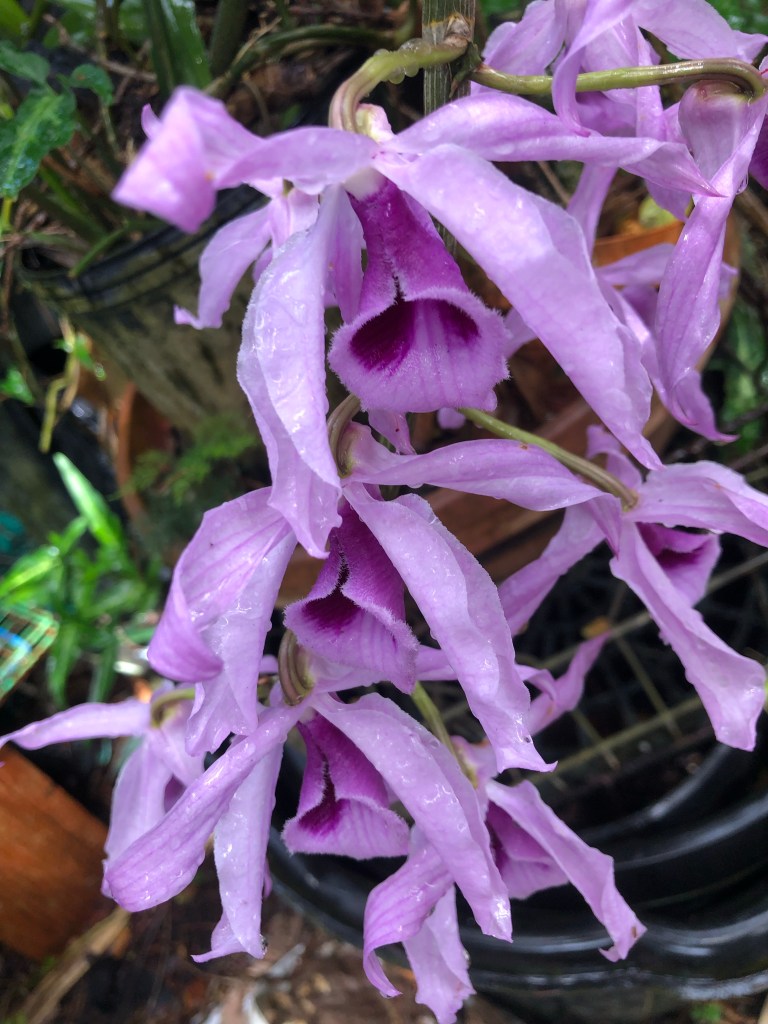
Mangoes and avocados were full of blossoms, Honohono orchids were in bud and some in bloom.

My Portuguese Madeira roses, and native Hawaiian gardenia Na`u have been blooming well, loving the cool and rainy winter were are finally having.

As I clean up the storm debris, (Mahalo for nature’s Arboriculture) including blown down dead twigs and branches, and lots of leaves, some I notice are from my mauka neighbors.

One of the tenets of true Horticulture is to OBSERVE nature and plants, to track the moon, winds, rain and other weather phenomena as see how the plants respond.

I am still reflecting on how the plants would respond.

What do you see? How are your plants after the winds?

Did you have any big tree failures? Or just small or dead branches?

The leaves are whipped on my gingers, Surinam cherries, mulberries, and ohia shed a few flowering branches. A young popolo plant got totally blasted on one side, it was just coming into fruit.

So, we shall see!

Honohono orchids had been in full glorious fragrant bloom as they budded and bloomed early this year. Originally I thought the orchids stood the wind storm but after a few days those in the main wind tunnel area of my garden wilted and withered prematurely.

Went to a neighborhood watch potluck pa`ina and a nice lady, Lokelani, that I always say hi to on my walks was there, with a gorgeous papale lauhala. She admired my honohono and said she caught a whiff of fragrance, from way across the yard, and she looked for the source of this favorite old time Hawaii fragrance, and from where? My hair!

Since she admired the orchids, I had to give them to her, along with maire ferns!

Now a couple weeks after the winds, I’m observing some of my favorite flowers and fruit trees in my garden and neighborhood:

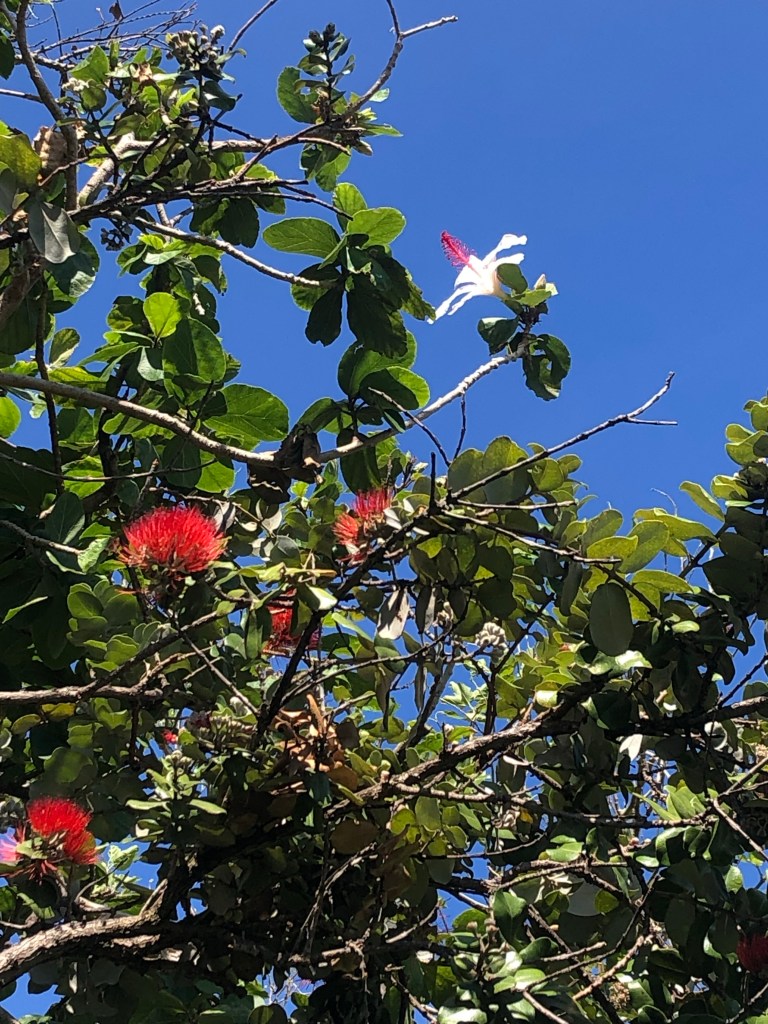
• ‘Ohi’a lehua  Blooming profusely, some dead wood branches and twigs broke in the winds

• Native White Hibiscus wind whipped leaves, a few blooms at the very top of the tree

• Tahitian mountain apples were blooming before, still many flowers and now small fruit.

• Gardenias surprise early blooms two on one stem, but no other apparent buds yet. (they usually bloom for me in May).

• Na`u, native Hawaiian Gardenia lots of flowers and buds (also triggered by abundant soft rains before the winds)

• Madeira roses Blooming profusely.

• Mangoes my Friend Dawn Shim from Makakilo brought me a gift of Haden mangoes, super early for this to fruit.

• Mulberries wind whipped leaves, lots of young fruit

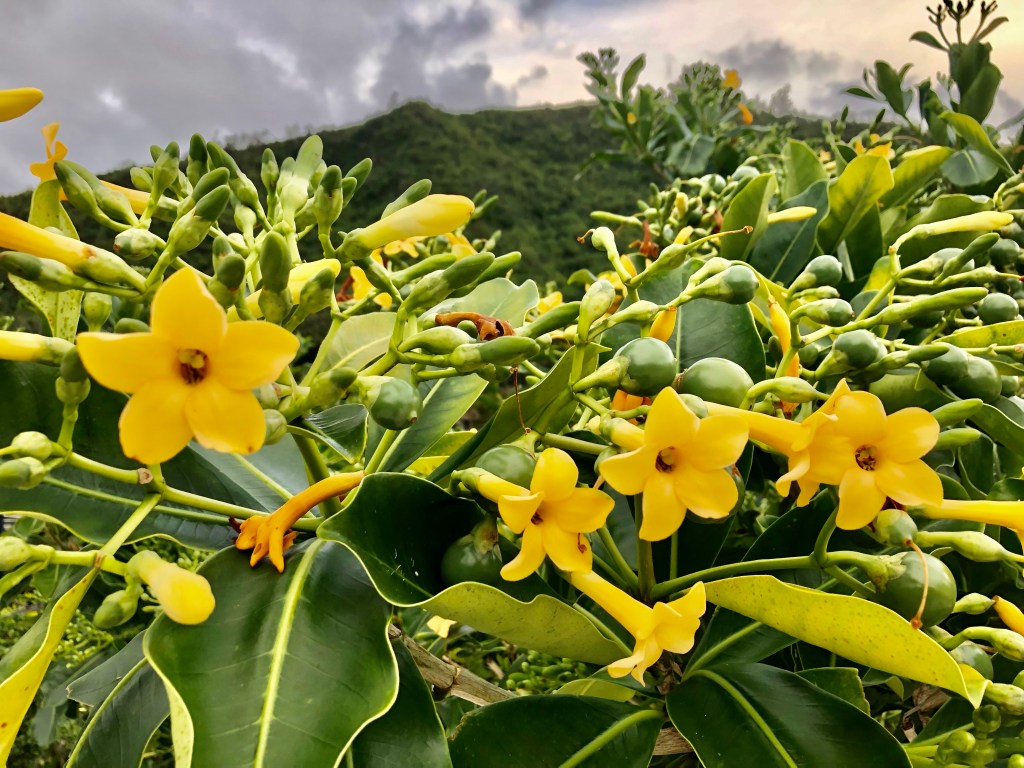
• Pua Keni keni usually Bloom less in winter, BUT after the storm mine are full of Buds, flowers and lots of developing green “ball” fruit.  I made some lei for a fundraiser, and plucked and cut off all the young fruit, to encourage more blooms from the tree 

What are YOU observing, in your garden in your unique microclimate? I would love to hear back from my Gardening Readers …..

Tuberoses for our friendship garden

By Heidi Bornhorst

The fragrance of tuberose! One of my Mother’s favorites, as a lei of tuberose and yellow roses are what my dad got her for their simple wedding ceremony. She also loved the smell of pineapple, because my dad gifted her with those too!

I like them in a lei, combined with other flowers like roses, carnations or orchids.

Florists carry this fragrant lei and if you grow your own, imagine what flowers from your garden you can combine with tuberose?

It’s an old-fashioned flower.

We used to grow a lot of them here in Hawaii. When I worked at Evergreen nurseries in Waimanalo, in 1978, one of my friends there, was working a second job, harvesting tuberose.

Her name was Estralita, and she was from the PI and recently married.  I think her new family really made her work hard!  At two jobs and at home.  She said they harvested in the dark using headlamps.

She told me that her named meant “star” and how appropriate that she worked at night when the stars came out!

She taught me the saying ‘Mabuhay las Philippinas !!’  Long life to Filipino women!

I wonder what happened to her, as she was kind, nice FUN and hardworking.

Tuberoses remind me of her, and I say a special prayer for her happiness. 

I got some from Estralita back then and grew it in our family garden in Makiki.  It did well for a while and even sent up a flower spike.  But then it got a very bad infestation of mealy bugs.  I treated it but they were too severe, and the plant died. I was sad.

Maybe tuberose does not like Makiki black sand as a potting media? Or it needs cooler conditions. Time to do some research and find out!

​The other day I got an email from my friend Ruth Fujita, another great gardener.

She was offering us, her Budleys, tuberose bulbs. She had a big plant and dug it up, dried out the bulbs a bit and had some to share with da girls.

So, Rachel Morton and I went up there, after a visit to Foster garden to see the Triennial art exhibit.

Ruth shared how she got the tuberose bulbs:

Our niece Tia C. had gone traveling.  She needed omiyage for her epic Aunt Ruth and so in the airport she bought a bulb in a package.

Ruth grew them and was now sharing them with Lynne, Cheryl, Doris Susan Young, Annie, and me and Rachel.

Such an epitome of the Friendship Garden: Grow something with love (and good horticulture!) and then share it with your friends.

With rare plants, this is a Botanic Gardenconcept: Share it and keep good records. If yours dies, you know right where you can get a replacement.

With plants of sentiment like this tuberose, its mainly sharing the wealth and the stories.  But it will be epic for us all to see them grow and Bloom!

People call it a bulb but the roots are actually a rhizome (just like our fragrant gingers)

Fragrant, showy flowers in the late, HOT summertime lead many to plant tuberose bulbs. The scientific name is Polianthes tuberosa, and it also called the Polyanthus lily. It is in the Lily family, LILIACEAE.

Florists and nurseries sometimes “force” tuberose to bloom year round with artificial lighting.  

Tuberose has a strong and enticing fragrance makes it a popular plant in our Hawaii gardens. Clusters of large white blooms form on stalks that can reach 4 feet (1 m.) in height and rise from grass-like clumps.

Tuberose was discovered by explorers in Mexico as early as the 1500’s.  It was one of the first flowers to be imported to Europe, where it was very popular in Spain. 

It likes well drained, compost enriched soil.  It likes FULL SUN especially hot afternoon sun (which not all plants do) 

Plant them 2-3” deep.

In cold regions they dig out the roots in winter.  In Hawaii we can dig them out hand let them rest but not for too long or they will dry out.

There are single and double flowered varieties and now we are seeing them in different colors like yellow and pale pink.

Deadheading Benefits for Hawaii Plants

Tiare benefit greatly from deadheading

By Heidi Bornhorst

Q: What is deadheading and which Hawaii plants would benefit?

A: Deadheading is where you remove spent flowers to increase blooming and benefit the health of the plant.

Pua Keni Keni comes to mind, as cutting or snapping off the green and orange “balls”, AKA the developing fruit, will increase blooming.

Fruit formation and seed development take a lot of time and energy for the plant, just like a woman being pregnant.

So, if we want more flowers, don’t let the fruit form.  In the case of Pua Keni Keni, the fruit on the stems makes for great décor in a flower arrangement.  You can even string the “balls” into lei, as my akamai lei making buddy Dede Replinger Sutherland does.

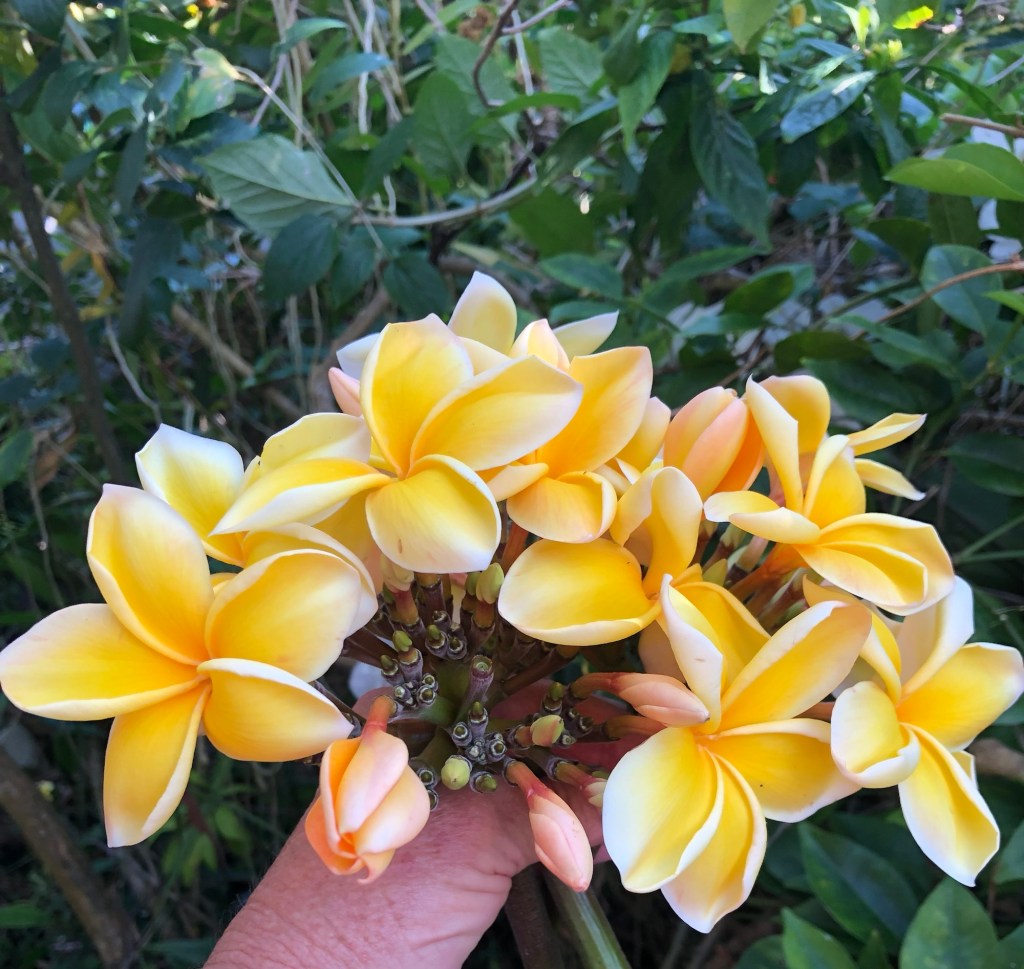
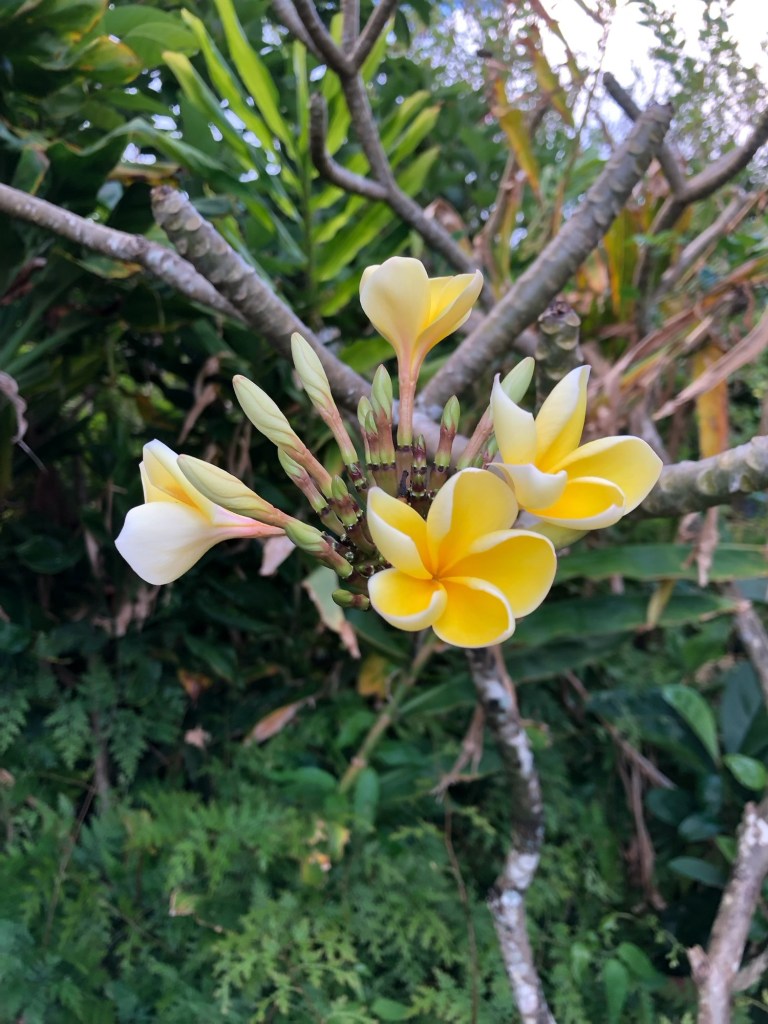
Tiare or Tahitian gardenia nowadays needs deadheading.  We didn’t use to have a pollinator for Tiare but now it seems we do, as the old flower calyces (the bottom green part of the flower) don’t fall off after blooming. They now form fruit and it takes about a year to fully develop and form mature seeds inside.

We need to snap off that part on a daily or weekly basis or Tiare plants will have fruit developing and fewer blooms.

Tiare buds make an epic lei, that can last for several days or nights with a most heavenly perfume.  When you pick the buds, pick the calyx too and save yourself some time and energy.

My friend Donna Chuck has a prolific and sunny garden with many flowers for lei. She collects the Tiare buds and stores them carefully in a plastic bag with a damp paper towel in the fridge until she has enough for a special lei for a special someone.

We spent some time cleaning up and deadheading her plants and now she gets way more Tiare flowers for her lei creations.

I first learned the word and horticultural practice known as deadheading when I was an apprentice Gardener at Longwood Gardens in Pennsylvania, in my junior year of college.

‘Go deadhead the Rhodies’, I was instructed by the Horticulturist at Longwood.

I wondered if it was something about the Grateful Dead; and had to ask what was deadheading and what are Rhodies?

Rhodies are Rhododendrons, related to the Azaleas that we grow here. They bloomed massively in spring there and general good garden practice was to deadhead them in early summer, to promote lots of blossoms for the following Spring show.

Some use sharp needle-nose clippers for this and some use sharp well-placed fingers and thumbnails to snap off the spent blooms.

Roses are another plant that will bloom better if you deadhead, or you can just harvest and use every flower.  Or you can let the fruit develop and you get rose hips which can be made into jam or tea.

Some kinds of Hibiscus, especially our fragrant native white Koki`o ke`o ke`o will form seed pods if you let them.  This is how early gardeners made new hybrids as they found the native Hawaiian whites were excellent “mother” plants.

Again, if you want blossoms, pluck off and clean up the old flowers.  Another benefit to this is we have lots of recent alien insect pests like scale and mealybugs that love to hide in the developing seed pods and suck sap and juices from the plants.

Deadheading helps you groom your plants, so you can rub off or cut off the pest-infested parts. Get rid of insect eggs and small sap suckers before they form a full-on infestation.

Lei rainbow pua melia tiare buds

Helpful Tips for Beautfiul Landscape

In my experience, people visiting Hawaii are truly interested in our unique plants and wonderful Hawaii gardens. Visitors vote and share with their cameras, with the questions they ask and the notes they take. Did you know that gardens and trees do not depreciate? They just keep on growing. The same cannot be said for buildings, sewers, sidewalks, pools and all the other accoutrements that make up Hawaii’s hotels.

At the Hale Koa Hotel, I researched and planted many new things in its 72 acres of gardens for the enjoyment and benefit of visitors, especially those who returned every year (or twice a year). Gardeners can be valuable customer service representatives and serve as front-line ambassadors. A nice gardener who can answer guests’ questions is more likely to bring new business and happier repeat customers.

Some people may or may not believe we have seasons in Hawaii, but professional Hawaii landscapers know we do.

For me, learning how to properly care for all the amazing plants here in Hawaii is a continual process, so I thought I would share with you some helpful landscape tips.

Tips and suggestions for a beautiful and professional Hawaii landscape

1. Create a highly visual and unique visitor experience by using native Hawaiian plants and well-adapted beautiful exotics in hotel gardens, interiorscapes and landscapes.
2. Plant plants where they belong (salty soil, dry or wet area, shady or sunny).
3. Plant in layers — low, medium, high.
4. Plant shrubs and ground-covers around trees like a “lei,” to protect the trunk and highlight the tree.
5. Group plants that require the same conditions.
6. Understand how big a plant will become and how quickly it will grow.
7. Create and retain shade trees and shady walkways.
8. Understand how hard or easy a plant is to prune.
9. Use ground-covers as much as possible. They save on water, weeding, mowing and edging.
10. Hire a professional from the start and do the job right the first time.

Caring for landscapes using good Hawaii based horticultural and Arboriculture science principles and akamai maintenance practices will save money and beautify Hawaii. That is a great thing for all of us and our visitors

Heidi Leianuenue Bornhorst is a landscaping consultant, gardener trainer and specialty VIP garden guide. She has been a professional horticulturist for more than 33 years. She is also a Certified Arborist. You can contact her via email at heidibornhorst@gmail.com or at 739-5594.