Dragon Fruit

By Heidi Bornhorst

Q: Heidi when did dragon fruit come to us here in Hawaii?  Seems kinda recent to me but one of my gardening writing friends tells me its been here since the late 1800s.

Pls inform

Mahalo

KD, Kahala

A: Like you, I think it’s recent. I know night blooming cereus, a relative of dragon fruit, has been here for a long time and has an interesting survival at sea/ revival by Horticulture story. So, I did some digging.

Ken Love, one of my go to Fruit experts, informs me that yes, it’s a recent arrival to our shores and gardens.

Love says that Greg Adams brought them from Vietnam in the late 60s or early 70s. Since then others have introduced cultivars from places like Israel.

They are native to Mexico and Central America where we get the common name pitaya. Now widely grown by masterful Horticulturists and entrepreneurial Farmers in Thailand and Vietnam, we are seeing more in Hawaii home gardens and fruit markets.

There are some reports of it getting here early, maybe by that epic plantsman and translator for Alii, Don Francisco de Paula Marin. He brought us our first mango, grapes and Yellow Plumeria, among many other wonderful plants that now enhance our Hawaii gardens.

I think the red fleshed one is gorgeous especially in a mixed fruit platter. To me the white one is more ono but less colorful and pretty. I’m still waiting to try the yellow fruited one.
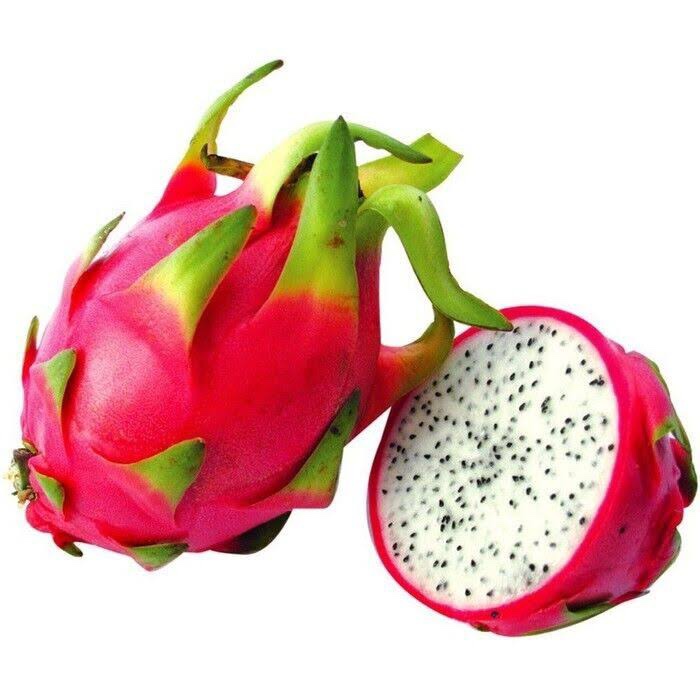
Scientists call it Hylocereus.  H. undatas is the white fleshed one, H. roja is the red fruited one and H. amarilla has yellow flesh. All are in the Cactus family, Cactaceae.

They are fun to grow if you don’t mind thorns.  The stalks are heavy and need support on a sturdy trellis or fence.  You get more fruit if you hand pollinate.

We always wonder how nutritious our Hawaii grown fruit are and dragon fruit has some great nutrients.  It is high in lycopene, as are tomatoes and watermelon. It’s a good source of calcium and iron.

Night-blooming cereus or panini o ka Punahou is a kind of cactus. The most famous planting of it in Hawaii is on the rock wall surrounding Punahou School in Makiki.

Night-blooming cereus

The plant, Hylocereus undatus, is from Mexico, where it is called pitahaya. It first landed in Hawaii around 1830 on the brig Ivanhoe, which was carrying plants collected in Mexico. Most of them died and were tossed overboard, and the nearly dead, dried-out cereus cutting looked like a goner, but First Officer Charles Brewer took care of it on the long voyage and planted it in Honolulu.

Dr. Richard Criley of UH Manoa, has been monitoring the night blooming cereus flowering cycles at Punahou school, for about 20 years, and sometimes sees fruit.  Maybe young scientists are hand pollinating them. He contends that hand pollination is needed for them to set fruit here in Hawaii.

They set fruit in Mexico where they are naturally bat pollinated. Our native bats are insect eaters and they are rare.

Its thorny stems send out aerial roots from the nodes or sections of stem. You can grow it from cuttings but watch out. It looks innocent at first but as it grows it can take over your rock wall, climb up slopes or trees, or even up your utility poles and lines.

(This happened at my parents’ home and they were without a phone for three weeks! I told my mom to keep it in a pot, but she is too kindhearted and said, “It looked so cute and helpless in the pot.”)
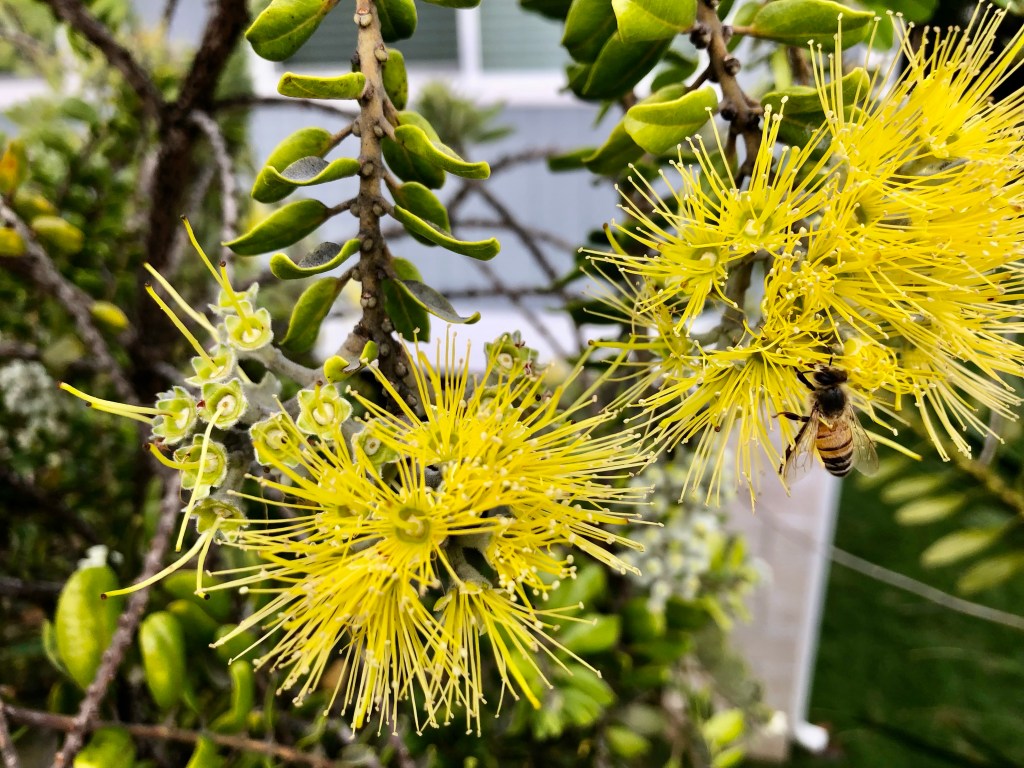
What will Wild West winds bring? More flowers and fruit?

By Heidi Leianuenue Bornhorst

We had such a weird windstorm with those super strong and gusty west winds! So different then normal.

Up in our valley we lost power twice to the wind and HECO did not restore power until 9:30 p.m. on Wednesday 3/8/2023.

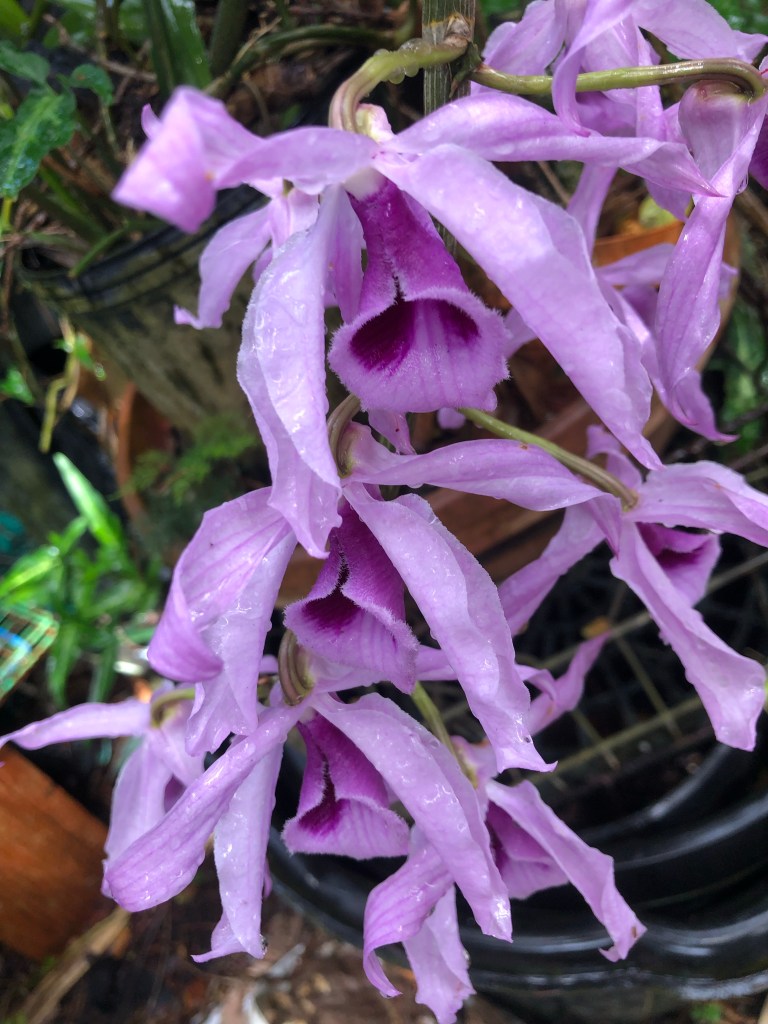
Mangoes and avocados were full of blossoms, Honohono orchids were in bud and some in bloom.

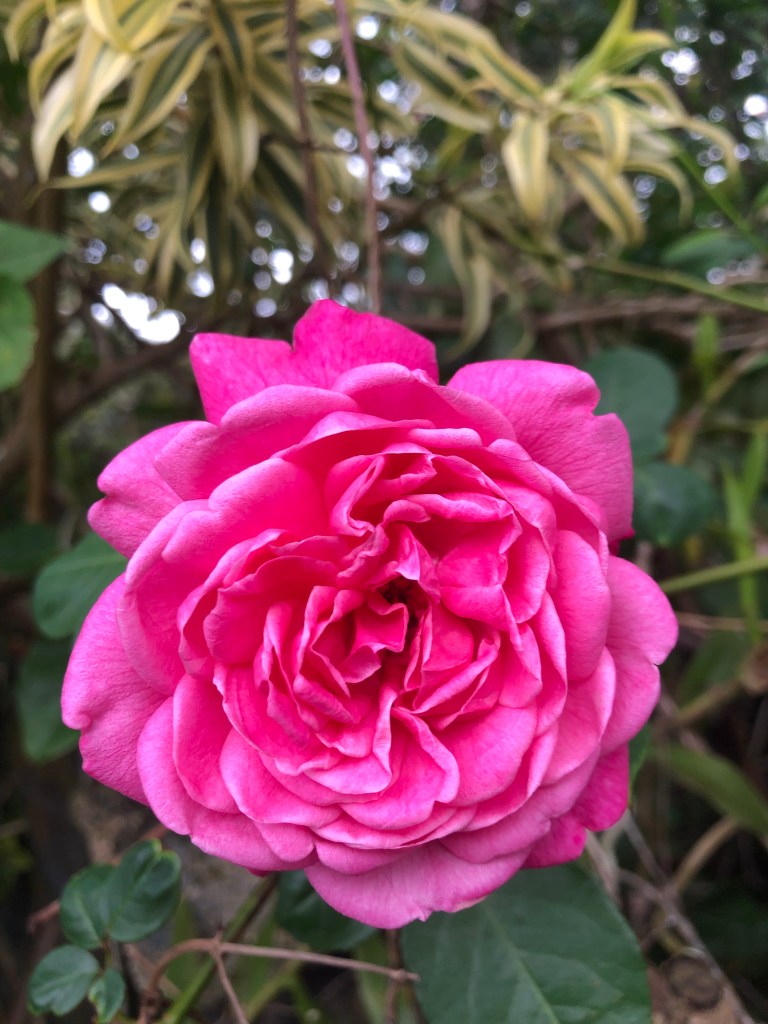
My Portuguese Madeira roses, and native Hawaiian gardenia Na`u have been blooming well, loving the cool and rainy winter were are finally having.

As I clean up the storm debris, (Mahalo for nature’s Arboriculture) including blown down dead twigs and branches, and lots of leaves, some I notice are from my mauka neighbors.

One of the tenets of true Horticulture is to OBSERVE nature and plants, to track the moon, winds, rain and other weather phenomena as see how the plants respond.

I am still reflecting on how the plants would respond.

What do you see? How are your plants after the winds?

Did you have any big tree failures? Or just small or dead branches?

The leaves are whipped on my gingers, Surinam cherries, mulberries, and ohia shed a few flowering branches. A young popolo plant got totally blasted on one side, it was just coming into fruit.

So, we shall see!

Honohono orchids had been in full glorious fragrant bloom as they budded and bloomed early this year. Originally I thought the orchids stood the wind storm but after a few days those in the main wind tunnel area of my garden wilted and withered prematurely.

Went to a neighborhood watch potluck pa`ina and a nice lady, Lokelani, that I always say hi to on my walks was there, with a gorgeous papale lauhala. She admired my honohono and said she caught a whiff of fragrance, from way across the yard, and she looked for the source of this favorite old time Hawaii fragrance, and from where? My hair!

Since she admired the orchids, I had to give them to her, along with maire ferns!

Now a couple weeks after the winds, I’m observing some of my favorite flowers and fruit trees in my garden and neighborhood:

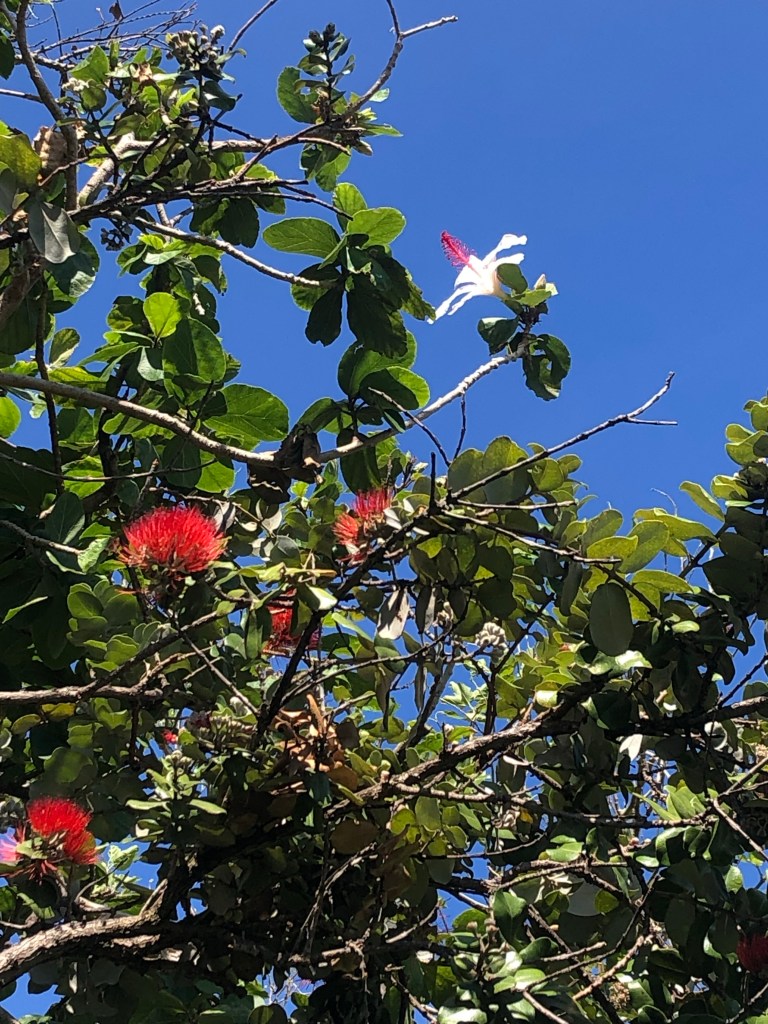
• ‘Ohi’a lehua  Blooming profusely, some dead wood branches and twigs broke in the winds

• Native White Hibiscus wind whipped leaves, a few blooms at the very top of the tree

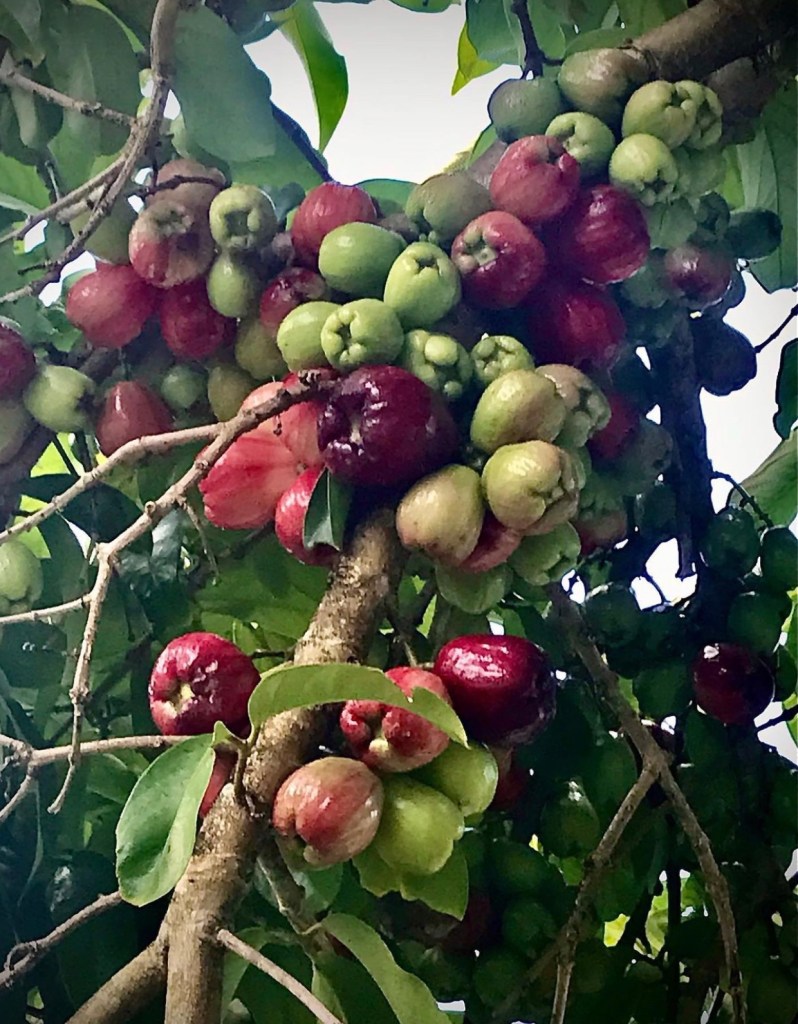
• Tahitian mountain apples were blooming before, still many flowers and now small fruit.

• Gardenias surprise early blooms two on one stem, but no other apparent buds yet. (they usually bloom for me in May).

• Na`u, native Hawaiian Gardenia lots of flowers and buds (also triggered by abundant soft rains before the winds)

• Madeira roses Blooming profusely.

• Mangoes my Friend Dawn Shim from Makakilo brought me a gift of Haden mangoes, super early for this to fruit.

• Mulberries wind whipped leaves, lots of young fruit

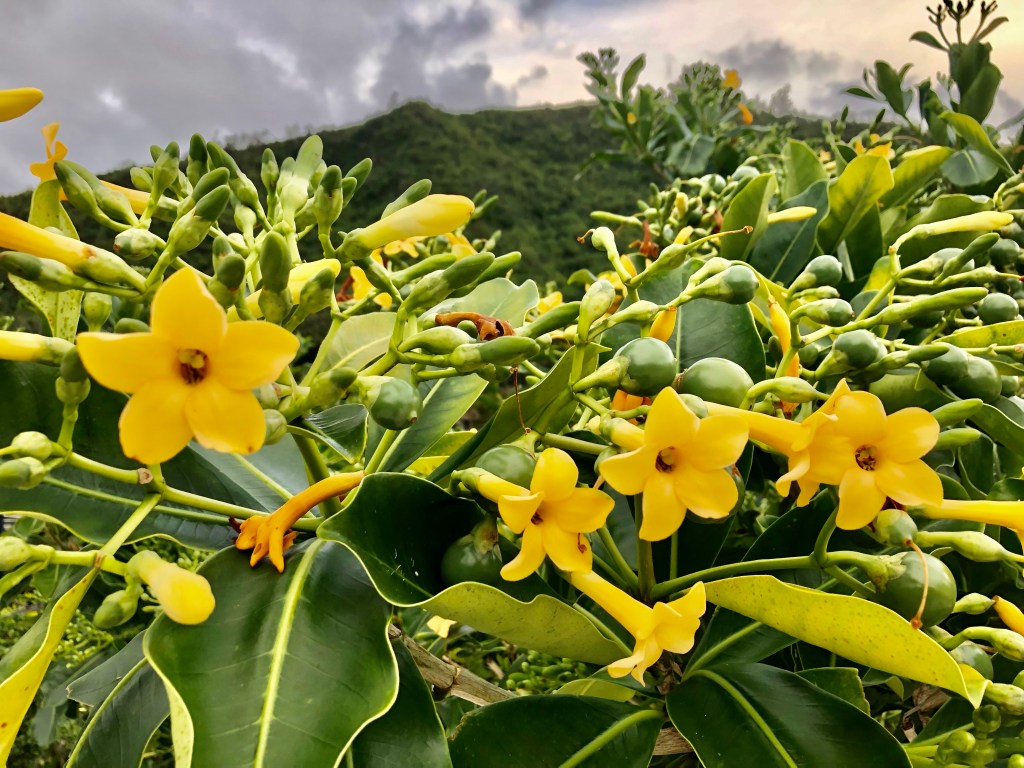
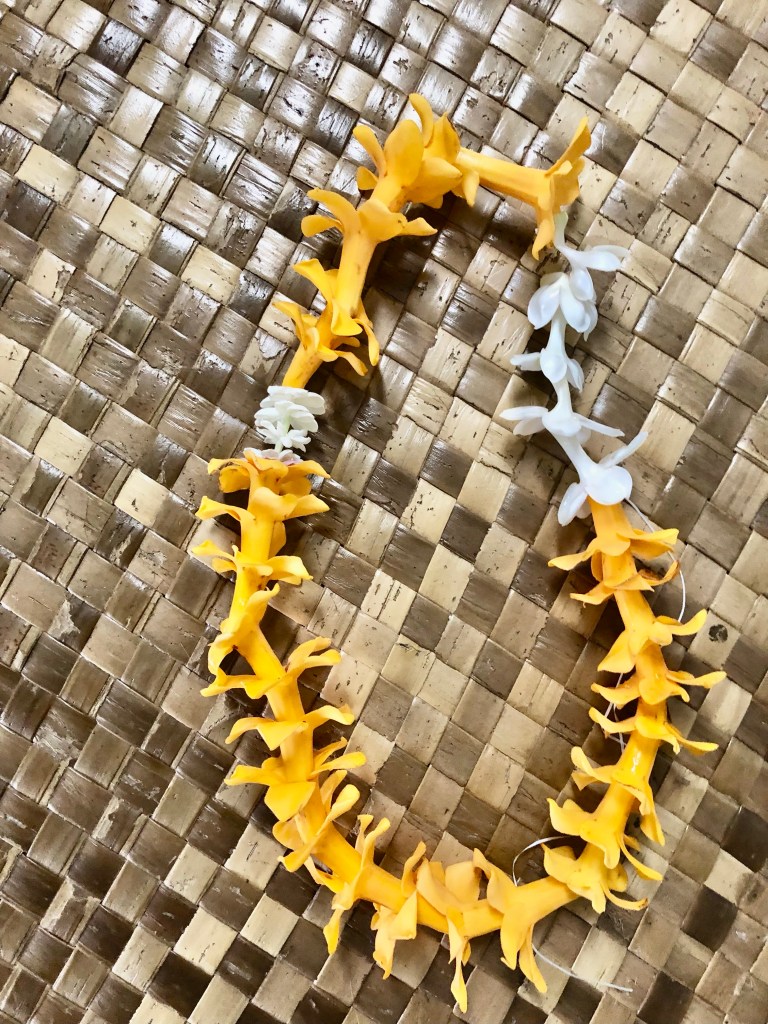
• Pua Keni keni usually Bloom less in winter, BUT after the storm mine are full of Buds, flowers and lots of developing green “ball” fruit.  I made some lei for a fundraiser, and plucked and cut off all the young fruit, to encourage more blooms from the tree 

What are YOU observing, in your garden in your unique microclimate? I would love to hear back from my Gardening Readers …..

Nutrition of Mountain Apples

By Heidi Bornhorst

Local Hawaii people are so Funny!

Nowadays people go nuts for Mangos and lychee and `ULU.

Even to far as buying them in the store!

Don’t you all think we should have some fruit trees in our gardens? And share with friends and neighbors? Let’s plant and grow some fruits today!

As kids, mangoes were like stray kittens, people would beg you to take them! We got jobs raking up the fallen smashed ones from super tall trees for elderly neighbors.

I could never get enough lychee even tho the trees were abundant in Makiki where I grew up. Lychee enticed me to move to Wahiawa where we had two lychee trees and then planted a third.

When you offer people mountain apples or `ohi`a `ai some are enthusiastic, some will help you pick and rake up and some meet the offer with distain.

Funny.

Nutritionally they are great; lots of hydration for your body, and rich in vitamins C, Calcium, magnesium, phosphorus, and super rich in potassium.

Also known as `Ohi`a `ai, the `ohi`a that you eat (`Ai) they were carried here by ancient Polynesians in their sailing canoes, an important part of our “imported” landscapes and gardens.

What a gorgeous gift to find when hiking the low moist forests. This fruit will keep you hydrated on your hike!

And you can bring home a seed and grow it to commemorate that special hike. Surprise and share with your hiking buddies at the next festive occasion.

They are nice to grow in our gardens too. A small to medium tree with pretty leaves and bark most of the year and then BOOM! in flower so pretty magenta pom poms

A month or two later you will have that juicy ono fruit. Like jewels up in the tree canopy.

Besides eating them straight off the tree, you can slice and add to fruit salads.

Or as my niece Jalene found out for us, you can make pickles from them to savor for another day. 

My friend and akamai farmer Deborah Ward makes a mean mountain apple pie and you can also make mountain apple sauce.

Add some slices to your favorite cold beverage.

You can make a lei with the smaller green and white fruit.  Store the lei in the fridge and when you wear it “Fruit cooling air conditioning” !  I made one for my then boss, Sydney Iaukea at a Kupuna Hawaiian studies training session and the lei kept her cool all day.

It’s an unusual lei today.   But easy to make and fun and unusual to wear.

​The scientific name is Eugenia mallaccensis and they are in the MYRTACEAE plant family along with `Ohi`a lehua, guavas, rose apples, Eucalyptus, and more.

Some call them Malay apple as they are native to the Malay peninsula and southeast Asia.

We have different varieties in Hawaii, a pure white one, a seedless one, squat plump Hawaiian variety and long and big Tahitian variety.

Many grew naturally in the wet lowland tropics of Ho`omaluhia Botanic Garden and then we planted more in the “Kahua Kukui” Polynesian plants section of this amazing and FREE botanic garden in Kane`ohe.

They are easy and fun to grow from seeds.  Save a seed from an ono one and plant it right away.

Besides the ono fruit and attractive flowers and tree, bringing shade and birds to yoru garden, mountain apples have medicinal uses.

The bark is a sore throat cure.   If you feel a sore throat coming on or are getting a cold, scrape off some young bark, rinse it and chew it.  It has lots of tannins and this truly can help ward off a cold.

The nutritious fruit will also help keep you healthy !

Wasabi Plant

By Heidi Leianuenue Bornhorst

“Here Heidi, try taste this, we call it “Wasabi plant”, said Ecologist John Gilardi, AKA “da bird man o Wake”.   He plucked some leaves from a little plant, on our way sunset walking to the bird meadow on one of the islets of Wake Atoll.  It was near dusk and very hot, no wind, and water barely quenched our thirst.

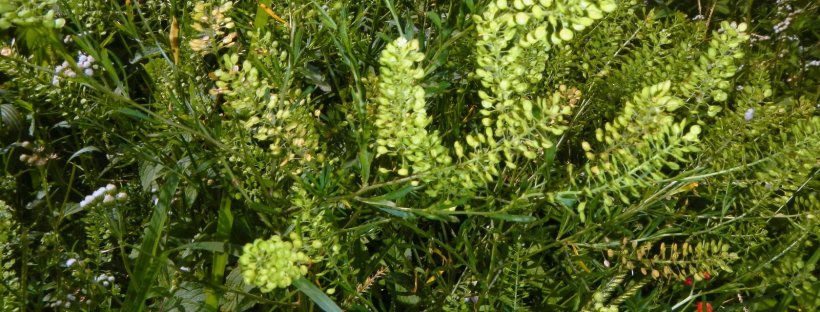
wasabi plant Lepidium

At first it just tasted a bit green and refreshing and then my mouth got happy, almost exploding with a definite wasabi taste.  I got all excited, asked him more about the plant and took some pictures of it.  It looked like a weed, but with papery transparent seeds.  It looked very cute in my pictures.  It was one of many interesting and intriguing native plants on the very remote Wake Atoll, where I was fortunate to be performing some contract Arborist work.

When I got back home, Happily, to cool green high volcanic lush green Hawaii, I did some research about this plant which scientists call Lepedium.

Another name for it is “Garden cress”.  We have one that is a weed and one that is native to Hawaii.

The non-native one is L. latifolium, and it’s been here a long time.  Its mentioned in the flora by Dr William Hildebrand, the original botanist who grew Foster Botanical garden.

Maca root which is found in health food stores, like our beloved KOKUA Market, and said to be good for wahine and for sleep is L. meyenii. (when I was googling for pictures, to see which species grew here, these adds for tinctures of maca root kept popping up!)

Our native Hawaiian wasabi plant is known to scientists as Lepidium bidentatum var. O-waihiense.

Turns out is has many Hawaiian names: kunana, naunau, `Anaunau and `Anounou; and lots of English ones too: Kunana pepperwort, peppergrass, pepperweed, and scurvy grass.

Wonder if its high in Vitamin C?

It is a good source of vitamin C, A, K, and some of the B-vitamins, as well as calcium, iron and magnesium. It’s also rich in fiber, like most green leafy vegetables or herbs.

It is endemic to all the Hawaiian Islands except Kaho`olawe and Ni`ihau, and it is found in Kure, Midway and some of the other islets of Papahanaumokuakea, or the northwest Hawaiian Islands.

It is in the Brassicaceae plant family, along with turnips or daikon, cabbage, mustard greens and our favorite: Wasabi !

The root was used as medicine in old Hawai`i, and in other parts of Polynesia too.

The scientific plant genus name, Lepedium, has kewl descriptive origins too. Lepis is scale in Greek and refers to the pretty papery, scale like semi-transparent seeds. The species name bidentatum comes from the Latin name for tooth, the leaf edges are serrated or toothlike.

I started looking for it and trying to grow it.  Such a fun taste and we do love wasabi here in Hawaii!  I thought it would be fun to grow and to gift for my fellow gardening gourmets!

So far it hasn’t been easy to grow, but we endeavor to persevere.  I find it in surprising places and have been trying to figure out its ideal habitat.

Sometimes it’s in a lawn like at UH Manoa or Kapiolani park. Sometimes it’s by the beach.  Visiting Sweetland farms with my horticulture buddy Rachel Morton, we found it outside the barn where keiki goats were being nurtured.  I got all excited and had Rachel, and co-owner Mary Bello taste it.

Ono yeh? And isn’t it a cute plant?  Imagine if were grow more and had the goats eat it.  Would their milk then be wasabi flavored?

We collected some to grow and so far, so good.  I think that because it’s a very xeric or drought tolerant plant, it must have a deep root and far spreading roots. When I casually pull it out, I might not be getting all of the roots.

Growing it from seeds is a good option.  Horticulture with native Hawaiian plants is so much fun and a great gardener challenge. We always learn something by growing plants and observing our gardens and nature in general.

Has anyone else tried to grow this?

One reference suggested that it would grow best in an herb garden, as compared to a general landscape.  It really does look like a weed until you get up close and see what a pretty plant it is.  Plus growing healthier and possibly medicinal and ONO plants in our gardens is always a plus!

I potted mine up in a mixture of good potting soil and coarse cinder and put them in pots.  Rachel planted hers directly in the soil in her mother’s herb garden in a sunny spot up Tantalus.  We shall see how it all GROWS!