CRB, what we can all do to save Niu and other trees.

By Heidi Bornhorst

Alien Coconut Rhinoceros Beetles are currently Endangering our Niu (coconut palms), native Hawaiian Loulu palms, hala, banana and more.
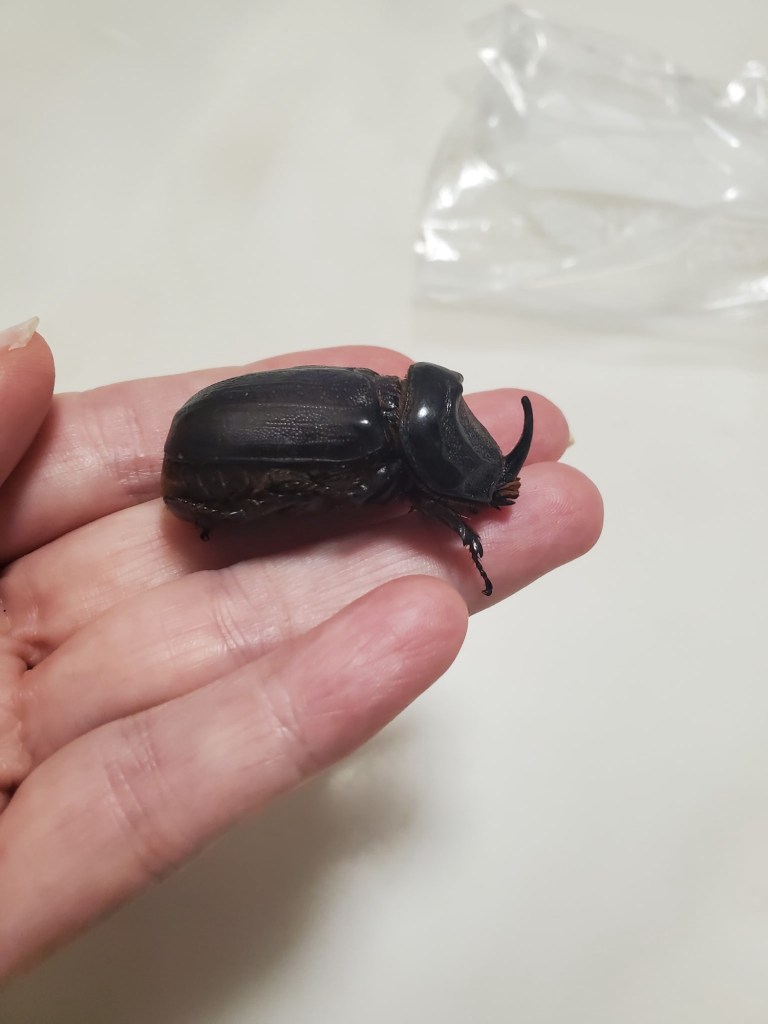
Coconut Rhinoceros Beetle

This is an existential threat, not only for beauty, but for life.

Without Niu we may starve.

​Imagine Hawaii with no Niu. 

Coconut Rhinoceros beetles (CRB) are a serious alien pest. We really need to take this problem seriously and attack / control them on all fronts.

For years, At Every Arborist and landscape conference, we were warned about these chunky hungry beetles and warned to KAPU !! keep them out of Hawaii.

CRB are Major and serious pests in other places such as Polynesia and overall world tropics.

Now they have spread from a Navy site in 2013, to the west side, devastating the north shore and Waialua. They are bad in Waimanalo.

I was at Wahiawa Botanic Garden recently and so devastated to see all of our native Loulu palms being munched and destroyed. This upland Botanic Garden has a collection of rare Loulu palms (CRB love our native Loulu palms even more than Niu or coconuts). They also attack Royal palms. 

(We have the famous ET grove of Royals, on Royal palm drive in Wahiawa.)

Auwe! we stopped at Kahana state park, where the precious Niu of Mary Mikahala Robinson Foster grow tall and graceful, said to be some of the best nuts for eating and drinking. 
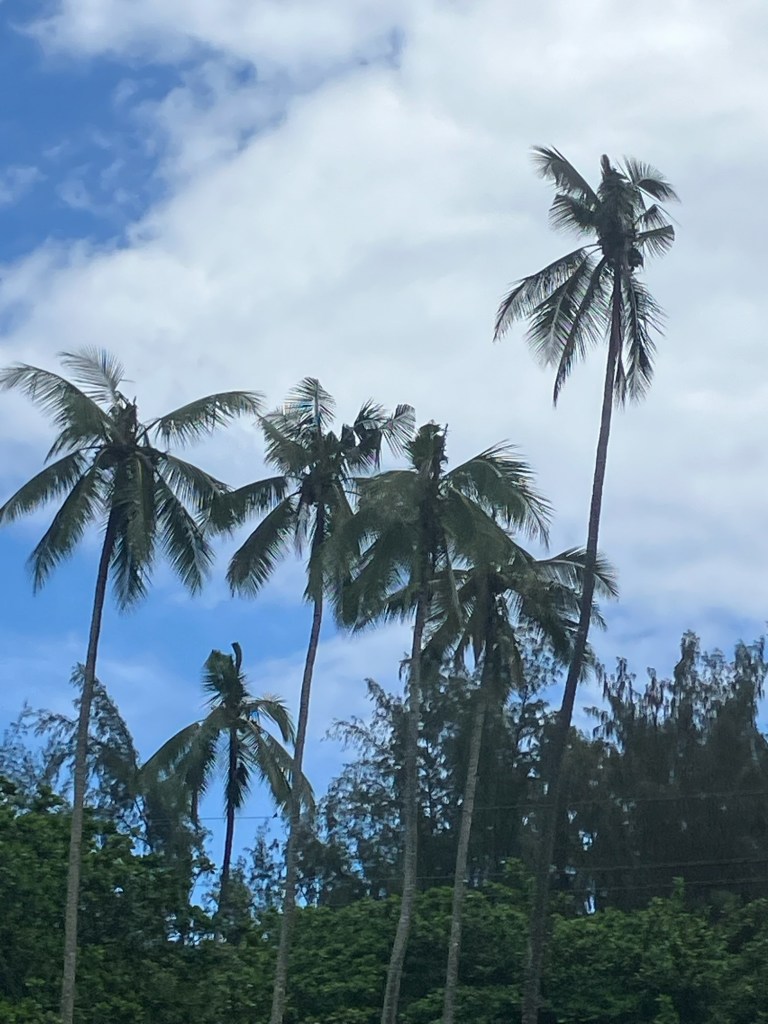

 Coconuts at Kahana state park,
attacked by CRB

I sadly observed the classic cut out fronds, characteristic of CRB feeding on new vulnerable growth. These Niu are iconic and getting munched to death, as I write this. 
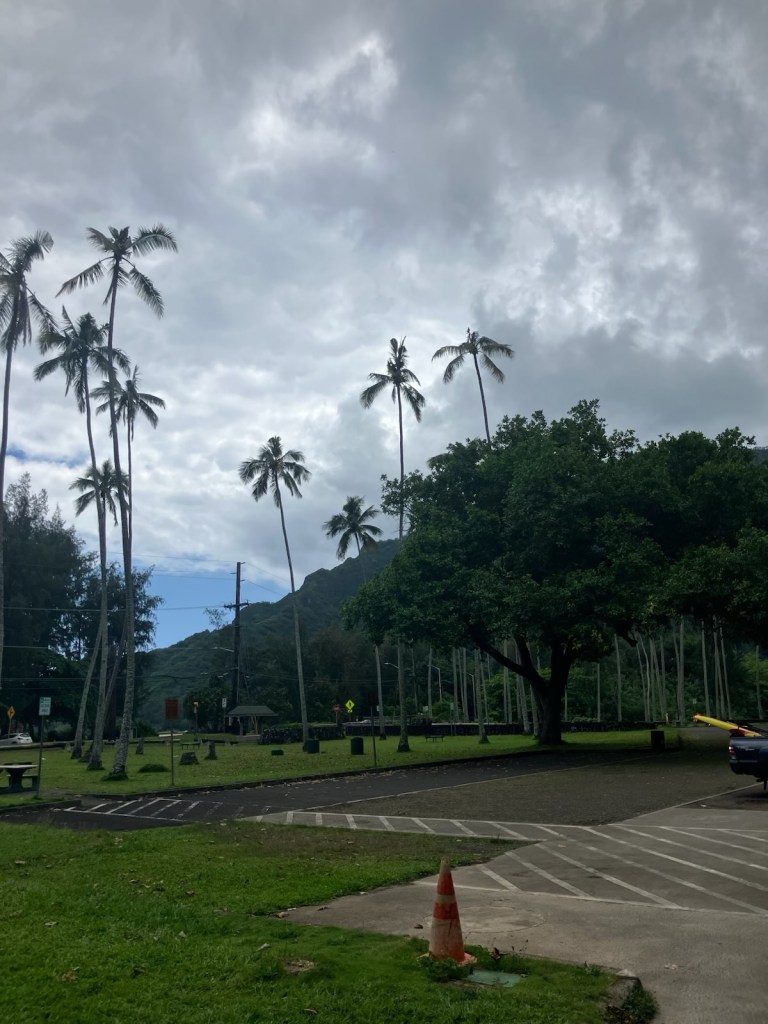

 Coconuts at Kahana state park,
attacked by CRB

We need to get everyone to pay attention and help with control. Our Governor Green and Mayor need to get behind these efforts: Education and control.

Neighbor islands are getting hit with CRB too.

Know the life cycle, they spend the bulk of their life feeding on and in, rotting vegetation, compost piles and the like.

It should be on the News every night, along with other crimes affecting Hawaii. 

Here are some of the immediate steps we can all take:

No mulch piles

No dead stumps

Netting 

Traps with lights and netting

Public awareness and education

Government support and action 

Search for Biocontrol 

Education


 Coconuts at Kahana state park,
attacked by CRB

Chemical treatment to save Coconut palms (Must label as treated, and cut off any flower and fruit on treated palms!) A high lift or skilled coconut climber is key for this.

Everybody’s dog, chickens and pigs can find and eat the grubs.  

A Gourmet opportunity for an innovative local chef?

Nui/Coconut, Cocos nucifera is the Tree of life for Hawaiians, do we really appreciate and treasure Niu in Hawaii as well as we could? 

Can you imagine Hawaii with no Coconuts? CRB also attack Hala, Loulu palms, banana and more.  

Let’s get together and scientifically, attack this pest.

Netting all around the vulnerable crown of the palm. Netting of mulch piles. Nets with Lights 

As my friend Mari Zane says Ho! Beneficial use for those illegal gill nets!  (Her Loulu and Niu on the north shore were early casualties, but there is hope for the shorter ones.)

Wrap the nets around the crown.  The nets will get the ones inside coming out of the bore holes, and get any on their way in.

Contemporary Landscaping, a nursery in Waimanalo, uses a low net about four feet tall, lit at night. This attracts and captures beetles. 

Trapped beetles attract more beetles to the light, and a chance for more control.

Brown Cannon made a trap using a netted Hula hoop and is capturing them out in Waialua. He sets this hula hoop net  (great recycling!) over a barrel of woody mulch.

We can all get smart and do our part!

Just when Hawaiian gardeners, City parks folks and landscapers were convinced to wisely use mulch, we find that mulch piles are endangering NIU.

CRB grubs love rotting vegetation and spend most of their life there.

​We can have mulch piles and mulch dishes if we are akamai.

Turn the mulch frequently disrupting the grubs. 

HOT mulch will help to kill them.

Turn your mulch and have animal helpers, keiki or your arborist ready to spot and capture the grubs. 

(Dogs, pigs and chickens can be trained to eat the grubs of CRB)

Mulch and green waste piles are perfect habitat for these alien pests and their voracious grubs.

Hot mulch is OK:  turn it and burn it!

Or spread mulch and compost thinly. Water it and look for CRB grubs.

As always water and nurture your palms, keep them as healthy as possible.

Let’s work together to protect and save this vital part of Hawaii. !!!
Miniature Forest Revolution

The Miyawaki method

By Heidi Bornhorst

Koa trees, Loulu palms, mulch dishes Ho`omaluhia

Aloha Hawai`i Gardeners: are we ready to plant and nurture a miniature forest Revolution?

I have wanted to learn about the Miyawaki method for a while. Thanks to generous friends: Chirstine and Pokey, I got my hands on one of the books about the Miyawaki miniature forest method, and plunged in.

The book I just read is called, “Miniature Forest Revolution”, by Hannah Lewis. 

Developed in Japan and now spread around the world this is a new and akamai way of forest restoration.

Dr Akira Miyawaki was a Botanist, ecologist, and researcher. He networked with others in Japan and around the world to plant mini climax forests and nurture them. 

I have advocated for years, to simply plant a tree, nurture a garden, keep one plant alive, Volunteer at a garden.  Go hiking, learn about our Hawaiian forest. Nurture our Hawaiian forests and learn more. 

Learn about and nurture our living soils.

This is a new way to do it and is very inspiring.

Trees and forests really do heal our land. Compost really does work. Watersheds can be restored by the forest. Healthy forests of multi layers cover the soil and nourish it. 

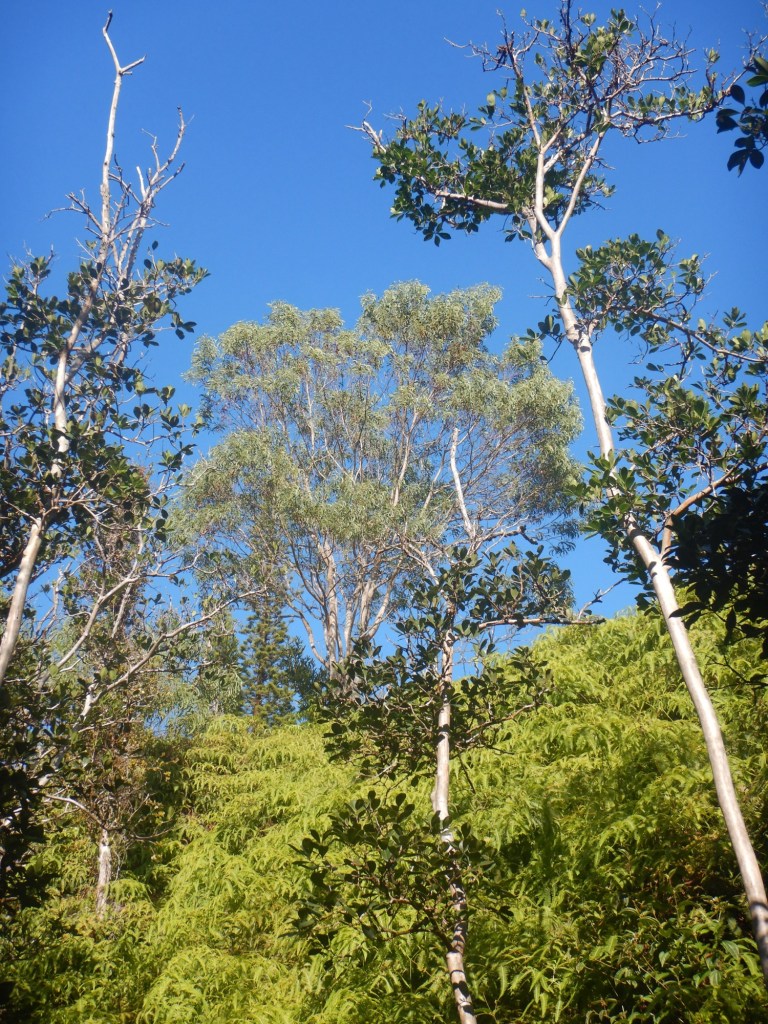
Koa tree and Uluhe ferns

With plants covering soil and adding their leaves to the living soil mix, we have less runoff when it rains.

We like to keep soil alive and where it belongs: on Land

When soil washes into the ocean after heavy rains we have fresh water killing the reef and silt and mud smothering the reef, clouding the water and adversely affecting fish, honu and all the saltwater living life forms.

Healthy forests funnel rainwater down into the ground enhancing our water sources. 

There are so many benefits. 

To follow the Miyawaki method you get rid of grass and weeds and plant climax species really close together like how they occur in nature. 

(Koa and `Ohi`a lehua trees are two Climax species that we do now know how to nurture and grow)

Soil preparation is key. Get rid of weeds and grass and mix in compost. Lots of compost and organic matter gets incorporated into the original soil. Drainage is also very important. 

Adding mycorrhizae or native soil from a healthy forest area might be advisable.

Soil tests help determine what soil type and fertility you have. 

After all this planning and preparation, the fun begins: Planting the forest.

The plant mix is trees, shrubs, ferns and ground covers, throw in some vines. A different plant mix would be suitable for various soil types, rainfall amounts and elevation. We have so many microclimates and soil types in Hawai`i.

Elevation is a very important consideration for growing native Hawaiian plants.   

For example, Koa seeds collected at 5000 feet on the richly soiled flanks of Mauna loa, would probably not thrive in Kapi’olani park.   It is partly soil (they do not like sandy salty soil), but even more it’s elevation. Cool night temperatures and other factors 

Often lowland plants can grow at higher elevations, but high elevation plants struggle and lower, hotter elevations. 

For the first few years you tend the forest, watering, and weeding. The book says you do this for three years. Maybe in Hawaii we need to tend to it longer with watering and weeding and adding to the mulch beds.

Then it can basically care for itself but it’s still good to do some nurturing. 

That is what horticulture is: Close monitoring, observation, and careful tending of your plants.

Like in a natural forest, leave the leaves. They nurture the soil.

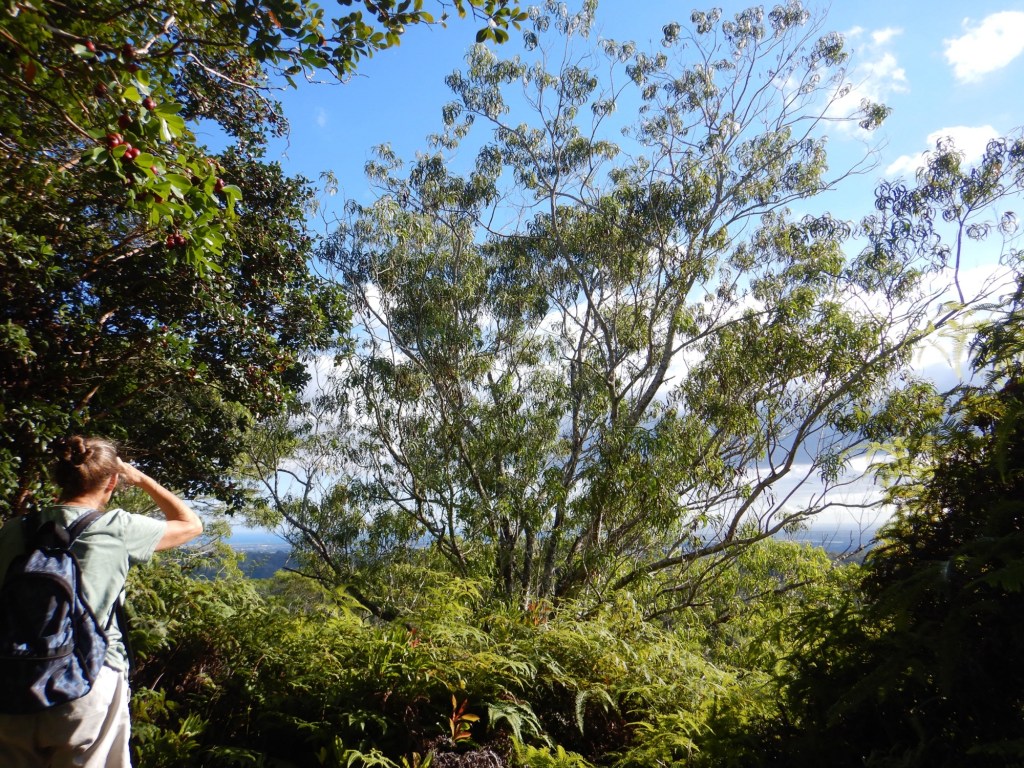
Rachel admires koa tree

ASHS coming to Honolulu!

By Heidi Bornhorst 

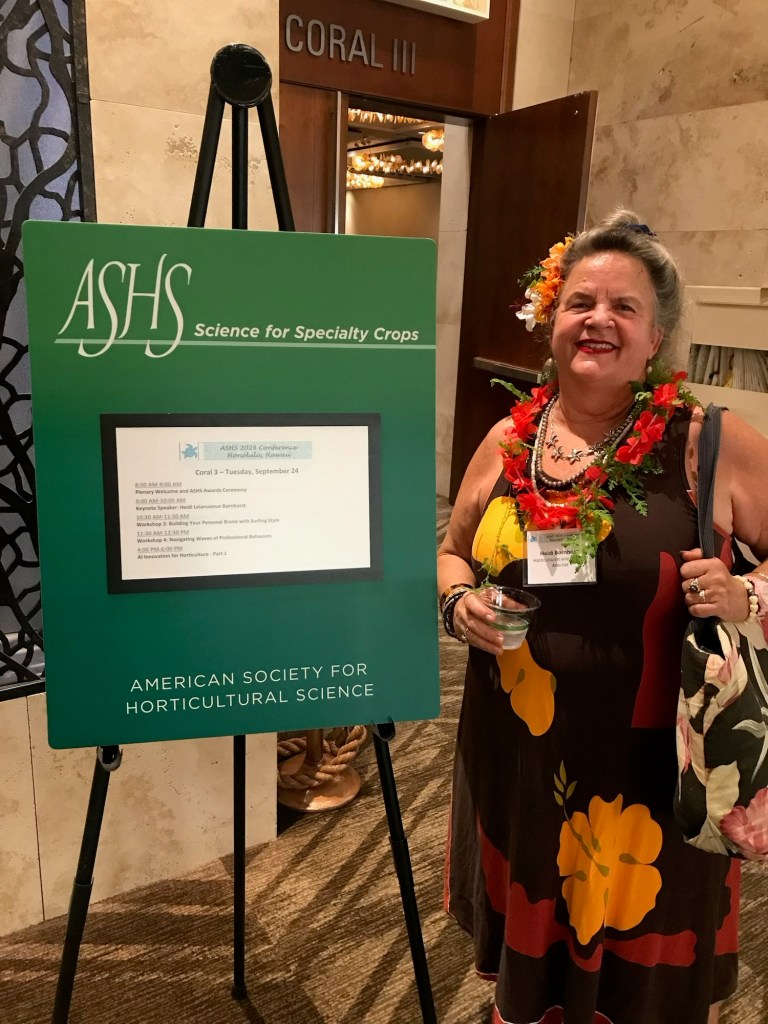
Heidi Bornhorst Keynote Speaker

A prestigious Horticulture group is coming to Hawaii for a weeklong conference.

The American Society for Horticulture Science will be here on Oahu for a week long conference beginning Monday September 23, 2024, closing on Friday September 27.

Over one thousand attendees are signed up and registration is still open. (1067) at last count.

This is great for Hawaii gardeners, Horticulturists, Botanists, and plant scientists.

The conference will be held at the Hilton HawaiianVillage hotel, right on the beach in beautiful Waikiki.

Renowned for its extensive gardens, featuring many native Hawaiian plants, along with canoe plants and tropical exotics, it is a great venue for these plant loving scientists to enjoy.

The Hilton is also right next to the Hale Koa Hotel (where I served for over 10 years as Landscape Director).

The extensive landscaped grounds of the Hale Koa were designed as a botanical garden and the plantings there are very impressive and worth a stroll.

There are many wonderful gardens in Waikiki, amidst all of the hotels and high-rises.

I was very honored to be invited to be the keynote speaker for this conference and I plan to be talking about my favorite: Growing native Hawaiian plants.

There are over one thousand native Hawaiian plant species, and we now are growing about 100 of these Hawaiian plant species. We can grow more!

We have 1367 native Hawaiian plant species. Over 90% of them are endemic, meaning they only grow naturally here in Hawaii. About 9% of them are extinct, and many are rare and endangered.

Some are common and easy to grow, and we see them all around. Examples are: Hala, beach naupaka, `ilima, Hapu`u or Hawaiian tree ferns, and Kou and Milo trees.

Other native plants are less common in our gardens and landscape, but horticulturists are working to change that.

​My friend, Dr. Mike Opgenorth, who is the Director of Kahanu Botanic Garden in Hana, Maui will be speaking on Thursday about his PhD work on our endangered native Hawaiian Gardenias 

Many more students and graduate student at the U.H. are studying how to grow and perpetuate native Hawaiian plants.

The landscape or “Green industry” here in Hawaii is doing the groundwork with native plants.

Home gardens now feature native Hawaiian plants especially those loved by lei makers such as `Ohi`a lehua, `ilima, Palapalai and Pala`a ferns, and our native fragrant Hawaiian white Hibiscus, Koki`o ke`o ke`o.

Our public parks and urban forests are growing more native plants too.

Let’s learn and grow more, let’s perpetuate our native Hawaiian plants together.

https://ashs.org/page/ASHSAnnualConference

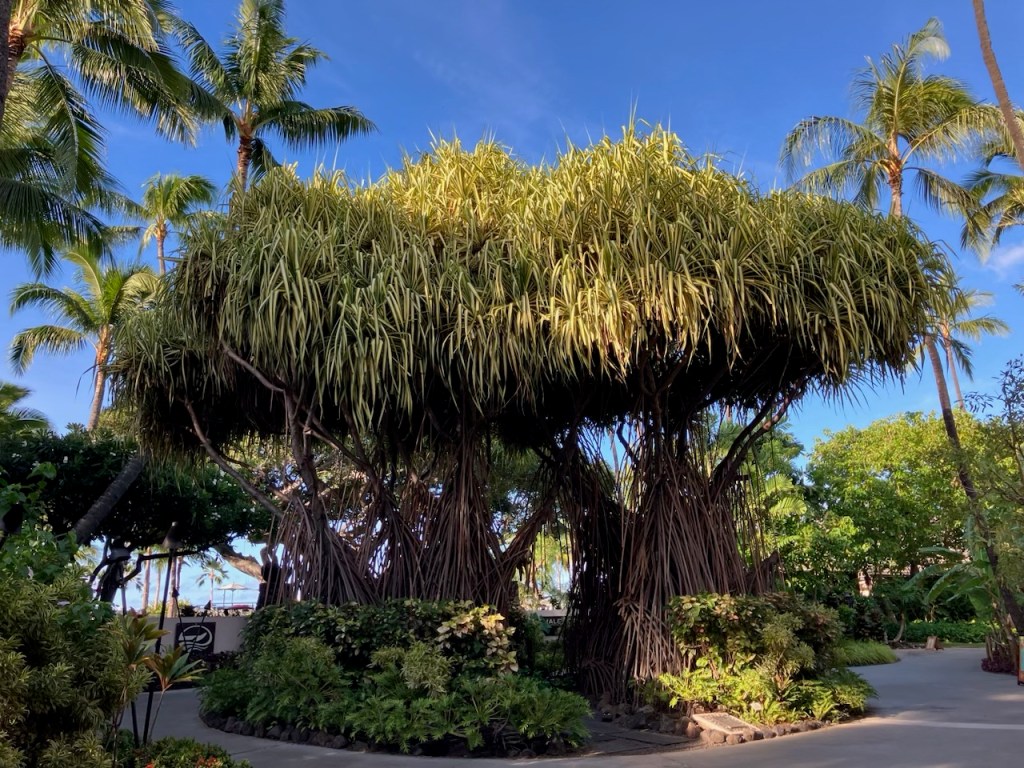
Variegated Hala tree. Pandanus. Growing happily at the Hale Koa hotel.

Pandan Wangi

By Heidi Bornhorst

Pandanus amaryllifolius
Working at the Honolulu Zoo, we were helping move and relocate plants for the community gardens from behind the zoo on Paki, to a new garden on Leahi and Paki.  As we were helping the (unhappy) gardeners, I heard Victorino Acorda, one of our best Gardeners and true plantsman exclaim in delight!
‘Pandan wangi!  Makes the rice taste so good Heidi!  I’ve been looking for this plant since I moved here from the PI!’
He was almost crying; he was so happy!
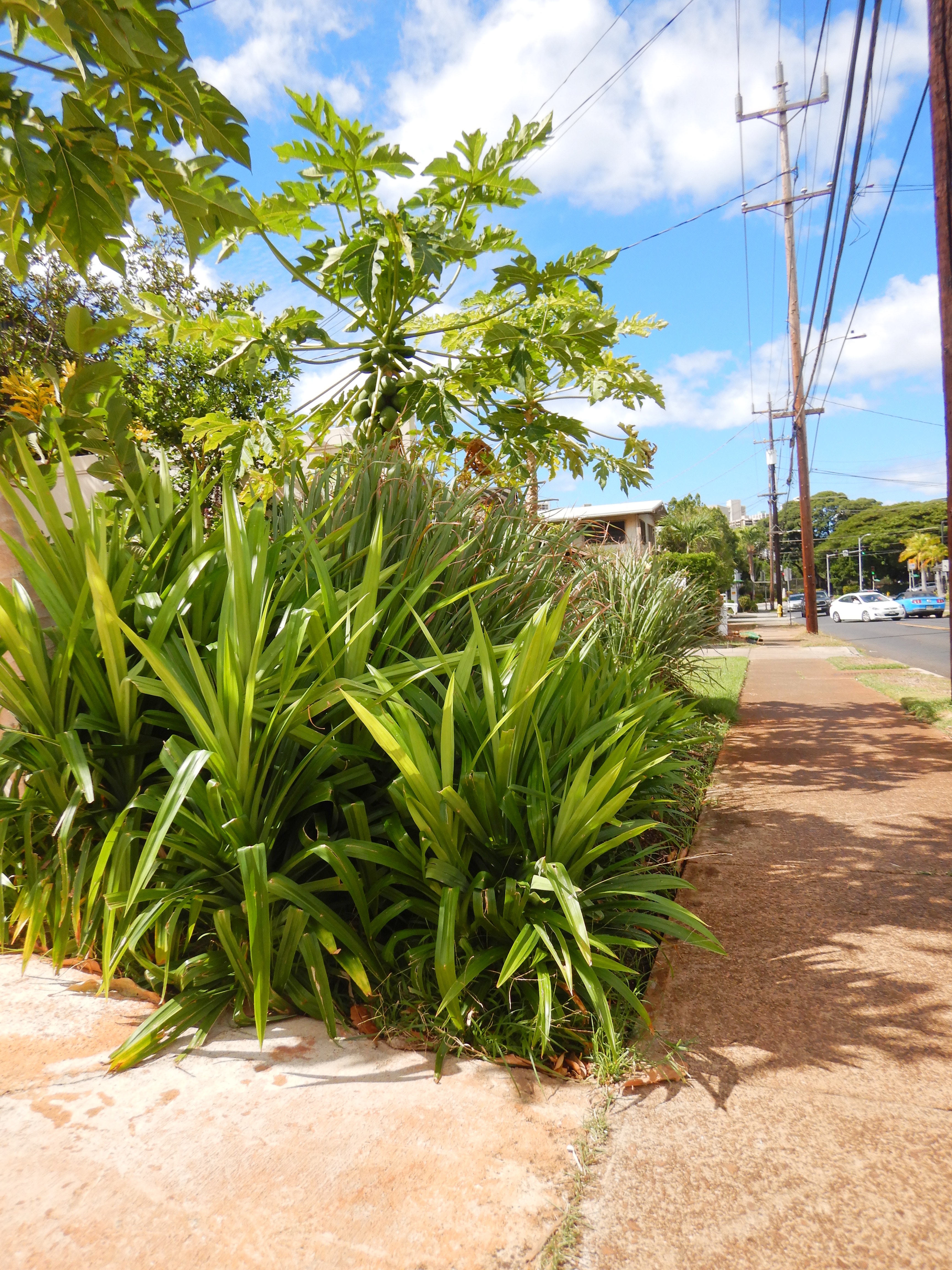
Then the other day I was stuck in morning traffic on Mo`oheau St in Kapahulu.  To amuse myself I looked closely at gardens along the street.  There was a really nice garden with a southeast Asia flavor.  First, I noticed nice clumps of lemon grass and some healthy papaya trees.
What was the clumping bright green plant in front of the lemon grass?  PANDAN WANGI!


So attractive in this landscape design and so useful.
We have it growing in the southeast Asian plant section at Ho’omaluhia Botanic Garden.  One year it was a featured plant at our plant sale, and we hope to feature it again once we can open up our gardens safely once again.
It is fairly easy to grow.  You can divide the clump and make new plants.  
 

Those who know this plant usually just call it pandan. There are many ways you can cook with it.
Some call Pandan, the Vanilla of the east, or the vanilla of Southeast Asia.
You can boil with whole leaves and combine them with other ingredients.  You can wrap foods in them and then cook them (like we do with Ti leaves).
If you’re handy with your blender, grind some fresh leaves with water and then freeze the juice in a mold or ice cube tray and use it for drinking or cooking later.
You could also add it to GREEN SMOOTHIES
Some just buy a bottle of pandan paste.  Lexi had some from Singapore, she had it quite a while I smelled it and then read the label.  It smelled really ono. The ingredients not so much.
How do we make it from the fresh leaves that we can grow in our Gardens?
You can just chop it up and add to the rice pot as you cook your rice.
You can make tea with the leaves. You can add your favorite tea like jasmine to the pot.  Pour hot water over both and let steep for Five minutes.
I made some with just hot water, poured over and steeped over leaves. it tasted ok
On 9 28 21 trying strip leaves lengthwise in 3s, add Olena and ginger powders, and three mamaki leaves, bring to a boil, then simmer for 30 minutes or so. It Smells really good!
There are lots of Creative and Foodie things you can do with pandan:
• Twist the leaves into Roses like we do with Ti leaves
• Little cups for deserts
• You can make green smoothies with it
• Pandan Chicken and Pandan Rice
• Grilled Fish stuffed with Pandan are just a few recipes that are popular.
And many desserts, variously featuring coconut milk, and various sugars like palm sugar.
If you look online there are lots of recipes, some quite layered and complex.  Some really pretty drinks and you insert a leaf tip to give it that final Flare of Gourmet Drink décor.
It gives the dish a lovely green color and subtle flavor.
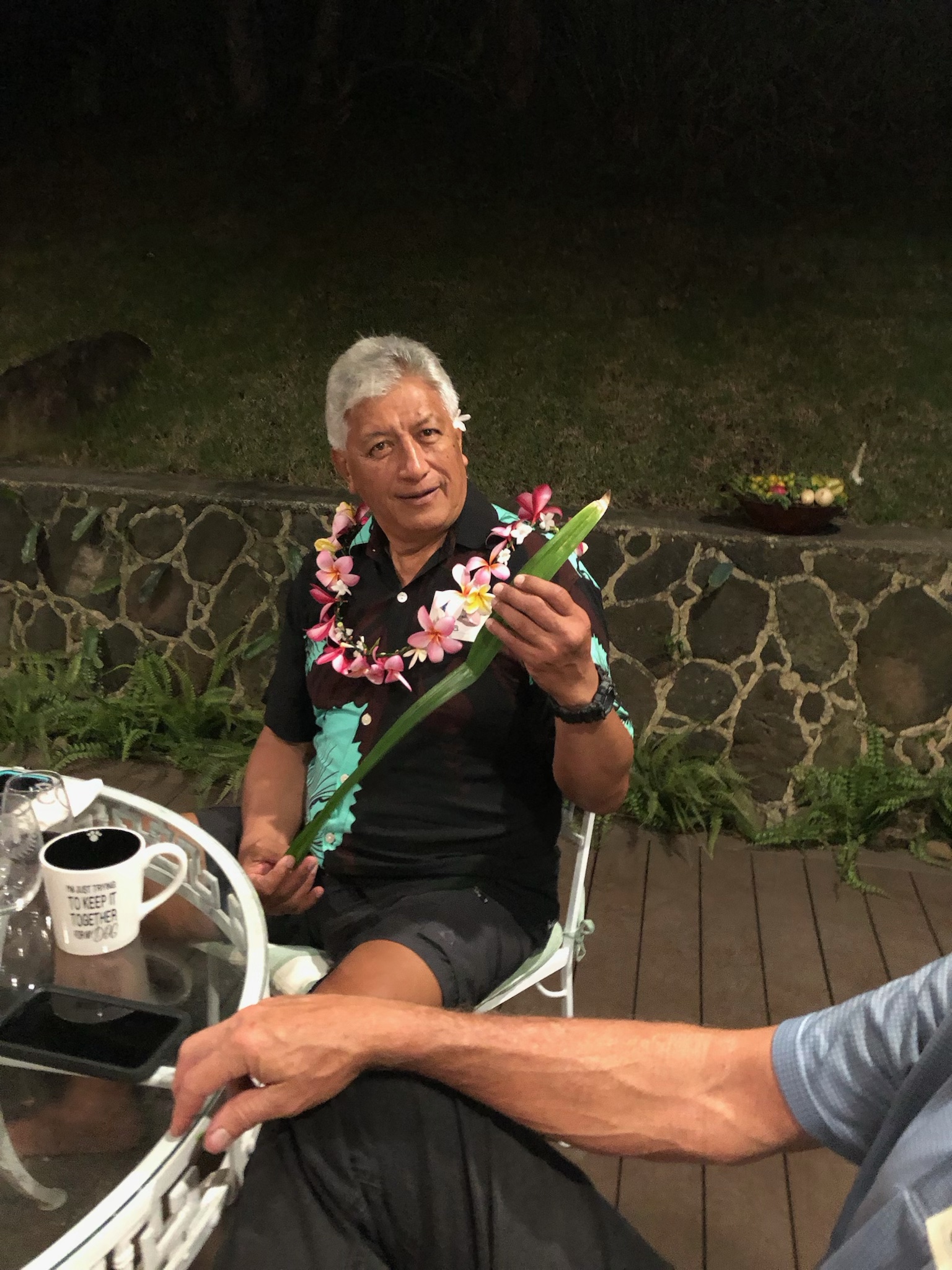
I took some in mixed arrangement as a hostess gift for Lexi Hada and Barney Robinson.  One of their guests, Teua from the Cook Islands admired it, drew it out of the arrangement and sniffed it.
As he ran his hands over the glossy thornless leaves, we talked about it.  He recognized it as a Pandanus, or HALA relative but NO THORNS! We all wondered how it would be for weaving.
The Latin name, Pandanus amaryllifolius refers to this. The growth is much like a hala, but the leaves are soft and shiny with no thorns.
Besides being ONO, it’s a very attractive garden accent or spotlight plant in your garden.
I also like it as an exciting and exotic foliage element in a Tropical Flower arrangement.
We plan to feature it at a Future Covid 19 safe FOHBG plant sale.
 

Finger limes, a fun pretty, newish fruit for Hawaii gardens

By Heidi Bornhorst

Citrus grow well in our Hawaii gardens, trees come in all shapes and sizes. Many people ask me for smaller fruit trees, or even shrubs and finger lime fits this to a T!

 One fun one that I first heard about and got to sample while visiting gardens on Hawaii island (a few years ago) with fellow horticulturist Erin Lee is the finger lime.

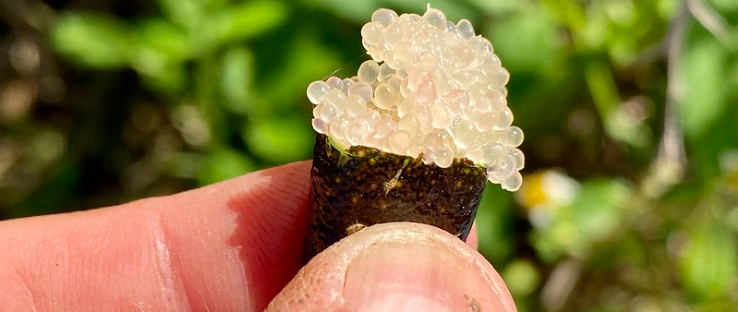
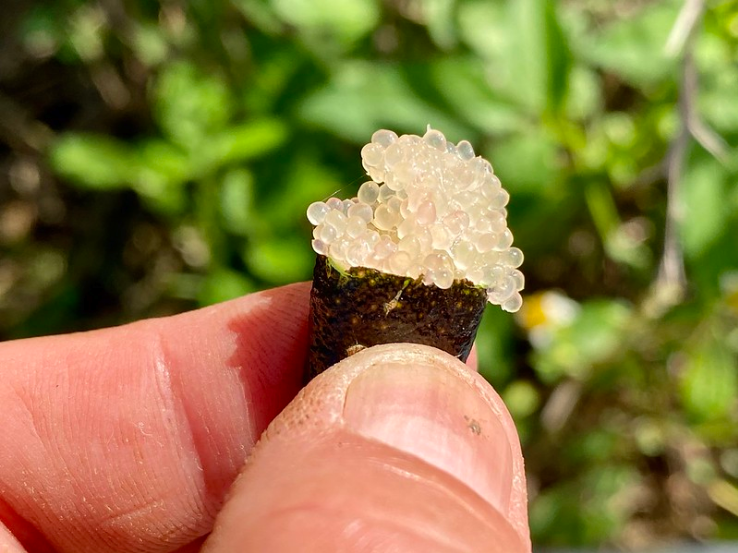
It is so Fun to eat! Cut open a ripe one and just squeeze it out like wasabi paste !  Fun for keiki to learn about, grow and eat more healthy fruit.

The little fruitlets inside can be white, green, or pink. The skin of the fruit as well as the insides, comes in different colors.

 So pretty and decorative for your Holiday table, whatever the Holiday is!  Let’s celebrate being alive and learning to grow and eat new things from our own gardens !

And sharing with friends and neighbors!

Amazing at your next gourmet potluck!  (when it safe to have a pa`ina). Imagine pairing it with home made sushi ! or on fish, or in drinks

Lee suggests growing it in a large decorative ceramic pot in full sun.  Once it’s growing vigorously, you can shape it as a standard or into a topiary on your sunny lanai or party patio !

It came to us from Australia, a land of many wonderful and unusual plants.

Scientists call it Citrus australasica and it is in the Rutaceae or Citrus Family. It is also sometimes called “caviar lime”.

 It is a rambling, very thorny, under-story shrub or small tree, from lowland, subtropical rain-forests, and dry rain-forests in the coastal border region of Queensland and New South Wales, Australia.

Happily, we are now growing finger limes in Hawai’i. We need to grow more of them and test varieties and find out which are best for our micro-climates.

The shrub is variable in height and its leaves and mixed in with thorns. Buds are purple, petals are white . The flowers are tiny . The fruit is cylindrical, 4–8 inches long, sometimes slightly curved, and shaped like a fat finger. Finger limes come in a range of colors, both inside and out

HOW DO YOU EAT IT?

One fun way to prepare eat this fruit is to cut the ends off and use a  rolling pin and roll out the small, caviar-shaped vesicles. The fruit caviar can be used wherever you would like a squeeze of citrus.  Or just cut and squeeze out the fruitlets like a tube of wasabi paste.

For a fun family pa`ina, have your keiki help you prepare your gourmet fruit platter and let them open and squeeze out the tart juicy insides.

In France they call it “lemon Caviar’ and it commands a very high price in Gourmet restaurants.  They must grow them in greenhouses there.

This could be a model for us in Hawaii. A rare, pretty and flavorful gourmet treat sold for a good price.  We could develop our own varieties that do thrive here.

This is true Horticulture and why the U.H. could sure use a Tropical fruit specialist to help grow our farms and support farmers.

I spoke with amazing ex UH extension agent Jari Sugano.  She was growing finger limes as a hedge crop at Waimanalo experimental station.  She mentioned how thorny they are.

Clients do ask me for thorny plants to help secure their homes and gardens. This could be a plus for farm security but does make harvesting tricky.

Tree crops are good for the land as they are perennials and you don’t have to work over the soil like with veg crops.  This is the concept of permaculture,

Frank Sekiya and Lynn Tsuruda of Frankie’s Fruit Tree Nursery in Waimanalo are growing finger limes. I talked to them about their experience with this interesting citrus fruit.  

Douglas Himmelfarb was living at the Marks estate in Nu’uanu and he gave Sekiya some varieties.   The California varieties do fruit well in California but not always here in Hawaii.

Some in the field that Sekiya planted got huge, and never bore fruit. Some only a few fruits; Sekiya relates that there is so much variability. 

Ken Love, a major Fruit advocate on Hawaii island, gave Sekiya some cuttings, and he say it fruits all year,  and it’s the slightly pink one. The outside of the fruit is kind of purple and  matures to green, if it gives a little, that’s how you tell its ripe enough to pick, the fruit will have sort of a spongy feel.

We have so many micro-climates and soil types in Hawaii, that we all can experiment with which ones grow and fruit best in our own ecosystem. People have had them in their yards for a while, says Sekiya and some grew well, and yet barely fruited,

They graft finger limes and can also start them from cuttings.  Grafting is quicker, but it’s a practice and skill that not many have today.  (Something to learn and practice, while we stay safely at home ?!)

Root stocks (the bottom part of the graft) are important.  As many people prefer smaller trees, for semi dwarf  trees ‘Rubidoux trifoliate’ were advised at one time for their dwarfing effects, but as Tsuruda says,  ‘We don’t use the Rubidoux trifoliate anymore since citrus  trees grow fairly slowly in Hawaii and are easily pruned’. 

  ‘Heen naran’ is a good root stock.  It’s from India,  U.H. highly recommends it.  It’s Good for most citrus here in Hawaii. The Botanical name for Heen Naran is Citrus lycopersicaeformis.  (The fruits of this root stock are small, round, super seedy inside,  and look something like a tomato, Lyco is a Latin name referring to tomatoes, as in the healthy lycopene, we’re encouraged to eat more of)

‘Some people like it it for New year’s décor, as the size and shape fits very well on the mochi stack since it’s an inch in diameter. It’s very productive and very seedy’, says Sekiya. 

The U.H. has had Trees at Poamoho Experimental Station for 30 years, all grafted with the Heen Naran root stock, which seemed to survive over 30 years while some others were grafted to different root stocks.

Most Citrus of the good, preferred varieties are sweet all year not only summer.  Only the pummelo seems to be sweeter in summer than in winter. 

Sekiya says that Tristeza virus is what can weaken and  kill Citrus trees, the root stock helps them be stronger and more resistant and vigorous.   Life of a citrus is 20-30 years here in general, and with heen naran maintains good growth. 

Sekiya as Chef, says he just put some finger limes on fish the other night, ‘on salmon and saba, and says that it tastes really good and adds some crunch!’.

Some people put it in beer, and it doesn’t dissolve like limes so at end you have these fish egg like things to chew on’.

Hinahina, Kipukai, Beach Heliotrope and relatives for LEI DAY

By Heidi Bornhorst

For many, many years I have been a Lei Day Volunteer at the Mayor’s Celebration at Kapi`olani park.  It is such an amazing event and I’ve learned and seen so much every year.  Since 1984 in fact !  Yikes

I was first asked to kokua with plant ID when I was working right across the street at the Honolulu Zoo as Zoo Horticulturist.  I was reluctant to leave work, even for a few hours,  as some of my landscape crew were on the kolohe side.

Kupuna Beatrice Krauss, our famed Ethnobotanist, was a fellow lei plant identifier and any time with her was a precious learning experience.  As she got older, she would ask me to drive her, and again, more time with someone so akamai and kind, a Hawaii woman Scientist, ahead of her time.

I told myself when Aunty Bea is pau I will be pau too.  But over the years I have realized what a gift it is to volunteer with this job.  We get to see all the contest lei as they are delivered at 7 a.m.   So amazing, creative and so much time and energy to grow, select, clean and prep and then craft the lei.  Timing is vital for freshness and for flowers, like ilima buds to be open.

One year there was a City-wide strike and we had to move the contest at the Hilton Hawaiian Village, they also roped me into being a judge.  Never again!  To me , all of them are winners.  Identifying the flowers, ferns, nuts and lei fibers is challenging but way easier for me!

This year there were some stunners, plants with mixed silvery patterns, in the Heliotrope family Boraginaceae.  We had native Hawaiian Hinahina, the lei flower of Kaho`olawe, an endemic native Hawaiian plant;  combined with Kipukai, an indigenous Hawaiian plant, and Beach Heliotrope Tree or Tahinu, which is an import, that looks and acts like a native coastal and xeric tree.

This twisty silvery lei combo was so amazing!  After doing our volunteer ID job  in the early morning we sometimes get a chance to talk to the lei makers.

I was talking to an inspiring and creative young lei maker, Mary Moriarty Jones.  I asked her where she collected all those lovely plants or if she grew them herself.  We talked about them all being in the Boraginaceae plant family.

One characteristic to identify this family is that the flowers are arranged in a helicoid cyme.  It twists to open like the fiddlehead of a fern, and the flowers bloom one by one along the curving floral stalk.

They also tend to have silvery hairs on their leaves.  These reflect light and give the silvery Hinahina color.  As a xeric adaptation to thrive in dry salty climates the silvery leaf hairs reflect light and also trap moisture and conserve it for the plant as it respires.

This silvery beauty to our eyes is how the plants have thrived for the millennia in harsh dry salty environments.

To grow them for the long term it’s good to understand where they came from and adapt your garden methods accordingly.  They need well drained soil and full sun.  They are more difficult to grow in pots than in the ground as they really need to spread their roots far and wide (not deep). They like daily watering to get established and then less and less water as their roots spread and adapt.

As my old boss and mentor Masa Yamauchi would say,  “Observe your plants closely and water only as needed”.

This is a skill we can all learn and cultivate.  Just as we can learn to grow our own rare and wonderful lei plants.

Wasabi Plant

By Heidi Leianuenue Bornhorst

“Here Heidi, try taste this, we call it “Wasabi plant”, said Ecologist John Gilardi, AKA “da bird man o Wake”.   He plucked some leaves from a little plant, on our way sunset walking to the bird meadow on one of the islets of Wake Atoll.  It was near dusk and very hot, no wind, and water barely quenched our thirst.

wasabi plant Lepidium

At first it just tasted a bit green and refreshing and then my mouth got happy, almost exploding with a definite wasabi taste.  I got all excited, asked him more about the plant and took some pictures of it.  It looked like a weed, but with papery transparent seeds.  It looked very cute in my pictures.  It was one of many interesting and intriguing native plants on the very remote Wake Atoll, where I was fortunate to be performing some contract Arborist work.

When I got back home, Happily, to cool green high volcanic lush green Hawaii, I did some research about this plant which scientists call Lepedium.

Another name for it is “Garden cress”.  We have one that is a weed and one that is native to Hawaii.

The non-native one is L. latifolium, and it’s been here a long time.  Its mentioned in the flora by Dr William Hildebrand, the original botanist who grew Foster Botanical garden.

Maca root which is found in health food stores, like our beloved KOKUA Market, and said to be good for wahine and for sleep is L. meyenii. (when I was googling for pictures, to see which species grew here, these adds for tinctures of maca root kept popping up!)

Our native Hawaiian wasabi plant is known to scientists as Lepidium bidentatum var. O-waihiense.

Turns out is has many Hawaiian names: kunana, naunau, `Anaunau and `Anounou; and lots of English ones too: Kunana pepperwort, peppergrass, pepperweed, and scurvy grass.

Wonder if its high in Vitamin C?

It is a good source of vitamin C, A, K, and some of the B-vitamins, as well as calcium, iron and magnesium. It’s also rich in fiber, like most green leafy vegetables or herbs.

It is endemic to all the Hawaiian Islands except Kaho`olawe and Ni`ihau, and it is found in Kure, Midway and some of the other islets of Papahanaumokuakea, or the northwest Hawaiian Islands.

It is in the Brassicaceae plant family, along with turnips or daikon, cabbage, mustard greens and our favorite: Wasabi !

The root was used as medicine in old Hawai`i, and in other parts of Polynesia too.

The scientific plant genus name, Lepedium, has kewl descriptive origins too. Lepis is scale in Greek and refers to the pretty papery, scale like semi-transparent seeds. The species name bidentatum comes from the Latin name for tooth, the leaf edges are serrated or toothlike.

I started looking for it and trying to grow it.  Such a fun taste and we do love wasabi here in Hawaii!  I thought it would be fun to grow and to gift for my fellow gardening gourmets!

So far it hasn’t been easy to grow, but we endeavor to persevere.  I find it in surprising places and have been trying to figure out its ideal habitat.

Sometimes it’s in a lawn like at UH Manoa or Kapiolani park. Sometimes it’s by the beach.  Visiting Sweetland farms with my horticulture buddy Rachel Morton, we found it outside the barn where keiki goats were being nurtured.  I got all excited and had Rachel, and co-owner Mary Bello taste it.

Ono yeh? And isn’t it a cute plant?  Imagine if were grow more and had the goats eat it.  Would their milk then be wasabi flavored?

We collected some to grow and so far, so good.  I think that because it’s a very xeric or drought tolerant plant, it must have a deep root and far spreading roots. When I casually pull it out, I might not be getting all of the roots.

Growing it from seeds is a good option.  Horticulture with native Hawaiian plants is so much fun and a great gardener challenge. We always learn something by growing plants and observing our gardens and nature in general.

Has anyone else tried to grow this?

One reference suggested that it would grow best in an herb garden, as compared to a general landscape.  It really does look like a weed until you get up close and see what a pretty plant it is.  Plus growing healthier and possibly medicinal and ONO plants in our gardens is always a plus!

I potted mine up in a mixture of good potting soil and coarse cinder and put them in pots.  Rachel planted hers directly in the soil in her mother’s herb garden in a sunny spot up Tantalus.  We shall see how it all GROWS!